
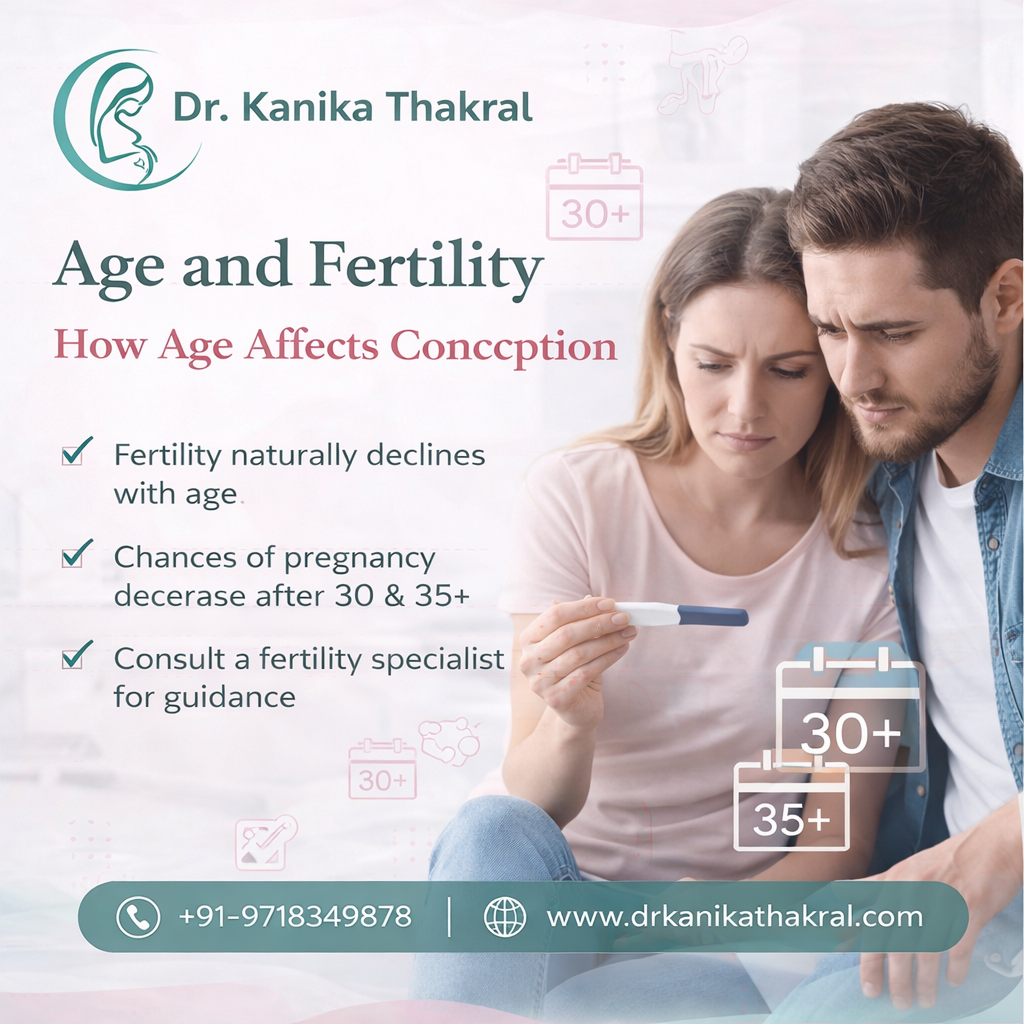
Age and Fertility: How Age Affects Conception
Planning a pregnancy is one of the most important decisions in life, and age plays a major role in fertility. At Dr. Kanika Thakral’s clinic in Gaur City 1, many couples seek guidance on how age impacts their chances of conceiving naturally or with medical support. Understanding fertility by age can help you make informed decisions and avoid unnecessary delays.
Both women and men experience fertility changes over time, but the impact is more significant in women due to the natural decline in egg quantity and quality.
How Female Fertility Changes With Age
Women are born with a fixed number of eggs. As age increases, both the number and quality of eggs decrease.
Fertility in Your 20s — Peak Reproductive Years
Your 20s are considered the best age to conceive.
✔ Highest egg quality
✔ Regular ovulation cycles
✔ Lower risk of miscarriage
✔ Higher chances of natural conception
Most healthy couples in this age group conceive within 6–12 months of trying.
However, lifestyle factors like stress, PCOS, thyroid issues, or unhealthy habits can still affect fertility. Consulting a gynecologist in Greater Noida can help ensure optimal reproductive health even in your 20s.
Fertility in Early 30s — Still Favorable
In the early 30s, fertility remains good, but a gradual decline begins.
✔ Slight decrease in egg quality
✔ Ovulation still regular
✔ Good chances of natural pregnancy
Doctors often consider 30–32 as a favorable window for planned pregnancy. If you live in Gaur City 1 and are planning your first child, preconception counseling can improve outcomes.
Fertility After 35 — Noticeable Decline
After age 35, fertility declines more rapidly.
Why fertility drops after 35:
• Reduced ovarian reserve
• Lower egg quality
• Increased risk of miscarriage
• Higher chances of chromosomal abnormalities
• Irregular ovulation
Many women still conceive naturally after 35, but it may take longer. Fertility evaluation is recommended if pregnancy does not occur within 6 months of trying.
Tests your gynecologist may suggest:
-
AMH test (ovarian reserve)
-
Ultrasound for follicle count
-
Hormone tests
-
Thyroid screening
Fertility After 40 — Challenging but Possible
Conceiving after 40 becomes more difficult but not impossible.
✔ Significantly lower egg quality
✔ Increased miscarriage risk
✔ Higher chance of pregnancy complications
✔ Often requires fertility treatment
Advanced reproductive options such as IUI or IVF may be recommended by a fertility specialist near Gaur City 1.
Early diagnosis and expert care significantly improve outcomes even in this age group.
How Male Age Affects Fertility
Fertility decline is not limited to women. Male fertility also decreases with age.
Effects of aging on male fertility:
• Reduced sperm count
• Poor sperm motility
• Increased DNA damage in sperm
• Longer time to achieve pregnancy
Men above 40 may face reduced conception chances, especially when combined with female age factors.
Medical Conditions That Impact Age-Related Fertility
Certain health conditions can accelerate fertility decline:
-
PCOS (Polycystic Ovary Syndrome)
-
Endometriosis
-
Thyroid disorders
-
Diabetes
-
Obesity
-
Pelvic infections
Early treatment by a qualified gynecologist in Greater Noida can preserve fertility and prevent complications.
Signs You Should Consult a Fertility Specialist
Seek medical advice if:
✔ You are under 35 and trying for 12 months without success
✔ You are over 35 and trying for 6 months
✔ Periods are irregular or absent
✔ History of miscarriage
✔ Known reproductive issues
✔ Severe menstrual pain
✔ Male fertility concerns
Early consultation saves time, reduces stress, and increases the chances of successful pregnancy.
Tips to Improve Fertility at Any Age
While age cannot be reversed, healthy habits can support reproductive health.
Lifestyle changes that boost fertility:
🥗 Maintain a healthy weight
🚶 Exercise regularly
🛌 Get adequate sleep
🚭 Avoid smoking and alcohol
🧘 Manage stress
🍎 Eat a balanced diet rich in nutrients
💊 Take prenatal vitamins if planning pregnancy
Tracking ovulation and timing intercourse during fertile days also improves chances of conception.
Fertility Treatments Available
Modern medicine offers several options for couples struggling with age-related infertility:
-
Ovulation induction
-
IUI (Intrauterine Insemination)
-
Egg freezing (fertility preservation)
-
Donor egg IVF (if required)
At a reputed gynecology clinic in Gaur City 1, treatment plans are personalized based on age, health status, and fertility goals.
Why Early Planning Matters
Delaying pregnancy for career, personal goals, or medical reasons is common today. However, understanding fertility timelines helps avoid unexpected difficulties later.
Proactive steps include:
✔ Preconception check-up
✔ Fertility testing
✔ Lifestyle optimization
✔ Discussing egg freezing if planning late pregnancy
Expert guidance ensures safe and informed family planning.
Conclusion
Age and fertility are closely linked, especially for women. While natural conception is easiest in the 20s and early 30s, pregnancy is still possible later with medical support. The key is awareness, early evaluation, and timely treatment.
If you are planning pregnancy or facing difficulty conceiving, consulting an experienced gynecologist in Gaur City 1 can provide clarity, reassurance, and effective solutions.
Frequently Asked Questions (FAQ)
1. What is the best age to get pregnant naturally?
The ideal age is between 20 and early 30s when fertility is highest.
2. Can I get pregnant after 35 naturally?
Yes, many women conceive naturally after 35, though it may take longer.
3. Does fertility drop suddenly at 35?
Fertility declines gradually but more noticeably after 35 due to reduced egg quality.
4. Can men’s age affect pregnancy?
Yes, male fertility declines with age, affecting sperm quality and conception time.
5. When should I see a fertility doctor?
After 12 months of trying under 35, or 6 months if over 35.
