
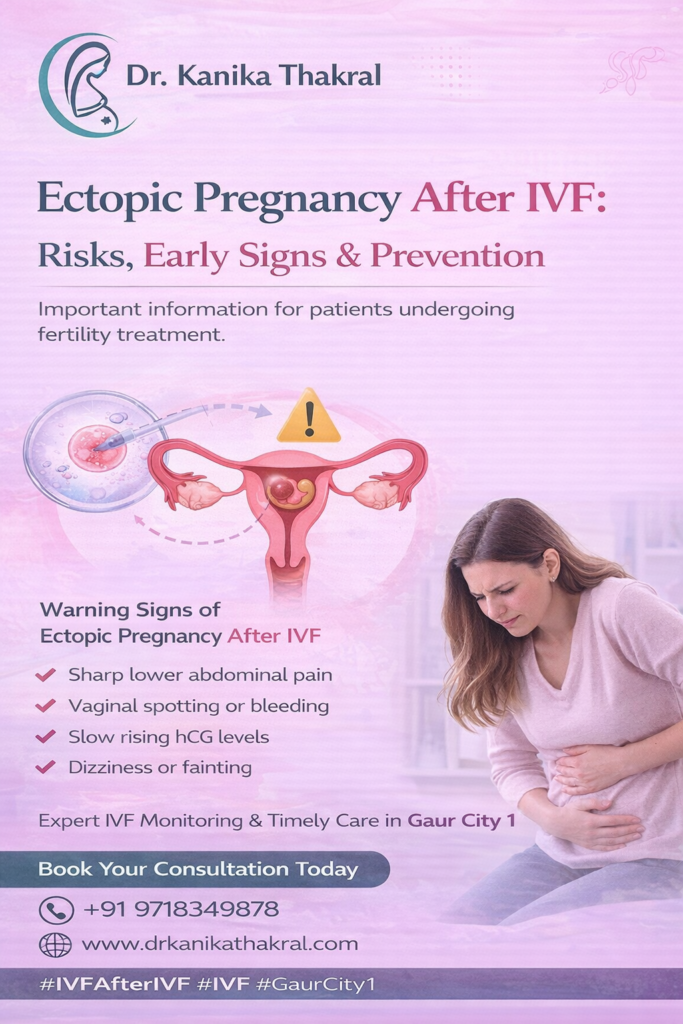
Ectopic Pregnancy After IVF: Risks, Early Signs & Prevention
IVF has brought hope to many couples struggling with infertility. However, like any medical procedure, it carries certain risks. One rare but serious complication is ectopic pregnancy after IVF. Women undergoing fertility treatment must be aware of early warning signs and seek timely medical care.
At Dr. Kanika Thakral’s clinic in Gaur City 1, women receive comprehensive fertility and pregnancy monitoring to detect early complications such as ectopic pregnancy after IVF in Gaur City 1 and ensure safe treatment.
What Is Ectopic Pregnancy After IVF?
Even though embryos are carefully transferred into the uterus during IVF, in rare cases, the embryo may implant outside the uterine cavity — most commonly in the fallopian tube. This is known as ectopic pregnancy after IVF.
While IVF reduces some infertility risks, it does not completely eliminate the possibility of abnormal implantation.
Why Does Ectopic Pregnancy Occur After IVF?
Several factors increase the risk:
-
Previous tubal damage or infection
-
History of pelvic inflammatory disease (PID)
-
Prior ectopic pregnancy
-
Endometriosis
-
Blocked or surgically treated fallopian tubes
-
Multiple embryo transfer
Even with advanced reproductive technology, women with underlying tubal issues remain at higher risk.
Early Signs of Ectopic Pregnancy After IVF in Gaur City 1
Women undergoing IVF are closely monitored, but symptoms may still appear between 4–7 weeks of pregnancy.
Warning Signs Include:
-
Sharp lower abdominal pain (often one-sided)
-
Vaginal spotting or light bleeding
-
Shoulder pain
-
Dizziness or fainting
-
Slow rise in hCG levels
-
Pain during movement
If you experience these symptoms after IVF, contact a gynecologist in Greater Noida West immediately.
How Is It Diagnosed?
Early diagnosis is critical to prevent rupture and internal bleeding.
1. Serial hCG Blood Tests
Abnormal rise in pregnancy hormone levels may indicate ectopic pregnancy.
2. Transvaginal Ultrasound
An experienced gynecologist performs ultrasound to locate the gestational sac.
3. Clinical Examination
Pain assessment and physical evaluation.
Clinics offering IVF monitoring in Gaur City 1 recommend early ultrasound at 5–6 weeks post embryo transfer.
Treatment Options for Ectopic Pregnancy After IVF
Treatment depends on early detection and the patient’s stability.
1. Medical Management
If detected early and the fallopian tube has not ruptured, methotrexate injection may be given to dissolve pregnancy tissue.
2. Laparoscopic Surgery
Minimally invasive surgery removes the ectopic pregnancy and preserves fertility when possible.
3. Emergency Surgery
Required if rupture occurs, causing internal bleeding.
Women searching for “IVF pregnancy complications treatment near me” should always consult an experienced fertility specialist.
Does IVF Increase the Risk of Ectopic Pregnancy?
Yes, slightly higher compared to natural conception, especially in women with pre-existing tubal damage. However, proper monitoring reduces life-threatening complications.
Regular follow-ups with a fertility specialist in Noida Extension ensure early detection.
Emotional Impact of Ectopic Pregnancy After IVF
Experiencing ectopic pregnancy after IVF can be emotionally distressing. Couples often invest emotionally and financially in fertility treatment.
Support strategies include:
-
Counseling
-
Emotional support from family
-
Discussion of future fertility plans
-
Preconception evaluation before next IVF cycle
Many women go on to have successful pregnancies after recovery.
Can You Try IVF Again?
Yes. After proper recovery, most women can attempt another IVF cycle.
Your gynecologist may recommend:
-
Tubal evaluation
-
Modified embryo transfer technique
-
Single embryo transfer
-
Closer monitoring in early weeks
Pre-pregnancy counseling is important before the next attempt.
How to Reduce Risk in Future IVF Cycles
While ectopic pregnancy cannot always be prevented, certain steps reduce risk:
-
Early ultrasound monitoring
-
Treating pelvic infections
-
Removing severely damaged tubes before IVF (if advised)
-
Careful embryo transfer technique
-
Choosing experienced fertility specialists
If you are planning IVF in Gaur City 1, always select a clinic with emergency obstetric care facilities.
When to Seek Immediate Medical Help
Call your doctor immediately if you notice:
-
Severe abdominal pain
-
Fainting
-
Sudden weakness
Prompt medical care can prevent life-threatening complications.
Conclusion
Ectopic pregnancy after IVF is rare but serious. Early diagnosis, proper monitoring, and timely treatment ensure patient safety and protect future fertility. If you are undergoing fertility treatment or experiencing unusual pain after IVF, consult an experienced gynecologist immediately.
Women living in Gaur City 1 and Noida Extension should prioritize early pregnancy monitoring to detect complications and ensure a healthy pregnancy journey.
Frequently Asked Questions (FAQs)
Q1. How common is ectopic pregnancy after IVF?
It occurs in about 2–5% of IVF pregnancies, especially in women with tubal damage.
Q2. Can ectopic pregnancy happen even if embryos are placed correctly?
Yes, rarely the embryo may migrate and implant outside the uterus.
Q3. How early can ectopic pregnancy be detected after IVF?
Usually between 5–6 weeks with ultrasound and hCG monitoring.
Q4. Will ectopic pregnancy affect future IVF success?
Not necessarily. Many women conceive successfully in future cycles.
Q5. Is ectopic pregnancy life-threatening?
Yes, if untreated it can cause rupture and internal bleeding.
