
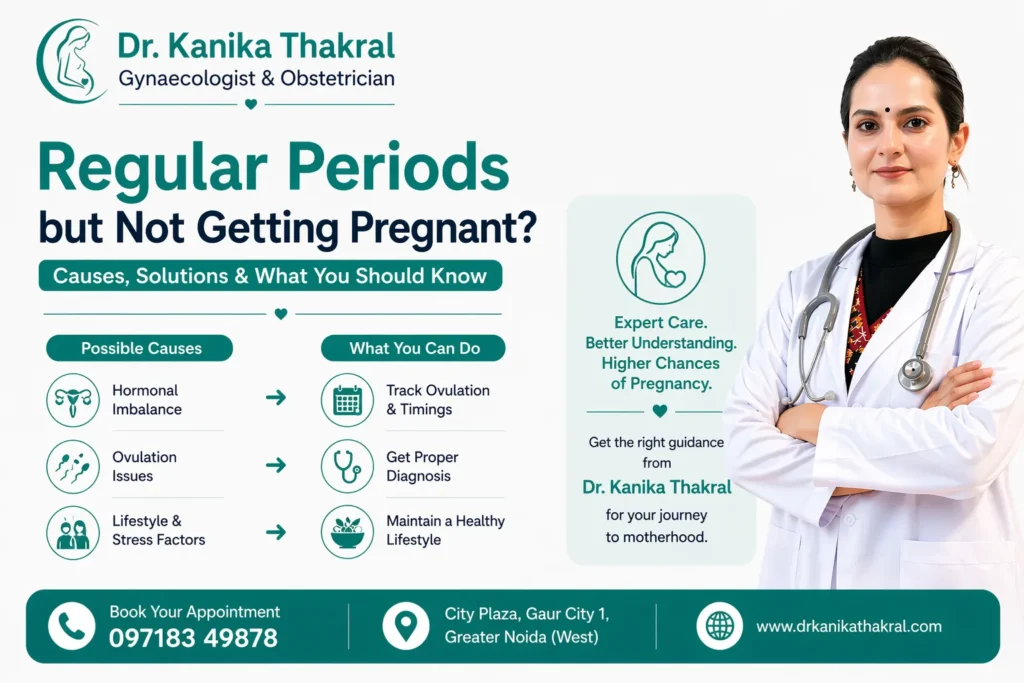
Regular Periods But Not Getting Pregnant? Causes & Solutions in Gaur City
If you are experiencing regular periods but not getting pregnant in Gaur City, you are not alone. Many women assume that having a normal menstrual cycle means fertility is not an issue, but that is not always true. While regular periods often indicate ovulation, several other factors can affect your ability to conceive.
Understanding the real causes behind this condition can help you take the right steps toward a healthy pregnancy.
Does Having Regular Periods Mean You Are Fertile?
A regular menstrual cycle usually indicates that ovulation is happening. Ovulation is when an egg is released from the ovary, which is necessary for pregnancy.
However, fertility is influenced by several other factors, including:
- Egg quality
- Hormonal balance
- Reproductive system health
- Sperm quality
This means that even with regular cycles, conception may not occur.
Common Reasons for Not Getting Pregnant Despite Regular Periods
Understanding the possible causes can help you take the right steps.
1. Poor Egg Quality
Even if ovulation occurs regularly, the quality of the egg plays a major role in fertilization. Egg quality declines with age, especially after 30, which can reduce the chances of conception.
2. Blocked Fallopian Tubes
Fallopian tubes are responsible for carrying the egg to the uterus. If they are blocked due to infections or previous medical conditions, fertilization cannot take place.
3. Hormonal Imbalance
Subtle hormonal imbalances may not affect your cycle but can impact fertility. Hormones like progesterone, thyroid hormones, and prolactin must be properly balanced.
4. Endometriosis
Endometriosis occurs when tissue similar to the uterine lining grows outside the uterus. It can affect ovulation, implantation, and overall fertility.
5. Polycystic Ovary Syndrome (PCOS)
Some women with mild PCOS may still have regular periods but experience issues with ovulation or egg quality.
6. Male Factor Infertility
Fertility is not just about female health. Low sperm count, poor motility, or abnormal sperm shape can also prevent pregnancy.
7. Timing Issues
Many couples miss the fertile window. Ovulation usually occurs mid-cycle, and intercourse during the right time is essential for conception.
8. Lifestyle Factors
Daily habits play a major role in fertility:
- High stress levels
- Poor diet
- Lack of sleep
- Smoking or alcohol
- Weight imbalance
How to Improve Your Chances of Getting Pregnant
Taking the right steps can improve fertility outcomes.
1. Track Ovulation
Use ovulation kits or monitor physical signs to identify your fertile window.
2. Maintain a Healthy Lifestyle
Focus on:
- Balanced diet
- Regular exercise
- Proper sleep
- Stress management
3. Have Timed Intercourse
Plan intercourse 2–3 days before ovulation and on the day of ovulation.
4. Take Prenatal Supplements
Folic acid and essential nutrients support reproductive health.
5. Get Medical Tests Done
If you have been trying for:
- 1 year (below 35 years)
- 6 months (above 35 years)
Consult a specialist for:
- Hormonal tests
- Ultrasound
- Tube patency test
- Semen analysis
Expert Fertility Guidance in Gaur City
If you are facing difficulty in conceiving despite regular periods, Dr. Kanika Thakral in Gaur City provides comprehensive fertility evaluation and personalized treatment.
Her approach includes:
- Detailed diagnosis of underlying issues
- Hormonal assessment
- Ovulation tracking guidance
- Fertility treatment plans
With expert care, many couples can overcome fertility challenges and achieve successful pregnancy.
When Should You See a Doctor?
You should seek medical advice if:
- You have been trying for a long time without success
- You experience severe pain during periods
- You have known reproductive health issues
- You are above 30 and concerned about fertility
Early consultation helps in identifying and treating problems effectively.
Common Myths About Fertility
Myth 1: Regular periods mean no fertility issues
Reality: Fertility depends on multiple factors beyond cycle regularity
Myth 2: Pregnancy happens immediately
Reality: Even healthy couples may take several months
FAQs
1. Can I have regular periods and still be infertile?
Yes, regular periods do not guarantee fertility. Other factors may prevent conception.
2. Why am I not getting pregnant despite regular cycles?
Possible reasons include poor egg quality, hormonal imbalance, blocked tubes, or male infertility.
3. How can I improve my chances of getting pregnant?
Track ovulation, maintain a healthy lifestyle, take supplements, and consult a doctor if needed.
4. When should I consult a doctor?
After 12 months of trying (or 6 months if above 35), or earlier if you have symptoms.
