
How Stress Affects Women’s Hormones in Gaur City
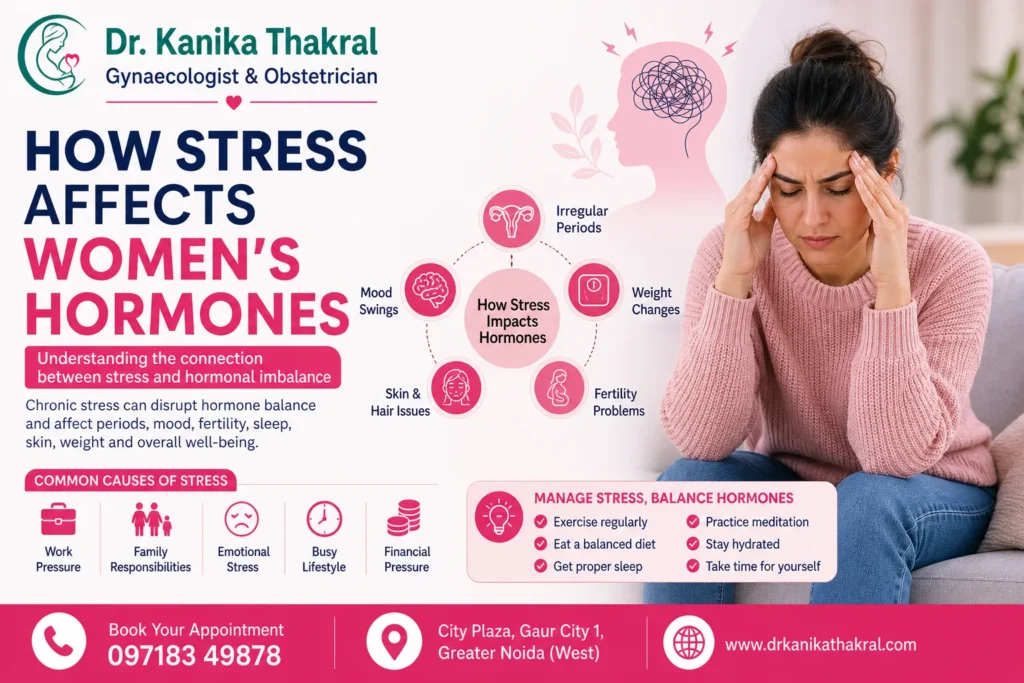
Understanding how stress affects women’s hormones in Gaur City is important because chronic stress can seriously impact menstrual health, fertility, mood, metabolism, sleep, and overall well-being. Many women today experience constant emotional and physical stress due to work pressure, family responsibilities, lifestyle imbalance, and health concerns. Over time, this stress can disturb hormonal balance and lead to symptoms such as irregular periods, mood swings, fatigue, acne, hair fall, weight gain, and fertility issues.
Stress has become a common part of modern life, especially for women managing multiple responsibilities every day. While occasional stress is normal, long-term or chronic stress can negatively affect women’s hormonal health. Hormones control many important body functions including menstruation, fertility, energy levels, metabolism, and emotional stability. When stress becomes constant, the body releases higher levels of cortisol, commonly known as the stress hormone, which may disrupt the balance of estrogen, progesterone, thyroid hormones, and other important reproductive hormones.
Many women ignore stress-related symptoms because they believe stress only affects emotions. However, chronic stress creates physical changes inside the body that can directly affect hormonal function and reproductive health. Managing stress properly is essential for maintaining a healthy menstrual cycle and long-term women’s wellness.
What Happens to Hormones During Stress?
When the body experiences stress, it releases a hormone called cortisol, commonly known as the “stress hormone.” Cortisol is produced by the adrenal glands and helps the body respond to stressful situations.
In small amounts, cortisol is helpful because it prepares the body to react during emergencies. However, when stress continues for weeks or months, cortisol levels remain elevated. High cortisol levels can interfere with the balance of important female hormones such as:
- Estrogen
- Progesterone
- Testosterone
- Thyroid hormones
- Insulin
This imbalance may affect menstruation, fertility, sleep, skin health, metabolism, and emotional health.
How Stress Affects Women’s Hormones in Gaur City
Understanding how stress affects women’s hormones in Gaur City can help women recognize symptoms early and seek proper care before hormonal problems become severe.
Stress and Irregular Periods
One of the most common effects of stress on women’s hormones is irregular periods. Stress can disrupt communication between the brain and ovaries, affecting ovulation and menstrual cycles.
Women may experience:
- Delayed periods
- Missed periods
- Frequent periods
- Heavy bleeding
- Painful periods
Stress-related hormonal imbalance may also worsen PMS symptoms before menstruation.
Stress and Fertility Problems
High stress levels can negatively affect fertility by interfering with ovulation. Chronic stress may delay or stop ovulation in some women, making it difficult to conceive.
Stress may also affect:
- Egg quality
- Libido
- Hormonal balance required for pregnancy
- IVF or fertility treatment outcomes
Women trying to conceive are often advised to manage stress as part of fertility care.
Stress and PCOS
Stress can worsen symptoms of Polycystic Ovary Syndrome (PCOS). Women with PCOS already experience hormonal imbalance, and additional stress can increase insulin resistance and cortisol levels.
This may lead to:
- Irregular periods
- Weight gain
- Acne
- Hair fall
- Mood swings
- Difficulty conceiving
Managing stress is important for controlling PCOS symptoms naturally.
Stress and Thyroid Hormones
Stress can also affect thyroid function. Thyroid hormones regulate metabolism, energy levels, and menstrual health.
Chronic stress may contribute to symptoms such as:
- Fatigue
- Weight changes
- Hair thinning
- Mood changes
- Irregular cycles
Women experiencing persistent symptoms should seek medical evaluation.
Stress and Weight Gain
Many women notice weight gain during stressful periods. High cortisol levels may increase cravings for sugary and unhealthy foods, slow metabolism, and promote fat storage around the abdomen.
Hormonal imbalance caused by stress may make weight management more difficult.
Stress and Skin Problems
Hormonal fluctuations due to stress can trigger skin issues such as:
- Acne
- Dull skin
- Hair fall
- Premature aging
Stress-related inflammation affects skin health and hormonal balance simultaneously.
Emotional Symptoms of Hormonal Imbalance Caused by Stress
Stress does not only affect physical health. Hormonal imbalance may also affect emotional well-being.
Women may experience:
- Anxiety
- Mood swings
- Irritability
- Low motivation
- Sleep disturbances
- Difficulty concentrating
Mental health and hormonal health are closely connected.
Signs That Stress Is Affecting Your Hormones
Women should not ignore symptoms such as:
- Irregular periods
- Constant fatigue
- Hair fall
- Weight gain
- Acne
- Low libido
- Trouble sleeping
- Mood changes
- Fertility issues
These symptoms may indicate stress-related hormonal imbalance.
How to Reduce Stress Naturally for Better Hormonal Health
Managing stress is important for maintaining hormonal balance and reproductive health.
Exercise Regularly
Physical activity helps reduce cortisol levels and improves mood naturally.
Activities like:
- Walking
- Yoga
- Stretching
- Light workouts
can help improve hormonal balance.
Get Proper Sleep
Poor sleep can worsen hormonal imbalance and increase stress hormones.
Women should aim for 7–8 hours of quality sleep daily.
Eat a Balanced Diet
Healthy nutrition supports hormonal function.
Include foods rich in:
- Protein
- Iron
- Omega-3 fatty acids
- Fruits and vegetables
Avoid excessive processed foods and sugar.
Practice Stress Management
Simple techniques may help reduce stress naturally:
- Meditation
- Deep breathing
- Journaling
- Spending time with family
- Taking breaks from work
Stay Hydrated
Proper hydration supports metabolism and hormonal health.
Medical Treatment for Hormonal Imbalance Due to Stress
In some cases, lifestyle changes alone may not be enough. Women experiencing severe hormonal imbalance may require medical treatment.
Doctors may recommend:
- Hormonal evaluation
- Thyroid testing
- Ultrasound
- PCOS assessment
- Fertility evaluation
Proper diagnosis helps identify the root cause of symptoms.
Expert Women’s Healthcare by Dr. Kanika Thakral
For women experiencing stress-related hormonal imbalance, Dr. Kanika Thakral provides personalized women’s healthcare and hormonal evaluation in Gaur City.
Her approach includes:
- Detailed hormonal assessment
- Menstrual health evaluation
- PCOS and fertility care
- Lifestyle guidance
- Personalized treatment planning
With proper diagnosis and stress management support, many women can improve their hormonal health and overall well-being.
How Stress Affects Women’s Hormones During Different Life Stages
Hormonal health changes throughout life, and stress may affect women differently at different ages.
Teenage Years
Stress during adolescence may lead to:
- Irregular periods
- Acne
- Mood swings
Reproductive Years
Stress can affect:
- Fertility
- Pregnancy planning
- PCOS symptoms
- Menstrual regularity
Pregnancy
High stress during pregnancy may affect emotional health and sleep quality.
Perimenopause
Women approaching menopause may experience worsening hormonal symptoms due to stress.
FAQs
1. Can stress affect women’s hormones?
Yes, chronic stress can increase cortisol levels and disrupt hormonal balance in women.
2. Can stress cause irregular periods?
Yes, stress may affect ovulation and menstrual cycles, causing delayed or missed periods.
3. Can stress worsen PCOS symptoms?
Yes, stress may increase hormonal imbalance and worsen PCOS symptoms like acne, weight gain, and irregular periods.
4. Can stress affect fertility?
Yes, chronic stress may interfere with ovulation and reduce fertility chances.
5. What are signs of hormonal imbalance caused by stress?
Common signs include fatigue, irregular periods, mood swings, hair fall, acne, and sleep problems.
