
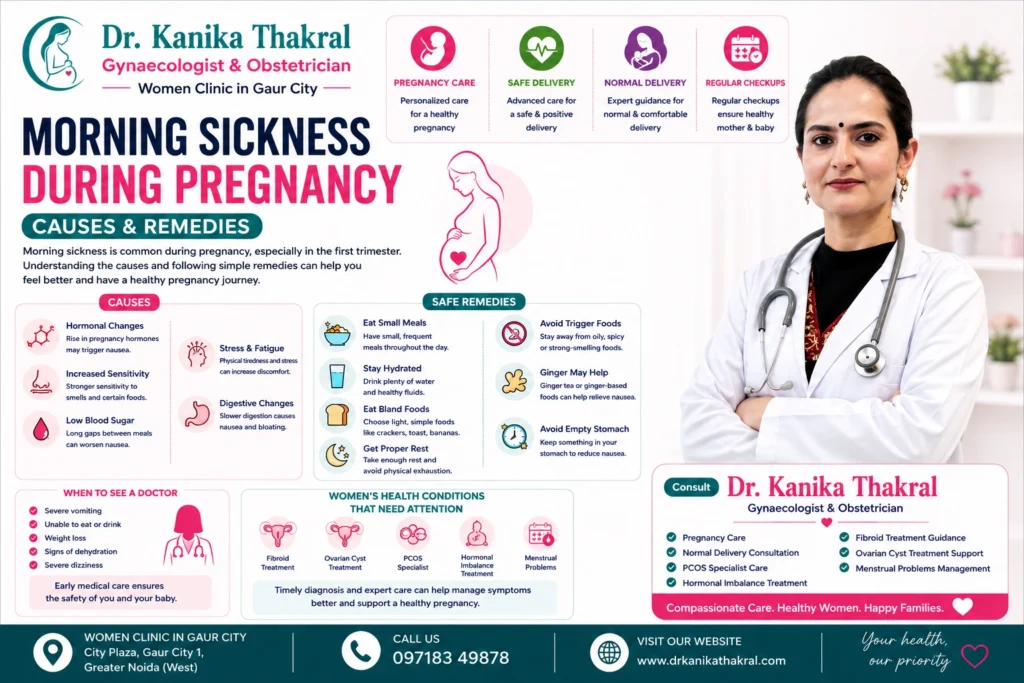
Morning Sickness During Pregnancy – Causes & Remedies
Morning sickness during pregnancy is one of the most common symptoms experienced by pregnant women, especially during the first trimester. Despite the name, nausea and vomiting can happen at any time of the day. For some women, symptoms are mild, while others may experience frequent discomfort that affects daily life.
Understanding morning sickness during pregnancy – causes & remedies can help women manage symptoms safely and maintain a healthier pregnancy journey. At Dr. Kanika Thakral clinic, women receive expert pregnancy care, hormonal health support, and personalized maternity guidance in Gaur City.
What is Morning Sickness?
Morning sickness refers to nausea and vomiting during pregnancy caused mainly by hormonal changes. It usually starts around the 5th or 6th week of pregnancy and may continue during the first trimester.
In most cases, symptoms improve after the third month, although some women may continue experiencing nausea later in pregnancy.
Common Causes of Morning Sickness During Pregnancy
Hormonal Changes
Pregnancy hormones increase rapidly during early pregnancy and can trigger nausea.
Increased Sensitivity to Smells
Many pregnant women become more sensitive to strong smells and certain foods.
Low Blood Sugar
Long gaps between meals may worsen nausea symptoms.
Stress and Fatigue
Physical exhaustion and emotional stress can increase discomfort during pregnancy.
Digestive Changes
Pregnancy slows digestion, which may contribute to nausea and bloating.
Women with hormonal imbalance, PCOS, or certain gynecological conditions may sometimes experience stronger symptoms and require additional monitoring.
Symptoms of Morning Sickness
Common symptoms include:
- Nausea
- Vomiting
- Food aversions
- Loss of appetite
- Dizziness
- Fatigue
- Increased sensitivity to smell
Safe Remedies for Morning Sickness During Pregnancy
Eat Small Frequent Meals
Eating small meals throughout the day may help reduce nausea.
Stay Hydrated
Drink enough water and fluids to prevent dehydration.
Avoid Trigger Foods
Avoid oily, spicy, or strong-smelling foods if they worsen symptoms.
Eat Bland Foods
Crackers, toast, bananas, and simple foods may help calm the stomach.
Ginger May Help
Some women find ginger tea or ginger-based foods helpful for nausea relief.
Get Proper Rest
Adequate sleep and stress reduction may improve symptoms.
Avoid Empty Stomach
Keeping the stomach empty for long periods can worsen nausea.
When Should You Visit a Doctor?
Consult a gynecologist if:
- Vomiting becomes severe
- You cannot eat or drink properly
- Weight loss occurs
- Signs of dehydration appear
- Dizziness becomes severe
Severe morning sickness may require medical attention and pregnancy monitoring.
Importance of Pregnancy Care
Regular pregnancy care helps monitor both mother and baby throughout pregnancy.
Benefits include:
- Monitoring baby growth
- Managing pregnancy symptoms
- Supporting healthy pregnancy
- Preparing for Normal Delivery
- Early detection of complications
Women’s Health Conditions That Need Attention
Women experiencing pregnancy symptoms along with gynecological concerns should consult a specialist.
Conditions such as:
- Fibroid Treatment needs
- Ovarian Cyst Treatment
- PCOS-related hormonal imbalance
- Severe Menstrual Problems history
- Hormonal disorders
may sometimes affect reproductive health and pregnancy care planning.
At Dr. Kanika Thakral’s clinic, women receive personalized care for pregnancy and women’s health conditions.
Why Choose Dr. Kanika Thakral?
Dr. Kanika Thakral provides expert women’s healthcare and pregnancy support in Gaur City.
Her services include:
✔ Pregnancy Care
✔ Normal Delivery Consultation
✔ PCOS Specialist Care
✔ Hormonal Imbalance Treatment
✔ Fibroid Treatment Guidance
✔ Ovarian Cyst Treatment Support
✔ Menstrual Problems Management
FAQs
1. Is morning sickness normal during pregnancy?
Yes, mild nausea and vomiting are very common during early pregnancy.
2. When does morning sickness usually start?
It usually begins around week 5–6 of pregnancy.
3. How long does morning sickness last?
Most women improve after the first trimester.
4. Can dehydration happen due to vomiting?
Yes, severe vomiting may cause dehydration and needs medical attention.
5. What foods help reduce nausea?
Simple foods like crackers, toast, bananas, and light meals may help.
6. Can stress worsen morning sickness?
Yes, stress and fatigue may increase symptoms.
7. Who should I consult in Gaur City?
Consult Dr. Kanika Thakral for pregnancy care and women’s health support.
