
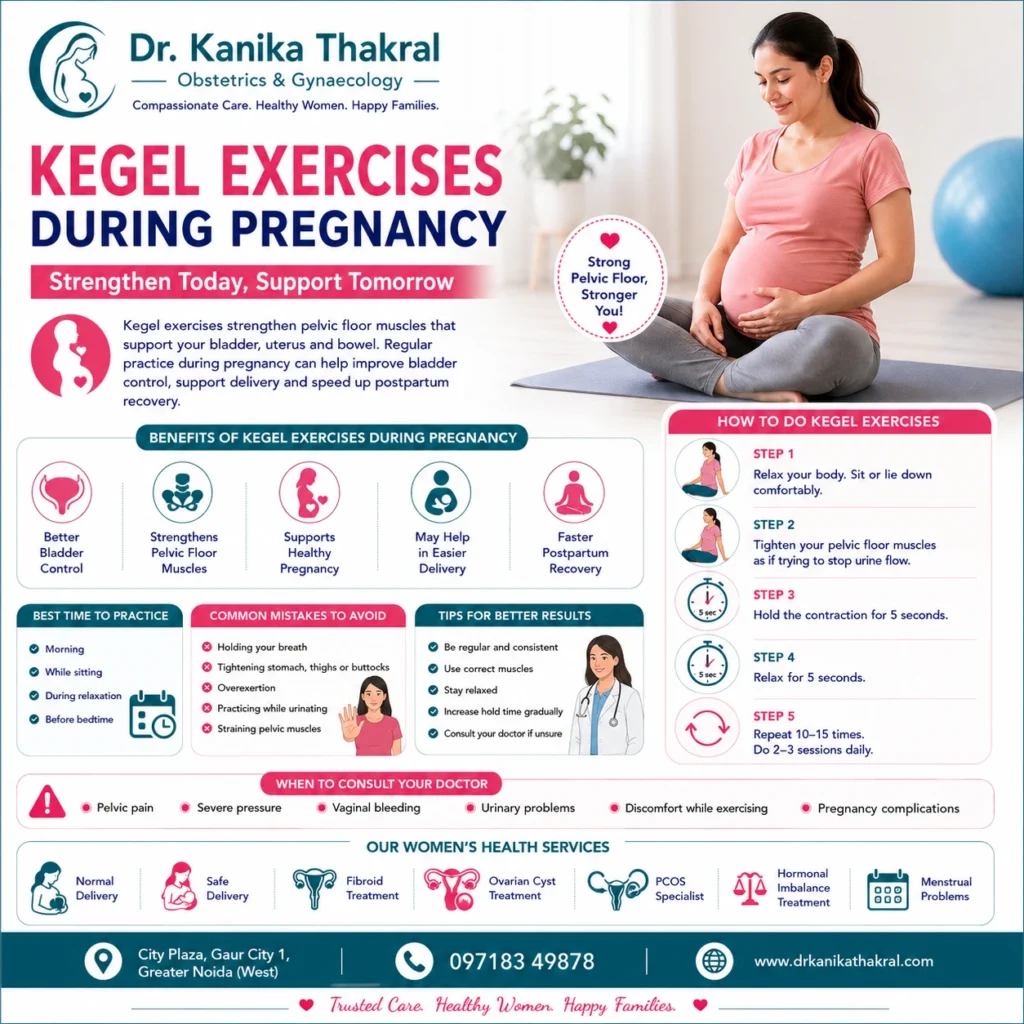
Kegel Exercises During Pregnancy
Pregnancy brings many physical and hormonal changes to a woman’s body. As the baby grows, pressure on the pelvic muscles increases, which may sometimes lead to bladder leakage, pelvic discomfort, or weakness in the pelvic floor muscles. This is where Kegel Exercises During Pregnancy can be helpful.
Kegel exercises are simple pelvic floor exercises that help strengthen the muscles supporting the bladder, uterus, and bowel. These exercises are commonly recommended during pregnancy because they may help improve muscle control, support delivery preparation, and aid postpartum recovery.
With proper guidance and regular practice, Kegel exercises can become a beneficial part of healthy pregnancy care.
What Are Kegel Exercises?
Kegel exercises are designed to strengthen pelvic floor muscles. These muscles support important organs such as:
- Bladder
- Uterus
- Rectum
During pregnancy, these muscles carry additional pressure because of the growing baby. Strengthening them may help support better bladder control and pelvic stability.
Kegel exercises are usually easy to perform and can be done almost anywhere.
Why Are Kegel Exercises Important During Pregnancy?
Pregnancy puts extra stress on the pelvic region. Weak pelvic floor muscles may sometimes contribute to discomfort and urinary leakage.
Practicing Kegel Exercises During Pregnancy may help:
- Improve pelvic muscle strength
- Support bladder control
- Reduce pelvic pressure
- Improve postpartum recovery
- Prepare pelvic muscles for childbirth
These exercises are often recommended as part of healthy pregnancy wellness.
Benefits of Kegel Exercises During Pregnancy
Regular pelvic floor exercises may offer several benefits for pregnant women.
Better Bladder Control
Many women experience urine leakage during pregnancy due to pressure on the bladder. Strong pelvic muscles may help reduce leakage.
Pelvic Support
Kegel exercises help support pelvic organs during pregnancy.
Delivery Preparation
Healthy pelvic muscles may support labor and recovery after childbirth.
Faster Postpartum Recovery
Women who maintain stronger pelvic muscles may recover more comfortably after delivery.
Improved Muscle Awareness
Regular practice helps women understand and control pelvic floor muscles better.
How to Identify Pelvic Floor Muscles
Before starting, it is important to identify the correct muscles.
One common method is trying to stop urine flow midway while urinating. The muscles used for this action are pelvic floor muscles.
However, this method should only be used for identification and not practiced regularly during urination.
How to Perform Kegel Exercises
Performing Kegel exercises correctly is important for better results.
Step 1: Relax Your Body
Sit or lie down comfortably and relax your abdominal, thigh, and hip muscles.
Step 2: Tighten Pelvic Muscles
Slowly tighten the pelvic floor muscles as if trying to stop urine flow.
Step 3: Hold the Contraction
Hold the muscles tight for around 5 seconds initially.
Step 4: Relax
Relax the muscles completely for another 5 seconds.
Step 5: Repeat
Repeat the exercise 10–15 times per session.
Over time, women may gradually increase holding time if comfortable.
Best Time to Practice Kegel Exercises
These exercises can be done:
- In the morning
- While sitting
- During relaxation time
- Before bedtime
Consistency is more important than timing.
Common Mistakes to Avoid
Some women unknowingly perform Kegel exercises incorrectly.
Avoid:
- Holding your breath
- Tightening abdominal muscles too much
- Overexertion
- Practicing while urinating regularly
- Straining pelvic muscles excessively
Correct technique helps avoid discomfort.
Are Kegel Exercises Safe During Pregnancy?
For most women, Kegel exercises are generally safe during pregnancy.
However, every pregnancy is different. Women with high-risk pregnancies or pregnancy complications should always consult their doctor before starting any exercise routine.
If you experience pain, discomfort, or contractions while exercising, stop immediately and consult your healthcare provider.
When Should You Start Kegel Exercises?
Women can usually begin pelvic floor exercises early in pregnancy after medical guidance.
Regular practice throughout pregnancy may help support pelvic strength and recovery after childbirth.
Can Kegel Exercises Help During Delivery?
Strong pelvic floor muscles may improve muscle control during labor and delivery.
These exercises may help:
- Improve muscle coordination
- Support pushing during labor
- Reduce pelvic weakness after childbirth
However, every delivery experience is different.
Kegel Exercises After Pregnancy
Pelvic floor exercises are also beneficial after childbirth. They may help improve:
- Pelvic recovery
- Bladder control
- Muscle strength
- Postpartum comfort
Doctors may recommend continuing these exercises after delivery for recovery support.
Healthy Pregnancy Tips Along With Kegel Exercises
Pregnancy wellness involves more than exercise alone.
Helpful pregnancy care habits include:
- Eating balanced meals
- Staying hydrated
- Getting proper rest
- Attending regular checkups
- Managing stress
- Following medical guidance
- Staying physically active safely
A healthy lifestyle supports both mother and baby.
When Should You Consult a Doctor?
Consult your doctor if you experience:
- Pelvic pain
- Severe pressure
- Urinary problems
- Discomfort during exercises
- Pregnancy complications
- Vaginal bleeding
Medical supervision is important during pregnancy.
Women’s Healthcare Services Available
At Dr. Kanika Thakral’s clinic, women receive complete pregnancy and gynecology support including:
✔ Pregnancy Care
✔ Women’s Health Consultation
✔ Normal Delivery Guidance
✔ Safe Delivery Support
✔ Fibroid Treatment
✔ Ovarian Cyst Treatment
✔ PCOS Specialist Consultation
✔ Hormonal Imbalance Treatment
Why Choose Dr. Kanika Thakral?
Dr. Kanika Thakral provides compassionate maternity and women’s healthcare support with a focus on patient comfort and personalized pregnancy guidance.
Women consult her for:
- Pregnancy monitoring
- Women wellness care
- High-risk pregnancy support
- Pelvic health guidance
- Maternity consultation
Her patient-focused approach helps women feel informed and confident throughout pregnancy.
FAQs
1. What are Kegel exercises?
Kegel exercises are pelvic floor exercises that help strengthen muscles supporting the bladder and uterus.
2. Are Kegel exercises safe during pregnancy?
For most women, they are generally safe when performed correctly after medical advice.
3. How often should Kegel exercises be done?
Many women practice them daily in short sessions.
4. Can Kegel exercises help during delivery?
Strong pelvic muscles may help support labor and recovery after childbirth.
5. Do Kegel exercises help bladder control?
Yes, they may help reduce urine leakage during pregnancy.
6. Can I do Kegel exercises after delivery?
Yes, many women continue these exercises postpartum for recovery support.
7. When should I stop Kegel exercises?
Stop and consult your doctor if you experience pain, discomfort, or pregnancy complications.
