
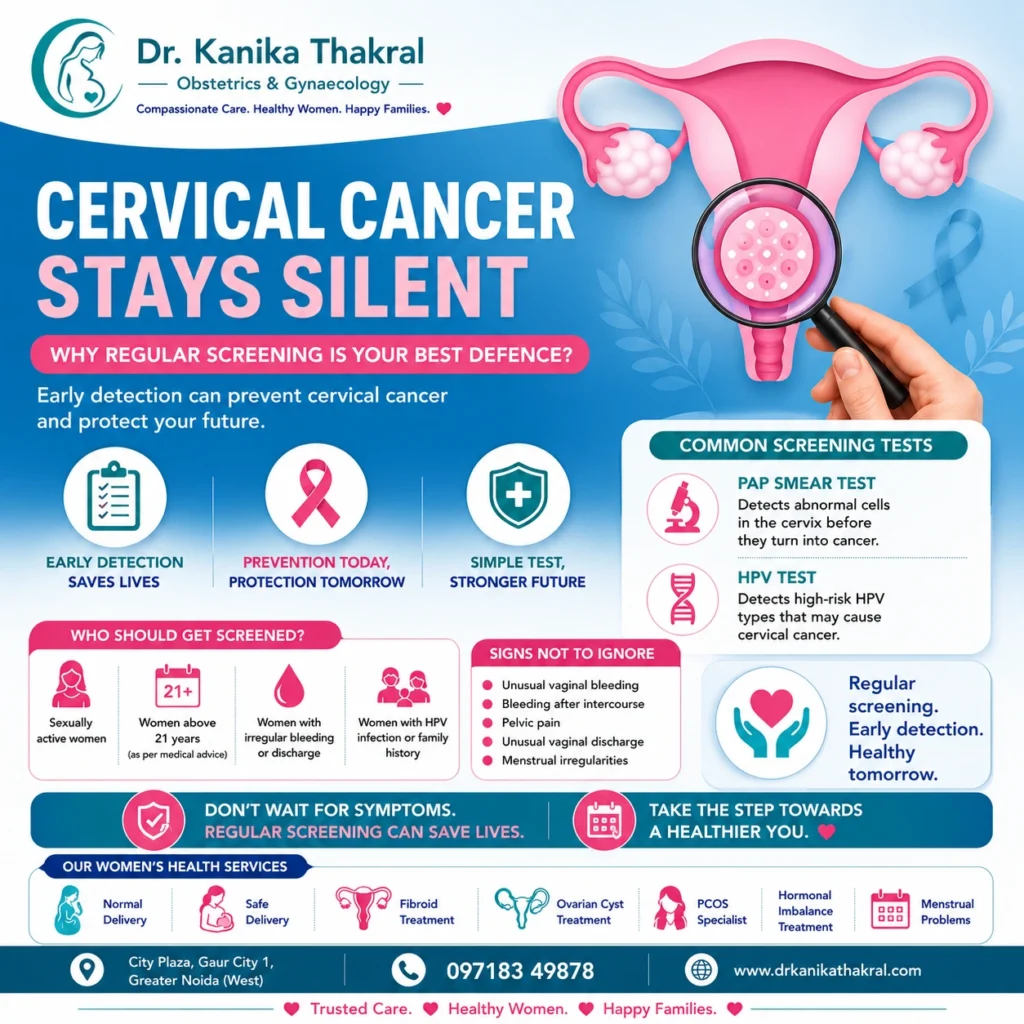
Cervical Cancer Screening in Gaur City: Complete Guide
Women’s health checkups play an important role in detecting medical conditions early and maintaining long-term wellness. One important preventive healthcare step for women is Cervical Cancer Screening in Gaur City. Regular screening helps identify abnormal cervical cell changes before they become serious health concerns.
Cervical cancer develops slowly in many cases, which means early diagnosis and timely treatment can significantly improve outcomes. Many women may not notice symptoms in the early stages, making routine gynecology checkups extremely important.
At Dr. Kanika Thakral’s clinic, women receive compassionate healthcare support with personalized consultation, preventive screening, and pregnancy care guidance.
What is Cervical Cancer?
Cervical cancer develops in the cervix, which is the lower part of the uterus connecting to the vagina. In many cases, cervical cancer is linked with persistent infection caused by certain types of Human Papillomavirus (HPV).
Regular screening helps detect abnormal cervical changes early before cancer develops.
Why is Cervical Cancer Screening Important?
Routine cervical screening is important because it may:
- Detect abnormal cervical cells early
- Identify HPV-related changes
- Help prevent serious complications
- Support early treatment planning
- Improve women’s reproductive health awareness
Early detection increases the chances of successful treatment and better recovery.
What is Cervical Cancer Screening?
Cervical screening involves medical tests that check the health of cervical cells.
The two most common screening methods include:
- Pap Smear Test
- HPV Test
Doctors may recommend one or both depending on age, symptoms, and medical history.
What is a Pap Smear Test?
A Pap smear is a simple procedure used to collect cervical cell samples for laboratory testing.
The test helps detect:
- Abnormal cervical cells
- Precancerous changes
- Infection-related changes
- Early warning signs
Pap smear screening is usually quick and may only take a few minutes.
What is HPV Testing?
HPV testing checks for high-risk HPV strains that may increase cervical cancer risk.
Some HPV infections clear naturally, but persistent high-risk infections may need monitoring and medical care.
Who Should Get Cervical Cancer Screening?
Women should consult their gynecologist regarding the right screening schedule.
Screening may be recommended for:
- Sexually active women
- Women above recommended screening age
- Women with abnormal bleeding
- Women with HPV infection history
- Women with family history of gynecological cancer
Regular women’s healthcare consultations are important for personalized guidance.
Symptoms That Should Not Be Ignored
Early cervical cell changes may not cause symptoms. However, women should consult a doctor if they notice:
- Unusual vaginal bleeding
- Bleeding after intercourse
- Pelvic pain
- Unusual vaginal discharge
- Pain during intercourse
- Menstrual irregularities
These symptoms may not always indicate cancer but should never be ignored.
Causes and Risk Factors
Several factors may increase cervical cancer risk.
Persistent HPV Infection
Certain HPV strains are linked with cervical cell changes.
Smoking
Smoking may affect cervical cell health and immunity.
Weak Immune System
Reduced immunity may increase the risk of persistent infections.
Multiple Pregnancies
Some studies suggest repeated pregnancies may slightly increase risk.
Long-Term Hormonal Factors
Hormonal changes may influence cervical health in some women.
Lack of Regular Screening
Skipping routine screening may delay diagnosis of abnormal changes.
How is Cervical Screening Performed?
The procedure is generally simple and performed during a gynecology visit.
During the test:
- The woman lies comfortably on the examination table
- A medical instrument is gently inserted for cervical visibility
- Small cervical cell samples are collected
- Samples are sent for laboratory analysis
The procedure is usually quick and may cause only mild discomfort.
How to Prepare for a Pap Smear Test
Doctors may advise:
- Avoiding intercourse before the test
- Avoiding vaginal medicines before screening
- Scheduling the test when not menstruating
Following preparation instructions may improve test accuracy.
What Happens if Results Are Abnormal?
Abnormal results do not always mean cancer.
Some women may need:
- Repeat testing
- HPV testing
- Colposcopy examination
- Further monitoring
- Additional treatment
Early follow-up helps manage abnormal changes effectively.
Can Cervical Cancer Be Prevented?
While not all cases are preventable, several preventive steps may help reduce risk.
Regular Screening
Routine screening remains one of the most effective preventive measures.
HPV Vaccination
Vaccination may help protect against certain HPV strains.
Healthy Lifestyle
Maintaining healthy habits supports immune health.
Avoid Smoking
Smoking cessation supports better cervical health.
Safe Intimate Health Practices
Protective measures may reduce infection risk.
Importance of Early Detection
Early-stage cervical abnormalities are often easier to manage than advanced disease.
Women who attend regular gynecology checkups may benefit from:
- Earlier diagnosis
- Better treatment planning
- Reduced complications
- Improved reproductive health awareness
Preventive healthcare plays an important role in women’s long-term wellness.
Women’s Healthcare Services Available
At Dr. Kanika Thakral’s clinic, women receive complete gynecology and wellness care including:
- Fibroid Treatment
- Ovarian Cyst Treatment
- PCOS Specialist Consultation
- Hormonal Imbalance Treatment
Why Choose Dr. Kanika Thakral?
Dr. Kanika Thakral provides compassionate and personalized women’s healthcare support in Gaur City.
Women consult her for:
- Preventive gynecology care
- Pregnancy monitoring
- Women wellness consultation
- Hormonal health support
- Cervical screening guidance
Her patient-focused approach helps women feel informed, comfortable, and supported throughout their healthcare journey.
Tips for Better Women’s Health
Healthy lifestyle habits support overall reproductive wellness.
Helpful tips include:
- Attend regular gynecology checkups
- Maintain proper hygiene
- Eat nutritious meals
- Stay physically active
- Avoid smoking
- Manage stress levels
- Follow vaccination guidance
Preventive care is an important part of long-term women’s health.
FAQs
1. What is cervical cancer screening?
It is a preventive test used to detect abnormal cervical cell changes early.
2. What is a Pap smear test?
A Pap smear collects cervical cell samples for laboratory testing.
3. Is cervical screening painful?
Most women experience only mild discomfort during the procedure.
4. How often should women get screened?
The schedule depends on age, medical history, and doctor recommendations.
5. Can HPV infection lead to cervical cancer?
Persistent infection with certain HPV strains may increase cervical cancer risk.
6. Can cervical cancer be prevented?
Regular screening, HPV vaccination, and healthy habits may help reduce risk.
7. Where can I get cervical screening in Gaur City?
Consult Dr. Kanika Thakral for women’s healthcare and cervical screening support.
