
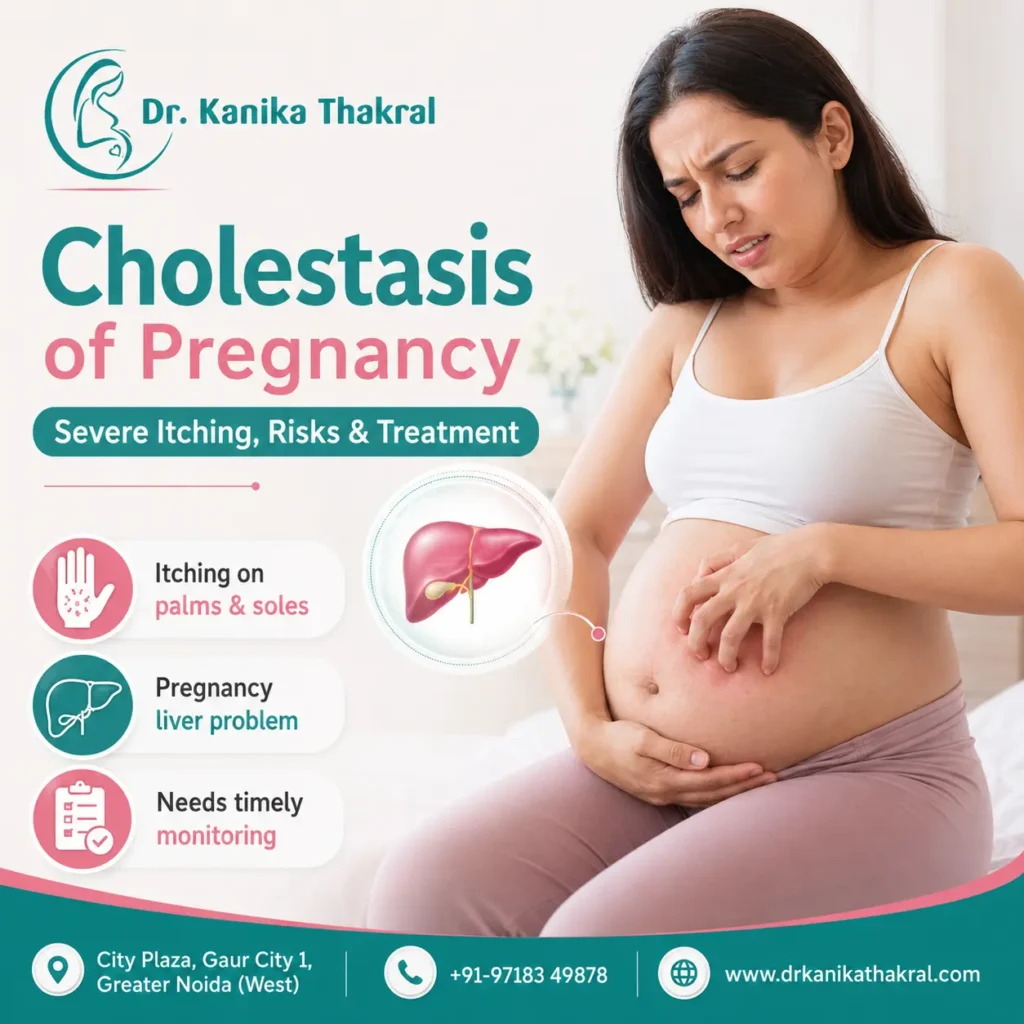
Cholestasis of Pregnancy: Severe Itching, Risks and Treatment in Gaur City
Cholestasis of Pregnancy is a liver-related condition that can happen during pregnancy. It often causes severe itching, especially on the palms and soles. The itching may become worse at night.
Many pregnant women feel mild itching due to skin stretching. However, intense itching without a rash should not be ignored. It may be a sign of a pregnancy liver problem.
This condition needs timely diagnosis and close monitoring. With the right care, your doctor can reduce risks and plan safer pregnancy management.
Dr. Kanika Thakral provides careful support for Pregnancy Care in Gaur City, pregnancy itching, liver-related pregnancy concerns, and high-risk pregnancy monitoring.
What Is Cholestasis of Pregnancy?
Cholestasis of Pregnancy is also called intrahepatic cholestasis of pregnancy. It affects the normal flow of bile from the liver.
Bile helps in digestion. During this condition, bile acids may build up in the mother’s blood. This can cause intense itching.
The condition usually appears in the second or third trimester. However, it can happen earlier in some cases.
Itching is often the first symptom. Therefore, any severe itching in pregnancy should be discussed with a doctor.
Why Does This Condition Happen?
The exact cause is not always clear. However, pregnancy hormones may affect bile flow in some women.
Genetic factors may also play a role. Some women may have a family history of this condition. Also, it may happen again in future pregnancies.
Other possible risk factors include:
- Previous cholestasis in pregnancy
- Family history
- Twin pregnancy
- Liver disease history
- IVF pregnancy in some cases
- Certain genetic tendencies
Still, it can happen without any clear risk factor. So, symptoms are very important.
Main Symptom: Severe Itching During Pregnancy
Severe itching during pregnancy is the most common symptom. It may happen without any visible rash.
The itching often affects:
- Palms
- Soles
- Arms
- Legs
- Abdomen
- Back
In many women, itching becomes worse at night. As a result, sleep becomes difficult.
Some women may scratch so much that the skin becomes red or irritated. However, the original problem usually starts without a rash.
ACOG notes that itching in this condition commonly affects the palms and soles. It can also spread to the body and is often worse at night.
Other Symptoms to Watch For
Itching is the main sign. However, some women may notice other symptoms too.
These may include:
- Dark urine
- Pale stools
- Tiredness
- Loss of appetite
- Nausea
- Yellowing of skin or eyes in rare cases
- Poor sleep due to itching
If you notice severe itching with any of these symptoms, consult a Gynecologist in Gaur City as soon as possible.
Is Itching Always Cholestasis?
No. Not all itching in pregnancy means cholestasis.
Mild itching can happen because the skin stretches as the belly grows. Dry skin can also cause itching. Some women may develop pregnancy-related skin rashes.
However, severe itching without rash needs medical attention. This is especially important if itching is on the palms and soles or worse at night.
Your doctor may suggest blood tests to confirm the cause.
Cholestasis as a Pregnancy Liver Problem
This condition is a Pregnancy liver problem. It happens when bile acids rise in the blood due to reduced bile flow.
The mother may mainly feel itching. However, the main concern is the baby’s safety.
High bile acid levels can increase pregnancy risks. Therefore, doctors monitor both mother and baby carefully.
This is why cholestasis is often managed under High-Risk Pregnancy specialist.
Risks for the Mother
For the mother, the biggest problem is usually severe itching. It can disturb sleep and cause stress.
Some women may also have abnormal liver function test results. Rarely, vitamin K deficiency or bleeding concerns may occur.
The condition usually improves after delivery. Still, follow-up after birth is important to ensure liver tests return to normal.
Do not take any medicine for itching without medical advice.
Risks for the Baby
The baby may need closer monitoring when the mother has cholestasis.
Possible risks include:
- Preterm birth
- Meconium-stained fluid
- Fetal distress
- Need for early delivery
- Stillbirth risk in severe cases
SMFM notes that intrahepatic cholestasis of pregnancy can carry fetal risks, including preterm delivery, meconium-stained amniotic fluid, and stillbirth.
Because of these risks, timely diagnosis and follow-up are very important.
When Should You Consult a Doctor?
You should consult a doctor if itching is severe, repeated, or disturbing your sleep.
Also seek care if you have:
- Itching on palms and soles
- Itching worse at night
- No visible rash but intense itching
- Dark urine
- Pale stools
- Reduced baby movements
- Yellow eyes or skin
- Severe tiredness
- Upper abdominal discomfort
Do not wait for routine visit if symptoms are strong. Early evaluation is safer.
How Is Cholestasis Diagnosed?
Diagnosis usually starts with symptoms and blood tests.
Your doctor may suggest:
- Liver function tests
- Serum bile acid test
- Complete blood count
- Coagulation test in selected cases
- Viral hepatitis tests if needed
- Ultrasound if another liver concern is suspected
The serum bile acid test is very important. Raised bile acids help confirm the diagnosis.
Sometimes, itching may start before blood tests become abnormal. Therefore, your doctor may repeat tests if symptoms continue.
Role of Pregnancy Ultrasound
Pregnancy Ultrasound does not diagnose cholestasis directly. However, it helps monitor the baby.
Ultrasound can check:
- Baby growth
- Amniotic fluid level
- Baby position
- Placenta condition
- General fetal wellbeing
Your doctor may suggest ultrasound monitoring based on your pregnancy week and risk level.
Role of Doppler Scan in Pregnancy
A Doppler Scan in Pregnancy may be advised in some high-risk cases. It checks blood flow between the mother, placenta, and baby.
Doppler may help assess fetal wellbeing, especially if there are other concerns such as growth restriction, reduced movements, or placental problems.
Not every case needs Doppler. Your doctor will decide based on your condition.
Treatment for Cholestasis of Pregnancy
Treatment depends on symptoms, bile acid level, pregnancy week, and baby monitoring.
Treatment may include:
- Medicines to reduce itching
- Regular bile acid testing
- Liver function monitoring
- Fetal monitoring
- Ultrasound checks
- Doppler scan if needed
- Delivery planning
- Post-delivery follow-up
RCOG notes that treatments for itching may include skin creams, antihistamines to help with sleep, cool baths, loose cotton clothing, and ursodeoxycholic acid in selected cases.
Always take medicines only under medical supervision.
Medicine for Itching
Your doctor may suggest medicine depending on your symptoms and test results.
Ursodeoxycholic acid may be used in selected cases. It may help reduce itching in some women.
Other supportive options may include moisturizers, soothing creams, and antihistamines if sleep is badly affected.
However, home remedies are not enough if bile acids are high. Proper medical monitoring is needed.
Home Care Tips for Itching
Home care cannot cure this condition. However, it may make itching more manageable.
You can try:
- Wear loose cotton clothes.
- Keep the room cool.
- Take cool baths.
- Use mild moisturizers.
- Avoid hot showers.
- Keep nails short.
- Avoid harsh soaps.
- Sleep in a cool environment.
- Do not scratch harshly.
These steps may reduce discomfort. However, they should not replace medical care.
Delivery Planning
Delivery planning is very important in cholestasis.
Your doctor will consider:
- Bile acid level
- Liver test results
- Pregnancy week
- Baby growth
- Baby movements
- Ultrasound findings
- Previous pregnancy history
- Other pregnancy risks
In some cases, early delivery may be advised to reduce baby-related risks. The timing depends on the severity of the condition.
A High risk pregnancy specialist can guide the safest plan for mother and baby.
Can Normal Delivery Happen?
Normal delivery may be possible in some cases. However, the final decision depends on the mother’s condition, baby’s wellbeing, bile acid levels, and labour situation.
Some women may need induction of labour. Others may need C-section if there are additional concerns.
The goal is always safe delivery planning.
Do not compare your delivery plan with another pregnancy. Each case is different.
After Delivery: What Happens Next?
In many women, itching improves after delivery. Liver function and bile acids usually return to normal.
However, follow-up tests may be needed after birth. Your doctor may check whether liver results have normalized.
Also, inform your doctor in future pregnancies if you had cholestasis before. It can happen again.
Post-delivery follow-up is important for long-term health.
Can It Happen Again?
Yes, cholestasis can happen again in future pregnancies.
If you had this condition once, tell your doctor early in your next pregnancy. You may need closer monitoring.
Early reporting helps your doctor plan blood tests and check symptoms before they become severe.
Why Choose Dr. Kanika Thakral?
Severe itching in pregnancy should not be ignored. It may look like a small symptom, but it can be linked with liver changes and baby-related risks.
Dr. Kanika Thakral provides care for Cholestasis of Pregnancy, Severe itching during pregnancy, pregnancy liver concerns, ultrasound monitoring, Doppler review, and delivery planning.
If you are looking for Pregnancy Care in Gaur City, High-Risk Pregnancy Care, or a Gynecologist in Gaur City, you can consult Dr. Kanika Thakral for proper evaluation and guidance.
Final Thoughts
Cholestasis of Pregnancy is a pregnancy-related liver condition. It often causes severe itching without rash, especially on palms and soles. It may become worse at night.
Although the mother may mainly feel itching, the condition can increase risks for the baby. Therefore, blood tests, monitoring, ultrasound, and delivery planning are important.
If you have Severe itching during pregnancy, do not ignore it. Consult Dr. Kanika Thakral for diagnosis, treatment guidance, and safe pregnancy care in Gaur City.
FAQs
1. What is Cholestasis of Pregnancy?
Cholestasis of Pregnancy is a liver-related condition during pregnancy. It causes bile acids to build up in the blood and often leads to severe itching.
2. What is the main symptom?
The main symptom is severe itching without rash. It commonly affects the palms and soles and may worsen at night.
3. Is severe itching during pregnancy serious?
Mild itching can be normal. However, Severe itching during pregnancy should be checked because it may be linked with cholestasis.
4. How is cholestasis diagnosed?
It is diagnosed with symptoms and blood tests, especially serum bile acid levels and liver function tests.
5. Can cholestasis affect the baby?
Yes. It may increase risks such as preterm birth, fetal distress, meconium-stained fluid, and stillbirth in severe cases.
