
PMDD vs PMS: Symptoms, Difference and Treatment in Gaur City
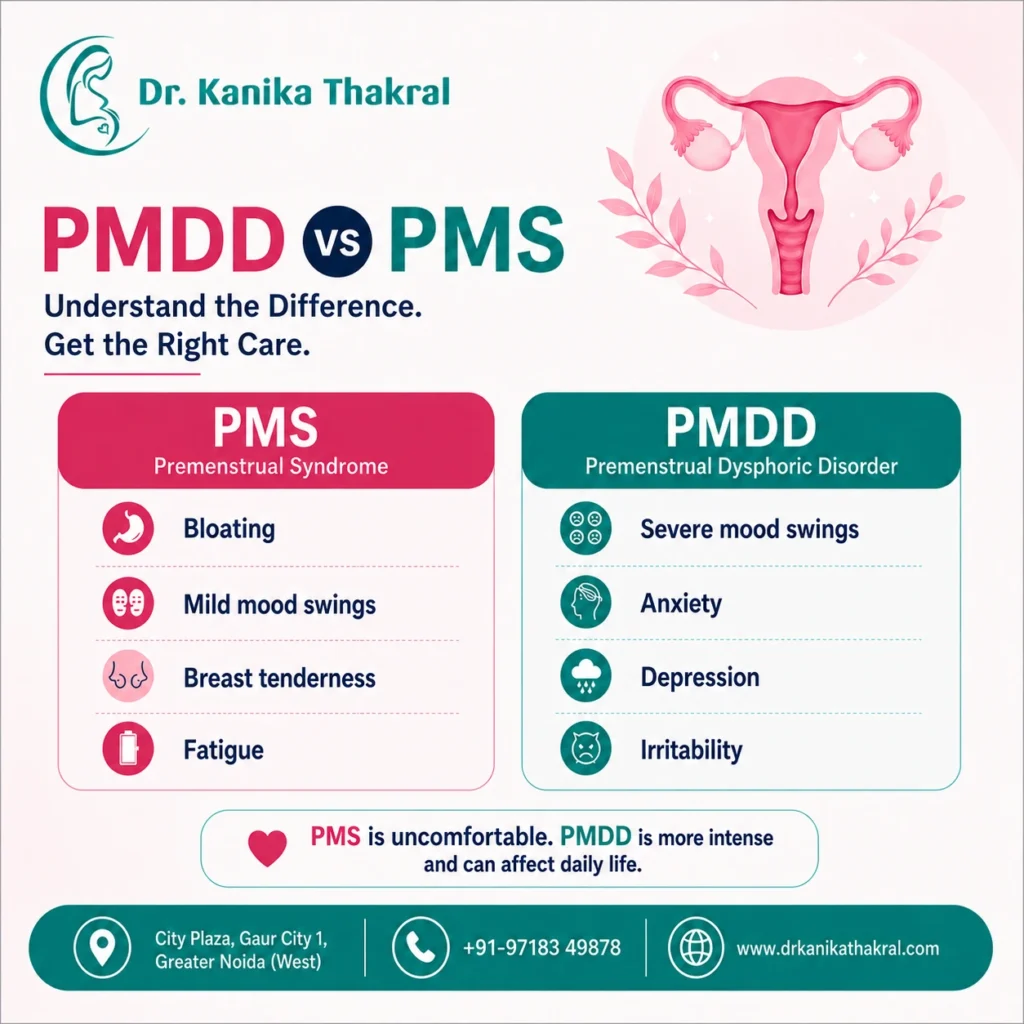
PMDD vs PMS is a common topic that many women experience before their periods. PMS usually causes mild physical and emotional changes, while PMDD leads to more severe mood and behavior symptoms that can affect daily life.
Because both conditions happen before menstruation, many women confuse them. However, understanding the difference between PMDD vs PMS is important for early diagnosis and proper treatment. Dr. Kanika Thakral provides expert care for PMS symptoms, PMDD treatment in Gaur City, hormonal imbalance, and menstrual health concerns.
What is PMS?
PMS means Premenstrual Syndrome. It is a common condition that many women experience before periods. Usually, symptoms start a few days before menstruation and improve after the cycle begins.
For example, a woman may feel bloating, tiredness, or mild mood changes. However, she can still continue her daily routine.
Common PMS symptoms include:
- Bloating in the stomach
- Mild mood swings
- Breast tenderness
- Headache
- Fatigue
- Food cravings
- Irritation
In most cases, PMS is manageable with lifestyle changes and simple care.
What is PMDD?
PMDD means Premenstrual Dysphoric Disorder. It is a more severe form of PMS. Unlike PMS, it strongly affects emotional and mental health.
Because of this, many women find it difficult to manage work, relationships, and daily activities.
PMDD symptoms include:
- Severe mood swings before periods
- Anxiety or panic feeling
- Depression or sadness
- Irritability and anger
- Loss of interest in daily life
- Feeling overwhelmed
- Trouble focusing
Therefore, PMDD should not be ignored and needs proper medical support.
PMDD vs PMS: Key Difference
Although both conditions occur before periods, there is a clear difference between them.
PMS is usually mild and temporary. On the other hand, PMDD is severe and affects daily life.
Simple difference:
- PMS = mild discomfort
- PMDD = strong emotional and physical impact
In addition, PMS improves quickly after periods start. However, PMDD symptoms may feel intense and disruptive every month.
Causes of PMS and PMDD
Both PMS and PMDD are linked with hormonal changes. Before periods, estrogen and progesterone levels change in the body.
Because of this, brain chemicals like serotonin also get affected. As a result, mood and emotions become unstable.
Other contributing factors include:
- Hormonal imbalance
- Stress
- Poor sleep
- Nutritional deficiency
- Genetic factors
Moreover, women with irregular cycles may experience stronger symptoms.
Mood Swings Before Periods
One of the most common concerns is mood changes. Many women experience mood swings before periods.
For instance, they may feel fine one moment and irritated the next. In PMDD, these mood changes are more intense.
Therefore, if emotional symptoms repeat every month, it should be discussed with a doctor.
Hormonal Imbalance and Its Role
Hormonal imbalance plays a major role in PMS and PMDD. When hormones are not balanced properly, the body reacts in different ways.
For example:
- Mood changes become frequent
- Energy levels drop
- Sleep gets disturbed
- Period cycle becomes irregular
In addition, hormonal imbalance may also cause acne, weight changes, and fatigue.
PMS and PMDD Diagnosis
Doctors usually diagnose PMS or PMDD based on symptoms and timing. However, pattern tracking is very important.
For example, the doctor may ask:
- When symptoms start
- How long they last
- How severe they are
- How they affect daily life
Therefore, maintaining a period diary helps in accurate diagnosis.
Treatment for PMS
PMS usually improves with simple lifestyle changes.
PMS treatment includes:
- Regular exercise
- Healthy diet
- Proper sleep
- Stress management
- Hydration
- Vitamin support (if needed)
In addition, reducing caffeine and sugar may also help.
Treatment for PMDD
PMDD needs more focused treatment because symptoms are severe.
PMDD treatment in Gaur City includes:
- Hormonal therapy
- Medicines for mood regulation
- Counseling support
- Lifestyle improvement
- Stress management techniques
Moreover, treatment is customized based on each patient’s condition.
Severe PMS Treatment
Sometimes PMS becomes more intense but does not fully become PMDD.
In such cases, Severe PMS treatment is helpful. It may include:
- Diet correction
- Hormone balance support
- Pain relief medicines
- Lifestyle changes
Therefore, early care can prevent symptoms from worsening.
Irregular Periods and PMS Connection
Women with irregular cycles may experience stronger PMS symptoms.
Because the cycle is not stable, hormonal fluctuations become more unpredictable. As a result, mood and physical symptoms increase.
Therefore, Irregular periods treatment can also improve PMS and PMDD symptoms.
Menstrual Health Awareness
Menstrual Health Awareness is very important. Many women ignore symptoms thinking they are normal.
However, repeated mood changes, pain, or emotional distress should not be ignored. In addition, early awareness helps in better treatment and health outcomes.
When to See a Gynecologist?
You should consult a doctor if:
- Mood swings are severe
- Symptoms affect daily life
- Anxiety or depression increases
- Period symptoms repeat every month
A Gynecologist in Gaur City can help diagnose and manage the condition properly.
Why Choose Dr. Kanika Thakral?
Dr. Kanika Thakral provides care for:
- PMDD vs PMS
- Hormonal imbalance treatment
- Irregular periods treatment
- Women’s health concerns
In addition, the focus is on clear diagnosis and simple treatment planning.
Final Thoughts
Understanding PMDD vs PMS is important for every woman. PMS is mild, but PMDD is more severe and affects emotional health.
Therefore, if symptoms are affecting your life every month, do not ignore them. Proper diagnosis and treatment can improve quality of life.
For PMDD treatment in Gaur City, hormonal imbalance, and menstrual health issues, consult Dr. Kanika Thakral.
FAQs
1. What is PMDD vs PMS?
PMS is mild symptoms before periods, while PMDD is a severe emotional disorder before periods.
2. What are PMS symptoms?
Bloating, mild mood swings, fatigue, and breast tenderness.
3. What are PMDD symptoms?
Severe mood swings, anxiety, depression, and irritability.
4. Can hormonal imbalance cause PMDD?
Yes, hormonal imbalance is a major cause.
5. Is PMDD treatable?
Yes, with proper medical treatment and lifestyle changes.
