
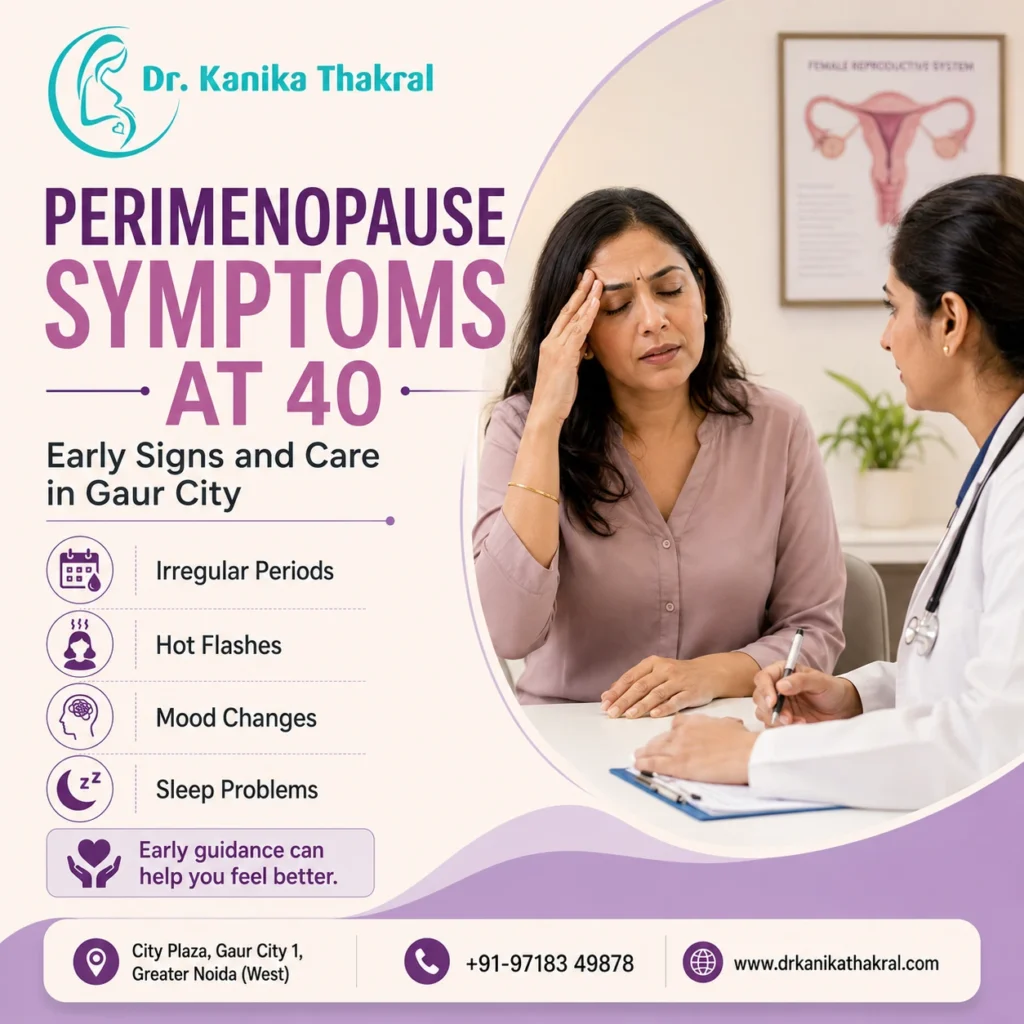
Perimenopause Symptoms at 40: Early Signs and Care in Gaur City
Perimenopause Symptoms can start around the age of 40 in some women. This phase happens before menopause. During this time, hormone levels slowly change, and periods may become irregular.
Many women feel confused because the symptoms may look like stress, thyroid issues, weakness, lifestyle changes, or normal aging. However, if periods, sleep, mood, body heat, or energy levels start changing together, perimenopause may be one possible reason.
Early care can help you manage symptoms better. Dr. Kanika Thakral provides guidance for Menopause care, Hormonal imbalance treatment, Irregular periods treatment, hot flashes, night sweats, and complete women’s health support in Gaur City.
What Is Perimenopause?
Perimenopause means the transition phase before menopause. It is the time when the ovaries slowly start making less estrogen. Because hormones fluctuate, symptoms can come and go.
Menopause is confirmed when periods stop for 12 months. However, perimenopause begins before that. It can last for months or years.
Some women notice only mild changes. Others may face heavy periods, skipped periods, hot flashes, sleep problems, anxiety, mood swings, or weight changes.
Can Perimenopause Start at 40?
Yes, perimenopause can start in the early 40s. For some women, symptoms may begin even before they expect them. That is why many women ignore the early signs.
At 40, menstrual changes should not always be dismissed as normal. Sometimes, they may be due to perimenopause. However, they may also happen because of thyroid issues, PCOS, fibroids, stress, anemia, weight changes, or other hormone-related concerns.
Therefore, a proper Women’s Health Checkup helps identify the real cause.
Why Hormones Change During Perimenopause
During perimenopause, estrogen and progesterone levels do not remain stable. They may rise and fall unevenly. This hormonal fluctuation can affect periods, body temperature, sleep, mood, skin, weight, and vaginal comfort.
Because of this, symptoms may not happen every day. A woman may feel fine for a few weeks and then suddenly notice hot flashes, mood changes, or irregular bleeding.
This unpredictable pattern is common during the transition phase. Still, proper evaluation is important if symptoms are troubling or bleeding pattern changes suddenly.
Early Signs of Perimenopause at 40
Perimenopause signs can be different for every woman. Some symptoms are physical, while others affect mood and sleep.
Common early signs may include:
- Irregular periods
- Shorter or longer menstrual cycles
- Heavy or lighter bleeding
- Missed periods
- Hot flashes
- Night sweats
- Mood swings
- Anxiety or irritability
- Sleep disturbance
- Low energy
- Weight changes
- Breast tenderness
- Vaginal dryness
- Reduced interest in intimacy
- Brain fog or poor concentration
If these signs are affecting daily life, it is better to seek guidance instead of waiting.
Irregular Periods During Perimenopause
Irregular periods are one of the most common signs of perimenopause. Periods may come early, late, or skip a month. Flow may also become heavier or lighter than usual.
However, irregular bleeding should not always be ignored. Heavy bleeding, bleeding after intercourse, bleeding between periods, or bleeding after long gaps should be evaluated.
Dr. Kanika Thakral provides guidance for Irregular periods treatment and helps find whether the cause is perimenopause, fibroids, PCOS, thyroid imbalance, pregnancy-related concern, or another condition.
Heavy Periods at 40
Some women experience heavy periods during perimenopause. This may happen because ovulation becomes irregular. When ovulation is not regular, the uterine lining may build up more than usual and cause heavy bleeding.
However, heavy bleeding can also happen due to fibroids, polyps, adenomyosis, hormonal imbalance, thyroid problems, or other causes. Therefore, do not assume it is only perimenopause.
Seek evaluation if you need to change pads very often, pass large clots, feel weak, or notice bleeding for many days.
Missed Periods at 40
Missed periods may happen during perimenopause. Still, pregnancy should always be ruled out if there is any chance of conception.
Missed periods may also happen due to stress, sudden weight change, PCOS, thyroid imbalance, high prolactin, intense exercise, or certain medicines.
This is why self-diagnosis is not enough. A Gynecologist in Gaur City can guide the right tests based on symptoms and history.
Hot Flashes at 40
Hot flashes are sudden waves of heat. They may affect the face, neck, chest, or whole body. Some women may also feel sweating, fast heartbeat, anxiety, or flushing during a hot flash.
Hot flashes can happen during the day or night. They may last for a short time, but they can still feel uncomfortable.
For Hot flashes treatment, the first step is to understand severity, triggers, sleep pattern, menstrual history, and overall health. Treatment may include lifestyle changes, medical options, or hormone-related care when suitable.
Night Sweats in Women
Night Sweats in Women can be one of the most disturbing perimenopause symptoms. A woman may wake up sweating, feel hot, need to change clothes, or struggle to sleep again.
Poor sleep can then affect mood, energy, work focus, and family life. Over time, it may also increase tiredness and irritability.
However, night sweats can also happen due to infection, thyroid problems, anxiety, medicines, diabetes, or other health concerns. So, repeated night sweats need proper evaluation.
Sleep Problems During Perimenopause
Sleep disturbance is common during perimenopause. It may happen due to night sweats, anxiety, body heat, or hormone changes. Some women find it hard to fall asleep. Others wake up many times at night.
Poor sleep can make other symptoms worse. It can increase mood swings, sugar cravings, fatigue, headache, and brain fog.
Simple changes may help. Keep the room cool, avoid heavy dinner late at night, reduce caffeine, follow a fixed sleep routine, and manage stress. If sleep remains poor, medical guidance may be needed.
Mood Swings and Anxiety
Hormonal changes can affect mood. Many women feel emotional, anxious, irritated, or low without a clear reason. Some also feel less confident or easily overwhelmed.
This does not mean the problem is “only in the mind.” Hormonal changes, poor sleep, workload, family responsibilities, and nutritional deficiencies can all contribute.
If mood symptoms are affecting daily life, speak to Dr. Kanika Thakral. Support, lifestyle correction, blood tests, and treatment planning can help.
Brain Fog and Low Energy
Brain fog means difficulty focusing, forgetfulness, or feeling mentally slow. Many women also feel tired even after rest.
This may happen due to poor sleep, hormone fluctuation, stress, vitamin deficiency, thyroid imbalance, anemia, or lifestyle overload.
A complete evaluation can help find the cause. Sometimes, small corrections in sleep, nutrition, exercise, and stress management can improve energy.
Weight Gain Around 40
Many women notice weight gain around the abdomen during perimenopause. Hormonal changes may play a role, but lifestyle, sleep, stress, insulin resistance, and muscle loss also matter.
Crash dieting is not the right solution. Instead, focus on balanced meals, strength training, walking, protein intake, and sleep improvement.
If weight gain is sudden or difficult to manage, checking thyroid, sugar levels, PCOS history, and hormone-related factors may help.
Vaginal Dryness and Intimate Discomfort
Low estrogen levels can affect vaginal and vulvar tissues. This may cause dryness, burning, itching, irritation, or pain during intercourse.
Many women feel shy discussing this symptom. However, it is common and treatable.
Do not use random creams or home remedies. The right treatment depends on symptoms, examination, infection check, and hormone status.
Hormonal Imbalance at 40
Hormonal changes are common during perimenopause. However, not every symptom at 40 is due to perimenopause. Thyroid imbalance, PCOS, anemia, diabetes, stress, fibroids, and other concerns can also cause similar symptoms.
That is why Hormonal imbalance treatment should be based on proper evaluation. Treatment may include lifestyle changes, medicines, hormone support in selected cases, or treatment of an underlying condition.
A careful approach gives better results than guessing.
Perimenopause and PCOS
Women with PCOS may already have irregular periods. So, perimenopause symptoms can be harder to identify. At 40, cycle changes may be due to PCOS, perimenopause, weight changes, thyroid issues, or a combination of factors.
If you have PCOS and your bleeding pattern changes suddenly, evaluation is important.
Dr. Kanika Thakral can guide whether symptoms are due to PCOS, perimenopause, or another women’s health concern.
Perimenopause and Fibroids
Fibroids can cause heavy bleeding, pelvic pressure, frequent urination, or prolonged periods. These symptoms may overlap with perimenopause-related bleeding changes.
Therefore, heavy bleeding at 40 should not be blamed only on menopause transition. Ultrasound or other tests may be needed to check the cause.
Early evaluation can help avoid anemia and long-term discomfort.
Women’s Health Checkup at 40
A Women’s Health Checkup becomes very important around 40. This is the age when hormone changes, menstrual changes, cervical screening needs, breast health, bone health, thyroid issues, sugar levels, and lifestyle concerns should be reviewed.
A checkup may include discussion about:
- Period pattern
- Hot flashes
- Night sweats
- Sleep problems
- Mood changes
- Vaginal dryness
- Weight gain
- Thyroid symptoms
- PCOS history
- Fibroids
- Cervical screening
- Breast health
- Pregnancy or contraception needs
This helps create a complete care plan instead of treating one symptom at a time.
Tests That May Be Suggested
Tests depend on symptoms and medical history. Not every woman needs hormone tests. In many cases, diagnosis is based on age, period changes, and symptoms.
However, Dr. Kanika Thakral may advise tests to rule out other causes.
Possible tests may include:
- Pregnancy test if needed
- Complete blood count
- Thyroid profile
- Blood sugar test
- Vitamin levels
- Hormone tests in selected cases
- Pelvic ultrasound
- Pap smear when due
- Other tests based on symptoms
The goal is to understand the cause and plan safe care.
Menopause Care in Gaur City
Menopause care is not only about stopping periods. It includes symptom relief, emotional support, sleep care, bone health, heart health, vaginal health, and long-term wellness.
Some women need only lifestyle guidance. Others may need medicines or hormone-related treatment after proper evaluation.
Care should always be personalized. What works for one woman may not be right for another.
Lifestyle Tips for Perimenopause Symptoms
Lifestyle changes can reduce many symptoms. They also support long-term health after 40.
Helpful tips include:
- Keep a regular sleep routine.
- Walk or exercise most days.
- Add strength training.
- Eat enough protein.
- Reduce excess sugar.
- Limit caffeine if hot flashes increase.
- Avoid spicy food if it triggers sweating.
- Keep the room cool at night.
- Practice stress management.
- Maintain a healthy weight.
- Avoid smoking.
- Track periods and symptoms.
These steps may not remove every symptom, but they can improve comfort and energy.
When Is Medical Treatment Needed?
Medical treatment may be needed if symptoms are severe, bleeding is heavy, sleep is badly affected, hot flashes are frequent, or mood changes are intense.
Treatment depends on health history, age, risk factors, and symptoms. It may include non-hormonal options, hormone-related care in suitable cases, or treatment for specific problems like thyroid imbalance, anemia, PCOS, or fibroids.
Never start hormone medicines without medical advice. A proper checkup is important before choosing treatment.
Warning Signs You Should Not Ignore
Some symptoms need quick evaluation. Do not delay if you notice:
- Very heavy bleeding
- Bleeding after intercourse
- Bleeding between periods
- Bleeding after long gaps
- Severe pelvic pain
- Sudden weight loss
- Severe weakness
- Fainting
- Breast lump
- Persistent vaginal discharge
- Severe mood symptoms
- Night sweats with fever
- Symptoms affecting daily life
These signs may not always be serious, but they should be checked.
Why Choose Dr. Kanika Thakral?
Dr. Kanika Thakral provides caring guidance for Perimenopause Symptoms, Menopause care, Hormonal imbalance treatment, Irregular periods treatment, Hot flashes treatment, Night Sweats in Women, and Women’s Health Checkup.
The care approach is simple and patient-focused. First, symptoms and period history are reviewed. Next, the right tests are advised if needed. Then, a safe care plan is made according to age, reports, and health goals.
If you are looking for a Gynecologist in Gaur City, Dr. Kanika Thakral can guide you with privacy, comfort, and clear communication.
Final Thoughts
Perimenopause Symptoms can start around 40 in some women. Early signs may include irregular periods, hot flashes, night sweats, mood changes, sleep problems, weight gain, and vaginal dryness.
However, many other health issues can look similar. So, proper evaluation is important before assuming it is only perimenopause.
For Menopause care, Hormonal imbalance treatment, Irregular periods treatment, Hot flashes treatment, Night Sweats in Women, and Women’s Health Checkup in Gaur City, consult Dr. Kanika Thakral. Timely care can help you feel more balanced, informed, and confident.
FAQs
1. What are common perimenopause symptoms at 40?
Common symptoms include irregular periods, hot flashes, night sweats, mood swings, poor sleep, vaginal dryness, weight changes, and low energy.
2. Can perimenopause start at 40?
Yes, perimenopause can start in the early 40s. However, similar symptoms may also happen due to thyroid, PCOS, stress, or other health issues.
3. Are irregular periods normal during perimenopause?
Irregular periods can happen during perimenopause. Still, heavy bleeding, bleeding after intercourse, or bleeding between periods should be evaluated.
4. What helps hot flashes?
Lifestyle changes, trigger control, cooling habits, stress management, and medical treatment may help. The right plan depends on symptom severity and health history.
5. Why do night sweats happen in women?
Night sweats may happen due to hormone changes during perimenopause. However, they can also occur due to thyroid issues, infection, anxiety, or medicines.
6. Is hormone treatment needed for every woman?
No. Not every woman needs hormone treatment. The plan depends on symptoms, age, reports, medical history, and personal health goals.
