
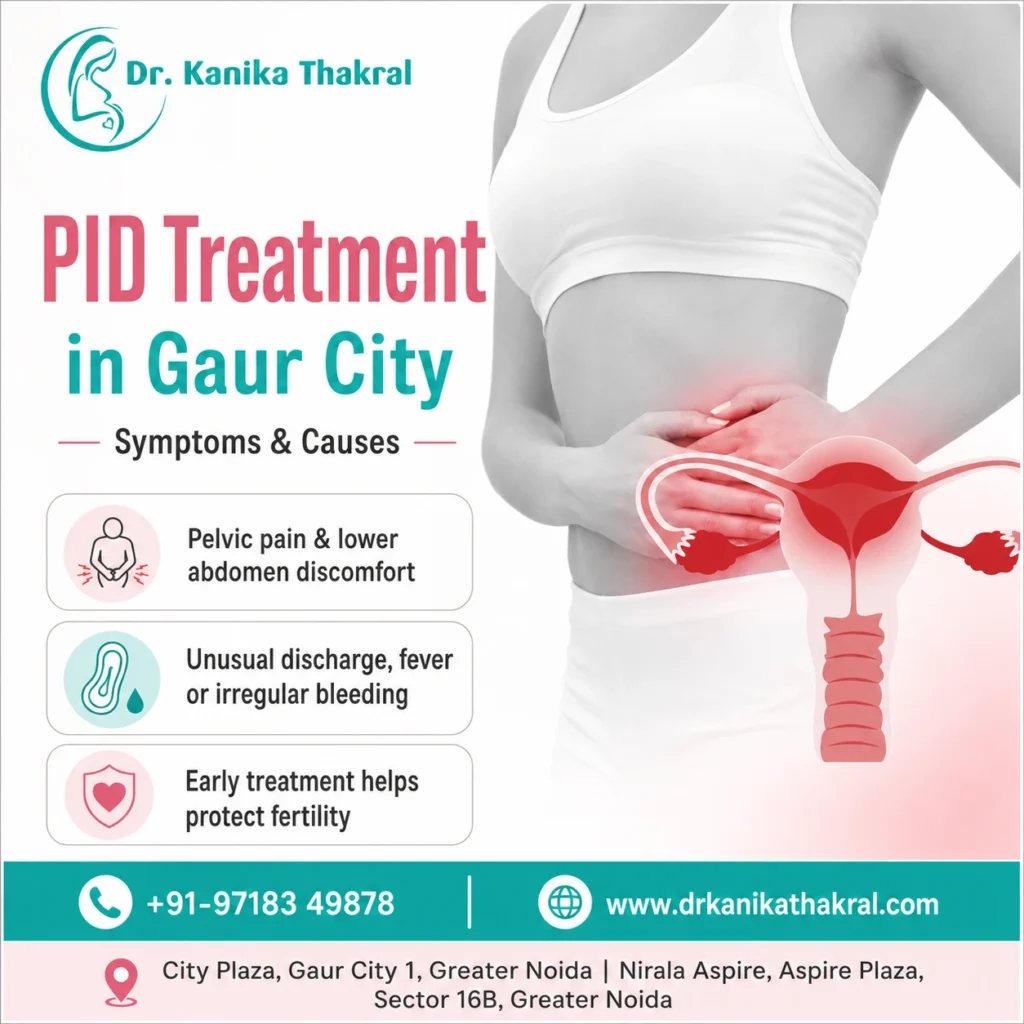
Pelvic Inflammatory Disease Treatment in Gaur City – Symptoms & Causes
PID Treatment in Gaur City is important for women who have pelvic pain, unusual discharge, fever, painful periods, or pain during intercourse. Pelvic inflammatory disease, also called PID, is an infection that affects the female reproductive organs. It may involve the uterus, fallopian tubes, ovaries, or nearby pelvic area.
PID can start as a mild infection. However, it should not be ignored. If treatment is delayed, it may lead to long-term pain, fertility problems, or tube-related issues. That is why early care is very important.
Many women confuse PID symptoms with normal period pain or weakness. But repeated pelvic pain, foul-smelling discharge, or fever needs attention. A timely visit to a Gynecologist in Gaur City can help find the cause and start the right treatment.
What Is Pelvic Inflammatory Disease?
Pelvic inflammatory disease is an infection in the upper female reproductive tract. It usually starts when germs move upward from the vagina or cervix. Then the infection may spread to the uterus, tubes, and ovaries.
PID can affect women of reproductive age. Sometimes, symptoms are strong and clear. In other cases, symptoms may be mild. Because of this, some women do not know they have PID until they face pelvic pain or difficulty in pregnancy.
Early PID Treatment in Gaur City can help reduce the risk of complications. It can also support better reproductive health.
Common Symptoms of PID
PID symptoms may differ from woman to woman. Some women feel severe pain. Others may feel only mild discomfort.
Common symptoms include:
- Lower abdominal pain
- Pelvic pain
- Pain during intercourse
- Pain or burning during urination
- Unusual vaginal discharge
- Foul-smelling discharge
- Fever or chills
- Irregular bleeding
- Bleeding after intercourse
- Painful periods
- Lower back pain
- Weakness or tiredness
If pelvic pain is repeated or getting worse, you may need a proper Pelvic Pain Evaluation. It helps check whether the pain is due to infection, cyst, fibroid, PCOS, or another reason.
Why PID Should Not Be Ignored
PID can become serious if it is not treated on time. The infection may damage the fallopian tubes. As a result, pregnancy may become difficult later.
Some women may also develop long-term pelvic pain. In a few cases, PID can increase the risk of ectopic pregnancy. This happens when pregnancy grows outside the uterus, often in the fallopian tube.
So, early diagnosis is not only about pain relief. It also helps protect future fertility. Women looking for Infertility Treatment in Gaur City may need PID history evaluation as part of their fertility checkup.
Causes of Pelvic Inflammatory Disease
PID usually happens due to infection. Germs may enter through the cervix and move upward into the reproductive organs.
Common causes and risk factors include:
- Untreated vaginal or cervical infection
- Previous pelvic infection
- Unsafe sexual exposure
- Multiple sexual partners
- Past history of PID
- Recent uterine procedure
- Poor intimate hygiene
- Delayed treatment of discharge or pain
- Infection after childbirth or miscarriage in some cases
Not every pelvic infection becomes PID. Still, symptoms should not be ignored. Timely consultation can help stop the infection from spreading.
PID and Pelvic Pain
Pelvic pain is one of the main signs of PID. It may feel dull, heavy, sharp, or cramp-like. Sometimes, pain becomes worse during periods or intercourse.
However, pelvic pain can happen due to many other reasons too. These include ovarian cysts, fibroids, endometriosis, urinary infection, or bowel-related problems.
That is why Pelvic Pain Evaluation is important. It helps your doctor understand the real cause and choose the right care plan.
PID and Fertility Problems
PID can affect fertility when the infection damages the fallopian tubes. These tubes help the egg and sperm meet. If the tubes become blocked or scarred, natural pregnancy may become difficult.
Repeated PID may increase this risk. Even one untreated infection can sometimes cause tube-related problems.
If you are trying to conceive and pregnancy is delayed, PID history should be discussed during fertility evaluation. Women seeking Infertility Treatment in Gaur City may need tests to check tube health, ovulation, uterus health, and partner factors.
How PID Is Diagnosed
Diagnosis starts with your symptoms and medical history. Your doctor may ask about pain, discharge, fever, periods, sexual history, past infections, and pregnancy plans.
A physical checkup may be needed. Depending on your condition, tests may also be advised.
These may include:
- Pelvic examination
- Vaginal swab test
- Urine test
- Blood tests
- Pregnancy test, if needed
- Pelvic ultrasound
- Further fertility tests, if pregnancy is delayed
A Gynecologist in Gaur City may also check for other causes of pelvic pain. This is important because PID symptoms can overlap with cysts, fibroids, and hormonal issues.
Conditions That May Look Like PID
Not all pelvic pain is due to PID. Many women have similar symptoms because of other gynecological problems.
Common conditions include:
1. Ovarian cyst
An ovarian cyst can cause lower abdominal pain, bloating, painful periods, or sudden pain if it twists or ruptures. Ovarian Cyst Treatment depends on the cyst size, type, symptoms, and age.
2. Fibroids
Fibroids are non-cancerous growths in or around the uterus. They may cause heavy bleeding, pelvic pressure, painful periods, or fertility concerns. Fibroid Treatment depends on symptoms, size, location, and pregnancy plans.
3. PCOS
PCOS can cause irregular periods, delayed ovulation, acne, weight gain, and fertility problems. It usually does not cause infection, but it can exist along with other pelvic concerns.
4. Urinary infection
Burning urine, frequent urination, and lower abdominal pain may suggest urinary infection. However, symptoms may overlap with pelvic infection.
5. Endometriosis
This condition can cause severe period pain, pelvic pain, pain during intercourse, and fertility issues. Proper evaluation is needed to confirm the cause.
Because symptoms can be similar, self-diagnosis is not safe. A proper checkup is always better.
PID Treatment in Gaur City
PID Treatment in Gaur City depends on the severity of infection, symptoms, age, and pregnancy goals. In most cases, medicines are given to control the infection. Your doctor may also advise rest, fluids, and follow-up visits.
It is important to complete the full treatment course. Stopping medicines early can allow the infection to come back or become worse.
During treatment, your doctor may suggest avoiding intercourse until recovery. Partner evaluation or treatment may also be advised in some cases to prevent reinfection.
When Is Urgent Care Needed?
Some symptoms need faster medical attention. Do not wait if you have:
- Severe lower abdominal pain
- High fever
- Vomiting
- Dizziness
- Fainting
- Heavy bleeding
- Severe pain during intercourse
- Positive pregnancy test with pain
- Foul-smelling discharge with fever
These signs may suggest a more serious problem. Early action can help prevent complications.
Can PID Come Back?
Yes, PID can come back if the infection is not fully treated or if reinfection happens. This is why follow-up care matters.
To reduce the risk, complete your treatment. Also, do not ignore discharge, pain, or fever in the future. Safe sexual practices and timely infection treatment can also help.
If PID happens again and again, your doctor may suggest a deeper evaluation.
Prevention Tips for PID
PID cannot always be prevented, but the risk can be reduced.
Helpful steps include:
- Treat vaginal infections early
- Do not ignore foul-smelling discharge
- Practice safe sexual habits
- Maintain intimate hygiene
- Avoid self-medication
- Go for regular gynecological checkups
- Consult early for pelvic pain
- Complete prescribed treatment
If you have irregular periods, PCOS, cysts, or fibroids, regular follow-up is also helpful. These issues may not directly cause PID, but they can affect overall women’s health.
PID and Pregnancy Planning
If you had PID in the past and now want pregnancy, consult early. Your doctor may suggest fertility evaluation based on your history.
The evaluation may include ovulation tracking, ultrasound, hormone tests, semen analysis, and tube testing if needed. This helps in planning pregnancy safely and clearly.
Women looking for Infertility Treatment in Gaur City should mention any past pelvic infection. It gives your doctor important information for treatment planning.
When Should You Consult Dr. Kanika Thakral?
You should consult Dr. Kanika Thakral if you have pelvic pain, unusual discharge, painful intercourse, fever, irregular bleeding, or difficulty in conceiving.
You should also seek care if you have:
- Repeated lower abdominal pain
- Painful periods
- Foul-smelling discharge
- Known PCOS
- Ovarian cyst symptoms
- Heavy bleeding due to fibroids
- Past pelvic infection
- Delayed pregnancy
A timely consultation can help find the cause and start proper treatment.
FAQs
1. What is PID?
PID means pelvic inflammatory disease. It is an infection of the female reproductive organs, including the uterus, fallopian tubes, and ovaries.
2. What are the common symptoms of PID?
Common symptoms include pelvic pain, lower abdominal pain, unusual discharge, fever, pain during intercourse, and irregular bleeding.
3. Can PID affect pregnancy?
Yes, untreated PID can damage fallopian tubes and may make pregnancy difficult. It can also increase the risk of ectopic pregnancy.
4. How is PID diagnosed?
Diagnosis may include medical history, pelvic checkup, swab test, urine test, blood test, ultrasound, and other tests if needed.
5. Is PID treatment possible?
Yes, PID can be treated, especially when diagnosed early. Treatment usually includes medicines and follow-up care.
6. Can PID symptoms look like ovarian cyst or fibroid symptoms?
Yes, pelvic pain can happen due to PID, ovarian cysts, fibroids, PCOS, or other causes. Proper evaluation helps find the exact reason.
