
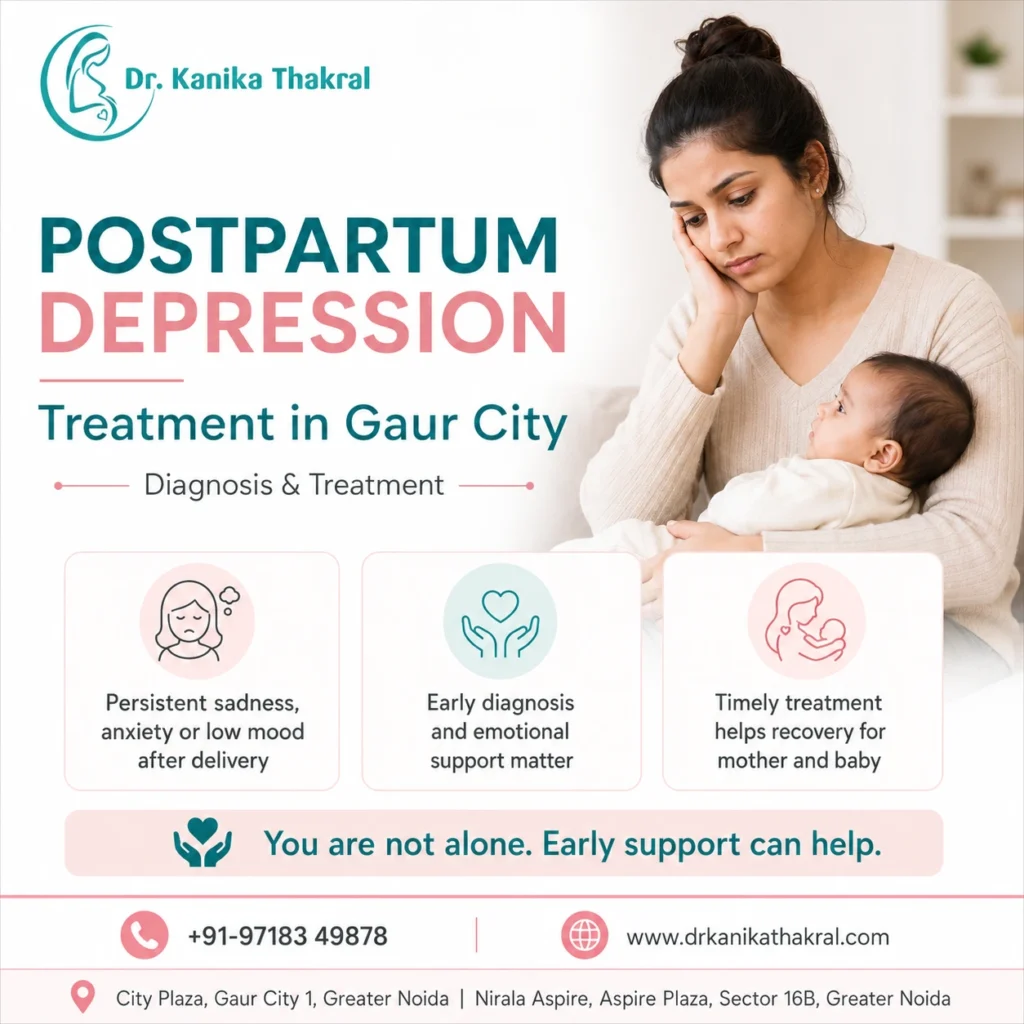
Postpartum Depression Treatment in Gaur City – Diagnosis and Treatment
Postpartum Depression Treatment in Gaur City is important for new mothers who feel very sad, anxious, tired, irritated, or emotionally low after delivery. Some mood changes after childbirth are common. However, when these feelings become strong or continue for many days, proper care is needed.
After delivery, a woman’s body and mind go through many changes. Hormone levels change quickly. Sleep also becomes disturbed because of feeding, baby care, pain, and weakness. As a result, many mothers feel overwhelmed.
Postpartum depression is not a weakness. It is a real and treatable condition. With timely diagnosis, family support, and guidance from a Gynecologist in Gaur City, a mother can recover and feel better.
What Is Postpartum Depression?
Postpartum depression is a mood problem that can happen after childbirth. It may start within a few weeks after delivery. Sometimes, it can appear later during the first year after birth.
Many new mothers go through “baby blues.” This may cause crying, mood swings, worry, and tiredness. Usually, these feelings improve with rest and support. However, postpartum depression lasts longer and feels more intense.
A mother may feel helpless, guilty, empty, or disconnected. She may also feel that she is not able to care for her baby properly. Therefore, early Postpartum Depression Treatment in Gaur City can help her recover in a safer and healthier way.
Common Symptoms of Postpartum Depression
Postpartum depression symptoms are not the same for every woman. Some mothers cry often. Others may feel angry, numb, or very anxious.
Common symptoms include:
- Feeling sad most of the time
- Crying without a clear reason
- Anxiety or panic
- Feeling hopeless or helpless
- Loss of interest in daily activities
- Trouble bonding with the baby
- Extreme tiredness
- Sleep problems
- Loss of appetite or overeating
- Feeling guilty or worthless
- Irritability or anger
- Poor focus
- Lack of motivation
- Fear of being a bad mother
In some cases, a mother may have thoughts of self-harm or harming the baby. If this happens, urgent help is needed. Also, family members should not leave the mother alone.
Why Postpartum Depression Happens
Postpartum depression can happen due to many reasons. Usually, it is linked to body changes, stress, lack of sleep, and emotional pressure.
After childbirth, hormone levels drop quickly. Because of this, mood and energy may change. At the same time, the mother may be dealing with pain, feeding issues, and lack of rest.
Common risk factors include:
- Sudden hormone changes after delivery
- Lack of sleep
- Delivery pain
- Difficult birth experience
- Feeding problems
- Weakness after delivery
- Lack of emotional support
- Past anxiety or depression
- Family stress
- Relationship stress
- Baby health concerns
- Previous pregnancy loss
- Mood changes before periods
Women with past period problems, Irregular Periods Treatment, or hormone-related concerns may need closer emotional care after delivery. Therefore, emotional health should be discussed openly during follow-ups.
Postpartum Depression vs Baby Blues
Baby blues are common after delivery. A mother may feel emotional, tired, or tearful. Usually, these symptoms improve within a short time.
Postpartum depression is stronger and lasts longer. It can affect sleep, appetite, bonding, baby care, and daily life. Because of this, it should not be ignored.
Here is the simple difference:
Baby blues: mild mood changes that usually improve with rest and support.
Postpartum depression: stronger symptoms that last longer and need proper care.
If symptoms continue for more than two weeks, it is better to consult early.
How Postpartum Depression Is Diagnosed
Diagnosis starts with a simple conversation. The doctor may ask about mood, sleep, appetite, energy, baby bonding, fear, guilt, and negative thoughts.
There is no single blood test for postpartum depression. However, tests may be advised if weakness, thyroid problems, anemia, or hormone issues are suspected.
Diagnosis may include:
- Discussion about symptoms
- Emotional health screening
- Review of delivery history
- Review of past mental health concerns
- Sleep and feeding routine assessment
- Thyroid or anemia check if needed
- Physical recovery review
A clear diagnosis helps the mother and family understand the problem better. Moreover, it helps decide the right treatment plan.
Why Early Diagnosis Matters
Early diagnosis is very important. If postpartum depression is ignored, symptoms may become worse. It may also affect feeding, bonding, sleep, and daily care.
A mother may feel guilty because she cannot explain her emotions. In addition, family members may not understand what she is going through. So, early guidance helps both mother and family.
Good Postpartum Care should include physical recovery and emotional health. After delivery, a mother needs rest, food, support, and reassurance.
Postpartum Depression Treatment in Gaur City
Postpartum Depression Treatment in Gaur City depends on the severity of symptoms. Some mothers improve with rest, counselling, and family support. However, others may need medicines or specialist care.
Treatment may include:
1. Emotional support
The first step is support. The mother should feel heard and understood. She should not be blamed for feeling low.
Family members can help by allowing her to rest, sharing baby care, and reducing pressure. Even small support can make recovery easier.
2. Counselling
Counselling helps the mother talk about her feelings. It can reduce fear, guilt, stress, and negative thoughts.
Also, counselling can help her understand that she is not alone. With regular sessions, many mothers feel more stable and confident.
3. Medical treatment
Sometimes, medicines may be needed. The choice of medicine depends on symptoms, breastfeeding, medical history, and doctor’s advice.
Do not start or stop any medicine on your own. Instead, always follow medical guidance.
4. Rest and sleep support
Sleep loss can make depression worse. Therefore, family support is very important. Short sleep breaks can also improve mood and energy.
If possible, family members should help with baby care so the mother can rest.
5. Nutrition and hydration
After delivery, the body needs good food and fluids. Balanced meals can support recovery. Also, iron-rich food may help if weakness is present.
Poor food intake, anemia, and dehydration can increase tiredness. So, nutrition should not be ignored.
6. Follow-up care
Follow-up is important during recovery. Symptoms may change with time. Therefore, treatment may also need small changes.
Regular follow-ups help track mood, sleep, feeding, and physical healing.
Role of Family in Recovery
Family support plays a big role in postpartum recovery. A new mother may not always ask for help. So, family members should observe her mood, sleep, food intake, and daily behavior.
Helpful support includes:
- Letting her rest
- Helping with baby care
- Listening without judgment
- Avoiding criticism
- Supporting feeding challenges
- Encouraging good food and fluids
- Taking symptoms seriously
- Going with her for consultation
Instead of saying “be strong,” say “we are with you.” This small change can make her feel safe and supported.
Postpartum Care After Delivery
Good Postpartum Care helps the mother heal after childbirth. It includes physical checkups, emotional support, feeding guidance, pain care, bleeding review, and recovery monitoring.
After a Safe Delivery, families often focus mainly on the baby. However, the mother also needs equal care. Her body has gone through pregnancy, delivery, and hormone changes.
Postpartum care may include:
- Bleeding and pain review
- Stitches or wound healing check
- Breastfeeding support
- Nutrition guidance
- Sleep and rest advice
- Emotional health screening
- Pelvic recovery guidance
- Period and hormone guidance
Later, if periods become irregular, Irregular Periods Treatment may also be needed.
Link Between Pregnancy Care and Postpartum Health
Good Pregnancy Care can support better postpartum recovery. During pregnancy, regular checkups help monitor mother and baby health. They also prepare the mother for delivery and recovery.
Women taking Pregnancy Care in Gaur City should discuss emotional health during pregnancy. For example, anxiety, fear, poor sleep, or past depression should be shared with the doctor.
Mental health care should not start only after delivery. Instead, it should be part of complete pregnancy and postpartum planning.
Who Is at Higher Risk?
Any new mother can have postpartum depression. Still, some women may have a higher risk.
Risk factors include:
- Past depression or anxiety
- Stress during pregnancy
- Difficult delivery
- Lack of family support
- Baby health concerns
- Sleep loss
- Breastfeeding problems
- Thyroid issues
- Hormone problems
- Relationship stress
- Financial stress
- Past pregnancy loss
Because risk factors are different for every woman, personal care is important. Early discussion can help reduce future problems.
When Should You Seek Help?
You should seek help if sadness, anxiety, or hopelessness lasts more than two weeks. Also, consult if the mother is unable to sleep, eat, care for herself, or bond with the baby.
Do not delay help if there are:
- Thoughts of self-harm
- Thoughts of harming the baby
- Severe panic
- Extreme anger
- Confusion
- Hallucinations
- Feeling detached from reality
- Refusal to eat or sleep
- Severe emotional breakdown
These signs need urgent care. In such cases, family support is very important.
Can Postpartum Depression Be Prevented?
Postpartum depression may not always be fully prevented. However, the risk can be reduced with awareness, support, and early care.
Helpful steps include:
- Discuss emotional health during pregnancy
- Build a support system before delivery
- Take proper rest after childbirth
- Share home and baby duties
- Avoid unrealistic expectations
- Eat well and stay hydrated
- Attend postpartum follow-ups
- Talk openly about mood changes
- Ask for help early
A mother should not feel guilty for needing support. In fact, asking for help is a strong and healthy step.
When to Consult Dr. Kanika Thakral
Consult Dr. Kanika Thakral if you feel emotionally low after delivery. You should also seek guidance if family members notice mood changes, crying, anger, fear, or sleep problems.
You may also need guidance for:
- Postpartum Care
- Pregnancy Care in Gaur City
- Emotional health after delivery
- Safe Delivery planning
- Pregnancy Care follow-up
- Irregular Periods Treatment after delivery
- Period and hormone concerns after childbirth
Timely care supports both physical and emotional recovery.
FAQs
1. What is postpartum depression?
Postpartum depression is a mood problem after delivery. It may cause sadness, anxiety, guilt, sleep problems, and trouble bonding with the baby.
2. Is postpartum depression common?
Yes, mood changes after delivery are common. However, if symptoms are strong or last more than two weeks, treatment is needed.
3. Can postpartum depression be treated?
Yes, it can be treated. Treatment may include support, counselling, lifestyle changes, medicines if needed, and follow-up care.
4. Can postpartum depression affect baby care?
Yes, it can affect feeding, bonding, sleep, and daily care. However, early treatment helps the mother recover and care for the baby better.
5. When should I consult a gynecologist?
Consult if sadness, anxiety, crying, anger, guilt, or poor sleep continues after delivery. Urgent help is needed if self-harm thoughts appear.
