
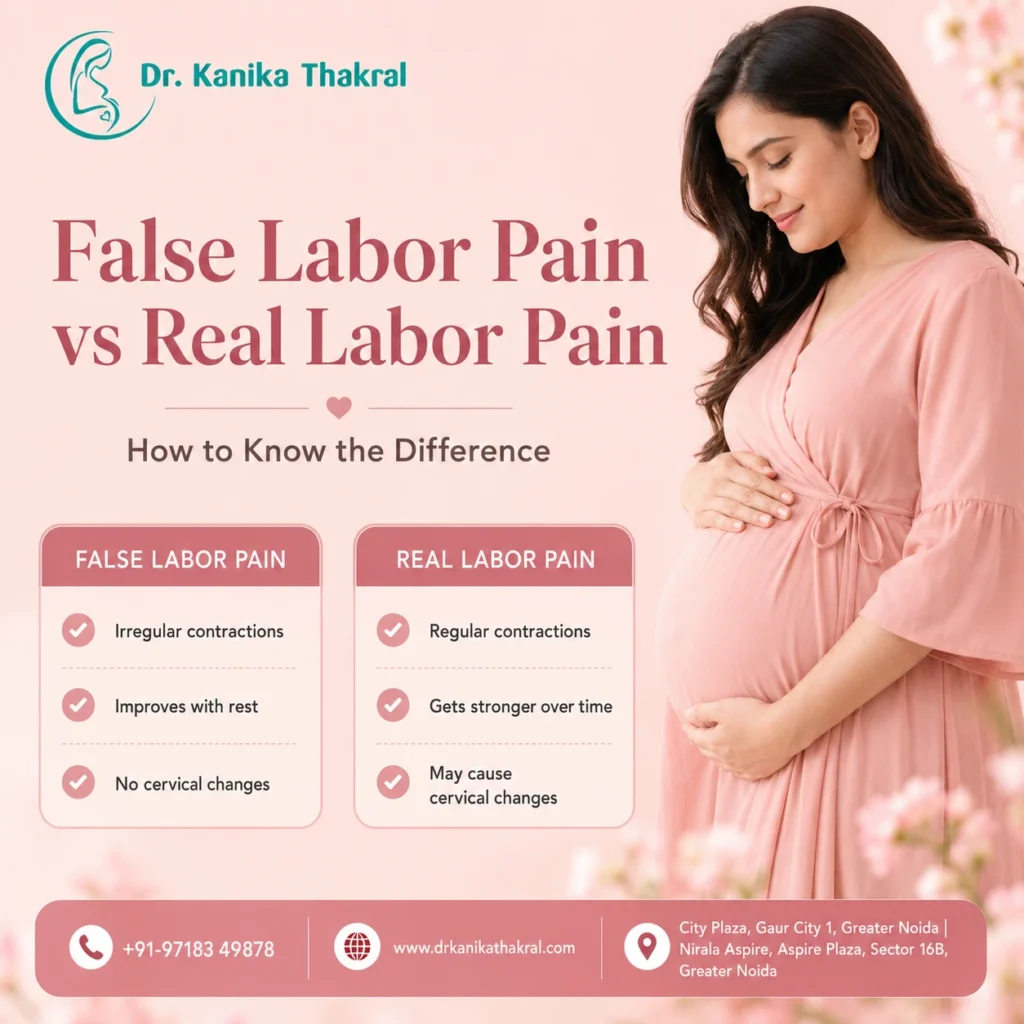
False Labor Pain vs Real Labor Pain: How to Know the Difference
False Labor Pain vs Real Labor Pain is an important topic for pregnant women, especially in the last weeks of pregnancy. Many women feel tightening, cramps, back pain, or pressure and start wondering if delivery is near.
False labor pain is also called Braxton Hicks contractions. These contractions can happen before real labor begins and may feel like the uterus is tightening. However, real labor pain usually becomes regular, stronger, and closer together with time. ACOG explains that false labor contractions may stop when you walk, rest, or change position, while true labor contractions continue and become more regular.
If you are unsure about Labor pain symptoms, consult a Gynecologist in Gaur City for proper guidance. Timely advice can help you stay calm and reach the hospital at the right time.
What Is False Labor Pain?
False labor pain means contraction-like pain that does not lead to delivery. It may happen in the second half of pregnancy, but it is more common near the due date.
These pains may feel uncomfortable, but they usually do not become stronger in a clear pattern. They may also reduce with rest, water, or position change.
False labor pain may feel like:
- Belly tightening
- Mild cramps
- Irregular contractions
- Pressure that comes and goes
- Discomfort mostly in the front
- Pain that improves with rest
- Pain that does not become stronger
False labor can confuse many mothers. Still, it is usually not the start of active labor.
What Is Real Labor Pain?
Real labor pain means contractions that help open the cervix and move the baby toward birth. These contractions usually become regular, stronger, longer, and closer together.
Real labor pain may not stop with rest or hydration. It may start in the back and move toward the front. Also, it may come with other signs like water leakage, blood-stained mucus discharge, or increasing pelvic pressure. The NHS explains that during contractions, the womb tightens and then relaxes, and regular contractions can be a sign that labor has begun.
Real labor needs timely medical attention, especially when contractions become regular or water breaks.
False Labor Pain vs Real Labor Pain: Main Difference
Understanding False Labor Pain vs Real Labor Pain can help you decide when to contact your doctor.
False Labor Pain
- Contractions are irregular
- Pain does not become stronger
- Gap between contractions does not reduce
- Pain may stop with rest
- Pain may improve after drinking water
- Mostly felt in the front
- No steady cervical changes
- Baby movements are usually normal
Real Labor Pain
- Contractions become regular
- Pain gets stronger over time
- Gap between contractions becomes shorter
- Pain does not stop with rest
- Pain may start in the back and move forward
- Pelvic pressure may increase
- Cervix may start opening
- Water leakage or bloody show may happen
Mayo Clinic also suggests timing contractions from the start of one contraction to the start of the next to understand the pattern.
Common Labor Pain Symptoms
Labor pain symptoms can vary from woman to woman. Some women feel strong back pain, while others feel abdominal cramps or pelvic pressure.
Common signs may include:
- Regular contractions
- Lower back pain
- Cramps that keep increasing
- Pelvic pressure
- Water leakage
- Blood-stained mucus discharge
- Pain that does not stop with rest
- Strong urge to push in later labor
- Contractions coming closer together
If you feel unsure, do not wait too long. Contact your doctor and explain your symptoms clearly.
Signs That You May Be Having False Labor Pain
False labor pain often comes and goes. It may feel strong for some time and then settle.
You may be having false labor if:
- Contractions are irregular
- Pain stops after rest
- Pain reduces after drinking water
- Walking changes the pain
- Pain stays mild
- There is no water leakage
- There is no heavy bleeding
- Baby movements are normal
However, if pain is severe or you are worried, consult your doctor. It is always better to check than to ignore symptoms.
Signs That You May Be in Real Labor
Real labor pain usually follows a pattern. It often becomes more intense with time.
You may be in real labor if:
- Contractions come at regular gaps
- Pain becomes stronger
- Pain lasts longer
- Contractions come closer together
- Back pain moves toward the front
- Water breaks
- Blood-stained mucus comes out
- Pelvic pressure increases
- You cannot talk comfortably during contractions
When these signs appear near your due date, contact your doctor or hospital.
When Should You Go to the Hospital?
You should contact your doctor or go to the hospital if contractions become regular, water breaks, bleeding occurs, or baby movements reduce.
Seek urgent care if you notice:
- Heavy bleeding
- Water leakage
- Reduced baby movements
- Severe abdominal pain
- Fever
- Dizziness
- Severe headache
- Vision changes
- Pain before 37 weeks
- Strong contractions before due date
Mayo Clinic Health System advises contacting a healthcare provider if labor signs appear before 37 weeks, especially with vaginal spotting.
False Labor Pain Before 37 Weeks
Pain before 37 weeks needs extra attention. Sometimes, contractions before 37 weeks may suggest preterm labor.
Call your doctor quickly if you have:
- Regular contractions before 37 weeks
- Watery discharge
- Bleeding or spotting
- Lower back pain that does not settle
- Pelvic pressure
- Cramps with tightening
- Change in vaginal discharge
The NHS lists signs of premature labor such as contractions, fluid leakage, backache, and changes in discharge, and recommends medical assessment when these symptoms happen early.
Normal Delivery Consultation for Labor Pain
A Normal Delivery Consultation helps pregnant women understand labor signs, delivery preparation, pain management, and when to reach the hospital.
During consultation, you can discuss:
- Real labor signs
- False labor pain signs
- Contraction timing
- Water breaking
- Baby movement tracking
- Normal Delivery preparation
- Hospital bag checklist
- Delivery plan
- Emergency signs
This guidance can reduce fear and help you feel prepared for delivery.
Pregnancy Care in Gaur City for Labor Readiness
Regular Pregnancy Care in Gaur City helps monitor mother and baby health before delivery. It also helps you understand what to expect during the last weeks of pregnancy.
Pregnancy care may include:
- Baby growth check
- Baby position check
- Blood pressure monitoring
- Sugar level review
- Ultrasound review
- Delivery planning
- Labor sign counselling
- High-risk pregnancy monitoring
As a result, you can make timely decisions when pain starts.
Role of a Gynecologist in Gaur City
A Gynecologist in Gaur City can help you understand whether your pain is false labor, early labor, or another pregnancy concern.
Your doctor may ask about:
- Pregnancy week
- Pain timing
- Contraction gap
- Water leakage
- Bleeding
- Baby movements
- Previous delivery history
- Current pregnancy reports
Based on your symptoms, your doctor may advise rest, observation, hospital visit, or further checkup.
Pregnancy Treatment and Labor Pain
Pregnancy Treatment during labor-like pain depends on the cause. False labor may need rest, hydration, and observation. Real labor needs monitoring and delivery care.
In some cases, pain may happen due to urine infection, dehydration, gastric discomfort, round ligament pain, or other pregnancy-related issues. Therefore, proper evaluation is important.
Do not take painkillers or medicines without medical advice during pregnancy.
Irregular Periods Treatment and Pregnancy Dating
Women with past Irregular Periods Treatment concerns may have confusion about pregnancy dates. If periods were irregular before pregnancy, due date calculation may need ultrasound support.
Correct pregnancy dating helps your doctor understand whether pain is normal near term or concerning before time.
So, always share your period history, scan reports, and past cycle concerns during pregnancy visits.
How to Time Contractions at Home
Timing contractions can help you explain symptoms better to your doctor.
You can note:
- When contraction starts
- When contraction ends
- How long it lasts
- Gap between two contractions
- Whether pain is getting stronger
- Whether rest or water helps
If contractions become regular and closer together, call your doctor for guidance.
What Can Help During False Labor Pain?
If your doctor has confirmed it is likely false labor, simple steps may help.
You may try:
- Drinking water
- Changing position
- Taking rest
- Walking slowly if comfortable
- Taking a warm bath if advised
- Practicing breathing
- Avoiding stress
- Monitoring baby movements
Still, if pain continues or becomes stronger, contact your doctor again.
When to Consult Dr. Kanika Thakral
Consult Dr. Kanika Thakral if you are confused about False Labor Pain vs Real Labor Pain, contraction timing, water leakage, pelvic pressure, or delivery signs.
You may need guidance for:
- False Labor Pain vs Real Labor Pain
- Labor pain symptoms
- Normal Delivery Consultation
- Pregnancy Care in Gaur City
- Pregnancy Treatment
- Delivery planning
- Last trimester care
- Irregular Periods Treatment history and pregnancy dating
Timely consultation can help you understand the right step and prepare for delivery safely.
FAQs
1. What is false labor pain?
False labor pain means irregular contractions that do not lead to delivery. They may reduce with rest, hydration, or position change.
2. What is real labor pain?
Real labor pain usually becomes regular, stronger, longer, and closer together. It may also cause cervical changes.
3. How do I know if labor pain is real?
Time your contractions. If they become regular, stronger, and closer together, it may be real labor. Contact your doctor for guidance.
4. Can false labor pain happen before delivery?
Yes, false labor pain can happen before real labor, especially near the due date.
5. When should I go to the hospital?
Go to the hospital or call your doctor if contractions become regular, water breaks, bleeding occurs, baby movements reduce, or pain starts before 37 weeks.
6. Can I have Normal Delivery after false labor pain?
Yes. False labor pain does not stop you from having Normal Delivery. Your delivery plan depends on mother and baby health.
