
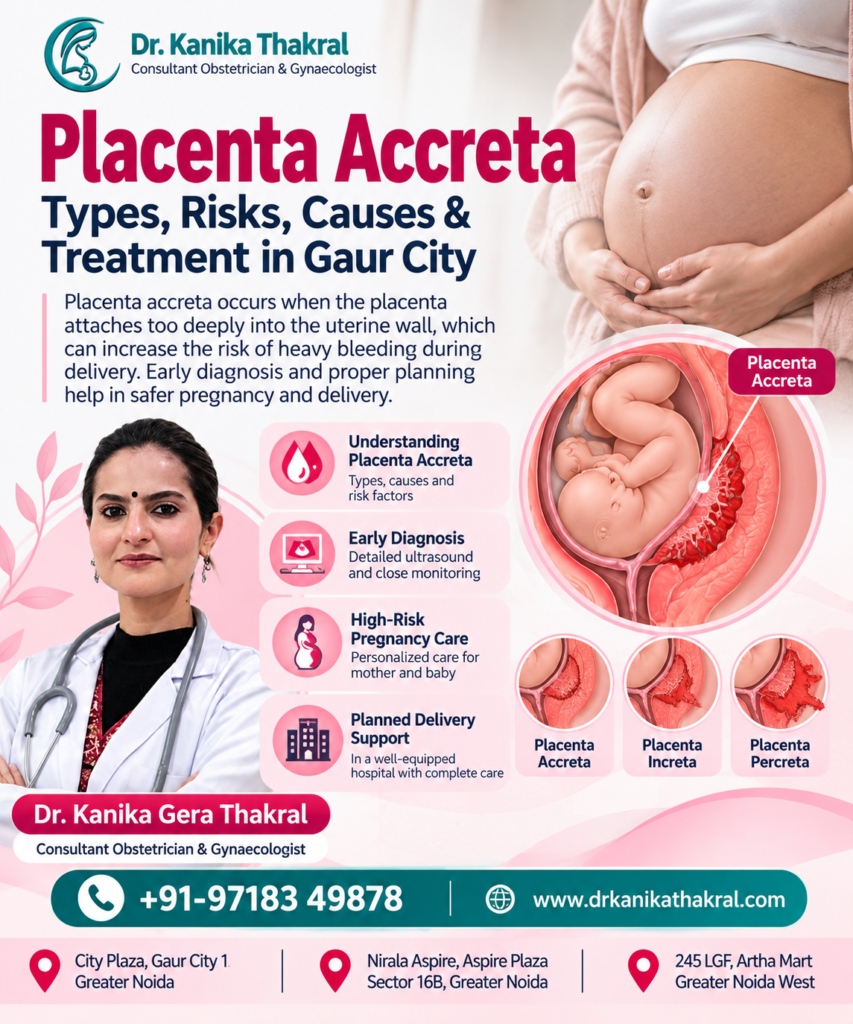
Placenta Accreta: Types, Risks, Causes & Treatment Gaur City
Placenta Accreta Treatment in Gaur City is important when the placenta attaches too deeply into the wall of the uterus. This condition can increase the risk of severe bleeding during delivery and may require careful pregnancy monitoring and planned delivery in a well-equipped hospital.
Placenta accreta may not cause clear symptoms during pregnancy. Therefore, women with previous cesarean deliveries, placenta previa, or previous uterine surgery may need closer ultrasound monitoring.
For evaluation, pregnancy monitoring, and delivery planning, consult Dr. Kanika Gera Thakral, Gynecologist in Gaur City.
What Is Placenta Accreta?
Normally, the placenta attaches to the inner lining of the uterus and separates after the baby is delivered.
In placenta accreta spectrum, however, the placenta attaches more deeply than usual. As a result, it may not separate easily after delivery.
This can increase the risk of:
- Heavy bleeding during delivery
- Blood transfusion
- Emergency surgery
- Injury to nearby organs in severe cases
- Premature delivery
- Intensive maternal monitoring
Because of these risks, early diagnosis and delivery planning are very important.
Placenta Accreta Types
There are three main Placenta accreta types.
1. Placenta Accreta
The placenta attaches too firmly to the uterine wall but does not deeply invade the uterine muscle.
2. Placenta Increta
The placenta grows deeper into the muscle of the uterus.
3. Placenta Percreta
This is the most severe form. The placenta grows through the uterine wall and may involve nearby organs such as the bladder.
The exact type is usually suspected through ultrasound and, in selected cases, MRI.
Placenta Accreta Causes
The exact reason is not always clear. However, Placenta accreta causes and risk factors are often related to previous damage or scarring of the uterine wall.
Possible risk factors include:
- Previous cesarean delivery
- Multiple previous C-sections
- Placenta previa
- Previous uterine surgery
- Previous D&C procedure
- Previous fibroid surgery
- Previous placenta accreta
- IVF pregnancy in selected cases
- Advanced maternal age
The risk may increase when placenta previa is present along with previous cesarean delivery.
Placenta Accreta Symptoms
Placenta accreta symptoms are often absent during pregnancy.
Some women may experience:
- Vaginal bleeding
- Spotting
- Placenta previa
- Repeated bleeding episodes
- Pelvic discomfort in some cases
However, many cases are found during routine ultrasound.
Therefore, ultrasound monitoring is especially important in women with known risk factors.
Why Placenta Accreta Is High Risk
Placenta accreta can become serious because the placenta may not separate normally after childbirth.
This can cause:
- Severe postpartum bleeding
- Rapid blood loss
- Low blood pressure
- Need for blood transfusion
- Emergency surgery
- Hysterectomy in severe cases
- Premature delivery
For this reason, delivery should be planned carefully rather than waiting for an emergency whenever possible.
Diagnosis of Placenta Accreta
Diagnosis is mainly based on pregnancy history and imaging.
Your doctor may advise:
- Detailed ultrasound
- Transvaginal ultrasound when needed
- Color Doppler ultrasound
- MRI in selected cases
- Hemoglobin testing
- Blood group testing
- Placental position monitoring
Ultrasound helps check whether the placenta appears abnormally attached to the uterine wall.
Placenta Accreta Treatment in Gaur City
Placenta Accreta Treatment in Gaur City depends on the severity of the condition, pregnancy week, placental location, previous cesarean history, and mother and baby’s health.
Management may include:
- Regular high-risk pregnancy monitoring
- Detailed ultrasound follow-up
- Hemoglobin monitoring
- Blood availability planning
- Steroid injections in selected cases if early delivery is expected
- Planned cesarean delivery
- Surgical planning
- Multidisciplinary hospital care
- Blood transfusion if required
The treatment plan should be personalized for every patient.
High-Risk Pregnancy Care
Placenta accreta usually requires High-Risk Pregnancy Care because severe bleeding can occur during delivery.
High-risk pregnancy care may include:
- Frequent antenatal visits
- Placenta monitoring
- Baby growth monitoring
- Blood pressure checks
- Hemoglobin monitoring
- Delivery timing discussion
- Blood transfusion planning
- Surgical team planning
- Emergency preparation
Close monitoring can help reduce delays during delivery.
Pregnancy Care in Gaur City
Proper Pregnancy Care in Gaur City is especially important if you have placenta previa, previous cesarean deliveries, or a suspected placenta accreta.
Care may include:
- Early pregnancy consultation
- Previous surgery history review
- Detailed ultrasound
- Placenta location monitoring
- Hemoglobin check
- Baby growth monitoring
- Delivery planning
- High-risk pregnancy counseling
Women with risk factors should inform their gynecologist about all previous uterine surgeries and cesarean deliveries.
Placenta Accreta and Previous C-Section
Previous cesarean delivery is one of the important risk factors for placenta accreta, especially when combined with placenta previa.
Your doctor may review:
- Number of previous cesarean deliveries
- Location of previous uterine scar
- Current placenta position
- Previous placenta-related complications
- Previous uterine procedures
This helps decide whether detailed imaging is needed.
Delivery Planning
Delivery planning is one of the most important parts of placenta accreta care.
The plan may include:
- Delivery in a well-equipped hospital
- Planned cesarean delivery
- Senior obstetric team availability
- Anesthesia team
- Blood bank support
- Neonatal care team
- Surgical backup
- Intensive monitoring
In severe cases, hysterectomy may be required to control life-threatening bleeding.
Can Normal Delivery Happen With Placenta Accreta?
Placenta accreta generally requires planned cesarean delivery because attempting placental separation can cause severe bleeding.
However, every case is different. Therefore, the delivery plan should be based on imaging, placental invasion, pregnancy week, and specialist assessment.
Warning Signs You Should Not Ignore
Seek urgent medical care if you have:
- Heavy vaginal bleeding
- Dizziness
- Fainting
- Severe weakness
- Fast heartbeat
- Breathlessness
- Severe abdominal pain
- Regular contractions
- Reduced baby movements
Heavy bleeding during pregnancy requires immediate hospital evaluation.
What Should You Avoid?
If placenta accreta is suspected, follow your doctor’s instructions carefully.
Avoid:
- Missing ultrasound follow-ups
- Ignoring vaginal bleeding
- Self-medication
- Delaying hospital care
- Long-distance travel without medical advice
- Ignoring reduced baby movements
- Missing high-risk pregnancy appointments
Regular monitoring is essential.
When to Consult Dr. Kanika Gera Thakral
Consult Dr. Kanika Gera Thakral if you have:
- Placenta accreta concern
- Placenta previa
- Previous cesarean deliveries
- Previous uterine surgery
- Bleeding during pregnancy
- High-risk pregnancy history
You may need consultation for:
- Placenta Accreta Treatment in Gaur City
- Placenta accreta symptoms
- Placenta accreta causes
- Placenta accreta types
- High-Risk Pregnancy Care
- Pregnancy Care in Gaur City
- Consultation with a Gynecologist in Gaur City
FAQs
1. What is placenta accreta?
Placenta accreta is a condition where the placenta attaches too deeply into the uterine wall.
2. What are the types of placenta accreta?
The three main types are placenta accreta, placenta increta, and placenta percreta.
3. What causes placenta accreta?
Risk factors include previous cesarean delivery, placenta previa, previous uterine surgery, D&C procedures, and previous placenta accreta.
4. Is placenta accreta dangerous?
It can be serious because it may cause severe bleeding during delivery and may require blood transfusion or surgery.
5. How is placenta accreta diagnosed?
It is usually suspected through ultrasound. MRI may also be advised in selected cases.
6. Which doctor should I consult in Gaur City?
You can consult Dr. Kanika Gera Thakral, Gynecologist in Gaur City, for placenta accreta evaluation, high-risk pregnancy care, and delivery planning.
Conclusion
Placenta Accreta Treatment in Gaur City requires early diagnosis, close pregnancy monitoring, and careful delivery planning. Women with placenta previa, previous cesarean delivery, or previous uterine surgery may need additional evaluation.
For Placenta accreta symptoms, Placenta accreta causes, Placenta accreta types, High-Risk Pregnancy Care, and Pregnancy Care in Gaur City, consult Dr. Kanika Gera Thakral for timely and personalized pregnancy care.
