
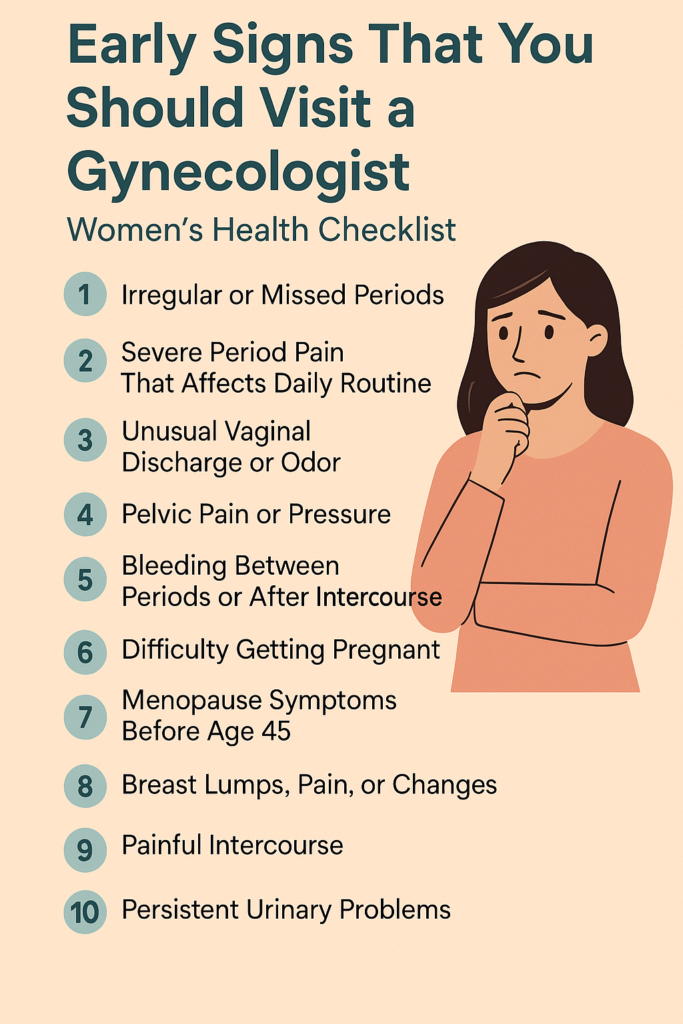
Early Signs That You Should Visit a Gynecologist – Women’s Health Checklist
Introduction
Women often tend to ignore early signs related to their reproductive and hormonal health, assuming they are temporary or stress-related. However, paying attention to these symptoms is essential for long-term wellness. Understanding when to see a gynecologist can prevent complications and help diagnose conditions at an early stage. This guide covers the most common women health symptoms that should not be overlooked and provides a helpful checklist for booking a gynecologist consultation at the right time.
1. Irregular or Missed Periods
A common but underestimated sign is a sudden change in menstrual patterns. If your cycle becomes shorter, longer, heavier, painful, or disappears altogether, it may indicate:
-
thyroid imbalance
-
hormonal disruption
-
pregnancy
-
early menopause
If irregularities continue for more than three cycles, it’s a clear sign that you should visit a gynecologist for evaluation.
2. Severe Period Pain That Affects Daily Routine
Mild cramps are normal, but intense pain, nausea, or pain that stops you from normal activities may signal:
-
endometriosis
-
adenomyosis
-
fibroids
-
pelvic inflammatory disease
Persistent pain is not normal and requires medical assessment.
3. Unusual Vaginal Discharge or Odor
Changes in discharge can reveal infections or reproductive concerns. Warning signs include:
✅ thick, cottage-like discharge
✅ foul or fishy smell
✅ green or yellow color
✅ burning or itching sensation
These could indicate bacterial infections, yeast infections, or STDs—making a gynecologist consultation important for diagnosis and treatment.
4. Pelvic Pain or Pressure
If you feel discomfort, heaviness, or pressure in the pelvic area, it may relate to:
-
ovarian cysts
-
fibroids
-
uterine disorders
-
urinary concerns
Pelvic pain should never be ignored, especially if it occurs frequently.
5. Bleeding Between Periods or After Intercourse
This symptom is considered a red flag and may be connected to:
-
hormonal imbalance
-
cervical irritation
-
infections
-
polyps
-
in rare cases, cervical cancer
Consulting a gynecologist early helps determine the cause through safe diagnostic steps.
6. Difficulty Getting Pregnant
If you’ve been trying to conceive for:
-
12 months (age under 35)
-
6 months (age above 35)
…then it’s time to seek gynecological advice. Fertility evaluations may include:
✅ ovulation tracking
✅ hormone testing
✅ ultrasound scans
7. Menopause Symptoms Before Age 45
Early menopause signs include:
-
hot flashes
-
mood swings
-
night sweats
-
low libido
-
sleep disturbances
Early menopause affects bone health, hormones, and emotional wellbeing—so early guidance matters.
8. Breast Lumps, Pain, or Changes
A gynecologist should be consulted if you notice:
✅ nipple discharge
✅ skin dimpling
✅ visible changes
✅ lumps or tenderness
Routine breast exams are crucial for early cancer detection.
9. Painful Intercourse
Pain during intimacy can be linked to:
-
dryness
-
infections
-
endometriosis
-
hormonal imbalance
This is a common issue, and treatment options are available.
10. Persistent Urinary Problems
Frequent urination or burning sensation may indicate:
-
urinary tract infection
-
bladder issues
-
pelvic floor weakness
A gynecologist can identify whether treatment or lifestyle adjustments are needed.
Women’s Health Self-Checklist
You should schedule a consultation if you experience any of these:
✅ cycle changes
✅ abnormal discharge
✅ pelvic or lower abdominal pain
✅ fertility concerns
✅ hormonal symptoms
✅ breast changes
Listening to your body helps protect long-term reproductive health.
Why Early Consultation Matters
Early diagnosis can:
✅ prevent complications
✅ offer faster treatment
✅ support fertility
✅ maintain hormonal balance
✅ improve quality of life
Frequently Asked Questions
Q1: How often should a woman visit a gynecologist?
At least once a year, even without symptoms.
Q2: What age should a girl start seeing a gynecologist?
Ideally between 13–15 years or after first period if issues appear.
Q3: Is it normal to feel nervous about the first consultation?
Yes, but gynecologists are trained to ensure comfort and privacy.
Conclusion
Understanding when to see a gynecologist is essential for every woman, regardless of age. Ignoring early signs can lead to bigger health concerns, while timely care ensures a healthier reproductive future. Prioritize your wellness, listen to your body, and take proactive steps toward better health.
