
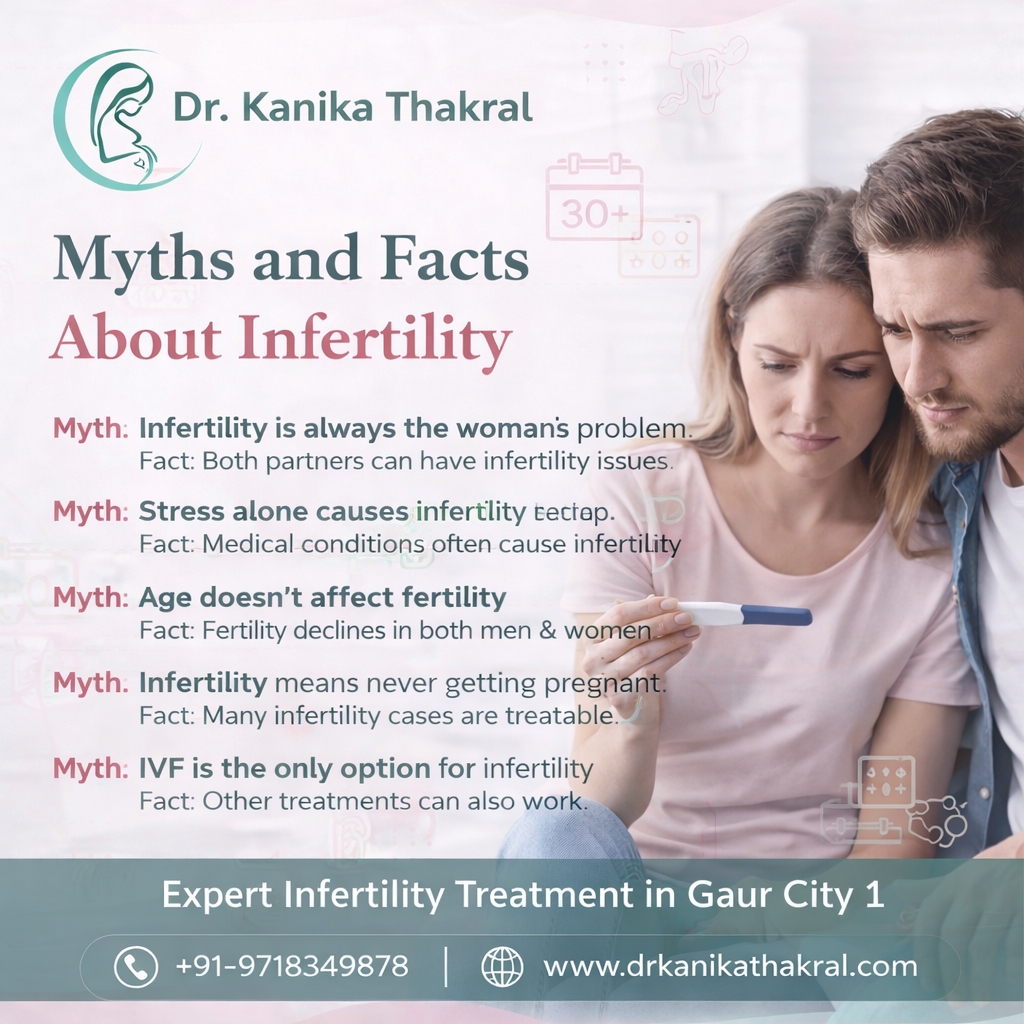
Myths and Facts About Infertility
Infertility is a common yet misunderstood health issue affecting millions of couples worldwide. Many people delay treatment because of misinformation, social stigma, or fear. At Dr. Kanika Thakral’s clinic, expert Infertility Treatment in Gaur City 1 is available to help couples understand the real causes and solutions for conception challenges.
If you are trying to conceive without success, knowing the difference between myths and facts can help you make informed decisions and seek timely medical care from a qualified gynecologist in Greater Noida West.
Myth 1: Infertility Is Always a Woman’s Problem
Fact:
Infertility affects both partners equally.
Studies show that:
-
About 30–40% cases involve female factors
-
30–40% involve male factors
-
Remaining cases involve both or unknown causes
Male infertility issues may include low sperm count, poor motility, or hormonal problems. Therefore, fertility evaluation should always involve both partners.
Myth 2: If You Already Have One Child, You Cannot Be Infertile
Fact:
Secondary infertility is very common.
Many couples who conceived earlier may face difficulty conceiving again due to:
-
Age-related fertility decline
-
Hormonal imbalances
-
PCOS or thyroid disorders
-
Lifestyle changes
-
Medical conditions developed later
Consulting a fertility specialist in Gaur City 1 can help identify the cause and provide appropriate treatment.
Myth 3: Infertility Means You Can Never Get Pregnant
Fact:
Most infertility cases are treatable.
Modern treatments offer high success rates, including:
-
Ovulation induction
-
Hormonal therapy
-
IVF (In Vitro Fertilization)
-
Lifestyle correction
With proper diagnosis and expert care, many couples achieve successful pregnancies.
Myth 4: Age Does Not Affect Fertility
Fact:
Age is one of the biggest fertility factors.
Female fertility begins to decline after age 30 and drops significantly after 35. Egg quality and quantity decrease over time, increasing the risk of miscarriage and chromosomal abnormalities.
Male fertility also declines with age, affecting sperm quality.
Early consultation with a gynecologist in Greater Noida West improves chances of natural conception or successful treatment.
Myth 5: Stress Alone Causes Infertility
Fact:
Stress may affect hormones but is rarely the sole cause.
While chronic stress can disrupt ovulation or sexual health, most infertility cases have medical causes such as:
-
Endometriosis
-
Blocked fallopian tubes
-
Hormonal imbalance
-
Low sperm count
Reducing stress helps overall health but does not replace medical treatment.
Myth 6: Regular Periods Mean You Are Fertile
Fact:
Regular cycles do not guarantee ovulation or fertility.
A woman may have regular bleeding but still face issues like:
-
Poor egg quality
-
Hormonal disorders
-
Uterine abnormalities
-
Luteal phase defects
Proper fertility testing is essential if pregnancy does not occur after one year of trying (or 6 months if age >35).
Myth 7: Lifestyle Has No Impact on Fertility
Fact:
Lifestyle plays a major role in reproductive health.
Factors affecting fertility include:
-
Smoking and alcohol
-
Obesity or underweight
-
Poor diet
-
Lack of exercise
-
Sleep disturbances
-
Environmental toxins
Adopting a healthy lifestyle can significantly improve treatment outcomes.
Myth 8: IVF Is the Only Treatment for Infertility
Fact:
IVF is only recommended when simpler treatments fail.
Many couples conceive with basic interventions such as:
-
Ovulation tracking
-
Medication
-
IUI
-
Treating underlying conditions
An experienced fertility specialist in Gaur City 1 will suggest IVF only when necessary.
Myth 9: Infertility Treatments Always Result in Multiple Babies
Fact:
Modern techniques minimize this risk.
Doctors carefully control medications and embryo transfer to reduce chances of twins or triplets. Most treatments aim for a single healthy pregnancy.
Myth 10: You Should Wait Years Before Seeking Help
Fact:
Early diagnosis improves success rates.
Seek medical advice if:
-
You have been trying for 12 months (or 6 months if over 35)
-
Periods are irregular
-
Known reproductive conditions exist
-
Previous miscarriages occurred
-
Male partner has fertility concerns
Early evaluation saves time, emotional stress, and treatment costs.
When to Consult a Fertility Specialist?
Consider visiting a pregnancy doctor near Ek Murti or Gaur City 1 if you experience:
-
Irregular or absent periods
-
Severe menstrual pain
-
History of pelvic infections
-
PCOS or thyroid disorders
-
Repeated pregnancy loss
-
Erectile or ejaculation problems in men
Timely consultation can dramatically improve chances of successful conception.
Hope and Support Are Available
Infertility can be emotionally challenging, but you are not alone. With advancements in reproductive medicine and personalized care, many couples overcome fertility issues and achieve their dream of parenthood.
Expert infertility treatment in Greater Noida West combines medical expertise, advanced diagnostics, and compassionate support to guide couples through every step of their journey.
Frequently Asked Questions (FAQs)
Q1. How common is infertility?
Infertility affects about 1 in 6 couples globally.
Q2. When should we see a doctor for infertility?
After 1 year of trying (6 months if woman is over 35).
Q3. Can lifestyle changes improve fertility?
Yes. Healthy diet, exercise, and stress reduction can enhance reproductive health.
Q4. Is infertility treatment painful?
Most procedures are minimally invasive and well tolerated.
Q5. Can men also be infertile?
Yes. Male factors contribute to nearly half of infertility cases.
