
Kidney Health for Women: Complete Guide to Prevention & Care
Kidney health for women is often overlooked, yet it plays a vital role in overall well-being, hormonal balance, pregnancy health, and reproductive wellness. Women experience unique health challenges such as urinary tract infections, hormonal fluctuations, menstrual health issues, pregnancy-related kidney stress, and menopause changes that can directly affect kidney function.
At Dr. Kanika Thakral’s Women Health Clinic, we emphasize preventive screenings and early diagnosis to protect long-term kidney health. Women living in Gaur City 1, Noida Extension, and nearby areas often ignore early symptoms like fatigue, swelling, or frequent urination, which can be warning signs of kidney problems.
How Kidney Health for Women Differs from Men
Women are more prone to certain kidney-related conditions due to anatomical and hormonal differences.
1. Higher Risk of Urinary Tract Infections (UTIs)
Women have a shorter urethra, making it easier for bacteria to reach the kidneys. Repeated UTIs can damage kidney tissues.
2. Hormonal Changes
Hormonal shifts during puberty, pregnancy, and menopause affect kidney function, fluid balance, and blood pressure.
3. Pregnancy-Related Kidney Stress
During pregnancy, kidneys work harder to filter extra blood and waste. Conditions like preeclampsia and gestational hypertension can harm kidney health.
4. Autoimmune Disorders
Autoimmune diseases such as lupus are more common in women and can directly damage kidney tissues.
Common Kidney Problems in Women
Understanding early warning signs can help prevent complications.
– Kidney Infections
Symptoms include:
• Burning sensation during urination
• Fever and chills
• Lower abdominal pain
• Frequent urination
– Kidney Stones
Women may experience:
• Severe back pain
• Nausea and vomiting
• Blood in urine
– chronic kidney disease (CKD)
A slow-progressing condition often unnoticed until advanced stages.
Early symptoms:
• Swelling in feet and hands
• Fatigue
• Poor appetite
• Changes in urination frequency
Women with diabetes, high blood pressure, or obesity are at higher risk.
Kidney Health for Women During Pregnancy
Pregnancy demands extra care for kidney health for women because:
✔ Kidney’s filter 50% more blood
✔ Hormonal changes slow urine flow
✔ Higher risk of UTIs
✔ Increased blood pressure affects kidney tissues
Pregnancy kidney complications may lead to:
• Preeclampsia
• Preterm birth
• Low birth weight
• Fluid retention
Regular prenatal checkups at a trusted gynecologist in Gaur City 1 help monitor kidney function and prevent complications.
Warning Signs You Should Not Ignore
Seek medical care if you experience:
⚠ Persistent back pain
⚠ Painful urination
⚠ Blood in urine
⚠ Foamy urine
⚠ Swelling in legs
⚠ Extreme fatigue
⚠ Sudden high blood pressure
Early diagnosis improves treatment outcomes and prevents long-term kidney damage.
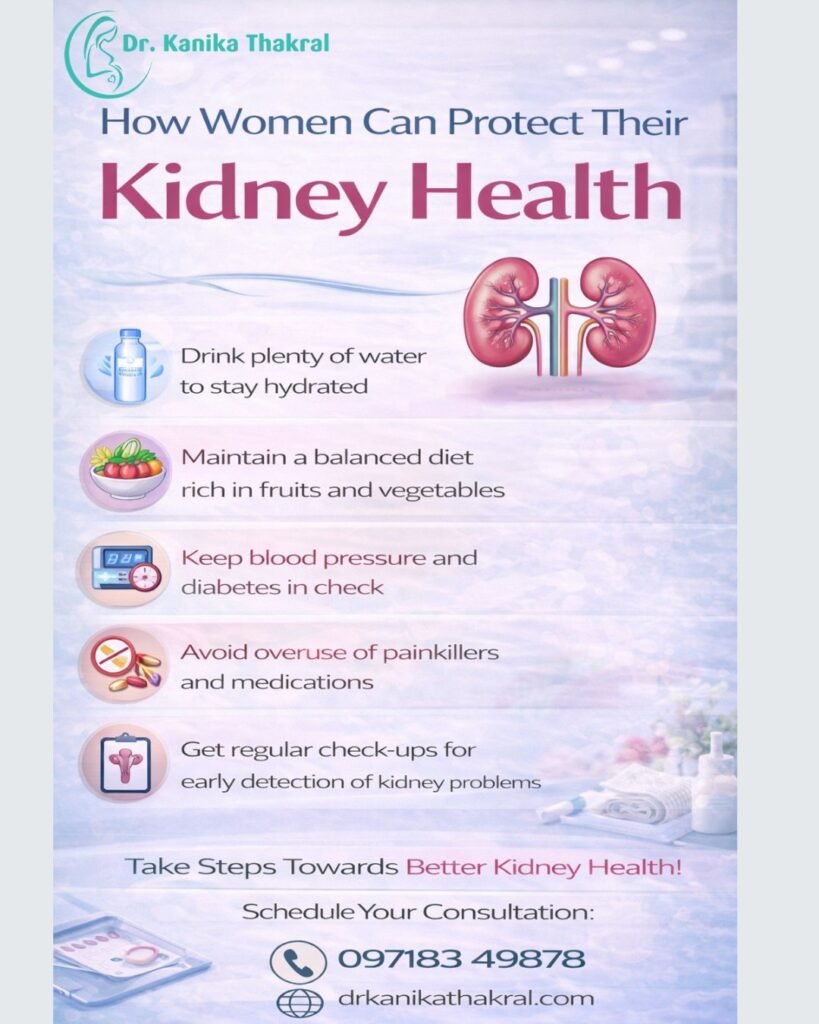
How to Maintain Kidney Health for Women
💧 Stay Hydrated
Drink 2.5–3 liters of water daily to flush toxins.
🥗 Follow a Balanced Diet
Include:
• Leafy vegetables
• Fresh fruits
• Whole grains
• Low-sodium foods
Avoid excessive salt and processed foods.
🧂 Reduce Sodium Intake
Too much salt increases blood pressure and kidney strain.
🏃♀️ Regular Exercise
Helps maintain healthy weight and blood circulation.
🚫 Avoid Self-Medication
Overuse of painkillers can damage kidneys.
🧪 Regular Health Checkups
Routine urine and blood tests detect early kidney problems.
Women should schedule annual wellness checkups, especially if they have diabetes, thyroid disorders, or PCOS.
Role of a Gynecologist in Kidney Health for Women
Many women don’t realize that gynecological health and kidney function are interconnected. Hormonal imbalance, reproductive tract infections, pregnancy complications, and menopause changes affect kidney performance.
A qualified gynecologist near Gaur City can:
✔ Diagnose UTIs early
✔ Treat hormonal disorders
✔ Monitor pregnancy-related kidney stress
✔ Provide preventive health screenings
✔ Manage PCOS and thyroid disorders affecting kidneys
At Dr. Kanika Thakral’s Clinic, comprehensive women wellness programs include kidney health screening and hormonal assessments.
Kidney Health for Women After Menopause
Post-menopause, estrogen levels decline, increasing risks of:
• Urinary infections
• Bone mineral loss
• High blood pressure
• Kidney stones
Regular screening and calcium balance are essential for maintaining kidney function.
Lifestyle Habits That Harm Kidney Health
❌ Smoking
❌ Alcohol abuse
❌ High-sodium diet
❌ Low water intake
❌ Ignoring UTIs
❌ Lack of exercise
❌ Excessive processed foods
Avoiding these habits greatly improves long-term kidney wellness.
When to Visit a doctor?
Consult a gynecologist if you notice:
• Recurrent urinary infections
• Irregular urination patterns
• Pregnancy complications
• Severe abdominal pain
• Menstrual irregularities with fatigue
Women in Noida Extension searching for “women health clinic near me” or “gynecologist in Gaur City 1” should prioritize clinics offering preventive kidney screening.
Conclusion
Maintaining kidney health for women is essential for overall wellness, safe pregnancy, hormonal balance, and disease prevention. Early diagnosis, healthy lifestyle choices, and regular medical checkups can prevent serious complications.
If you are experiencing symptoms or want preventive screening, consult Dr. Kanika Thakral, a trusted gynecologist serving Gaur City 1 and nearby communities with comprehensive women healthcare services.
FAQs
1. What are early signs of kidney problems in women?
Fatigue, swelling, painful urination, frequent urination, and blood in urine are early symptoms.
2. Are women more prone to kidney infections?
Yes, due to anatomical differences and hormonal fluctuations, women face higher UTI and kidney infection risks.
3. Can pregnancy affect kidney health?
Yes, pregnancy increases kidney workload and raises risks of UTIs and high blood pressure.
4. How often should women get kidney tests?
Women should undergo kidney function tests annually, especially after age 30 or during pregnancy.
5. Can hormonal imbalance affect kidneys?
Yes, estrogen and thyroid hormones influence kidney filtration and fluid balance.
