
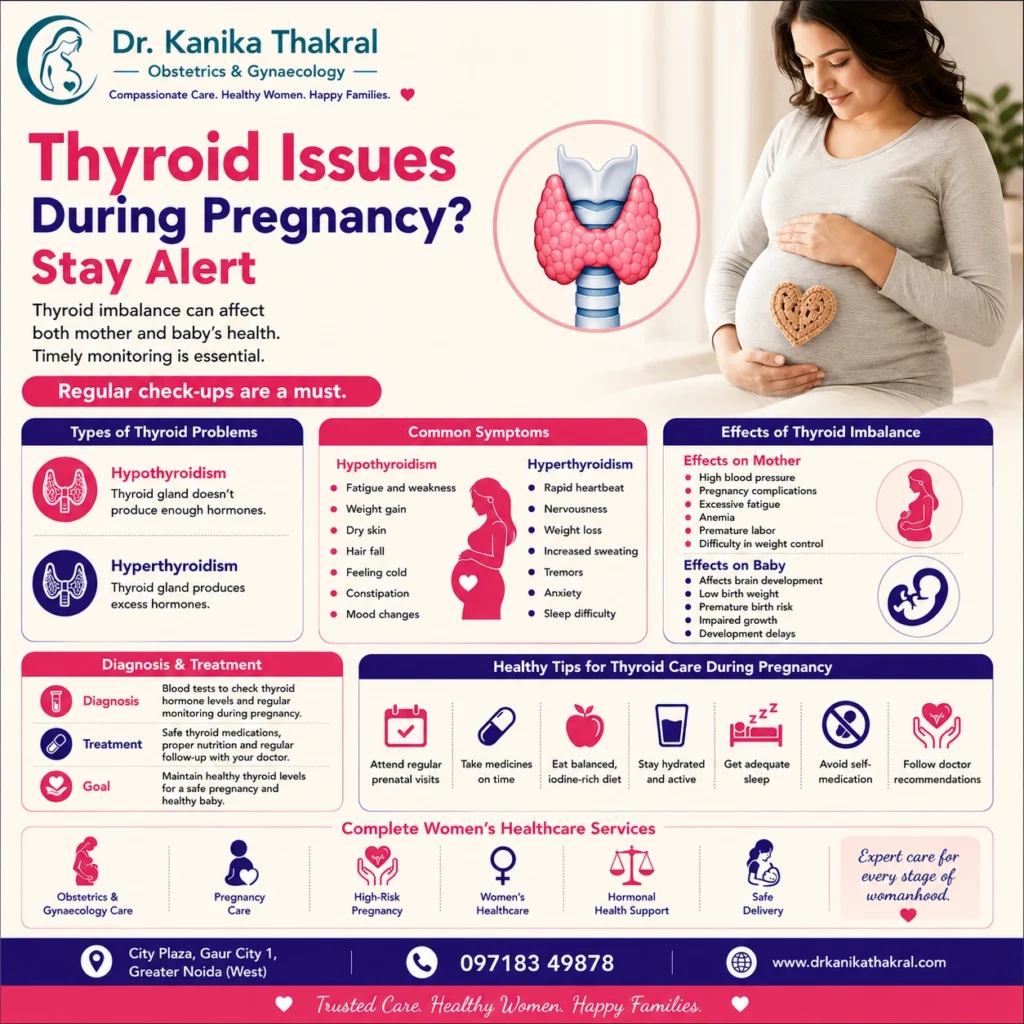
Thyroid During Pregnancy: Effects on Mother and Baby
Pregnancy brings many hormonal and physical changes to a woman’s body. During this time, proper thyroid function is extremely important for both maternal health and the baby’s development. The thyroid gland helps regulate metabolism, energy levels, body temperature, and hormone balance. When thyroid hormones become imbalanced during pregnancy, it may affect both mother and baby if not managed properly.
Many women may not notice thyroid-related symptoms early because some signs are similar to common pregnancy symptoms. However, regular pregnancy monitoring and timely medical care can help identify thyroid problems early and support a healthier pregnancy journey.
At Dr. Kanika Thakral’s clinic, women receive compassionate pregnancy care, hormonal health support, and personalized maternity guidance for safer maternal wellness.
What is the Thyroid Gland?
The thyroid is a small butterfly-shaped gland located in the front of the neck. It produces hormones that help regulate many important body functions such as:
- Metabolism
- Heart rate
- Energy production
- Body temperature
- Hormonal balance
During pregnancy, thyroid hormones are important for the baby’s brain and nervous system development, especially in the early months.
Why is Thyroid Health Important During Pregnancy?
The baby depends on the mother’s thyroid hormones during the first trimester because the baby’s thyroid gland is not fully developed initially.
Healthy thyroid levels help support:
- Baby’s brain development
- Healthy pregnancy growth
- Maternal energy balance
- Hormonal regulation
- Healthy fetal development
Untreated thyroid imbalance may increase pregnancy-related risks.
Types of Thyroid Problems During Pregnancy
The two most common thyroid conditions during pregnancy are:
Hypothyroidism
Hypothyroidism occurs when the thyroid gland produces lower-than-normal hormone levels.
Hyperthyroidism
Hyperthyroidism occurs when the thyroid gland produces excessive thyroid hormones.
Both conditions require medical supervision during pregnancy.
Symptoms of Hypothyroidism During Pregnancy
Some women may experience symptoms such as:
- Excessive tiredness
- Weight gain
- Dry skin
- Hair fall
- Feeling cold frequently
- Constipation
- Muscle weakness
- Mood changes
These symptoms may sometimes overlap with normal pregnancy changes, making diagnosis important.
Symptoms of Hyperthyroidism During Pregnancy
Women with excessive thyroid hormone levels may experience:
- Rapid heartbeat
- Nervousness
- Weight loss
- Increased sweating
- Anxiety
- Tremors
- Sleep difficulty
- Excessive fatigue
If symptoms become severe, immediate medical attention may be required.
Causes of Thyroid Problems During Pregnancy
Several factors may contribute to thyroid imbalance.
Autoimmune Conditions
Certain immune-related disorders may affect thyroid function.
Previous Thyroid Disease
Women with a history of thyroid disorders may require close monitoring during pregnancy.
Hormonal Changes
Pregnancy hormones can affect thyroid activity.
Family History
A family history of thyroid disorders may increase risk.
Iodine Deficiency
Iodine is essential for thyroid hormone production. Low iodine intake may affect thyroid function.
Effects of Thyroid Problems on the Mother
Uncontrolled thyroid imbalance may increase certain pregnancy-related complications.
Possible maternal effects include:
- High blood pressure
- Pregnancy complications
- Excessive fatigue
- Anemia
- Premature labor
- Difficulty maintaining healthy pregnancy weight
Regular monitoring helps reduce potential complications.
Effects on the Baby
Healthy thyroid hormone levels are important for fetal growth and development.
Untreated thyroid imbalance may sometimes affect:
- Baby’s growth
- Brain development
- Birth weight
- Premature birth risk
- Fetal development
Timely treatment and regular checkups can help support healthier pregnancy outcomes.
How is Thyroid During Pregnancy Diagnosed?
Doctors diagnose thyroid conditions through:
- Blood tests
- Thyroid hormone level testing
- Medical history review
- Pregnancy monitoring
Routine prenatal checkups may help detect thyroid imbalance early.
Treatment for During Pregnancy
Treatment depends on the type and severity of thyroid imbalance.
Medication Support
Doctors may prescribe pregnancy-safe thyroid medicines to help balance hormone levels.
Regular Blood Testing
Frequent monitoring helps ensure hormone levels remain within healthy range.
Nutritional Guidance
A healthy diet with proper iodine intake may support thyroid health.
Pregnancy Monitoring
Regular fetal growth monitoring and prenatal checkups are important throughout pregnancy.
Women should never stop thyroid medicines without medical advice.
Healthy Pregnancy Tips
Women with thyroid conditions should follow healthy lifestyle habits during pregnancy.
Helpful tips include:
- Attend regular prenatal visits
- Take medicines on time
- Follow doctor recommendations
- Eat balanced meals
- Stay hydrated
- Get adequate sleep
- Avoid self-medication
- Monitor unusual symptoms
Consistent medical care helps support safer pregnancy outcomes.
Can Women With Thyroid Problems Have Healthy Pregnancies?
Yes, many women with properly managed thyroid conditions have healthy pregnancies and healthy babies.
The key factors include:
- Early diagnosis
- Proper treatment
- Regular monitoring
- Healthy lifestyle habits
- Timely prenatal care
Medical supervision plays an important role in pregnancy wellness.
Importance of Regular Prenatal Checkups
Routine pregnancy checkups help monitor:
- Thyroid hormone levels
- Baby’s growth
- Maternal health
- Blood pressure
- Overall pregnancy progress
Women should never ignore symptoms such as severe fatigue, rapid heartbeat, swelling, dizziness, or unusual weakness during pregnancy.
Foods That Support Thyroid Health
Helpful foods may include:
- Iodine-rich foods
- Dairy products
- Eggs
- Green vegetables
- Nuts and seeds
- Protein-rich meals
Women should consult their doctor before making major dietary changes.
Women’s Healthcare Services Available
At Dr. Kanika Thakral’s clinic, women receive complete pregnancy and gynecology support including:
- Obstetrics & Gynecology Care
- Pregnancy Care
- High-Risk Pregnancy Monitoring
- Women’s Healthcare Consultation
- Hormonal Health Support
- Safe Delivery Guidance
Why Choose Dr. Kanika Thakral?
Dr. Kanika Thakral provides compassionate women’s healthcare with a focus on pregnancy wellness, hormonal health, and personalized maternity care.
Women consult her for:
- Pregnancy monitoring
- Hormonal health consultation
- Thyroid-related pregnancy care
- High-risk pregnancy support
- Women wellness guidance
Her patient-focused approach helps mothers feel informed, safe, and supported throughout pregnancy.
FAQs
1. Can thyroid problems affect pregnancy?
Yes, untreated thyroid imbalance may affect both maternal and fetal health.
2. What are common thyroid symptoms during pregnancy?
Fatigue, weight changes, rapid heartbeat, hair fall, anxiety, and weakness are common symptoms.
3. Is thyroid testing important during pregnancy?
Yes, blood tests help detect thyroid imbalance early and support healthier pregnancy care.
4. Can thyroid problems affect the baby?
Untreated thyroid disorders may affect baby growth and development.
5. Are thyroid medicines safe during pregnancy?
Doctors may prescribe pregnancy-safe medicines based on individual health needs.
6. When should I consult a doctor?
Consult immediately if you notice unusual fatigue, rapid heartbeat, swelling, dizziness, or hormonal symptoms during pregnancy.
