
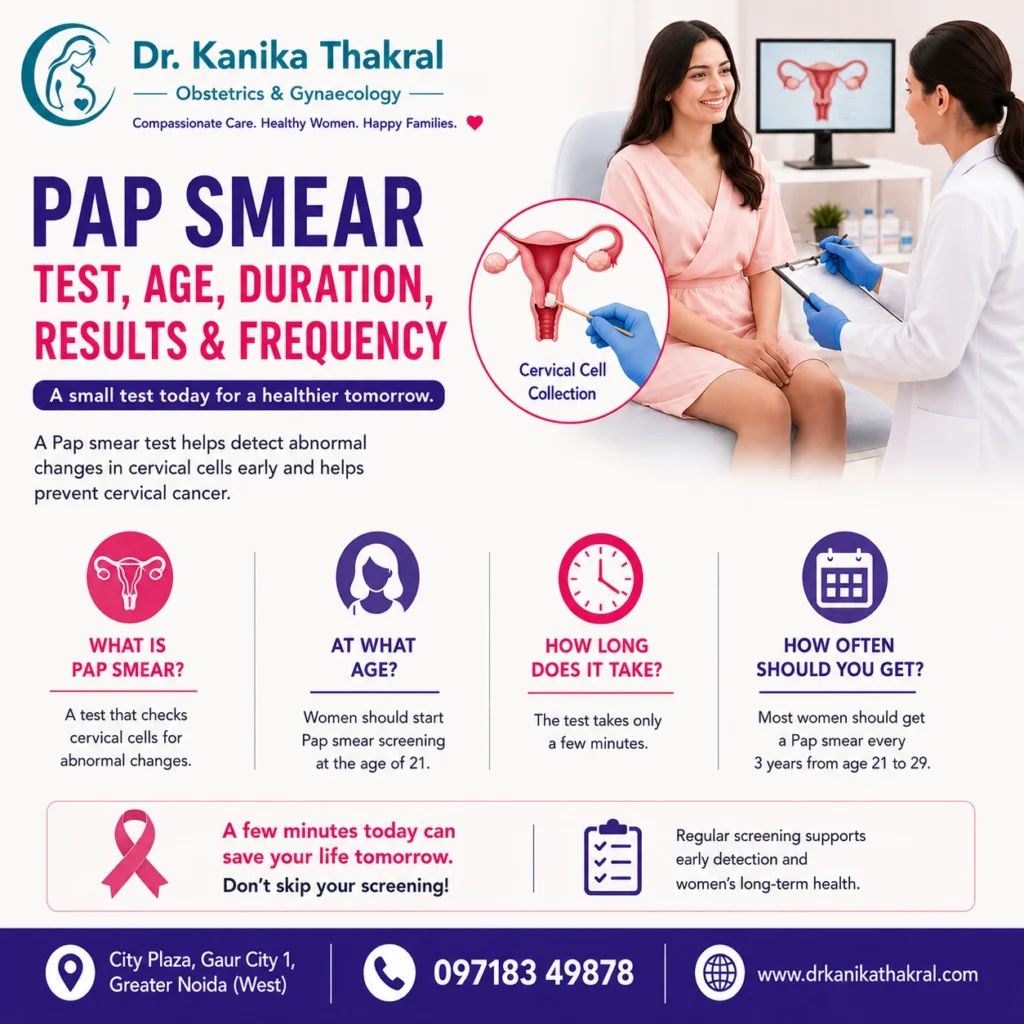
Pap Smear: Test, Age, Duration, Results & Frequency
Women’s health checkups are an important part of preventive healthcare. One of the most commonly recommended screening tests for women is the Pap Smear. This test helps detect abnormal cervical cell changes early before they become serious health concerns. Regular cervical screening can support early diagnosis and better treatment outcomes.
Many women delay cervical screening because of fear, confusion, or lack of awareness. However, the Pap smear procedure is usually simple, quick, and important for long-term reproductive health. Understanding the purpose of the test, recommended age, procedure duration, results, and screening frequency can help women feel more comfortable and informed.
At Dr. Kanika Thakral’s clinic, women receive compassionate gynecology consultation, cervical health screening, and personalized women’s healthcare guidance.
What is a Pap Smear?
A Pap smear is a screening test used to examine cervical cells for abnormal changes. The cervix is the lower part of the uterus that connects to the vagina.
During the test, small cell samples are collected from the cervix and sent to a laboratory for examination. The test helps doctors identify:
- Abnormal cervical cells
- Precancerous changes
- Infection-related changes
- Early warning signs of cervical cancer
Why is a Pap Smear Important?
Cervical abnormalities may not cause noticeable symptoms in the early stages. Regular screening helps detect abnormal changes before they become serious.
A Pap smear may help:
- Detect abnormal cervical cells early
- Support cervical cancer prevention
- Identify infection-related changes
- Improve women’s reproductive health awareness
- Allow early treatment planning
Preventive healthcare plays a major role in maintaining long-term women’s wellness.
At What Age Should Women Start Pap Smear Screening?
Doctors usually recommend cervical screening based on age, medical history, symptoms, and individual health needs.
In many cases, women may begin Pap smear screening around the age recommended by their healthcare provider. Women who are sexually active or have certain risk factors may require earlier consultation.
The screening schedule may vary depending on:
- Age
- Medical history
- Previous Pap smear results
- HPV infection history
- Family history
It is always best to consult a gynecologist for personalized screening guidance.
How is the Pap Smear Test Performed?
The procedure is generally simple and performed during a gynecology visit.
During the test:
- The woman lies comfortably on the examination table
- A medical instrument called a speculum is gently inserted into the vagina
- The cervix becomes visible for examination
- Small cervical cell samples are collected using a soft brush or spatula
- Samples are sent to a laboratory for testing
The procedure is usually quick and may cause only mild discomfort for some women.
How Long Does a Pap Smear Take?
The actual sample collection process usually takes only a few minutes. However, the overall appointment may take slightly longer depending on consultation and examination.
Many women are able to resume normal daily activities shortly after the procedure.
Does a Pap Smear Hurt?
Most women experience little to mild discomfort during the test. Some women may feel slight pressure or temporary discomfort when the sample is collected.
The procedure is generally well tolerated and performed carefully to maintain patient comfort.
Relaxing during the test may help reduce discomfort.
How to Prepare for a Pap Smear Test
Doctors may provide preparation instructions before the screening appointment.
Women may be advised to:
- Avoid intercourse before the test
- Avoid vaginal medicines or creams before screening
- Schedule the test when not menstruating
- Inform the doctor about pregnancy or medical conditions
Following preparation guidelines may help improve test accuracy.
Understanding Pap Smear Results
Pap smear reports may show normal or abnormal findings.
Normal Results
Normal results usually indicate that no abnormal cervical cell changes were detected.
Abnormal Results
Abnormal results do not always mean cancer. In many cases, abnormal findings may indicate:
- Mild cervical changes
- HPV-related changes
- Inflammation
- Infection-related changes
Some women may require repeat testing or further evaluation.
What Happens After Abnormal Results?
If abnormal cervical changes are detected, doctors may recommend:
- Repeat Pap smear testing
- HPV testing
- Colposcopy examination
- Cervical monitoring
- Additional treatment if needed
Early follow-up helps manage cervical abnormalities effectively.
How Often Should Women Get a Pap Smear?
The screening frequency depends on:
- Age
- Medical history
- Previous results
- HPV status
- Doctor recommendations
Some women may need regular routine screening, while others may require closer monitoring.
It is important not to skip gynecology checkups even if there are no symptoms.
What is the Difference Between Pap Smear and HPV Test?
Although both tests are related to cervical health, they are different.
A Pap smear checks for abnormal cervical cells, while an HPV test checks for certain high-risk HPV strains associated with cervical cancer risk.
Doctors may recommend one or both tests depending on individual health needs.
Symptoms That Should Not Be Ignored
Women should consult a doctor if they notice:
- Unusual vaginal bleeding
- Bleeding after intercourse
- Pelvic pain
- Unusual discharge
- Pain during intercourse
- Menstrual irregularities
These symptoms may not always indicate serious disease but should never be ignored.
Benefits of Regular Cervical Screening
Routine screening supports early diagnosis and preventive care.
Benefits may include:
- Early detection of abnormal changes
- Better treatment outcomes
- Improved cervical health awareness
- Reduced risk of advanced disease
- Better women’s healthcare management
Regular gynecology visits are an important part of preventive wellness.
Can Pap Smear Help Prevent Cervical Cancer?
A Pap smear itself does not prevent cervical cancer, but it helps detect abnormal changes early before they become serious.
Early diagnosis allows doctors to monitor and treat abnormal cervical cells at an earlier stage.
Women’s Healthcare Services Available
At Dr. Kanika Thakral’s clinic, women receive complete gynecology and wellness care including:
Obstetrics & Gynecology consultation, cervical health screening, pregnancy care, hormonal health guidance, women wellness consultation, Safe Delivery support, and preventive women’s healthcare services.
The clinic also provides consultation for women seeking long-term reproductive health monitoring and personalized gynecology care.
Why Choose Dr. Kanika Thakral?
Dr. Kanika Thakral provides compassionate women’s healthcare with a focus on preventive screening, patient comfort, and personalized medical guidance.
Women consult her for:
- Cervical health screening
- Women wellness consultation
- Pregnancy monitoring
- Hormonal health support
- Preventive gynecology care
Her patient-focused approach helps women feel informed, comfortable, and supported during their healthcare journey.
Healthy Tips for Better Cervical Health
Healthy lifestyle habits support women’s reproductive wellness.
Women are encouraged to:
- Attend regular gynecology checkups
- Maintain proper hygiene
- Follow healthy nutrition habits
- Avoid smoking
- Practice safe intimate health habits
- Follow vaccination guidance if recommended
Preventive care is one of the best ways to support long-term health.
FAQs
1. What is a Pap smear test?
A Pap smear is a screening test used to detect abnormal cervical cell changes.
2. Is a Pap smear painful?
Most women experience little to mild discomfort during the procedure.
3. How long does the test take?
The sample collection usually takes only a few minutes.
4. Can abnormal results mean cancer?
Not always. Abnormal results may indicate mild changes, infection, or HPV-related changes.
5. How often should women get screened?
The frequency depends on age, medical history, and doctor recommendations.
6. What is the difference between Pap smear and HPV test?
A Pap smear checks cervical cells, while an HPV test checks for high-risk HPV infection.
