
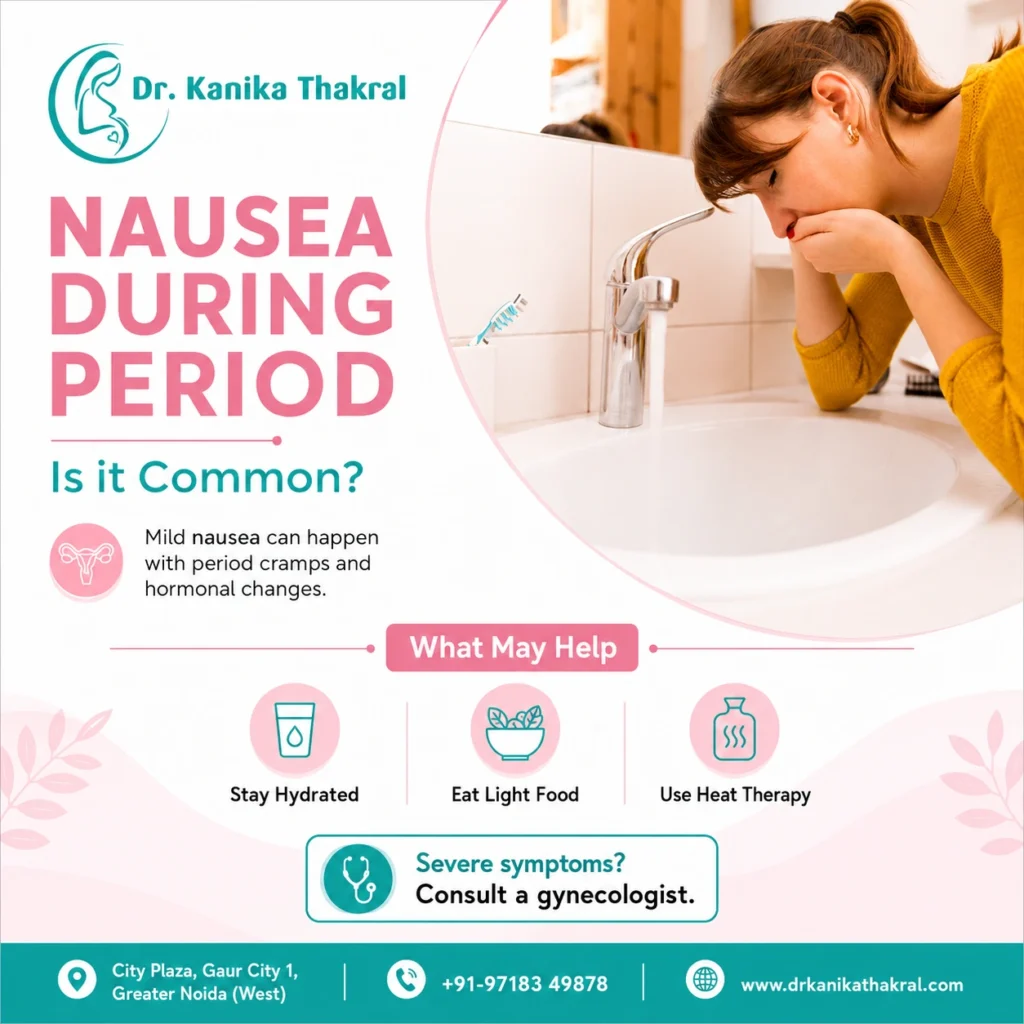
Nausea During Period: Is It Common and Remedies
Nausea During Period is a common problem for many women. Some women feel mild stomach discomfort during periods, while others may feel like vomiting along with cramps, weakness, headache, or loose motions. In most cases, this happens because of hormonal changes and strong period cramps.
During periods, the uterus contracts to remove its lining. These contractions are linked with hormone-like chemicals called prostaglandins. When prostaglandin levels are high, cramps may become stronger. They may also affect the digestive system and cause nausea, vomiting, bloating, or diarrhea. Mayo Clinic explains that higher prostaglandin levels are linked with more severe menstrual cramps.
At Dr. Kanika Thakral’s clinic, women get complete care for period pain, nausea, irregular cycles, PCOS, pelvic pain, and other menstrual health concerns. If Nausea During Period happens every month or affects your daily routine, it is better to understand the reason instead of ignoring it.
Is Nausea During Period Common?
Yes, Nausea During Period can be common, especially when it comes with period cramps. Many women feel uncomfortable during the first one or two days of periods. This is usually the time when cramps are stronger.
For some women, nausea is mild and improves with rest, fluids, and light food. However, for others, it can become difficult to manage. They may feel weak, dizzy, or unable to attend work, college, or daily activities.
Nausea can also come with other symptoms, such as:
- Lower abdominal cramps
- Back pain
- Headache
- Loose motions
- Bloating
- Tiredness
- Vomiting feeling
- Mood changes
If these symptoms are mild, simple care may help. But if they are severe or repeat every cycle, you should consult a gynecologist.
Why Does Nausea During Period Happen?
The most common reason for Nausea During Period is painful periods, also called dysmenorrhea. Period cramps happen when the uterus tightens and relaxes to shed its lining. Prostaglandins play an important role in this process.
When the body makes more prostaglandins, cramps can become stronger. These chemicals can also affect the stomach and intestines. This is why some women feel nausea, vomiting, or diarrhea during periods. MedlinePlus also explains that primary period pain is usually caused by too many prostaglandins, which make the uterus tighten and relax.
Hormonal changes can also affect digestion. Some women feel acidity, loss of appetite, gas, or bloating before and during periods. Lack of sleep, stress, dehydration, and skipping meals can make nausea worse.
When Nausea During Period May Not Be Normal
Mild nausea during periods is usually not serious. But severe nausea should not be ignored. It may be a sign that your period pain or menstrual health needs proper evaluation.
You should consult a gynecologist if you notice:
- Repeated vomiting during periods
- Severe cramps every month
- Very heavy bleeding
- Large blood clots
- Irregular periods
- Pelvic pain between periods
- Pain during intercourse
- Fever or unusual discharge
- Dizziness or fainting
- Sudden severe lower abdominal pain
These symptoms may be linked to fibroids, ovarian cysts, endometriosis, pelvic infection, PCOS, or hormonal imbalance. If your cycles are irregular, you may need Irregular Periods Treatment to understand the real cause.
Nausea During Period and Period Cramps
Nausea and cramps often happen together. Usually, cramps start before the bleeding or on the first day of periods. Nausea may also feel stronger during this time.
This happens because prostaglandin levels are usually higher at the start of periods. These chemicals help the uterus push out the lining, but they can also cause pain and digestive discomfort.
If cramps are mild, home remedies may help. But if pain is severe, getting worse, or not improving with usual care, it is better to seek medical advice. ACOG explains that NSAIDs reduce prostaglandins and can help reduce painful period symptoms when used properly.
Do not take painkillers repeatedly without medical guidance. If you need medicine every cycle, the cause should be checked.
Home Remedies for Nausea During Period
Many women can manage mild Nausea During Period with simple home care. The goal is to calm the stomach, reduce cramps, and keep the body hydrated.
You can try these remedies:
- Drink small sips of water often.
- Eat light homemade food.
- Avoid oily and very spicy food.
- Use a heating pad on the lower abdomen.
- Take proper rest.
- Try gentle walking or stretching.
- Avoid skipping meals.
- Reduce caffeine if it increases acidity.
- Take doctor-advised medicine if needed.
NHS suggests using a warm bath, heat pad or hot water bottle, tummy and back massage, and gentle exercise to ease period pain.
These remedies can help in mild cases. However, if nausea is severe or happens every month, do not depend only on home remedies.
Food Tips to Reduce Nausea During Period
Food can affect how you feel during periods. Some foods may make nausea worse, while light foods may make the stomach feel better.
During periods, try to eat small meals instead of one heavy meal. Soft and simple foods are easier to digest. You can choose khichdi, curd rice, soup, dal, banana, toast, poha, light fruits, or homemade meals.
Avoid heavy fried food if it increases nausea. Also avoid too much tea, coffee, packaged snacks, and sugary drinks if they make bloating or acidity worse.
If bleeding is heavy, include iron-rich foods in your diet. Green leafy vegetables, lentils, beans, dates, nuts, seeds, and balanced meals may help support energy. If weakness is frequent, your doctor may check hemoglobin and iron levels.
Heat Therapy for Period Nausea and Cramps
Heat therapy is one of the easiest ways to reduce period cramps. When cramps reduce, nausea may also feel better.
You can place a hot water bottle or heating pad on the lower abdomen. Keep it warm, not too hot. Always wrap it in a towel to protect your skin.
Heat may relax the uterine muscles and reduce discomfort. A warm bath may also help the body relax. This can be useful when nausea is linked with strong cramps.
However, heat therapy should not replace medical care if pain is severe. If you have sudden sharp pain, fever, heavy bleeding, or dizziness, consult your doctor.
Can Nausea During Period Be Linked to PCOS?
PCOS can cause irregular periods, delayed periods, acne, weight gain, hair fall, and facial hair growth. Some women with PCOS may also have painful periods or digestive discomfort around periods.
If Nausea During Period happens with irregular cycles, weight gain, acne, or difficulty conceiving, PCOS evaluation may be needed. A PCOS Specialist can guide you with cycle tracking, hormone evaluation, lifestyle changes, and treatment options.
PCOS care is not only about periods. It also supports fertility, weight, skin, metabolism, and long-term hormonal health. Therefore, early diagnosis is helpful.
Can Fibroids or Ovarian Cysts Cause Period Nausea?
Fibroids and ovarian cysts do not always cause nausea. However, they can cause symptoms that may make periods more difficult.
Fibroids may cause heavy bleeding, pelvic pressure, painful periods, frequent urination, or low energy. Ovarian cysts may cause pelvic pain, bloating, irregular periods, or sudden severe pain in some cases.
If nausea comes with heavy bleeding, severe pelvic pain, or repeated cramps, your doctor may suggest an ultrasound. Women who need Fibroid Treatment or Ovarian Cyst Treatment should not ignore period-related symptoms.
Not every fibroid or cyst needs surgery. Treatment depends on size, symptoms, age, pregnancy plans, and overall health.
Could It Be Pregnancy Instead of Period Nausea?
Sometimes nausea around the expected period date can create confusion. If your period is delayed or bleeding is unusual, pregnancy should be considered.
This is more important if you had unprotected intercourse or you are trying to conceive. In such cases, take a pregnancy test after a missed period or consult your doctor.
Do not take strong medicines for period pain if pregnancy is possible. Your doctor can guide you safely.
Women with irregular cycles may find it harder to know whether nausea is due to periods or early pregnancy. In such cases, proper consultation is helpful.
Period Health and Future Pregnancy Planning
Menstrual health is important for future pregnancy planning. Regular periods often suggest regular ovulation, although this is not always guaranteed. Irregular periods may need evaluation, especially if you are planning pregnancy.
If you are planning a baby, your doctor may check your cycle history, thyroid, sugar levels, hemoglobin, PCOS symptoms, and general health. Good menstrual health can support better pregnancy planning.
You can also discuss future care, Normal Delivery, and Safe Delivery guidance with your gynecologist. Pregnancy care often starts before conception, especially if you have period problems, PCOS, fibroids, ovarian cysts, or hormonal concerns.
When Should You Consult Dr. Kanika Thakral?
You should consult Dr. Kanika Thakral if nausea during periods happens often, vomiting repeats, or period pain becomes severe. You should also visit if your periods are irregular, bleeding is heavy, or cramps affect your routine.
A consultation is also important if you have pelvic pain, pain during intercourse, abnormal discharge, fever, dizziness, fainting, or sudden severe pain.
At Dr. Kanika Thakral’s clinic, women can get guidance for Irregular Periods Treatment, period pain, PCOS, fibroids, ovarian cysts, pregnancy planning, and complete women’s health care. Early care can help you feel more confident about your cycle and overall health.
Final Thoughts
Nausea During Period is common for many women, especially when it comes with cramps. It often happens due to prostaglandins and hormonal changes during menstruation. Mild nausea can improve with hydration, light food, heat therapy, rest, and proper pain care.
However, severe nausea, repeated vomiting, heavy bleeding, irregular periods, or intense pelvic pain should not be ignored. These symptoms may need medical evaluation to rule out fibroids, ovarian cysts, PCOS, infection, or other gynecological concerns.
For Nausea During Period, Irregular Periods Treatment, Fibroid Treatment, Ovarian Cyst Treatment, and guidance from a PCOS Specialist, consult Dr. Kanika Thakral. Timely care can help you manage periods better and protect your long-term women’s health.
FAQs
1. Is Nausea During Period common?
Yes, Nausea During Period can be common, especially with cramps. It often happens because of prostaglandins and hormonal changes during menstruation.
2. Why do I feel like vomiting during periods?
You may feel like vomiting because prostaglandins increase during periods. They make the uterus contract and may also affect the digestive system.
3. What helps nausea during periods?
Small sips of fluids, light meals, rest, heat therapy, gentle movement, and proper pain care may help. If nausea is severe, consult a gynecologist.
4. When should I worry about nausea during periods?
You should worry if nausea is severe, vomiting repeats, pain is intense, bleeding is very heavy, or you feel dizzy or faint. These symptoms need medical advice.
5. Can PCOS cause nausea during periods?
PCOS may cause irregular periods and hormonal changes. Some women with PCOS may also feel period discomfort. A PCOS Specialist can help evaluate the cause.
