
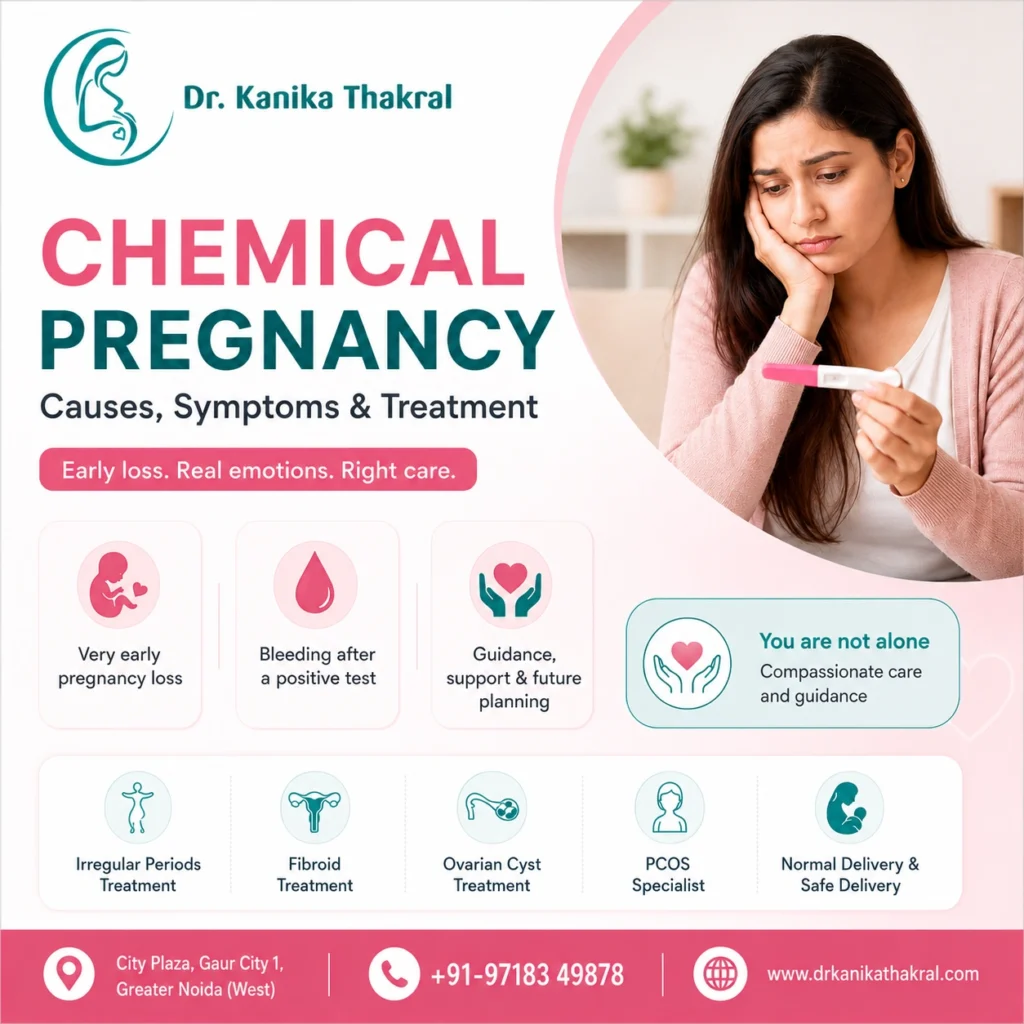
Chemical Pregnancy: Causes, Symptoms & Treatments
A Chemical Pregnancy is a very early pregnancy loss that usually happens before the fifth week of pregnancy. Many women only come to know about it after getting a positive pregnancy test and then bleeding starts a few days later. In some cases, the next pregnancy test may become negative, which can feel confusing and emotionally painful.
The word “chemical” does not mean anything harmful or artificial happened in the body. It simply means the pregnancy was detected through pregnancy hormones, mainly hCG, but it ended before it could be clearly seen on an ultrasound. Cleveland Clinic explains that a chemical pregnancy is an early miscarriage that happens before the fifth week, and many people later go on to have healthy pregnancies.
At Dr. Kanika Thakral’s clinic, women receive calm guidance for early pregnancy concerns, bleeding after a positive test, miscarriage counselling, and future pregnancy planning. A Chemical Pregnancy can be emotionally difficult, but the right medical advice can help you understand what happened and what to do next.
What Is a Chemical Pregnancy?
A Chemical Pregnancy is an early miscarriage that happens soon after implantation. Implantation means the fertilized egg attaches to the lining of the uterus. After implantation, the body starts producing hCG, the pregnancy hormone detected by urine and blood pregnancy tests.
In a chemical pregnancy, the pregnancy may start, but it stops developing very early. Because hCG has already started rising, the pregnancy test may show positive. However, when the pregnancy does not continue, hCG levels fall and bleeding may start.
This can happen so early that many women may think their period was simply late or heavier than usual. Some women may never know they had a chemical pregnancy unless they tested early. Tommy’s describes chemical pregnancy as a very early miscarriage where pregnancy hormones are detected, but the embryo is lost before it can be seen on ultrasound.
Why Does Chemical Pregnancy Happen?
A Chemical Pregnancy often happens because the embryo does not develop properly in the earliest stage. In many cases, this may be due to chromosomal abnormalities. Chromosomes carry genetic information. If the embryo has the wrong number or structure of chromosomes, it may not continue growing.
This does not usually happen because of something the woman did. It is important to understand this clearly. Many women blame themselves after early pregnancy loss. But most early miscarriages are not caused by daily activities, travel, work, mild stress, exercise, or intercourse.
Mayo Clinic explains that many miscarriages happen because the unborn baby does not develop properly, and early losses may happen before a person even realizes they are pregnant.
Common Causes of Chemical Pregnancy
In many cases, the exact cause of a Chemical Pregnancy is not found. However, some factors may increase the chances of very early pregnancy loss. These may include chromosomal problems in the embryo, poor implantation, hormonal imbalance, thyroid problems, uncontrolled diabetes, PCOS, uterine problems, infections, or age-related egg quality changes.
Women with irregular periods may also find it difficult to identify early pregnancy and early loss. If cycles are irregular, ovulation timing can vary. This may cause confusion about pregnancy dates, late periods, or early bleeding. In such cases, proper Irregular Periods Treatment and cycle evaluation can help in better pregnancy planning.
Some women with fibroids, ovarian cysts, or PCOS may need a more detailed evaluation before planning pregnancy. If you have a history of Fibroid Treatment, Ovarian Cyst Treatment, or consultation with a PCOS Specialist, you should share your full medical history with your gynecologist.
Symptoms of Chemical Pregnancy
The symptoms of a Chemical Pregnancy may look similar to a late period or early miscarriage. Many women first notice a positive pregnancy test. After a few days, bleeding may start. The bleeding may be heavier than a normal period or may come with more cramping.
Some women may notice that pregnancy symptoms suddenly reduce. For example, breast tenderness, tiredness, or mild nausea may decrease. In other cases, there may be no clear pregnancy symptoms because the loss happens very early.
Common signs may include bleeding after a positive pregnancy test, period-like cramps, heavier bleeding than usual, blood clots, a delayed period, falling hCG levels, or a negative pregnancy test after a previous positive result. Cleveland Clinic lists signs such as a positive pregnancy test followed by a negative test, mild spotting, or bleeding around the expected period time.
How Is Chemical Pregnancy Diagnosed?
A Chemical Pregnancy is usually diagnosed through pregnancy test history and hCG blood levels. If a woman had a positive pregnancy test and then bleeding, the doctor may advise a blood test to check hCG levels.
In a healthy early pregnancy, hCG usually rises over time. In a chemical pregnancy, hCG may be low or may start falling. Your doctor may repeat the blood test after 48 hours to understand the pattern.
Mayo Clinic notes that blood tests can check hCG levels, and low or falling hCG may be a sign of pregnancy loss. If hCG changes are irregular, your healthcare professional may advise more blood tests or ultrasound.
In many chemical pregnancies, ultrasound may not show a pregnancy sac because it is too early. This is why blood tests and symptoms become important. Your doctor may also want to rule out ectopic pregnancy if pain, unusual bleeding, or abnormal hCG patterns are present.
Is Chemical Pregnancy the Same as Miscarriage?
A Chemical Pregnancy is a type of very early miscarriage. The difference is mainly timing. A chemical pregnancy happens before the pregnancy can be seen clearly on ultrasound. A clinical pregnancy is usually one that can be seen on ultrasound.
This difference can make chemical pregnancy emotionally confusing. Some people may say, “It was too early,” but for the woman who saw a positive pregnancy test, it can still feel like a real loss. Emotional pain should not be ignored just because the pregnancy ended early.
Every woman reacts differently. Some may feel sad, shocked, angry, or anxious about future pregnancy. These feelings are valid. Support from family and proper counselling from a doctor can help during recovery.
Does Chemical Pregnancy Affect Future Fertility?
A single Chemical Pregnancy usually does not mean you cannot have a healthy pregnancy later. Many women conceive again and go on to have normal pregnancies. Cleveland Clinic also states that most people who experience chemical pregnancy go on to have healthy pregnancies.
However, if chemical pregnancies happen repeatedly, medical evaluation is important. Recurrent early losses may be linked to hormonal problems, thyroid issues, diabetes, PCOS, uterine cavity problems, blood clotting conditions, or genetic factors.
If you have had repeated early pregnancy losses, do not keep trying without guidance. A gynecologist may suggest blood tests, ultrasound, thyroid profile, sugar test, hormone evaluation, infection screening, or other investigations based on your history.
Treatment for Chemical Pregnancy
In most cases, a Chemical Pregnancy does not need any special treatment because the body naturally completes the process. Bleeding may happen like a period, and hCG levels gradually come down. However, it is still important to consult your doctor, especially if bleeding is heavy or pain is severe.
Your gynecologist may advise follow-up hCG testing to make sure the levels are falling properly. This helps confirm that the pregnancy tissue has passed and also helps rule out other concerns. If bleeding continues for many days, or if there is severe pain, dizziness, fever, or foul-smelling discharge, you should seek medical care immediately.
Treatment may also include emotional support and future pregnancy counselling. If an underlying condition is suspected, your doctor may treat that before you plan pregnancy again. For example, thyroid imbalance, PCOS, anemia, diabetes, infection, or uterine problems may need attention.
When Should You See a Doctor?
You should consult a gynecologist if you get bleeding after a positive pregnancy test. You should also visit if the bleeding is heavy, pain is severe, or pregnancy test results are confusing.
Immediate medical help is needed if you have severe one-sided pelvic pain, shoulder pain, dizziness, fainting, very heavy bleeding, fever, or weakness. These symptoms need urgent evaluation because they may suggest a more serious condition, including ectopic pregnancy.
You should also consult if you had more than one Chemical Pregnancy or repeated miscarriage history. Early evaluation can help identify treatable causes and improve pregnancy planning.
At Dr. Kanika Thakral’s clinic, women can discuss early pregnancy bleeding, positive test confusion, miscarriage concerns, and future pregnancy care in a supportive environment.
Chemical Pregnancy and PCOS
Women with PCOS may have irregular ovulation, delayed periods, and hormonal imbalance. This can make pregnancy tracking more difficult. Some women with PCOS may test very early because their cycles are irregular, and they may notice a chemical pregnancy that otherwise may have looked like a late period.
PCOS does not mean you cannot have a healthy pregnancy. However, proper care is important. Weight management, cycle tracking, ovulation guidance, sugar control, and hormone evaluation may help in pregnancy planning.
If you have irregular cycles, acne, weight gain, facial hair growth, or difficulty conceiving, consult a PCOS Specialist. With proper treatment and follow-up, many women with PCOS conceive and continue healthy pregnancies.
Planning Pregnancy After Chemical Pregnancy
Many couples ask when they can try again after a Chemical Pregnancy. The answer depends on your physical recovery, emotional readiness, bleeding pattern, and doctor’s advice. In many cases, women can try again after the bleeding stops and they feel ready. However, it is best to consult your gynecologist first.
Your doctor may check whether hCG has returned to normal and whether any further tests are needed. If this was your first early loss and there are no other symptoms, you may not need a long list of tests. But if there is repeated loss, irregular periods, PCOS, thyroid issues, diabetes, fibroids, or ovarian cysts, evaluation becomes more important.
Before trying again, focus on folic acid, healthy diet, proper sleep, stress control, weight management, and treatment of existing health problems. If you are planning for Normal Delivery and Safe Delivery in the future, pregnancy care should start before conception itself.
Emotional Recovery After Chemical Pregnancy
A chemical pregnancy can be physically early, but emotionally it may feel heavy. Seeing a positive pregnancy test can create hope. When bleeding starts soon after, it can feel heartbreaking.
It is okay to feel sad. It is also okay if you do not feel ready to talk about it immediately. Every woman processes pregnancy loss differently. Give yourself time and do not compare your reaction with others.
Talk to your partner, a trusted family member, or your doctor. If sadness, anxiety, guilt, or fear becomes too heavy, counselling may help. Emotional healing is also a part of treatment.
Can Chemical Pregnancy Be Prevented?
Not every Chemical Pregnancy can be prevented because many happen due to random chromosomal changes in the embryo. These are usually not under anyone’s control. However, you can reduce some risks by taking care of your overall health.
Manage thyroid problems, diabetes, PCOS, anemia, and infections before pregnancy. Avoid smoking and alcohol. Maintain a healthy weight. Take folic acid as advised. Also, consult your doctor before taking any medicine while planning pregnancy.
If you have fibroids or ovarian cysts, your doctor will guide whether they need monitoring or treatment before pregnancy. Not every fibroid or cyst affects pregnancy, but proper evaluation helps in better planning.
Why Choose Dr. Kanika Thakral?
Early pregnancy loss needs both medical care and emotional support. Many women feel confused after a positive pregnancy test followed by bleeding. They may not know whether it was a period, miscarriage, or something else.
Dr. Kanika Thakral provides guidance for early pregnancy concerns, pregnancy test interpretation, bleeding in early pregnancy, miscarriage counselling, PCOS-related fertility concerns, and complete women’s health care. If you need Irregular Periods Treatment, Fibroid Treatment, Ovarian Cyst Treatment, or pregnancy planning support, you can consult Dr. Kanika Thakral for proper evaluation.
The goal is not only to treat the current concern. The goal is also to guide you safely for your future pregnancy journey.
Final Thoughts
A Chemical Pregnancy is a very early pregnancy loss that happens before the pregnancy is visible on ultrasound. It may show as a positive pregnancy test followed by bleeding, cramping, falling hCG levels, or a negative test later.
In many cases, it happens due to early embryo development problems and is not the woman’s fault. A single chemical pregnancy usually does not mean future pregnancy is impossible. Many women go on to have healthy pregnancies later.
However, repeated chemical pregnancies, severe pain, heavy bleeding, or irregular hCG levels should be checked by a gynecologist. For early pregnancy loss guidance, future pregnancy planning, and care toward Safe Delivery, consult Dr. Kanika Thakral.
FAQs
1. What is a Chemical Pregnancy?
A Chemical Pregnancy is a very early miscarriage that usually happens before the fifth week of pregnancy. It is often detected by a positive pregnancy test before it can be seen on ultrasound.
2. What are the symptoms of Chemical Pregnancy?
Symptoms may include a positive pregnancy test followed by bleeding, cramps, heavier period-like bleeding, falling hCG levels, or a negative pregnancy test after a previous positive result.
3. Does Chemical Pregnancy need treatment?
In many cases, no special treatment is needed. However, you should consult your gynecologist to confirm recovery and rule out other concerns.
4. Can I get pregnant again after Chemical Pregnancy?
Yes, many women get pregnant again and have healthy pregnancies after a chemical pregnancy. If it happens repeatedly, medical evaluation is advised.
5. Is Chemical Pregnancy caused by stress?
Most early pregnancy losses are linked to embryo development or chromosomal problems. It is usually not caused by normal daily stress or routine activities.
6. When should I see a doctor after Chemical Pregnancy?
See a doctor if bleeding is heavy, pain is severe, hCG levels are confusing, or you have repeated early pregnancy losses. Urgent care is needed for severe one-sided pain, dizziness, or fainting.
