
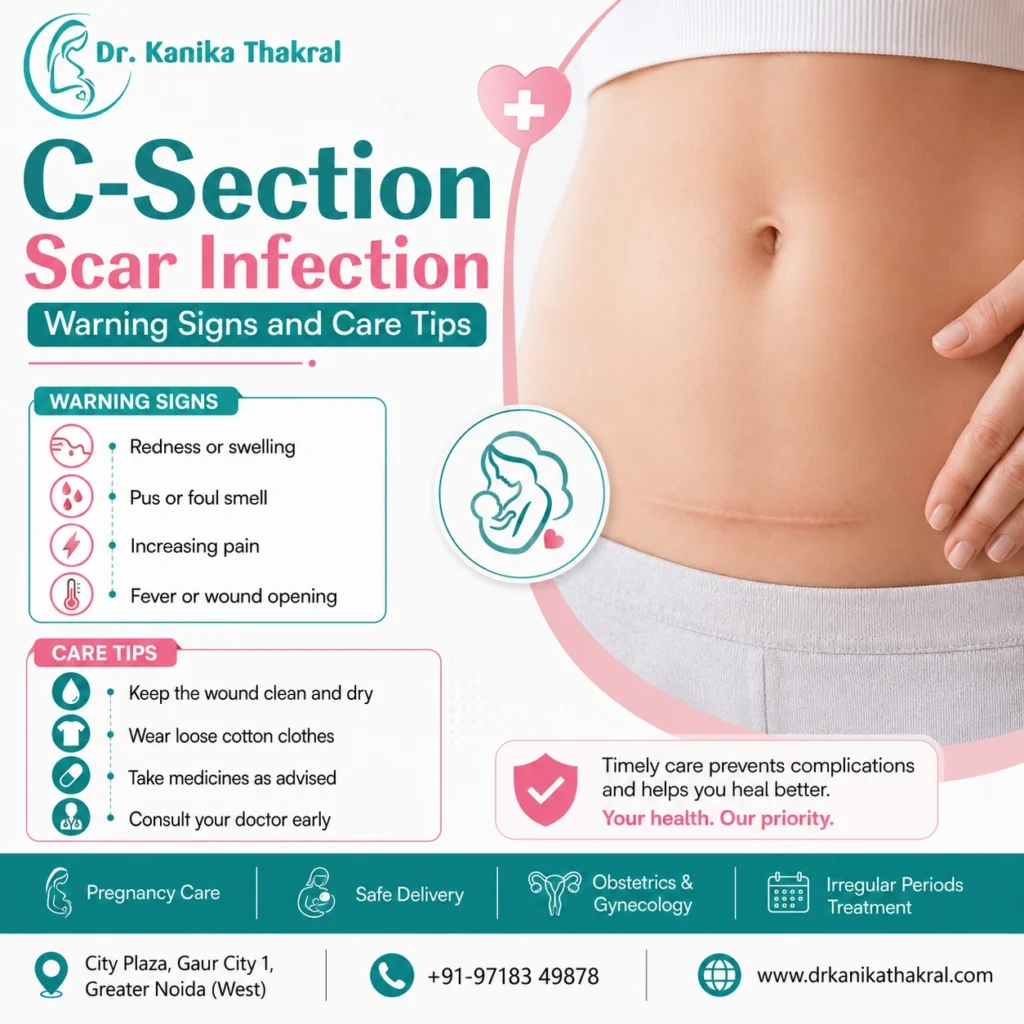
C-Section Scar Infection: Warning Signs and Care Tips
C-Section Scar Infection can happen when bacteria enter the surgical wound after a cesarean delivery. A C-section is a common delivery procedure, but the incision needs proper care during recovery. Mild pain, tightness, or pulling around the scar can be normal in the first few days. However, increasing redness, swelling, pus, foul smell, fever, or worsening pain should never be ignored.
Many mothers focus only on baby care after delivery and forget their own recovery. But scar healing is also an important part of post-delivery health. Timely care can prevent infection from getting worse and support better healing.
At Dr. Kanika Thakral clinic, mothers get guidance for post-delivery wound care, cesarean recovery, Pregnancy Care, Safe Delivery, and complete Obstetrics & Gynecology support. If you notice any warning signs of C-Section Scar Infection, consult your doctor early.
What Is C-Section Scar Infection?
A C-Section Scar Infection is an infection around the incision made during cesarean delivery. It may affect the skin, tissue under the skin, or deeper layers in some cases.
The wound usually takes time to heal. During this phase, the area may feel sore, numb, tight, or slightly itchy. These symptoms can be part of normal healing. But if the wound becomes more painful, red, swollen, hot, or starts leaking pus, infection may be present.
NHS guidance advises women to seek medical help after a C-section if the wound becomes more red, painful, swollen, or if there is pus or foul-smelling fluid from the wound.
Why C-Section Scar Infection Happens
A C-section is a surgical procedure. Like any surgery, there is a chance of wound infection. Bacteria may enter the incision during or after delivery. Poor wound care, moisture, friction, diabetes, obesity, low immunity, or delayed treatment can increase the risk.
Some women may have a higher risk if they had emergency C-section, prolonged labour, long rupture of membranes, heavy bleeding, or other pregnancy complications. However, infection can happen even when surgery and recovery seem normal at first.
This is why wound care matters after Safe Delivery. Your scar should be checked regularly during the first few weeks.
Warning Signs of C-Section Scar Infection
Early warning signs can be mild. Therefore, it is important to look at the wound daily, especially after bathing.
Common signs of C-Section Scar Infection include:
- Increasing redness around the scar
- Swelling or hardness near the wound
- Skin feeling warm or hot
- Worsening pain around the incision
- Yellow, green, or pus-like discharge
- Bad smell from the wound
- Fever or chills
- Wound opening
- Bleeding from the incision
- Feeling unwell or weak
NHS wound care guidance also lists redness, swelling or hardening, warmth, foul-smelling discharge, pus-like discharge, and increasing pain as signs that may suggest infection.
Normal Healing vs Infection
After a C-section, mild discomfort is expected. The scar may feel tight while walking, coughing, or getting up from bed. Some numbness around the incision is also common.
However, normal healing should gradually improve. Pain should slowly reduce. Redness should not spread. The wound should not smell bad or leak pus.
A simple way to understand the difference is this: healing gets better with time, while infection often gets worse. If your scar looks more inflamed or painful after a few days, speak to your doctor.
When Should You Call Your Doctor?
You should call your doctor if you notice any sign that feels unusual. Do not wait for the wound to become severe.
Contact your doctor if:
- Pain is increasing instead of improving
- Redness is spreading around the scar
- Wound feels hot or swollen
- Pus or foul-smelling fluid is present
- Fever develops
- The wound opens
- You feel very weak or unwell
- Bleeding is heavy
- There is severe lower abdominal pain
NHS advises seeking medical help after C-section for severe pain, heavy vaginal bleeding, wound redness, pain, swelling, pus, foul-smelling fluid, shortness of breath, or leg swelling and pain.
How Is C-Section Scar Infection Diagnosed?
Diagnosis usually starts with an examination of the wound. Your doctor will check redness, swelling, discharge, tenderness, wound opening, and fever.
In some cases, the doctor may ask about pain level, delivery history, blood sugar, fever, and discharge. If pus is present, a sample may be sent for testing. This helps identify the bacteria and choose the right antibiotic.
Your doctor may also check if the infection is only on the skin or deeper inside. Deep infections need closer care.
Treatment for C-Section Scar Infection
Treatment depends on the severity of the infection. Mild infection may need antibiotics and proper wound care. More serious infection may need wound cleaning, drainage, dressing, or further medical care.
Treatment may include:
- Antibiotics
- Pain relief medicines
- Wound cleaning
- Dressing changes
- Drainage if pus is collected
- Blood sugar control if needed
- Follow-up visits
- Hospital care in severe cases
Do not start antibiotics on your own. Wrong medicine can delay healing and may not treat the infection properly. Also, if you are breastfeeding, your doctor will choose medicines that are suitable for you.
C-Section Scar Care at Home
Good wound care can support healing and lower infection risk. Always follow the instructions given at discharge.
Basic care tips include:
- Keep the wound clean and dry.
- Wash hands before touching the scar.
- Avoid rubbing the incision.
- Pat the area dry after bathing.
- Wear loose cotton clothes.
- Avoid tight waistbands.
- Do not apply creams without advice.
- Do not scratch the wound.
- Avoid lifting heavy weight.
- Attend follow-up visits.
NHS wound care advice recommends keeping the wound clean and dry and wearing loose-fitting underwear to prevent rubbing.
Bathing After C-Section
Most women can bathe after C-section, but wound care should be gentle. Do not scrub the scar. Let water run over the area, then pat it dry with a clean towel.
Avoid soaking in a bathtub until your doctor says it is safe. Also avoid using strong soaps, powders, oils, or home remedies on the wound.
Moisture can irritate the scar. So, keep the skin fold area dry, especially if sweating is common.
What Not to Do After C-Section
Some habits can slow healing or increase infection risk. Be careful during the first few weeks.
Avoid these mistakes:
- Do not ignore pus or foul smell.
- Do not press or squeeze the wound.
- Do not use random antiseptic creams.
- Do not cover the wound with unclean cloth.
- Do not lift heavy objects too soon.
- Do not skip medicines prescribed by your doctor.
- Do not miss follow-up visits.
- Do not delay care if fever starts.
Home remedies should not replace medical treatment. If there is infection, proper care is needed.
C-Section Scar Infection and Breastfeeding
Many mothers worry that medicines for C-Section Scar Infection may affect breastfeeding. In many cases, doctors can prescribe antibiotics and pain medicines that are compatible with breastfeeding.
Do not stop breastfeeding without asking your doctor. Also, tell your doctor that you are breastfeeding before taking any medicine.
If you feel very weak, have high fever, or need hospital care, ask for guidance on breastfeeding support and baby feeding.
Pain Around the Scar: When Is It Serious?
Some pain after C-section is normal. But pain should improve slowly. If pain suddenly becomes worse, or if it comes with fever, swelling, redness, or discharge, infection may be present.
Pain can also increase if the wound is under pressure from tight clothes, poor posture, constipation, or heavy lifting. Still, severe pain should not be ignored.
A doctor can check whether the pain is due to normal healing, infection, fluid collection, or another issue.
Can C-Section Scar Infection Affect Future Pregnancy?
Most scar infections heal well with proper treatment. A mild infection usually does not affect future pregnancy.
However, severe infection, poor healing, or repeated wound problems should be discussed before planning another pregnancy. Your doctor may review scar healing, medical history, and delivery records.
If you are planning another pregnancy, good Pregnancy Care starts early. You can also discuss chances of Normal Delivery after cesarean, if suitable. The decision depends on your previous C-section reason, scar history, current pregnancy, and safety factors.
C-Section Recovery and Safe Delivery Planning
C-section recovery is part of delivery care. A healthy recovery supports the mother physically and emotionally. After delivery, your body needs rest, nutrition, hydration, wound care, and support.
The goal of every pregnancy is Safe Delivery and safe recovery. Whether you had a planned or emergency C-section, proper follow-up is important.
If you are pregnant and worried about delivery options, discuss your birth plan during antenatal visits. Sometimes Normal Delivery is possible. Sometimes C-section is safer. Your doctor will guide you based on mother and baby health.
C-Section Scar and Women’s Health
C-section scar care is not only about skin healing. It is also part of women’s health after delivery. Mothers may also face bleeding changes, weakness, breast discomfort, mood changes, urinary issues, or period changes after birth.
If periods become irregular later, or if you have cycle concerns, you may need Irregular Periods Treatment. Post-delivery hormonal changes can affect the body, but persistent symptoms should be checked.
A trusted Women Clinic in Gaur City can help with postnatal care, scar checks, menstrual concerns, and recovery guidance.
Who Has Higher Risk of Scar Infection?
Some factors may increase the risk of C-Section Scar Infection. Knowing these can help mothers stay alert.
Risk may be higher with:
- Diabetes or high blood sugar
- Obesity
- Emergency C-section
- Long labour before surgery
- Long time after water breaking
- Anemia or low immunity
- Poor wound care
- Excess sweating around wound
- Previous wound infection
- Smoking
- Heavy physical strain too early
Having a risk factor does not mean infection will definitely happen. It only means wound care and follow-up are more important.
Tips for Faster and Safer Healing
Healing takes time. Do not rush your body after delivery. Small daily habits can support recovery.
Helpful tips include:
- Eat protein-rich meals.
- Drink enough water.
- Take medicines as prescribed.
- Walk gently as advised.
- Avoid constipation.
- Keep the wound dry.
- Rest whenever possible.
- Ask for help with household work.
- Monitor fever and pain.
- Keep follow-up appointments.
Good nutrition supports wound repair. If you feel too weak, dizzy, or pale, ask your doctor about anemia or other deficiencies.
When Is Emergency Care Needed?
Some symptoms need urgent care. Do not wait if they appear.
Seek urgent medical help if you have:
- High fever
- Severe abdominal pain
- Heavy bleeding
- Foul-smelling discharge
- Wound opening widely
- Pus with severe pain
- Breathlessness
- Chest pain
- Leg swelling or calf pain
- Fainting or severe weakness
These symptoms need quick assessment. Early treatment can prevent serious complications.
Why Choose Dr. Kanika Thakral?
Post-delivery care needs patience, privacy, and proper guidance. Many mothers delay wound checks because they are busy with newborn care. But ignoring scar symptoms can make infection worse.
Dr. Kanika Thakral provides care for C-section recovery, wound concerns, Pregnancy Care, Irregular Periods Treatment, and complete Obstetrics & Gynecology needs.
If you are looking for a Gynecologist in Gaur City or the Best Gynecologist in Gaur City for post-delivery care, you can consult Dr. Kanika Thakral for timely evaluation and safe treatment planning.
Final Thoughts
C-Section Scar Infection should not be ignored. Mild soreness after delivery can be normal, but increasing redness, swelling, warmth, pus, foul smell, fever, or worsening pain needs medical attention.
Good wound care, hygiene, loose clothing, proper rest, and follow-up visits can support healing. If infection develops, timely treatment with the right medicines and wound care can prevent complications.
For C-Section Scar Infection, post-delivery recovery, Pregnancy Care, and Safe Delivery guidance, consult Dr. Kanika Thakral. Timely care can help mothers heal with more comfort and confidence.
FAQs
1. What is C-Section Scar Infection?
C-Section Scar Infection is an infection around the cesarean incision. It may cause redness, swelling, pain, warmth, pus, or fever.
2. What are warning signs of C-section wound infection?
Warning signs include increasing redness, swelling, heat, worsening pain, pus, foul smell, wound opening, fever, or feeling unwell.
3. Is pain around the C-section scar normal?
Mild pain and tightness can be normal after surgery. However, pain that gets worse or comes with fever, redness, or discharge should be checked.
4. How should I care for my C-section scar?
Keep the wound clean and dry. Wear loose clothes. Avoid rubbing, scratching, heavy lifting, and applying creams without medical advice.
5. Can I breastfeed if I need antibiotics?
In many cases, breastfeeding can continue with doctor-prescribed medicines. Always tell your doctor that you are breastfeeding.
