Heavy Bleeding in Early Pregnancy: Causes, Warning Signs & Treatment
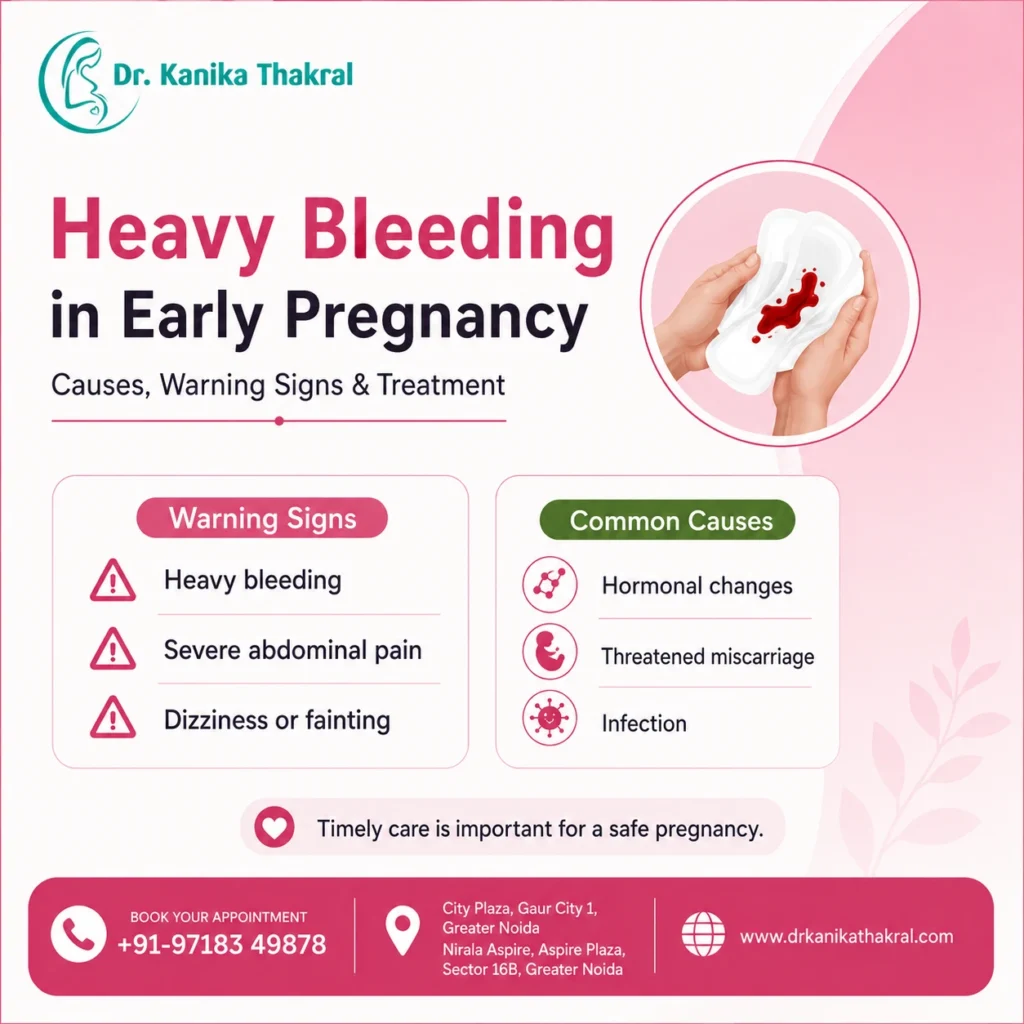
Heavy Bleeding in Early Pregnancy can be stressful and should never be ignored. Light spotting may happen in some pregnancies, but heavy bleeding, clots, strong cramps, dizziness, or severe pain need timely medical attention.
Early pregnancy bleeding can happen due to many reasons. Some causes may be minor, while others may need urgent care. For example, bleeding may happen due to cervical changes, early pregnancy loss, ectopic pregnancy, infection, or other pregnancy-related concerns. The NHS also notes that bleeding in pregnancy may not always mean something serious, but medical advice is important when it happens.
If you notice Bleeding during pregnancy, consult a Gynecologist in Gaur City for proper evaluation. Timely care can help protect mother’s health and support the next safe step.
What Is Heavy Bleeding in Early Pregnancy?
Heavy Bleeding in Early Pregnancy means bleeding that is more than light spotting during the first few weeks or first trimester of pregnancy. It may look bright red, dark red, or brown. Sometimes, it may come with clots or cramps.
Light spotting can happen in early pregnancy. However, heavy bleeding needs a checkup. ACOG explains that bleeding and cramping can be signs of early pregnancy loss, so proper evaluation is important.
Do not assume bleeding is a normal period after pregnancy is confirmed. Pregnancy bleeding and period bleeding are not the same.
Common Causes of Heavy Bleeding in Early Pregnancy
There are many possible causes of bleeding in early pregnancy. A doctor needs to check the exact reason.
Common causes include:
- Implantation-related spotting
- Cervical irritation
- Vaginal or cervical infection
- Threatened miscarriage
- Early pregnancy loss
- Ectopic pregnancy
- Subchorionic bleeding
- Hormonal concerns
- Molar pregnancy in rare cases
- Bleeding from other gynecology causes
Because causes can be different, self-treatment is not safe. A scan and blood tests may be needed to understand the condition.
Warning Signs You Should Not Ignore
Some signs need quick medical care. Do not wait at home if bleeding is heavy or symptoms are strong.
Consult urgently if you have:
- Heavy bleeding
- Large clots
- Severe lower abdominal pain
- One-sided pelvic pain
- Shoulder tip pain
- Dizziness or fainting
- Fever or chills
- Foul-smelling discharge
- Severe weakness
- Positive pregnancy test with pain and bleeding
Ectopic pregnancy can cause vaginal bleeding and pain, and it can become serious if not treated in time. NHS guidance says women should seek medical advice if they have bleeding in pregnancy, especially when symptoms suggest ectopic pregnancy.
Heavy Bleeding in Early Pregnancy and Miscarriage
Heavy bleeding can sometimes be linked with miscarriage. Miscarriage means pregnancy loss before 24 weeks. The NHS states that the main symptom of miscarriage is usually vaginal bleeding before 24 weeks of pregnancy.
However, bleeding does not always mean miscarriage. Some women bleed in early pregnancy and continue pregnancy safely. That is why proper testing is important before making any conclusion.
Your doctor may suggest ultrasound and blood tests to check pregnancy location, heartbeat if the time is right, and hormone levels.
Bleeding During Pregnancy and Ectopic Pregnancy
Ectopic pregnancy happens when pregnancy grows outside the uterus, most commonly in the fallopian tube. This condition needs urgent medical care.
Symptoms may include:
- Vaginal bleeding
- One-sided lower abdominal pain
- Shoulder tip pain
- Dizziness
- Fainting
- Weakness
- Brown watery discharge
- Pain with positive pregnancy test
NICE guidance covers diagnosis and care for ectopic pregnancy and miscarriage in early pregnancy when women have pain or bleeding.
If pregnancy is positive and bleeding comes with pain, do not delay consultation.
Pregnancy Care in Gaur City for Early Bleeding
Proper Pregnancy Care in Gaur City helps monitor early pregnancy health. If bleeding happens, your doctor may check symptoms, pregnancy week, pain, bleeding amount, previous pregnancy history, and scan reports.
Early pregnancy care may include:
- Pregnancy confirmation
- Ultrasound
- Blood tests
- Beta-hCG monitoring
- Blood group testing
- Hemoglobin check
- Infection check if needed
- Rest and follow-up advice
- Emergency guidance
As a result, the care plan becomes safer and more clear.
High-Risk Pregnancy Care for Bleeding Concerns
Bleeding in early pregnancy may need closer follow-up in some women. High-Risk Pregnancy Care is important if you have previous miscarriage, ectopic pregnancy history, IVF pregnancy, thyroid problems, diabetes, high blood pressure, fibroids, ovarian cysts, or repeated bleeding.
High-risk care does not always mean the pregnancy will have a problem. It means the pregnancy needs extra monitoring.
Timely follow-up can help reduce fear and guide the next steps properly.
Can Heavy Bleeding Be Linked With Irregular Periods?
Before pregnancy, many women have Irregular Periods Treatment concerns due to PCOS, thyroid issues, hormonal imbalance, stress, or weight changes. Because of irregular cycles, pregnancy dating may become confusing.
Sometimes, women think early pregnancy bleeding is a delayed period. However, if pregnancy test is positive, bleeding should be treated as pregnancy bleeding, not a normal period.
A gynecology evaluation can help confirm pregnancy week and bleeding cause.
Diagnosis for Heavy Bleeding in Early Pregnancy
Diagnosis depends on symptoms and pregnancy stage. Your doctor may ask about last period date, pregnancy test, bleeding amount, pain, clots, dizziness, fever, and previous pregnancy history.
Tests may include:
- Pelvic ultrasound
- Beta-hCG blood test
- Hemoglobin test
- Blood group and Rh test
- Progesterone test if advised
- Urine test
- Infection testing if needed
- Pelvic examination in selected cases
These tests help check pregnancy location, growth, bleeding source, and overall safety.
Treatment for Heavy Bleeding in Early Pregnancy
Treatment depends on the cause. There is no single treatment for every case.
Your doctor may advise:
- Rest and observation in selected cases
- Medicines if needed
- Pregnancy support as per reports
- Infection treatment if present
- Emergency care for ectopic pregnancy
- Miscarriage care if pregnancy loss is confirmed
- Follow-up ultrasound
- Blood tests for monitoring
- Rh injection if needed and advised
Do not take medicines, hormonal tablets, or painkillers without medical advice during pregnancy.
Does Early Bleeding Affect Normal Delivery Later?
Early bleeding does not always decide your delivery type. Many women with early bleeding may continue pregnancy and later have a Normal Delivery, depending on pregnancy progress.
The final delivery plan depends on:
- Baby growth
- Placenta position
- Mother’s health
- Blood pressure
- Sugar levels
- Baby position
- Pregnancy complications
- Labor progress
So, regular pregnancy follow-up matters after bleeding settles.
What Should You Do If Bleeding Starts?
If bleeding starts in early pregnancy, stay calm but act quickly.
You should:
- Note the amount of bleeding
- Check if there are clots
- Notice pain location
- Avoid self-medication
- Avoid intercourse until doctor advice
- Keep pregnancy test and scan reports ready
- Contact your gynecologist
- Go for urgent care if bleeding is heavy or pain is severe
Do not wait for symptoms to become worse.
When to Consult Dr. Kanika Thakral
Consult Dr. Kanika Thakral if you have bleeding, spotting, cramps, pelvic pain, clots, weakness, or dizziness during early pregnancy.
You may need guidance for:
- Heavy Bleeding in Early Pregnancy
- Bleeding during pregnancy
- Pregnancy Care in Gaur City
- High-Risk Pregnancy Care
- Early pregnancy scan
- Miscarriage evaluation
- Ectopic pregnancy warning signs
- Irregular Periods Treatment history
- Future Normal Delivery planning
Timely consultation can help protect health and reduce complications.
FAQs
1. Is bleeding in early pregnancy normal?
Light spotting can happen in some pregnancies. However, heavy bleeding, pain, clots, dizziness, or fever should be checked quickly.
2. What causes heavy bleeding in early pregnancy?
Possible causes include cervical irritation, infection, threatened miscarriage, early pregnancy loss, ectopic pregnancy, subchorionic bleeding, or other pregnancy-related concerns.
3. Does heavy bleeding always mean miscarriage?
No. Heavy bleeding does not always mean miscarriage. Still, proper ultrasound and blood tests are needed to find the cause.
4. When should I seek urgent care?
Seek urgent care if you have heavy bleeding, severe pain, dizziness, fainting, shoulder pain, fever, or one-sided pelvic pain.
5. Can I have Normal Delivery after early pregnancy bleeding?
Yes, it may be possible if pregnancy continues safely and later reports are normal. Delivery depends on mother and baby health near term.
6. Which doctor should I consult?
You should consult a Gynecologist in Gaur City for proper pregnancy evaluation, ultrasound guidance, and safe treatment.
