
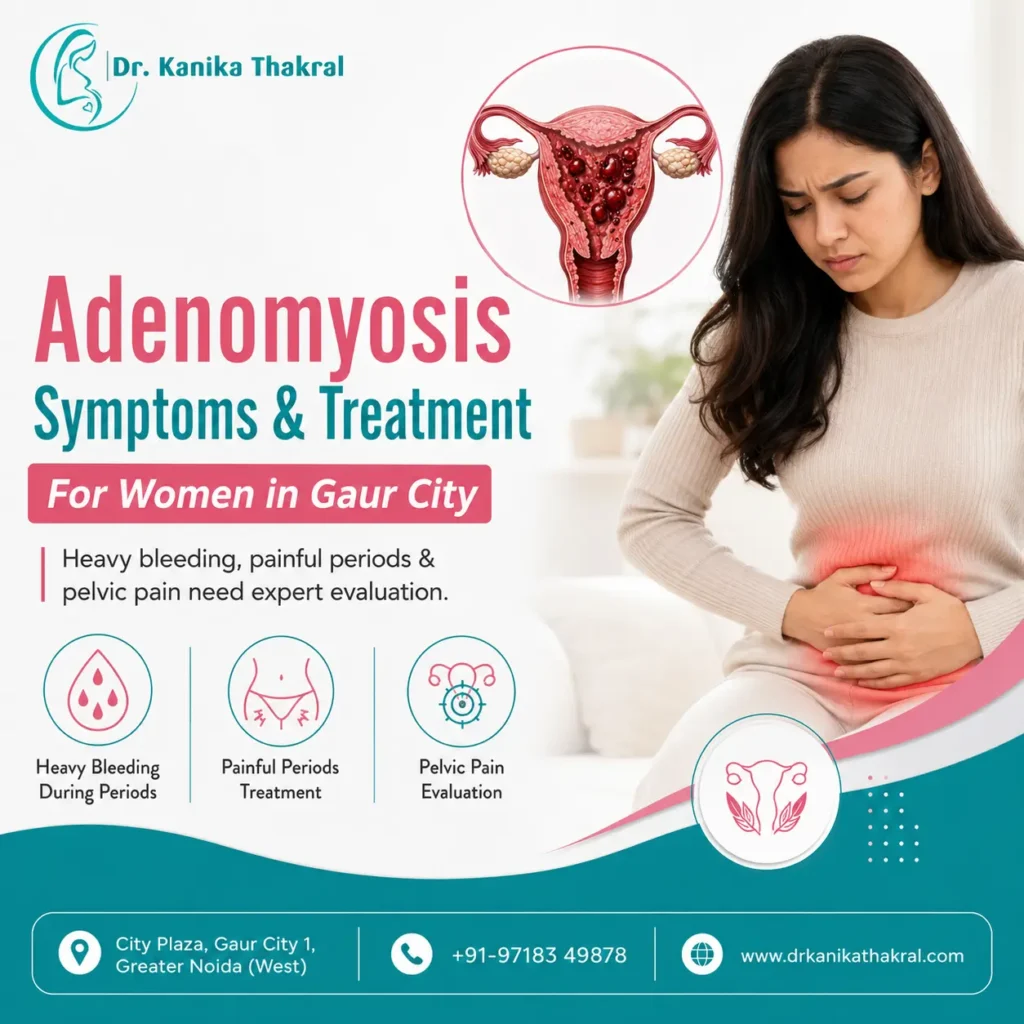
Adenomyosis Treatment in Gaur City – Relief from Heavy Bleeding & Period Pain
Adenomyosis Treatment is important for women who suffer from heavy bleeding, painful periods, pelvic pain, or long periods. Many women ignore these symptoms. They often think period pain and heavy bleeding are normal.
However, this is not always true.
Adenomyosis is a uterus-related condition. It happens when tissue similar to the inner lining of the uterus grows into the muscle wall of the uterus. Because of this, the uterus may become bulky, painful, and tender.
As a result, periods can become heavy and painful. Some women also feel pressure in the lower abdomen. Others may feel tired due to blood loss.
Dr. Kanika Thakral provides caring support for Adenomyosis Treatment in Gaur City, painful periods, heavy bleeding, pelvic pain, and complete women’s health care.
What Is Adenomyosis?
Adenomyosis is a condition of the uterus. In this condition, tissue similar to the uterine lining grows inside the uterine muscle.
During every menstrual cycle, this tissue reacts to hormonal changes. Therefore, it can cause swelling, pain, and heavy bleeding.
Some women have mild symptoms. However, some women face severe pain and heavy periods every month.
Adenomyosis is not cancer. Still, it can affect daily life. It can disturb work, travel, sleep, and emotional health.
So, repeated pain and heavy bleeding should not be ignored.
Common Adenomyosis Symptoms
Adenomyosis symptoms can be different for every woman. Some women may not notice clear signs. However, many women face period-related problems.
Common symptoms include:
- Heavy menstrual bleeding
- Painful periods
- Severe cramps
- Pelvic pain
- Long periods
- Blood clots during periods
- Lower abdominal pressure
- Bloating
- Pain during intercourse
- Tiredness or weakness
In some women, pain starts before periods. It may continue during bleeding. Sometimes, pelvic pain may also happen between periods.
Therefore, a proper checkup is important.
Why Adenomyosis Causes Heavy Bleeding
Adenomyosis can affect the normal muscle wall of the uterus. Because of this, the uterus may not contract properly during periods.
This can lead to heavy or long bleeding.
Many women need to change pads again and again. Some may pass clots. Others may feel weak or dizzy during periods.
Heavy Bleeding During Periods can also cause anemia. Anemia may lead to tiredness, breathlessness, pale skin, and low energy.
So, timely Heavy bleeding treatment can improve health and daily comfort.
Painful Periods and Adenomyosis
Period pain is common. However, severe pain is not normal.
Adenomyosis can cause deep cramps and lower abdominal pain. The pain may become stronger with age. It may also affect daily work.
Some women need painkillers every month. Others may miss office, school, or family events due to pain.
In such cases, Painful periods treatment is needed. The aim is to reduce pain, control bleeding, and improve quality of life.
Do not suffer silently every month. Period pain that affects routine needs medical evaluation.
Pelvic Pain in Women
Pelvic pain in women can happen due to many reasons. Adenomyosis is one possible reason. However, pelvic pain can also happen due to fibroids, ovarian cysts, endometriosis, infection, or hormonal problems.
That is why self-diagnosis is not safe.
A proper Pelvic Pain Evaluation helps find the real cause. Your doctor may ask about your cycle, bleeding pattern, pain location, and medical history.
After that, tests may be advised if needed.
Once the cause is clear, treatment becomes more effective.
Adenomyosis vs Fibroids
Adenomyosis and fibroids can look similar because both can cause heavy bleeding and pelvic pain.
However, they are different conditions.
Fibroids are non-cancerous growths in or around the uterus. Adenomyosis happens when lining-like tissue grows into the uterine muscle wall.
Sometimes, both conditions can happen together. When this happens, symptoms may become stronger.
Women looking for Fibroids Treatment in Gaur City should also get evaluated for adenomyosis if they have severe cramps, heavy bleeding, or pelvic pressure.
Who Can Get Adenomyosis?
Adenomyosis can affect women at different ages. However, it is commonly seen in women in their 30s and 40s.
The risk may be higher in women who have:
- Given birth before
- Heavy periods
- Painful periods
- Previous uterus surgery
- C-section history
- Fibroids
- Endometriosis
- Hormonal changes
- Family history of similar symptoms
Still, adenomyosis can happen without clear risk factors.
So, symptoms should be taken seriously.
When Should You See a Gynecologist?
You should consult a Gynecologist in Gaur City if periods are affecting your daily life.
Visit a doctor if you have:
- Very heavy bleeding
- Bleeding with clots
- Severe period cramps
- Pelvic pain between periods
- Pain during intercourse
- Long periods
- Dizziness during periods
- Weakness or tiredness
- Lower belly pressure
- Pain that does not improve
These symptoms may be due to adenomyosis. However, they may also be due to fibroids, cysts, or other gynecological conditions.
Therefore, timely consultation is the best step.
How Adenomyosis Is Diagnosed
Diagnosis starts with a detailed discussion. Your doctor will ask about your periods, pain, bleeding, pregnancy history, and past surgery.
A pelvic examination may also be done.
Your doctor may suggest:
- Pelvic ultrasound
- Transvaginal ultrasound
- Blood tests for anemia
- Thyroid or hormone tests if needed
- MRI in selected cases
Ultrasound is often used first. However, MRI may be advised when the diagnosis is not clear.
A complete diagnosis helps decide the right treatment plan.
Why Early Diagnosis Matters
Many women delay treatment for years. They manage pain every month and believe it is normal.
But delay can make life difficult.
Heavy bleeding may lead to anemia. Pain may affect work and sleep. Pelvic discomfort may disturb intimacy and confidence.
Early diagnosis helps rule out other conditions. It also helps start the right care at the right time.
So, do not wait until symptoms become severe.
Adenomyosis Treatment Options
Adenomyosis Treatment depends on symptoms, age, bleeding amount, pain level, fertility plans, and scan findings.
Not every woman needs surgery. Many women improve with medicines and follow-up care.
Treatment options may include:
- Pain relief medicines
- Medicines to reduce bleeding
- Hormonal treatment
- Iron supplements
- Hormonal intrauterine device in selected cases
- Treatment for related fibroids
- Surgery in severe cases
Your doctor will choose the treatment based on your condition.
Medicines for Pain and Bleeding
Pain relief medicines may help reduce cramps. However, they should be taken only after medical advice.
For heavy bleeding, your doctor may suggest medicines that reduce blood loss. These medicines can make periods more manageable.
If anemia is present, iron supplements may be needed. Also, iron-rich food can support recovery.
Still, medicines should not be taken randomly. The right treatment depends on diagnosis.
Hormonal Treatment for Adenomyosis
Hormonal treatment may help reduce pain and bleeding in some women.
It works by controlling the effect of hormones on the uterus. This may make periods lighter and less painful.
Hormonal options may include tablets, injections, or intrauterine devices. However, these are not suitable for everyone.
Your doctor will check your age, symptoms, medical history, and future pregnancy plans before advising hormonal treatment.
Surgical Treatment for Adenomyosis
Surgery is not needed for every woman. It is usually considered when symptoms are severe or medicines do not help.
The type of surgery depends on age, severity, uterus condition, and fertility plans.
In women who have completed their family and have severe symptoms, uterus removal may be discussed as a final option.
However, this decision needs proper counselling.
The goal is to reduce symptoms and improve quality of life.
Can Adenomyosis Affect Fertility?
Adenomyosis may affect fertility in some women. However, not every woman with this condition will face pregnancy problems.
If you are planning pregnancy, tell your doctor. Treatment needs to be planned carefully.
Your doctor may focus on symptom control, uterus health, and pregnancy planning.
Early care is helpful, especially if you have heavy bleeding, painful periods, and difficulty conceiving.
Home Care Tips for Relief
Home care cannot cure adenomyosis. However, it may help reduce discomfort.
Helpful tips include:
- Use a warm heating pad.
- Rest during severe pain.
- Drink enough water.
- Eat iron-rich foods.
- Track your periods.
- Note bleeding flow.
- Avoid self-medication.
- Take medicines only as advised.
- Visit your doctor for follow-up.
Also, maintain a period diary. It helps your doctor understand your symptoms better.
What to Track Before Consultation
Before your visit, write down your symptoms. This makes consultation easier.
Track these points:
- Cycle length
- Number of bleeding days
- Pad changes per day
- Clot size
- Pain level
- Pain location
- Pain during intercourse
- Weakness or dizziness
- Medicines taken
- Previous scan reports
This information helps in better Pelvic Pain Evaluation and treatment planning.
Why Choose Dr. Kanika Thakral?
Women often ignore heavy bleeding and painful periods. However, these symptoms may be signs of adenomyosis or other uterus-related problems.
Dr. Kanika Thakral provides caring support for Adenomyosis Treatment in Gaur City, Adenomyosis symptoms, heavy bleeding, painful periods, pelvic pain, and complete women’s health care.
You can consult Dr. Kanika Thakral for diagnosis, ultrasound guidance, treatment planning, and follow-up care.
The aim is simple. Reduce pain, manage bleeding, and improve daily comfort.
Final Thoughts
Adenomyosis is common, but it is often ignored. It can cause heavy bleeding, painful periods, pelvic pain, bloating, and weakness.
However, treatment is available.
The right care starts with proper diagnosis. Mild symptoms may improve with medicines. Severe symptoms may need advanced treatment.
If you have Heavy Bleeding During Periods, severe cramps, or repeated pelvic pain, consult Dr. Kanika Thakral.
For Adenomyosis Treatment in Gaur City, Heavy bleeding treatment, Painful periods treatment, and complete women’s health care, book a consultation with Dr. Kanika Thakral.
FAQs
1. What is adenomyosis?
Adenomyosis is a uterus condition. It happens when tissue similar to the uterine lining grows into the muscle wall of the uterus.
2. What are common Adenomyosis symptoms?
Common Adenomyosis symptoms include heavy bleeding, painful periods, pelvic pain, clots, bloating, and lower abdominal pressure.
3. Can adenomyosis cause Heavy Bleeding During Periods?
Yes. Adenomyosis can cause Heavy Bleeding During Periods. It may also cause long periods and blood clots.
4. Is adenomyosis the same as fibroids?
No. Fibroids are growths in or around the uterus. Adenomyosis is tissue growth inside the uterine muscle wall.
5. How is adenomyosis diagnosed?
Diagnosis may include medical history, pelvic examination, ultrasound, blood tests, and MRI in selected cases.
