
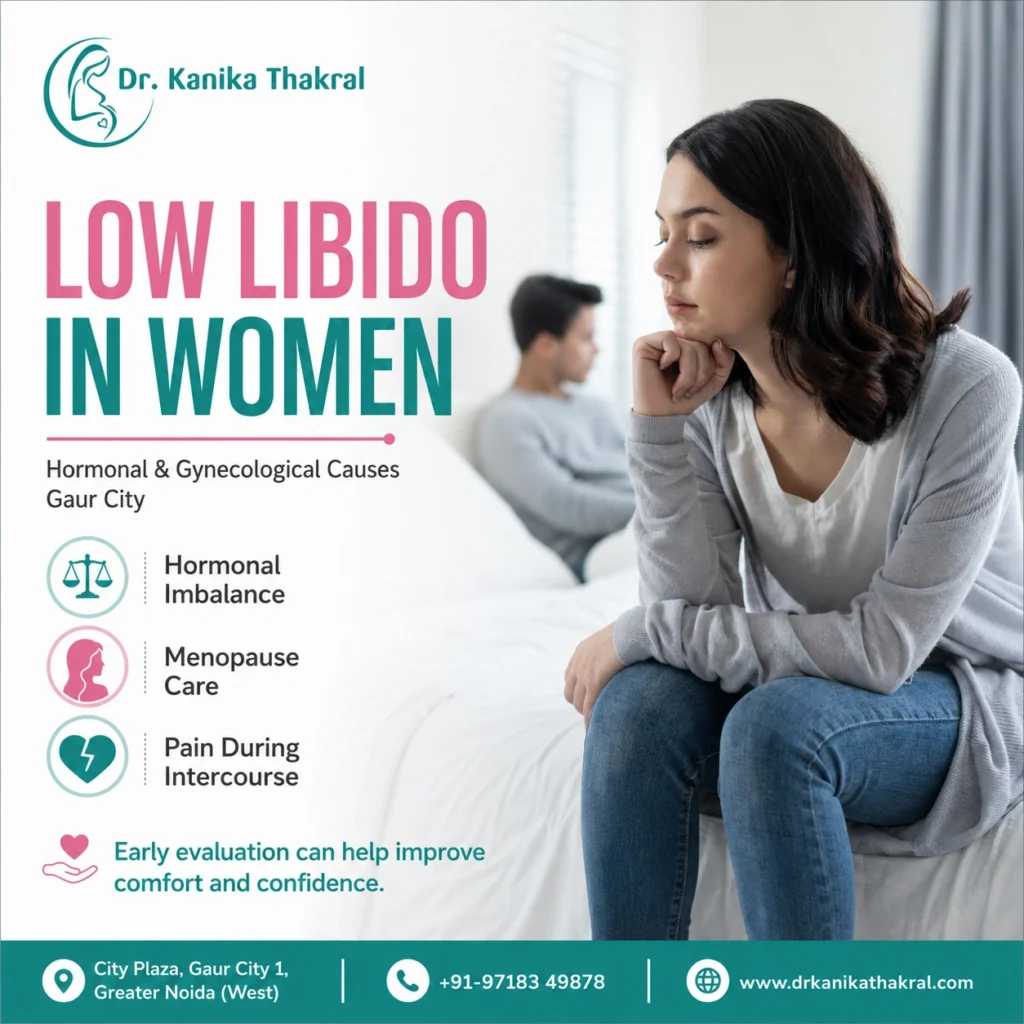
Low Libido in Women: Hormonal and Gynecological Causes in Gaur City
Low Libido in Women is a common concern, but many women feel shy to talk about it. Some women think it is only a relationship issue. Others feel guilty or confused. However, low sexual desire can happen due to many medical reasons.
Hormonal changes, menopause, vaginal dryness, pelvic pain, infections, stress, and certain gynecological conditions can affect sexual desire. Sometimes, the reason is simple. At other times, it needs proper evaluation.
The good news is that help is available.
Dr. Kanika Thakral provides caring support for women’s health concerns, hormonal issues, menopause symptoms, painful intimacy, and complete gynecological care in Gaur City.
What Does Low Libido Mean?
Low libido means reduced interest in sexual activity. It may happen for a short time. It may also continue for months.
Every woman has a different level of desire. So, low libido becomes a concern when it causes stress, relationship pressure, or emotional discomfort.
It is important to understand one thing. Sexual desire is connected to the body, mind, hormones, and comfort. Therefore, treatment should look at the complete picture.
Is Low Libido in Women Normal?
Low Libido in Women can happen at different stages of life. It may occur after childbirth, during breastfeeding, during menopause, or during stressful periods.
Sometimes, it improves on its own. However, if it continues or causes distress, medical advice is helpful.
You should not ignore it if low desire is linked with pain, dryness, irregular periods, hot flashes, mood changes, or pelvic discomfort.
These signs may point to a hormonal or gynecological cause.
Common Causes of Low Libido
There is no single cause. Many factors may work together.
Common causes include:
- Hormonal imbalance
- Menopause
- Vaginal dryness
- Pain during sex
- Pelvic pain
- Thyroid problems
- PCOS
- Premature ovarian insufficiency
- Stress or anxiety
- Poor sleep
- Relationship stress
- Certain medicines
- Post-delivery changes
- Breastfeeding
- Chronic illness
Because causes are different, treatment should also be personalized.
Hormonal Causes of Low Libido
Hormones play an important role in sexual desire. Estrogen, progesterone, testosterone, thyroid hormones, and prolactin can all affect energy, mood, vaginal comfort, and sexual interest.
When hormones are not balanced, a woman may feel tired, moody, dry, or less interested in intimacy.
Common signs of hormone-related problems include:
- Irregular periods
- Mood swings
- Fatigue
- Hot flashes
- Vaginal dryness
- Low desire
- Weight changes
- Acne or hair growth
- Sleep issues
In such cases, Hormonal imbalance treatment may help. However, the exact treatment depends on the cause.
Menopause and Low Libido
Menopause is one of the common reasons for reduced sexual desire. During menopause, estrogen levels fall. This can affect vaginal moisture, mood, sleep, and comfort during intimacy.
Many women also face hot flashes, night sweats, poor sleep, and tiredness. As a result, sexual interest may reduce.
This does not mean your intimate life has to end. With proper Menopause care, many symptoms can improve.
Treatment may include lifestyle changes, vaginal moisturizers, lubricants, local hormone therapy in selected cases, and medical guidance.
Vaginal Dryness After Menopause
Vaginal Dryness After Menopause is very common. It can cause burning, itching, irritation, and discomfort during intimacy.
ACOG explains that vaginal dryness can cause irritation, burning, and pain with intercourse. It is common after menopause and often happens due to low hormone levels.
When intimacy becomes painful, desire may naturally reduce. This is not a lack of love or interest. It is often a physical problem that needs care.
So, if dryness is affecting your comfort, consult a doctor. Treatment can make a big difference.
Pain During Intercourse
Pain during intercourse is an important reason for low desire. When sex is painful, the body starts avoiding it. Over time, fear of pain can reduce interest.
Pain may happen due to:
- Vaginal dryness
- Infection
- Menopause changes
- Pelvic inflammation
- Endometriosis
- Ovarian cysts
- Fibroids
- Vaginismus
- Poor lubrication
- Post-delivery healing issues
Pain should never be ignored. It is not something women should “adjust” to.
A proper checkup can help find the cause and start the right treatment.
Premature Ovarian Insufficiency
Premature Ovarian Insufficiency happens when the ovaries stop working normally before age 40. It may cause irregular or missed periods, hot flashes, night sweats, mood changes, vaginal dryness, and reduced sex drive.
MedlinePlus lists decreased sex drive, pain during sex, vaginal dryness, hot flashes, night sweats, and irregular or missed periods as possible symptoms of primary ovarian insufficiency.
This condition needs medical evaluation. It can affect hormones, fertility, bone health, and emotional wellbeing.
If you are below 40 and have missed periods with low libido or dryness, consult a gynecologist.
PCOS and Low Libido
PCOS can affect hormones, periods, weight, skin, mood, and fertility. Some women with PCOS may also notice reduced desire.
This may happen due to hormonal imbalance, stress, body image concerns, irregular periods, acne, unwanted hair growth, or fatigue.
Low libido in PCOS is not always only a hormone issue. Emotional health and confidence also matter.
A proper evaluation can help decide whether lifestyle changes, cycle regulation, hormonal support, or other treatment is needed.
Thyroid and Other Hormonal Problems
Thyroid problems can also affect libido. Low thyroid may cause tiredness, weight gain, low mood, dry skin, and reduced interest in intimacy.
High prolactin may also affect periods and sexual desire.
Therefore, your doctor may advise blood tests if symptoms suggest hormone imbalance.
Do not take hormone medicines without medical advice. The treatment should match the diagnosis.
Gynecological Conditions That Can Affect Libido
Several gynecological conditions can reduce comfort and desire.
These may include:
- Vaginal infections
- Urinary infections
- Fibroids
- Ovarian cysts
- Endometriosis
- Pelvic inflammatory disease
- Menopause-related dryness
- Post-delivery pelvic pain
- Painful periods
- Chronic pelvic pain
When the body is in pain, sexual desire can reduce. Therefore, a complete Women’s Health Checkup is important.
Emotional and Lifestyle Factors
Low desire is not always only a physical issue. Emotional and lifestyle factors can also play a role.
Common factors include:
- Stress
- Anxiety
- Depression
- Poor sleep
- Work pressure
- Relationship conflict
- Lack of emotional connection
- Body image concerns
- Fatigue
- Parenting responsibilities
However, physical causes should still be checked. Many women feel better when both medical and emotional factors are addressed together.
When Should You Consult a Doctor?
You should consult a Gynecologist in Gaur City if low libido is troubling you or affecting your relationship.
Also visit a doctor if you have:
- Vaginal dryness
- Pain during intercourse
- Irregular periods
- Hot flashes
- Missed periods before age 40
- Pelvic pain
- Recurrent infections
- Bleeding after intercourse
- Mood changes
- Low energy
- Menopause symptoms
Early consultation can help find the cause. It can also prevent symptoms from becoming worse.
How Is Low Libido Diagnosed?
Diagnosis starts with a private and respectful discussion. Your doctor may ask about your periods, pain, dryness, mood, sleep, stress, medicines, and relationship concerns.
A pelvic examination may be advised if you have pain, dryness, discharge, or bleeding.
Your doctor may also suggest:
- Hormone tests
- Thyroid test
- Prolactin test
- Blood sugar test
- Vitamin levels
- Pelvic ultrasound
- Infection screening
- Menopause evaluation
The goal is to find the real reason. Then treatment can be planned properly.
Treatment Options for Low Libido
Treatment depends on the cause. There is no single treatment for every woman.
Options may include:
- Hormonal imbalance treatment
- Menopause care
- Vaginal moisturizers
- Lubricants
- Treatment for infections
- Pelvic pain treatment
- PCOS care
- Thyroid treatment
- Counselling
- Lifestyle changes
- Medicine review
- Local hormone therapy in selected cases
The best treatment is the one that matches your symptoms and diagnosis.
Treatment for Vaginal Dryness
Vaginal dryness can improve with the right care. Your doctor may suggest lubricants, moisturizers, or local treatment.
If dryness is due to menopause, local estrogen therapy may be discussed in selected cases. However, it should be used only after medical advice.
Do not use random creams or home remedies. Some products may cause irritation or infection.
Treatment for Pain During Intercourse
Treatment depends on the cause of pain.
If pain is due to dryness, lubrication and vaginal treatment may help. If infection is present, medicines may be needed. If pelvic pain is the cause, further evaluation may be required.
Sometimes, counselling or pelvic floor support may also help.
The aim is to make intimacy comfortable again.
Role of Women’s Health Checkup
A Women’s Health Checkup is useful when low libido is linked with pain, dryness, period changes, or menopause symptoms.
A checkup can help detect:
- Hormonal issues
- Vaginal dryness
- Infections
- Fibroids
- Ovarian cysts
- Menopause changes
- Thyroid concerns
- Premature ovarian insufficiency
Regular checkups also help women talk about concerns they often hide.
Why Choose Dr. Kanika Thakral?
Low libido is a sensitive concern. Many women avoid discussing it because they fear judgment. However, it is a genuine women’s health issue.
Dr. Kanika Thakral provides private and supportive consultation for Low Libido in Women, hormonal problems, menopause symptoms, vaginal dryness, painful intercourse, and gynecological concerns.
If you are looking for a Women health specialist or Gynecologist in Gaur City, you can consult Dr. Kanika Thakral for clear guidance and personalized care.
Final Thoughts
Low Libido in Women can happen due to hormonal, gynecological, emotional, or lifestyle reasons. It may be linked with menopause, vaginal dryness, pain during intercourse, PCOS, thyroid problems, or premature ovarian insufficiency.
The most important step is to talk about it. You do not have to feel embarrassed.
With proper diagnosis, Hormonal imbalance treatment, Menopause care, and a complete Women’s Health Checkup, many women can feel better.
For low libido, vaginal dryness, painful intercourse, menopause concerns, and complete gynecological support in Gaur City, consult Dr. Kanika Thakral.
FAQs
1. What causes Low Libido in Women?
Low Libido in Women may happen due to hormonal imbalance, menopause, vaginal dryness, pain during intercourse, PCOS, stress, poor sleep, or gynecological problems.
2. Can Hormonal imbalance treatment help low libido?
Yes, Hormonal imbalance treatment may help when low libido is linked with thyroid issues, PCOS, menopause, prolactin changes, or other hormone-related problems.
3. Can menopause reduce sexual desire?
Yes. Menopause can reduce sexual desire due to low estrogen, vaginal dryness, sleep problems, hot flashes, mood changes, and discomfort during intimacy.
4. What is Vaginal Dryness After Menopause?
Vaginal Dryness After Menopause happens when low estrogen makes vaginal tissues dry, thin, or irritated. It can cause discomfort and painful intercourse.
5. Is pain during intercourse normal?
No. Pain during intercourse should not be ignored. It may happen due to dryness, infection, pelvic pain, menopause changes, or other gynecological causes.
