
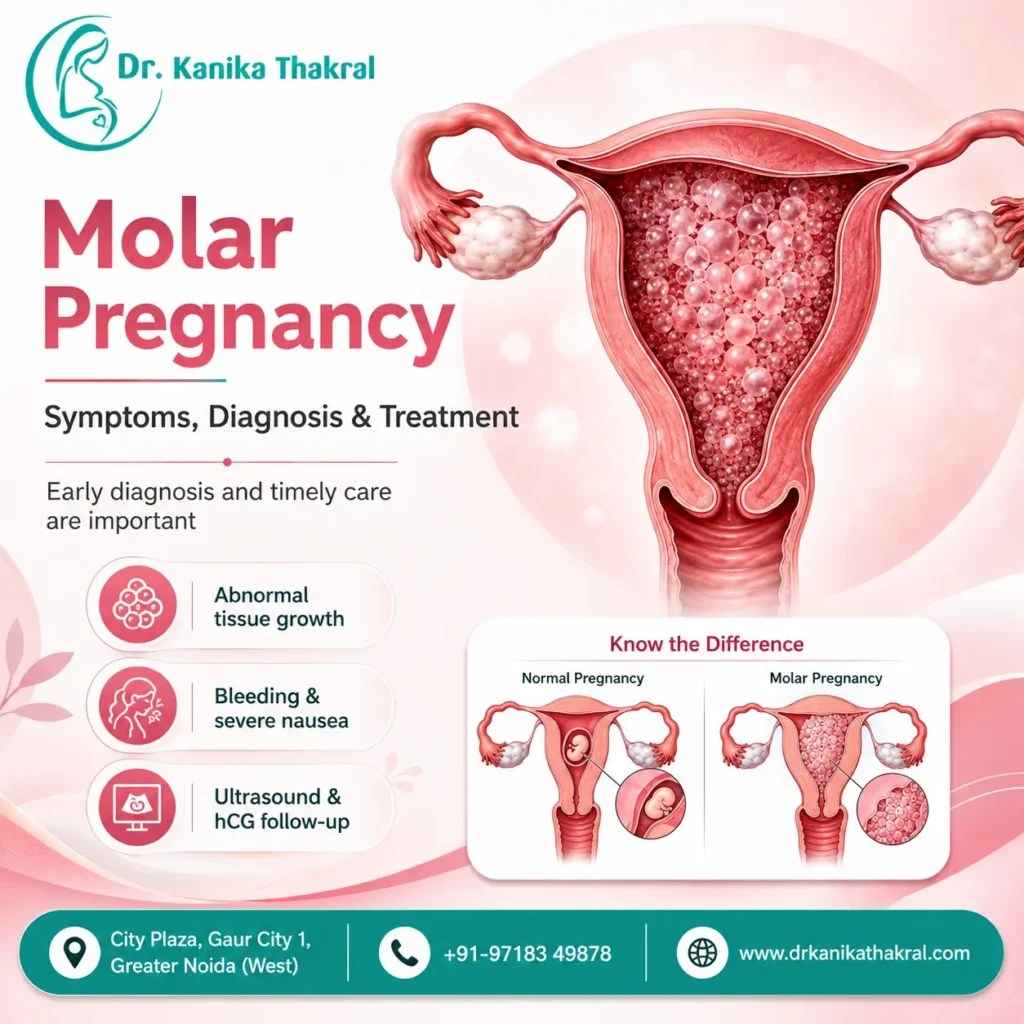
Molar Pregnancy: Symptoms, Diagnosis and Treatment in Gaur City
Molar Pregnancy is a rare pregnancy complication. It happens when abnormal tissue grows inside the uterus instead of a normal pregnancy. In some cases, no baby develops. In other cases, abnormal pregnancy tissue may be present along with abnormal fetal tissue.
This condition can feel emotionally difficult. A woman may first think she has a normal pregnancy. Later, ultrasound or blood tests may show that the pregnancy is not developing normally.
However, timely diagnosis and proper treatment are very important. Most women recover well with the right care and follow-up.
Dr. Kanika Thakral provides careful guidance for pregnancy complications, early pregnancy evaluation, ultrasound review, and high-risk pregnancy support in Gaur City.
What Is Molar Pregnancy?
Molar Pregnancy is also called a hydatidiform mole. It is a type of gestational trophoblastic disease. It starts after fertilization, but the pregnancy tissue grows abnormally.
Normally, after fertilization, the placenta and baby develop in a planned way. In this condition, the placental tissue grows abnormally and may form fluid-filled sacs.
A molar pregnancy cannot continue as a healthy pregnancy. Therefore, medical treatment is needed.
NHS states that a molar pregnancy will not be able to survive and may end on its own or need treatment to remove the pregnancy tissue.
Types of Molar Pregnancy
There are mainly two types.
The first is complete molar pregnancy. In this type, there is abnormal placental tissue and usually no baby tissue.
The second is partial molar pregnancy. In this type, some abnormal fetal tissue may form, but it cannot develop into a healthy baby.
Both types need medical care. However, follow-up may differ based on the type, report, and hCG levels.
Molar Pregnancy Symptoms
Molar Pregnancy symptoms can be similar to normal pregnancy at first. A woman may miss her period, feel nausea, or have a positive pregnancy test.
However, some signs may suggest a problem.
Common symptoms include:
- Vaginal bleeding in early pregnancy
- Severe nausea or vomiting
- Pelvic pressure
- Lower abdominal pain
- Very high pregnancy hormone levels
- Uterus larger than expected
- No heartbeat seen on ultrasound
- Grape-like tissue discharge in rare cases
- Symptoms of anemia due to bleeding
Some women may not have strong symptoms. The condition may be found during a routine Pregnancy Ultrasound.
So, early pregnancy scans are important.
Vaginal Bleeding in Early Pregnancy
Bleeding during pregnancy can happen due to many reasons. It may happen in miscarriage, ectopic pregnancy, infection, cervical problems, or molar pregnancy.
Therefore, bleeding should not be ignored.
If bleeding is heavy, painful, or linked with dizziness, visit a doctor quickly. Also, seek care if bleeding happens with severe nausea, pelvic pain, or weakness.
A Gynecologist in Gaur City can check the cause and guide the next step.
Severe Nausea and Vomiting
Many pregnant women have nausea. However, very severe nausea and vomiting may need medical attention.
In some molar pregnancies, pregnancy hormone levels may become very high. This can cause strong nausea and vomiting.
As a result, the woman may feel weak, dehydrated, or unable to eat properly.
If vomiting is severe, do not wait. Medical care can help prevent dehydration and complications.
Why Molar Pregnancy Happens
A molar pregnancy usually happens because of a genetic problem during fertilization. It is not caused by something the mother did.
It is also not caused by stress, food, travel, or normal daily activity.
Some factors may increase the risk, such as:
- Previous molar pregnancy
- Age below 20 or above 40
- Past pregnancy loss
- Certain nutritional factors
- Family history in rare cases
Still, many cases happen without any clear risk factor.
Therefore, women should not blame themselves.
Is Molar Pregnancy a Pregnancy Complication?
Yes. Molar pregnancy is one of the Pregnancy complications that needs timely treatment and follow-up.
The main concern is abnormal tissue growth inside the uterus. In some women, this tissue can continue to grow even after treatment.
That is why hCG follow-up is important after treatment.
A proper treatment plan helps reduce risks and supports future pregnancy health.
Molar Pregnancy vs Chemical Pregnancy
Many women confuse Molar Pregnancy with Chemical Pregnancy. However, both are different.
A chemical pregnancy is a very early pregnancy loss. It usually happens soon after implantation. Many women may only notice a late period or a positive test that becomes negative.
A molar pregnancy is different. It involves abnormal placental tissue growth and needs medical diagnosis, treatment, and follow-up.
Both conditions can be emotionally painful. However, management is not the same.
How Is Molar Pregnancy Diagnosed?
Diagnosis usually includes symptoms, examination, blood tests, and ultrasound.
Your doctor may suggest:
- Pregnancy test
- hCG blood test
- Pelvic ultrasound
- Complete blood count
- Thyroid test in selected cases
- Liver and kidney tests if needed
- Blood group testing
- Histopathology after tissue removal
Cancer Research UK explains that molar pregnancies can produce hCG, often at higher levels, and measuring hCG in blood or urine can help diagnosis. It also notes that pelvic ultrasound is used to look inside the womb.
Role of Pregnancy Ultrasound
Pregnancy Ultrasound is very important in diagnosis. It helps check whether the pregnancy is developing normally.
In a molar pregnancy, ultrasound may show abnormal tissue inside the uterus. In some cases, the scan may show no normal baby development.
Ultrasound also helps rule out other early pregnancy problems.
However, ultrasound findings should always be matched with symptoms and blood test results.
hCG Levels and Follow-Up
hCG is a pregnancy hormone. In molar pregnancy, hCG levels may be higher than expected.
After treatment, doctors monitor hCG levels. This helps confirm that abnormal tissue is reducing or gone.
If hCG does not fall properly, more evaluation may be needed.
Cancer Research UK explains that follow-up after a molar pregnancy depends on how quickly hCG returns to normal, and complete molar pregnancy may need several months of follow-up.
So, follow-up is not optional. It is a key part of recovery.
Molar Pregnancy Treatment
Molar Pregnancy treatment usually involves removing the abnormal pregnancy tissue from the uterus. The exact method depends on the case, pregnancy size, bleeding, and health condition.
Treatment may include:
- Suction evacuation
- Dilation and curettage in selected cases
- Medicines in some situations
- Blood tests after treatment
- hCG monitoring
- Follow-up visits
- Treatment for anemia if present
NHS notes that if molar pregnancy does not end on its own, it is usually treated with a procedure to remove the pregnancy.
Your doctor will choose the safest treatment for your condition.
Is Surgery Always Needed?
Many diagnosed cases need a procedure to remove the tissue. This is done to protect the mother’s health and prevent complications.
However, treatment depends on the situation. Sometimes, a molar pregnancy may end on its own. Still, follow-up is needed to ensure no abnormal tissue remains.
Do not use medicines or wait at home without medical advice. This can be risky.
Why High-Risk Pregnancy Care Matters
Molar pregnancy needs careful monitoring. It is not managed like a normal early pregnancy loss.
You may need High-Risk Pregnancy Care if bleeding is heavy, hCG is very high, symptoms are severe, or follow-up results are abnormal.
A High risk pregnancy specialist can guide testing, treatment, monitoring, and future pregnancy planning.
The aim is to treat the condition safely and prevent long-term complications.
Possible Complications
Most women recover well after treatment. However, complications can happen if the condition is not diagnosed or followed properly.
Possible complications include:
- Heavy bleeding
- Anemia
- Persistent abnormal tissue
- Infection
- High hCG after treatment
- Need for further treatment
- Emotional stress
- Rare development into gestational trophoblastic neoplasia
This is why follow-up blood tests are so important.
Can Molar Pregnancy Become Cancer?
In rare cases, abnormal tissue can continue to grow after treatment. This is called persistent gestational trophoblastic disease or gestational trophoblastic neoplasia.
It is treatable, especially when found early.
Regular hCG monitoring helps detect this early. Therefore, do not skip follow-up even if you feel well.
Emotional Impact of Molar Pregnancy
This condition can be emotionally heavy. A woman may feel shocked, confused, sad, or anxious.
These feelings are normal.
Many couples also worry about future pregnancy. However, many women can have healthy pregnancies later after proper treatment and follow-up.
Talk openly with your doctor. Also, take emotional support from family or a trusted person.
When Can You Try Pregnancy Again?
Your doctor will advise when it is safe to try again. Usually, you need to wait until hCG follow-up is complete and your doctor confirms recovery.
This waiting period can feel difficult. However, it helps protect your health and allows proper monitoring.
Do not plan pregnancy during follow-up unless your doctor allows it. A new pregnancy can make hCG monitoring confusing.
Warning Signs After Treatment
After treatment, contact your doctor if you notice:
- Heavy bleeding
- Fever
- Severe abdominal pain
- Foul-smelling discharge
- Dizziness
- Fainting
- Breathlessness
- Persistent vomiting
- Severe weakness
These signs may need urgent care.
How Dr. Kanika Thakral Can Help
Dr. Kanika Thakral provides careful evaluation for early pregnancy problems, abnormal bleeding, ultrasound findings, and pregnancy complications.
You can consult Dr. Kanika Thakral for Molar Pregnancy symptoms, Molar Pregnancy treatment, Pregnancy Ultrasound, hCG follow-up, and High-Risk Pregnancy Care.
If you are looking for a Gynecologist in Gaur City, timely consultation can help you get the right diagnosis and safe treatment plan.
Final Thoughts
Molar Pregnancy is a rare but important pregnancy complication. It happens when abnormal pregnancy tissue grows inside the uterus. It cannot continue as a healthy pregnancy.
Symptoms may include bleeding, severe nausea, pelvic pain, or abnormal ultrasound findings. However, some women may have no clear symptoms.
The right care includes diagnosis, treatment, hCG monitoring, and follow-up. With timely care, most women recover well.
For molar pregnancy evaluation, Pregnancy complications, Pregnancy Ultrasound, and High-Risk Pregnancy Care in Gaur City, consult Dr. Kanika Thakral.
FAQs
1. What is Molar Pregnancy?
Molar Pregnancy is a rare pregnancy complication where abnormal pregnancy tissue grows inside the uterus instead of a normal healthy pregnancy.
2. What are common Molar Pregnancy symptoms?
Common Molar Pregnancy symptoms include vaginal bleeding, severe nausea, pelvic pain, high hCG levels, and abnormal ultrasound findings.
3. Can molar pregnancy continue as a normal pregnancy?
No. A molar pregnancy cannot develop into a healthy surviving pregnancy. It needs medical treatment and follow-up.
4. How is molar pregnancy diagnosed?
It is diagnosed with symptoms, hCG blood tests, pelvic examination, and Pregnancy Ultrasound.
5. What is Molar Pregnancy treatment?
Molar Pregnancy treatment usually involves removing abnormal pregnancy tissue and monitoring hCG levels afterward.
