
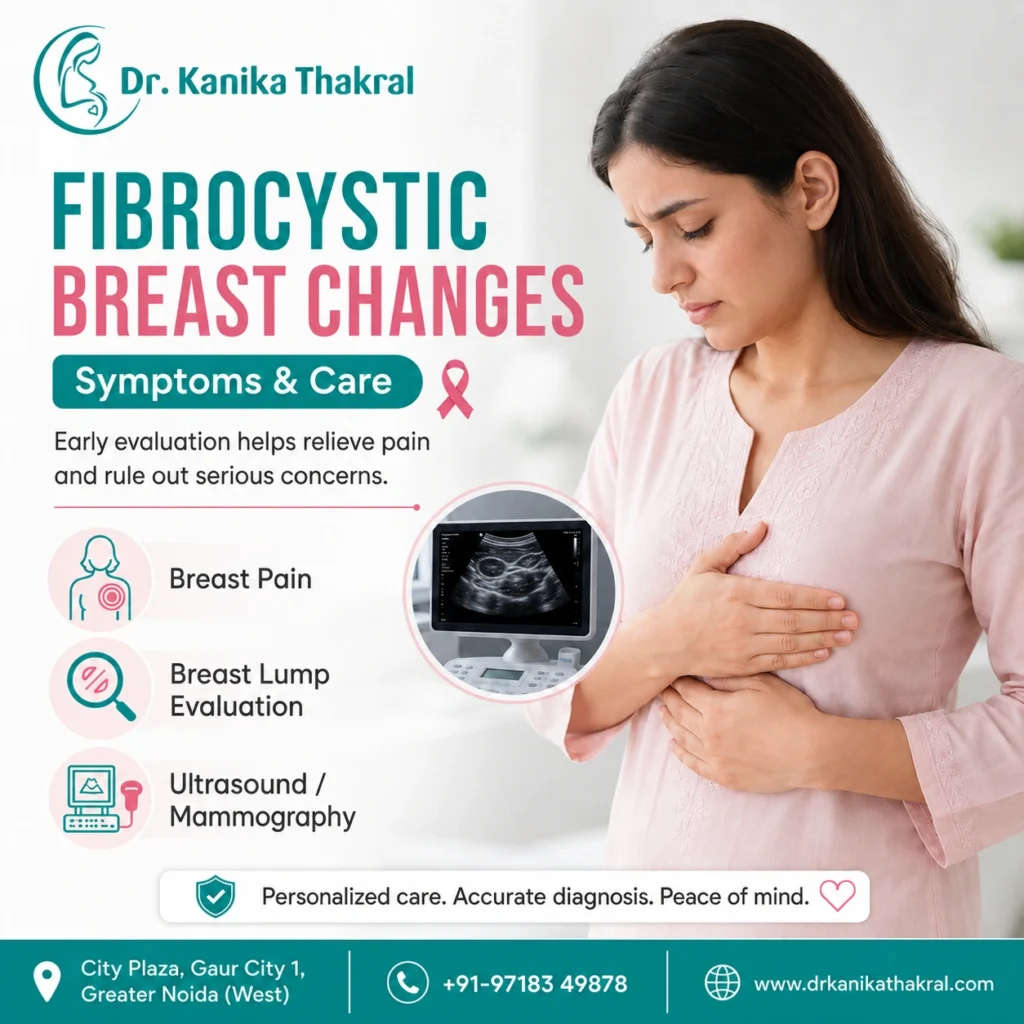
Fibrocystic Breast Changes in Gaur City – Symptoms, Pain & Care
Fibrocystic Breast Changes are common and usually benign changes in breast tissue. Many women notice breast pain, swelling, tenderness, or lumpiness before periods. These changes can feel worrying, especially when a lump is felt.
However, fibrocystic changes are not the same as breast cancer. Still, every new breast lump should be checked by a doctor.
Breast changes can happen due to monthly hormonal shifts. They may feel worse before periods and improve after bleeding starts. In some women, symptoms are mild. In others, pain and heaviness can affect daily comfort.
Dr. Kanika Thakral provides caring guidance for breast pain, breast lump evaluation, women’s health concerns, and complete gynecological care in Gaur City.
What Are Fibrocystic Breast Changes?
Fibrocystic Breast Changes happen when breast tissue becomes lumpy, tender, or cystic. The breasts may feel thick, rope-like, or uneven.
These changes are often linked with hormones. Because hormone levels change during the menstrual cycle, breast symptoms may also change.
Some women feel pain only before periods. Others may feel discomfort for many days.
These changes are common in women of reproductive age. However, any breast lump should be evaluated, even when symptoms seem cyclical.
Are Fibrocystic Breast Changes Dangerous?
In most cases, they are not dangerous. They are usually benign.
The National Cancer Institute says fibrocystic breast changes are benign breast tissue changes. They may include irregular lumps, cysts, swelling, discomfort, sensitive nipples, and itching. It also notes that this condition does not increase breast cancer risk.
Still, do not ignore a new lump. Some breast problems can feel similar in the beginning.
So, the safest step is a clinical breast examination and imaging when needed.
Common Fibrocystic Breast Symptoms
Fibrocystic Breast symptoms can vary. Some women feel only mild tenderness. Others may notice painful lumps or swelling.
Common symptoms include:
- Breast pain
- Breast tenderness
- Lumpiness in one or both breasts
- Swelling before periods
- Thick or rope-like breast texture
- Heaviness in the breast
- Pain that changes with the cycle
- Clear or slightly cloudy nipple discharge in some cases
- Sensitive nipples
Cancer Research UK also notes that fibrocystic breast changes may cause lumpy, tender, or painful breasts, and some people may have clear or slightly cloudy nipple discharge.
Why Breast Pain Happens
Breast pain may happen due to hormonal changes. Before periods, estrogen and progesterone levels change. These shifts can make breast tissue swollen and sensitive.
As a result, the breasts may feel heavy, painful, or tight.
This pain is often called cyclical breast pain. It usually becomes worse before periods and improves afterward.
However, breast pain can also happen due to cysts, infection, injury, medicines, poor bra support, or other breast conditions.
Therefore, repeated or severe pain needs proper evaluation.
When Breast Pain Needs Medical Care
Mild breast tenderness before periods is common. However, some symptoms need medical attention.
Consult a doctor if you have:
- New breast lump
- Lump that does not go away
- Pain in one fixed area
- Severe breast pain
- Redness or warmth
- Nipple discharge with blood
- Skin dimpling
- Nipple pulling inward
- Change in breast shape
- Swelling in the armpit
- Pain that affects daily life
Timely Breast pain treatment depends on finding the cause first.
Breast Lump in Women: When to Worry
A Breast lump in women can happen due to many reasons. Not every lump is cancer. Many lumps are benign, such as cysts, fibroadenomas, or fibrocystic changes.
However, you cannot know the cause by touch alone.
A lump should be checked if it is:
- New
- Hard
- Fixed
- Growing
- Painful
- Present after periods
- Linked with skin or nipple changes
- Present with nipple discharge
- Found in one breast only
A Breast Lump in Women should always be discussed with a gynecologist or breast specialist. Early evaluation reduces fear and helps plan the right care.
Why Breast Changes Feel Worse Before Periods
Fibrocystic symptoms often follow the menstrual cycle. Before periods, breast tissue may hold more fluid. Hormonal changes may also make cysts more tender.
Because of this, women may notice swelling, pain, or lumpiness before periods.
After periods start, symptoms may reduce.
This pattern is common. However, any lump that stays after periods should be examined.
How Are Fibrocystic Breast Changes Diagnosed?
Diagnosis starts with a detailed history and breast examination. Your doctor may ask about your cycle, pain pattern, lump changes, discharge, family history, and past reports.
After examination, imaging may be advised.
Tests may include:
- Clinical breast examination
- Breast ultrasound
- Mammography
- Fine needle aspiration in selected cases
- Biopsy if a suspicious area is found
The test choice depends on age, symptoms, breast density, and clinical findings.
Role of Breast Ultrasound
Breast ultrasound uses sound waves to create breast images. It is helpful for checking lumps, cysts, and dense breast tissue.
Mayo Clinic explains that ultrasound can help distinguish between fluid-filled cysts and solid masses. It may also be used instead of mammography in younger women, especially when breast tissue is dense.
Ultrasound is painless and does not use radiation.
It is often useful when a woman feels a lump or has localized pain.
Role of Mammography
Mammography is an X-ray test of the breast. It helps detect changes that may not be felt by hand.
It is commonly used for breast screening and evaluation, especially in women above a certain age or when a doctor advises it.
Mammography can detect calcifications, masses, and other breast changes.
However, in younger women with dense breasts, ultrasound may sometimes be more useful for lump evaluation. Your doctor will choose the right test.
Mammogram vs Breast Ultrasound
Many women feel confused about Mammogram vs Breast Ultrasound.
Both tests are useful, but they work differently.
A mammogram uses X-rays. It is helpful for screening and detecting small changes.
A breast ultrasound uses sound waves. It is helpful for checking whether a lump is fluid-filled or solid.
Sometimes, both tests are needed. In other cases, one test is enough.
Your doctor will decide based on age, symptoms, lump type, and risk factors.
Can Fibrocystic Breast Changes Become Cancer?
Usually, fibrocystic changes do not become cancer. They are benign.
However, this does not mean all breast lumps can be ignored. A new lump still needs evaluation.
The goal is to confirm that the lump is benign and not something serious.
So, regular awareness and timely checkups are important.
Treatment and Care Options
Treatment depends on the severity of symptoms. If symptoms are mild, reassurance and observation may be enough.
For pain and discomfort, your doctor may suggest:
- Better bra support
- Warm or cold compress
- Pain relief medicines when needed
- Reducing excess caffeine in some cases
- Tracking symptoms with periods
- Treating cysts if painful
- Follow-up imaging if advised
Do not start medicines or supplements without medical advice.
Breast Pain Treatment
Breast pain treatment depends on the cause. If pain is linked with fibrocystic changes, simple care may help.
Helpful steps may include:
- Wear a supportive bra.
- Use warm compress if comfortable.
- Track pain with your menstrual cycle.
- Avoid pressing the painful area repeatedly.
- Take prescribed medicine only.
- Follow imaging advice.
- Review any hormone medicines with your doctor.
If pain is severe or one-sided, further evaluation may be needed.
Care for Breast Cysts
Fibrocystic changes may include cysts. A cyst is a fluid-filled sac.
Small cysts may not need treatment. However, large or painful cysts may need aspiration in selected cases.
Mayo Clinic notes that diagnosis of a breast cyst may include breast exam, imaging such as ultrasound or mammogram, and sometimes fine-needle aspiration or biopsy.
Your doctor will guide whether treatment is needed.
Lifestyle Tips for Breast Comfort
Lifestyle steps can support comfort, especially when symptoms change with the cycle.
You can try:
- Wear a well-fitted bra.
- Use a sports bra during exercise.
- Maintain a symptom diary.
- Reduce salt before periods if swelling is high.
- Stay hydrated.
- Sleep well.
- Avoid repeated self-checking during pain.
- Consult your doctor before using supplements.
These steps may reduce discomfort. However, they do not replace medical evaluation for a new lump.
Breast Self-Awareness
Breast self-awareness means knowing what is normal for your breasts. This helps you notice changes early.
Check for:
- New lump
- Change in size
- Skin dimpling
- Nipple discharge
- Nipple inversion
- Redness
- Swelling
- Pain in one area
- Armpit lump
Do not panic if you notice a change. However, do not ignore it either.
Book a consultation and get proper evaluation.
When to Consult a Gynecologist in Gaur City
You should consult a Gynecologist in Gaur City if you notice breast pain, lumpiness, nipple discharge, or breast swelling.
Also visit if symptoms are new, worsening, or not linked with periods.
A doctor can examine the breast and advise imaging if needed.
Early care helps reduce anxiety. It also ensures that serious causes are not missed.
Why Choose Dr. Kanika Thakral?
Breast pain and lumps can create fear. Many women delay consultation because they feel anxious or embarrassed.
Dr. Kanika Thakral provides supportive care for Fibrocystic Breast Changes, breast pain, breast lump evaluation, menstrual-related breast discomfort, and complete women’s health checkups.
You can consult Dr. Kanika Thakral for breast examination, Breast ultrasound guidance, Mammography advice, and follow-up care in Gaur City.
Final Thoughts
Fibrocystic Breast Changes are common and usually benign. They can cause breast pain, tenderness, swelling, cysts, or lumpy breast tissue.
However, every new breast lump should be checked. This is the safest way to rule out serious problems.
If you have Fibrocystic Breast symptoms, breast pain, or a Breast lump in women, consult Dr. Kanika Thakral. Timely care, imaging, and follow-up can help you feel clear and confident.
For Breast pain treatment, Breast ultrasound, Mammography, and complete women’s health care in Gaur City, book a consultation with Dr. Kanika Thakral.
FAQs
1. What are Fibrocystic Breast Changes?
Fibrocystic Breast Changes are benign breast tissue changes. They may cause lumpiness, tenderness, swelling, pain, or cysts.
2. What are common Fibrocystic Breast symptoms?
Common Fibrocystic Breast symptoms include breast pain, tenderness, swelling, lumpiness, heaviness, and symptoms that worsen before periods.
3. Is a breast lump always cancer?
No. Many breast lumps are benign. However, every new Breast lump in women should be checked by a doctor.
4. When is Breast ultrasound needed?
Breast ultrasound may be advised when there is a lump, pain, dense breast tissue, or the doctor needs to check whether a lump is solid or fluid-filled.
5. What is Mammography?
Mammography is an X-ray test of the breast. It helps detect breast changes that may not be felt during examination.
6. Mammogram vs Breast Ultrasound: which is better?
Both have different roles. Mammography is useful for screening, while ultrasound helps assess cysts, solid lumps, and dense breast tissue.
