
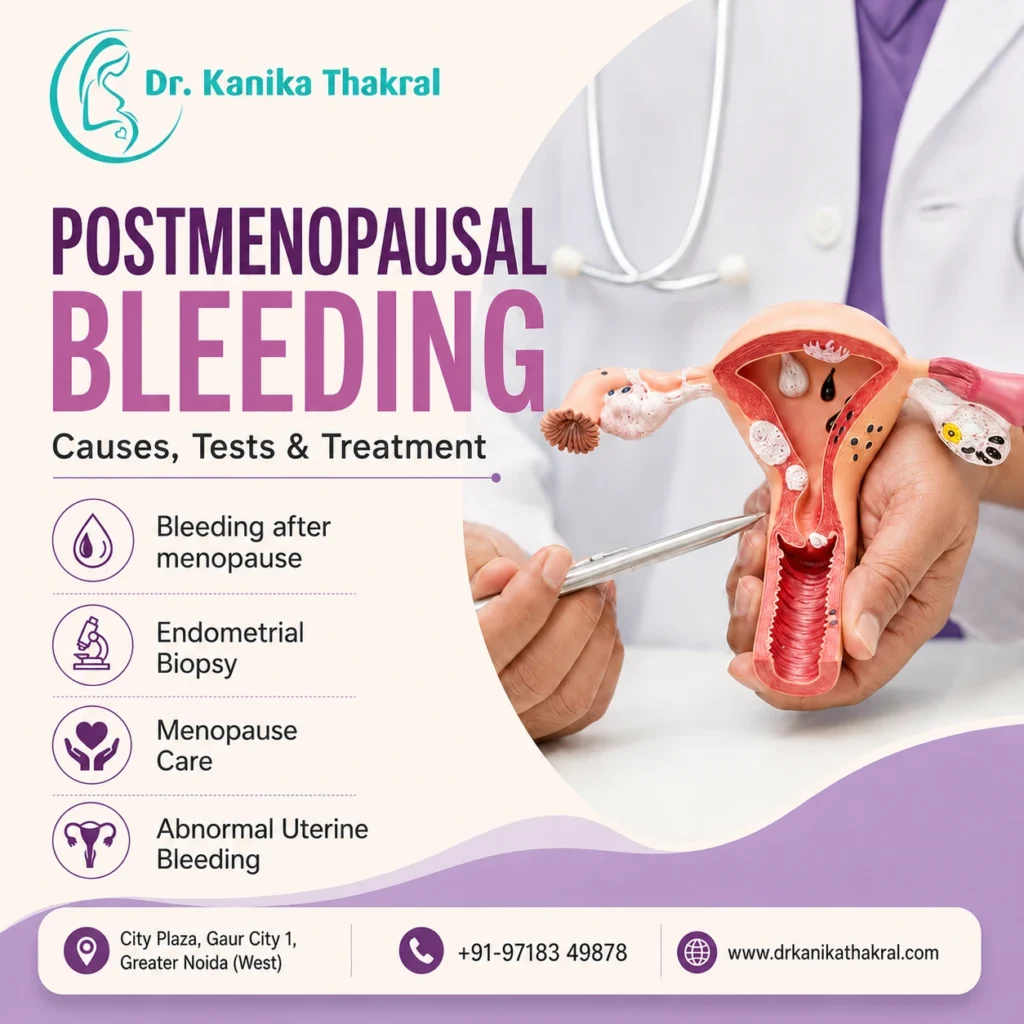
Postmenopausal Bleeding: Causes, Tests and Treatment
Postmenopausal Bleeding means vaginal bleeding that happens after menopause. Menopause is usually confirmed when a woman has not had periods for 12 months. Any bleeding after this stage should be checked by a gynecologist.
Many women feel confused when bleeding starts again after menopause. Some may notice only light spotting. Others may have heavier bleeding. However, even one episode should not be ignored.
Most causes are not cancer. Still, some causes can be serious. Therefore, timely evaluation is very important.
Dr. Kanika Thakral provides caring guidance for Menopause care, Abnormal uterine bleeding, Endometrial Biopsy, Hormonal Imbalance, and complete women’s health care.
What Is Postmenopausal Bleeding?
Postmenopausal Bleeding is bleeding from the vagina after periods have stopped due to menopause. It may appear as spotting, light bleeding, brown discharge, pink discharge, or heavy bleeding.
This bleeding can happen once or repeatedly. It may happen after intercourse, during urination, or without any clear trigger. Sometimes, women think it is a delayed period. However, after menopause, periods do not return naturally.
So, bleeding after menopause needs medical attention. A proper checkup helps find the cause and plan treatment.
Why Bleeding After Menopause Should Not Be Ignored
Bleeding after menopause is not considered normal. It can happen due to simple causes like vaginal dryness or polyps. However, it can also happen due to thickening of the uterine lining, abnormal cells, or cancer in rare cases.
This is why doctors advise evaluation. Early diagnosis helps treat the cause before it becomes more serious. It also gives peace of mind when the cause is not dangerous.
NHS clearly advises that postmenopausal bleeding should be checked by a doctor, even if it happens only once, there is a small amount of blood, or there are no other symptoms.
Common Causes of Postmenopausal Bleeding
There are many possible causes of bleeding after menopause. Some are mild, while others need detailed care. Your doctor will decide the right tests based on your age, symptoms, medical history, and ultrasound findings.
Common causes may include:
- Vaginal dryness or thinning
- Endometrial thinning
- Uterine polyps
- Cervical polyps
- Thickened uterine lining
- Endometrial hyperplasia
- Fibroids
- Infection
- Hormone therapy effects
- Certain medicines
- Cervical or uterine cancer in some cases
Do not try to guess the cause at home. Similar bleeding patterns can happen in different conditions. Therefore, proper examination is needed.
Vaginal Dryness and Tissue Thinning
After menopause, estrogen levels fall. Because of this, the vaginal and uterine tissues may become thin and dry. These tissues can become sensitive and may bleed easily.
Bleeding may happen after intercourse, after a pelvic exam, or due to irritation. Some women also feel burning, dryness, itching, or pain during intercourse.
This is a common cause of bleeding after menopause. However, it still needs confirmation by a doctor.
Polyps and Postmenopausal Bleeding
Polyps are small growths that may develop in the uterus or cervix. Most polyps are non-cancerous. However, they can cause spotting or bleeding after menopause.
A woman may have bleeding between episodes, brown discharge, or bleeding after sex. Sometimes, polyps are found during ultrasound or pelvic examination.
Treatment depends on the size, symptoms, and location of the polyp. In many cases, removal may be advised for testing and symptom relief.
Thickened Uterine Lining
The lining inside the uterus is called the endometrium. After menopause, this lining is usually thin. If ultrasound shows a thickened lining, your doctor may advise further evaluation.
A thickened lining may happen due to hormone effects, polyps, hyperplasia, or other changes. In some cases, an Endometrial Biopsy may be needed to test the lining.
ACOG says transvaginal ultrasound can be used in the initial evaluation of postmenopausal bleeding. It also notes that an endometrial thickness of 4 mm or less has more than 99% negative predictive value for endometrial cancer in the right clinical setting.
Endometrial Hyperplasia
Endometrial hyperplasia means the uterine lining becomes thicker than usual. This can happen due to hormone imbalance, especially when estrogen acts without enough progesterone effect.
Some cases of hyperplasia may be simple. Others may carry a higher risk and need closer treatment. The type is usually confirmed through biopsy.
Women with obesity, diabetes, PCOS, long-term Hormonal Imbalance, or history of irregular cycles may have a higher chance of lining-related problems. So, sharing your full health history is important.
Fibroids and Ovarian Cysts
Fibroids are non-cancerous growths in or around the uterus. They are more common before menopause. However, some women may still have symptoms around menopause or after menopause.
If bleeding happens after menopause, your doctor may check whether fibroids, polyps, or lining changes are involved. Women with past Fibroid Treatment should share old reports during consultation.
Similarly, ovarian cysts may not directly cause vaginal bleeding in most cases. Still, pelvic ultrasound may check the ovaries too. Women with previous Ovarian Cyst Treatment should also inform their doctor.
Abnormal Uterine Bleeding and Menopause
Abnormal uterine bleeding means bleeding that does not follow a normal pattern. Before menopause, it can mean heavy periods, irregular periods, or bleeding between cycles. After menopause, any vaginal bleeding is considered abnormal.
MedlinePlus notes that vaginal bleeding after menopause can have different causes. Most may be benign, but unusual bleeding should be evaluated because it can sometimes be linked to cancer or pre-cancer.
Therefore, women should not delay consultation, even if bleeding is light.
When Should You See a Gynecologist?
You should consult a gynecologist if you notice any bleeding after menopause. The amount of bleeding does not decide the seriousness. Even spotting needs evaluation.
Visit your doctor if you have:
- Light spotting after menopause
- Brown or pink discharge
- Bleeding after intercourse
- Heavy bleeding
- Pelvic pain
- Foul-smelling discharge
- Bleeding with weakness
- Repeated bleeding episodes
- Bleeding while on hormone therapy
If bleeding is heavy or you feel dizzy, seek urgent medical help.
How Is Postmenopausal Bleeding Diagnosed?
Diagnosis starts with a detailed consultation. Your doctor will ask when menopause happened, when bleeding started, how much bleeding happened, and whether there is pain, discharge, or bleeding after intercourse.
The doctor may also ask about medicines, hormone therapy, diabetes, weight changes, previous fibroids, PCOS, surgeries, and family history.
Tests may include:
- Pelvic examination
- Pap smear if needed
- Transvaginal ultrasound
- Endometrial thickness check
- Endometrial Biopsy
- Hysteroscopy in selected cases
- Blood tests if required
- Infection testing if symptoms suggest it
Not every woman needs every test. Your doctor will choose tests based on your symptoms and findings.
Role of Transvaginal Ultrasound
Transvaginal ultrasound is commonly used to check the uterus, endometrial thickness, ovaries, fibroids, polyps, and other pelvic findings. It helps the doctor understand whether the uterine lining is thin or thick.
The scan may also show fibroids, ovarian cysts, fluid, or masses. However, ultrasound cannot always give a final answer. Sometimes, tissue testing is needed.
If the lining is thick or bleeding continues, your doctor may advise biopsy or hysteroscopy.
Role of Endometrial Biopsy
An Endometrial Biopsy is a test in which a small sample is taken from the uterine lining. The sample is sent to a lab and checked under a microscope.
This test can help detect lining overgrowth, abnormal cells, infection, or cancer-related changes. It is especially useful when bleeding happens after menopause or ultrasound shows a thickened lining.
The procedure may cause mild cramps for a short time. Some women may have light spotting afterward. Your doctor will explain preparation and aftercare before the procedure.
What Is Hysteroscopy?
Hysteroscopy is a procedure in which a thin camera is used to look inside the uterus. It may be advised if ultrasound shows a polyp, if biopsy is unclear, or if bleeding continues despite normal basic tests.
During hysteroscopy, the doctor can directly see the uterine cavity. In some cases, polyps can also be removed.
This test is not needed for everyone. It is suggested only when it can help diagnosis or treatment.
Treatment for Postmenopausal Bleeding
Treatment depends on the cause. This is why proper diagnosis is the first step. Once the cause is clear, the treatment plan becomes more accurate.
Treatment may include:
- Vaginal moisturizers or local treatment for dryness
- Medicines for infection
- Polyp removal
- Treatment for thickened endometrium
- Hormonal treatment in selected cases
- Fibroid-related treatment if needed
- Hysteroscopy or surgery in selected cases
- Cancer care referral if abnormal cells are found
Do not start medicines on your own. Postmenopausal bleeding should be treated only after proper evaluation.
Menopause Care and Follow-Up
Good Menopause care includes more than bleeding evaluation. It also includes bone health, urinary symptoms, vaginal dryness, sexual health, sleep, mood, weight, and heart health.
Many women do not discuss menopause symptoms openly. However, timely care can improve comfort and quality of life.
Dr. Kanika Thakral provides patient-friendly guidance for menopause symptoms, bleeding concerns, Hormonal Imbalance, and women’s health follow-up.
PCOS, Hormonal Imbalance and Bleeding Risk
Women with past PCOS, long-term irregular periods, obesity, or Hormonal Imbalance may have a higher chance of endometrial lining problems before menopause. This history may still matter when evaluating bleeding after menopause.
If you had long gaps between periods earlier in life, repeated Menstrual Problems, or needed hormonal treatment, share this information with your doctor. It can help in risk assessment and treatment planning.
Complete history leads to better care.
Link With Pregnancy and Past Delivery History
Some women think menopause care is not related to past pregnancy history. However, your doctor may still ask about childbirth, miscarriage, surgeries, and earlier bleeding problems.
If you had Normal Delivery, C-section, fibroid surgery, or other uterine procedures, tell your doctor. Past procedures can sometimes help explain current findings or guide safe testing.
Dr. Kanika Thakral also provides Pregnancy Care and delivery guidance for younger women, while supporting menopause evaluation and care for women in later life stages.
How to Prepare for Your Consultation
Before your visit, note your symptoms clearly. This helps your doctor understand the bleeding pattern.
Carry or note these details:
- Date when menopause started
- Date when bleeding happened
- Amount of bleeding
- Color of discharge or blood
- Pain or cramps
- Bleeding after intercourse
- Current medicines
- Hormone therapy use
- Old ultrasound reports
- Pap smear reports
- Previous biopsy reports
- History of fibroids, cysts, or PCOS
This information helps make the consultation more useful.
Why Choose Dr. Kanika Thakral?
Dr. Kanika Thakral provides caring support for Postmenopausal Bleeding, Bleeding after menopause, Menopause care, Abnormal uterine bleeding, and Endometrial Biopsy guidance.
Women can consult Dr. Kanika Thakral for bleeding concerns, , Ovarian Cyst Treatment, PCOS, Hormonal Imbalance, and Menstrual Problems. The care approach is simple, clear, and patient-focused.
The aim is to find the cause early and guide the right treatment.
Final Thoughts
Postmenopausal Bleeding should always be checked. It may happen due to vaginal dryness, polyps, fibroids, thickened uterine lining, hormone effects, or other conditions. Most causes may not be cancer, but evaluation is still necessary.
Do not ignore spotting, brown discharge, or bleeding after sex. Even one episode after menopause needs medical advice.
For Bleeding after menopause, Menopause care, Abnormal uterine bleeding, Endometrial Biopsy, and complete women’s health care, consult Dr. Kanika Thakral.
Early evaluation can bring clarity, safety, and peace of mind.
FAQs
1. What is Postmenopausal Bleeding?
Postmenopausal Bleeding means vaginal bleeding that happens after menopause, usually after 12 months without periods.
2. Is Bleeding after menopause normal?
No. Bleeding after menopause is not considered normal. Even light spotting should be checked by a doctor.
3. What causes bleeding after menopause?
Common causes include vaginal dryness, polyps, thickened uterine lining, fibroids, infection, hormone therapy, or abnormal cells.
4. Is postmenopausal bleeding always cancer?
No. Most causes are not cancer. However, it can sometimes be linked to serious conditions, so evaluation is important.
5. What tests are done for postmenopausal bleeding?
Tests may include pelvic examination, transvaginal ultrasound, Pap smear, Endometrial Biopsy, hysteroscopy, or blood tests.
6. When is Endometrial Biopsy needed?
Endometrial Biopsy may be advised if the uterine lining is thick, bleeding continues, or the doctor needs to check the lining cells.
