
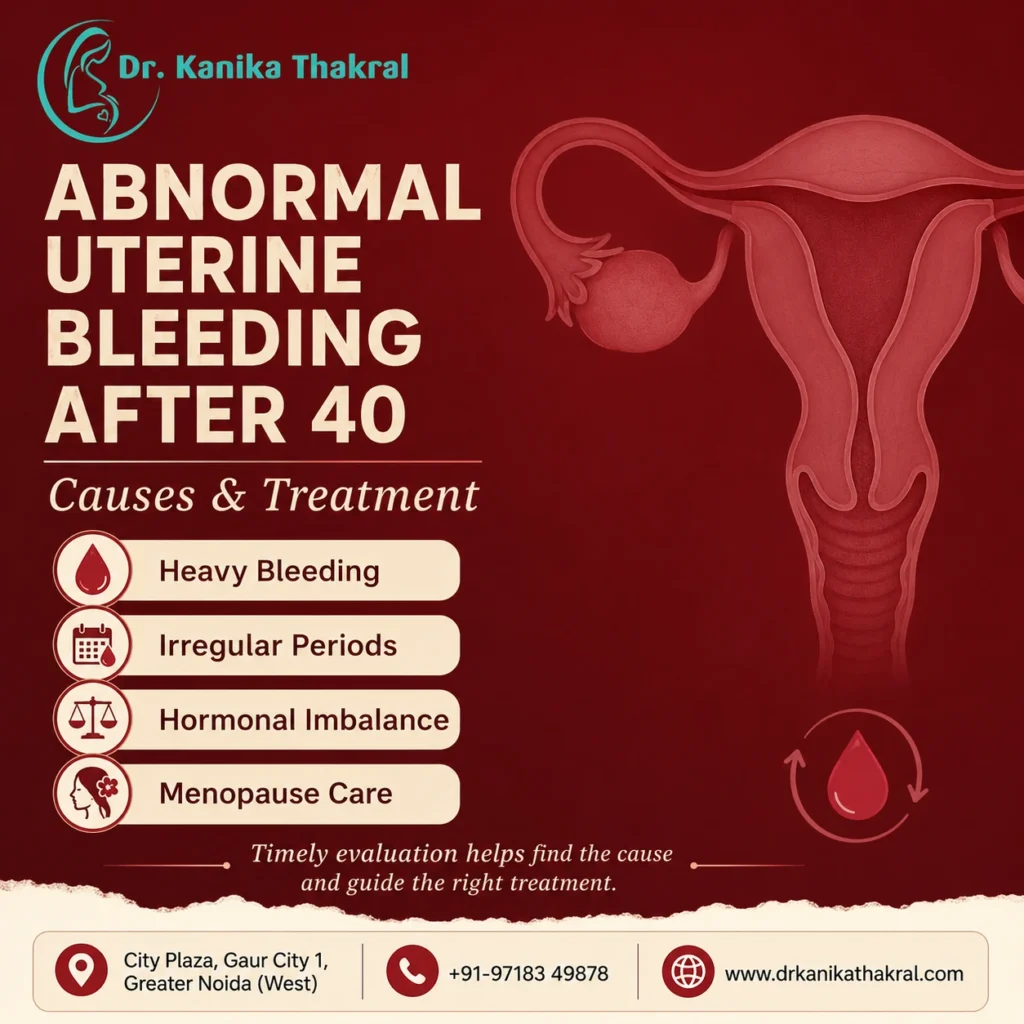
Abnormal Uterine Bleeding After 40: Causes and Treatment
Abnormal Uterine Bleeding after 40 is a common concern for many women. Periods may start changing as the body moves closer to menopause. Some women notice heavier bleeding. Others may have irregular cycles, spotting, clots, or bleeding between periods.
Many women think these changes are always normal after 40. However, that is not always true. Some changes may be due to hormonal shifts. But bleeding can also happen because of fibroids, polyps, thickened uterine lining, PCOS, thyroid problems, or other gynecological conditions.
Dr. Kanika Thakral provides caring guidance for Abnormal Uterine Bleeding After 40, Heavy bleeding treatment, Irregular periods treatment, Menopause care, and complete women’s health care.
What Is Abnormal Uterine Bleeding?
Abnormal uterine bleeding means bleeding from the uterus that is different from your normal period pattern. It may be heavier, longer, more frequent, or unpredictable. It can also include spotting between periods or bleeding after intercourse.
After 40, period changes are common because hormones may fluctuate. Still, any new or repeated bleeding change should be checked. ACOG notes that during perimenopause, bleeding may become lighter or heavier, and cycles may change. However, it also advises women to discuss abnormal bleeding changes with an ob-gyn because they can sometimes indicate health problems.
So, do not ignore bleeding changes only because of age. A proper evaluation helps find the real cause.
Why Bleeding Changes After 40
After 40, many women enter the perimenopause phase. This is the transition period before menopause. During this time, hormone levels may rise and fall unevenly. As a result, ovulation may become irregular.
When ovulation is irregular, the uterine lining may not shed in a regular way. This can lead to delayed periods, heavy bleeding, spotting, or prolonged bleeding.
However, hormones are not the only reason. Bleeding after 40 may also be linked with fibroids, ovarian cysts, polyps, adenomyosis, thyroid issues, or endometrial changes.
Therefore, the cause should be confirmed before starting treatment.
Common Symptoms After 40
Bleeding symptoms can vary from woman to woman. Some women notice small changes. Others face bleeding that affects their daily life.
Common symptoms include:
- Heavy periods
- Periods lasting more than usual
- Bleeding between periods
- Spotting after intercourse
- Passing large clots
- Irregular periods
- Periods coming too frequently
- Long gaps between periods
- Pelvic pain or pressure
- Weakness during periods
If bleeding affects your work, sleep, travel, or daily comfort, you should consult a gynecologist.
When Heavy Bleeding Needs Attention
Heavy bleeding should not be ignored, especially after 40. It may cause anemia, weakness, dizziness, tiredness, and low energy. Some women need to change pads very often or wake up at night due to heavy flow.
MedlinePlus describes abnormal uterine bleeding as bleeding that may be heavier or lighter than usual, occur at irregular times, last longer than normal, or happen after menopause.
You may need Heavy bleeding treatment if:
- You soak pads very quickly.
- You pass large clots.
- Bleeding lasts many days.
- You feel weak or dizzy.
- Your daily life is affected.
- Bleeding happens between periods.
- Bleeding returns after menopause.
Timely care can help protect your health and prevent repeated blood loss.
Irregular Periods After 40
Irregular periods are common during perimenopause. However, they still need attention when they become frequent, heavy, painful, or unpredictable.
Some women may skip periods for one or two months. Then they may have very heavy bleeding. Others may have spotting between cycles. This can happen due to hormone changes, but it may also be linked with PCOS, thyroid disorder, or thickened uterine lining.
Irregular periods treatment depends on the cause. Your doctor may suggest blood tests, ultrasound, hormonal evaluation, or endometrial testing in selected cases.
Role of Hormonal Imbalance
Hormonal Imbalance is one of the most common reasons for bleeding changes after 40. Estrogen and progesterone control the growth and shedding of the uterine lining. When this balance changes, the lining may grow unevenly or shed irregularly.
This can cause heavy bleeding, delayed periods, spotting, or long cycles. Hormonal changes may also lead to mood swings, hot flashes, sleep issues, weight changes, and breast tenderness.
Still, symptoms should not be treated blindly. A proper diagnosis is important because several conditions can cause similar bleeding patterns.
PCOS and Bleeding After 40
Many women think PCOS affects only younger women. However, women with a history of PCOS may continue to have irregular cycles, hormone imbalance, weight-related concerns, or lining-related changes after 40.
In PCOS, ovulation may not happen regularly. This can cause delayed periods and irregular shedding of the uterine lining. Over time, some women may develop heavy or unpredictable bleeding.
If you have PCOS and bleeding changes after 40, share your full history with your doctor. This helps in better evaluation and treatment planning.
Fibroids and Heavy Bleeding
Fibroids are non-cancerous growths in or around the uterus. They are common during reproductive years and may cause heavy periods, pelvic pressure, frequent urination, back pain, or prolonged bleeding.
NHS lists fibroids among conditions that can cause heavy periods, along with PCOS, endometriosis, adenomyosis, and pelvic inflammatory disease.
Women with fibroids may need Fibroid Treatment if bleeding is heavy, pain is present, or the fibroid affects daily life. Treatment depends on the size, location, symptoms, age, and future pregnancy plans.
Ovarian Cysts and Menstrual Changes
Ovarian cysts can sometimes affect periods, pain, and hormonal balance. Some cysts are harmless and go away on their own. Others may need monitoring or treatment.
If you have pelvic pain, irregular bleeding, bloating, or cycle changes, your doctor may suggest ultrasound. This helps check the ovaries and uterus.
Ovarian Cyst Treatment depends on cyst type, size, symptoms, and age. Not every cyst needs surgery. However, proper evaluation is important after 40, especially if symptoms repeat.
Menopause Care and Bleeding Changes
Menopause care becomes important as a woman moves through her 40s and 50s. Menopause is confirmed when periods stop for 12 months. Before that, irregular bleeding may happen during perimenopause.
However, bleeding after menopause should never be ignored. It needs medical evaluation even if it is light spotting.
Menopause care may include support for hot flashes, sleep problems, vaginal dryness, mood changes, urinary symptoms, bone health, and bleeding concerns. A gynecologist can guide you based on your symptoms and health history.
Other Possible Causes
Bleeding after 40 can happen due to several reasons. Some are mild, while others need deeper evaluation.
Possible causes include:
- Uterine polyps
- Cervical polyps
- Adenomyosis
- Thyroid disorder
- Endometrial hyperplasia
- Infection
- Blood-thinning medicines
- Hormone therapy
- Stress and weight changes
- Cervical or uterine abnormalities
MedlinePlus lists several causes of vaginal or uterine bleeding, including fibroids, uterine or cervical polyps, adenomyosis, cervicitis, infection, and endometrial hyperplasia.
This is why testing is important before choosing treatment.
When Should You See a Gynecologist?
You should see a doctor if bleeding is new, heavy, repeated, or different from your usual pattern. Do not wait for symptoms to become severe.
Consult Dr. Kanika Thakral if you notice:
- Heavy bleeding after 40
- Irregular periods
- Bleeding between periods
- Bleeding after intercourse
- Large clots
- Pelvic pain
- Bleeding after menopause
- Long or frequent periods
- Weakness due to bleeding
- Ultrasound showing thick lining, fibroids, or cysts
A timely consultation can help detect the cause early and guide the right treatment.
How Is Abnormal Uterine Bleeding Diagnosed?
Diagnosis starts with a detailed discussion. Your doctor will ask about your age, last period, bleeding pattern, pain, pregnancy history, medicines, past surgeries, and medical conditions.
After that, the doctor may advise tests based on your symptoms.
Common tests may include:
- Pelvic examination
- Pap smear if needed
- Pregnancy test if required
- Complete blood count
- Thyroid test
- Hormonal evaluation
- Pelvic ultrasound
- Transvaginal ultrasound
- Endometrial biopsy in selected cases
- Hysteroscopy if needed
Not every woman needs every test. Your doctor will choose the right plan based on your case.
Role of Ultrasound
Ultrasound is commonly used to check the uterus, ovaries, uterine lining, fibroids, cysts, and polyps. A transvaginal ultrasound may give a clearer view of the uterus and endometrium.
Ultrasound can help identify structural causes of bleeding. However, it may not always confirm the exact reason. If the lining looks thick or bleeding continues, your doctor may suggest further evaluation.
When Is Endometrial Biopsy Needed?
An endometrial biopsy may be advised when the doctor needs to check the uterine lining more closely. This is more common when bleeding is unusual, persistent, or linked with risk factors.
During biopsy, a small sample from the uterine lining is taken and sent for testing. The report can help detect hormonal changes, hyperplasia, infection, or abnormal cells.
The procedure may sound scary, but it is usually short. Your doctor will explain why it is needed and what to expect.
Treatment Options After 40
Treatment depends on the cause. The same treatment is not suitable for every woman. Your doctor will consider your age, symptoms, scan findings, medical history, anemia status, and future health needs.
Treatment may include:
- Medicines to reduce bleeding
- Hormonal treatment
- Iron supplements for anemia
- PCOS management
- Thyroid correction
- Fibroid treatment
- Ovarian cyst monitoring or treatment
- Polyp removal
- Endometrial biopsy-based care
- Hysteroscopy in selected cases
- Surgery when needed
The goal is to control bleeding, treat the cause, and protect long-term health.
Heavy Bleeding Treatment
Heavy bleeding treatment may include medicines to reduce blood loss, hormonal medicines, or treatment for fibroids, polyps, or thickened lining. If anemia is present, iron supplements may also be advised.
Do not take random medicines to stop bleeding. This may hide symptoms and delay diagnosis. Always consult a gynecologist before starting treatment.
Irregular Periods Treatment
Irregular periods treatment depends on the reason behind cycle changes. If hormones are the cause, your doctor may suggest cycle-regulating medicines. If PCOS, thyroid disorder, or perimenopause is involved, treatment is planned accordingly.
Lifestyle support may also help in some women. Weight management, balanced diet, sleep, and physical activity can support hormonal health. However, medical evaluation is still needed if bleeding is heavy or unusual.
Lifestyle Tips for Better Menstrual Health
Lifestyle changes cannot replace treatment. Still, they can support overall hormonal and menstrual health.
Helpful habits include:
- Track your periods every month.
- Note flow, clots, pain, and spotting.
- Maintain a healthy weight.
- Eat iron-rich foods.
- Drink enough water.
- Sleep well.
- Reduce stress.
- Stay active.
- Avoid self-medication.
- Attend follow-up visits.
These habits help your doctor understand your pattern and plan better care.
Why Choose Dr. Kanika Thakral?
Dr. Kanika Thakral provides caring support for Abnormal Uterine Bleeding After 40, Menstrual Problems, Heavy bleeding treatment, Irregular periods treatment, Menopause care, Fibroid Treatment, Ovarian Cyst Treatment, PCOS, and Hormonal Imbalance.
Her care approach focuses on clear diagnosis, simple explanation, and personalized treatment. If you are facing bleeding changes after 40, timely consultation can help you feel informed and confident.
Final Thoughts
Abnormal Uterine Bleeding after 40 should not be ignored. It may be due to perimenopause, hormonal imbalance, PCOS, fibroids, ovarian cysts, polyps, thyroid problems, or uterine lining changes.
Some changes may be simple. However, proper evaluation is important to rule out serious causes. Early diagnosis can help control bleeding, prevent anemia, and protect women’s health.
For Abnormal Uterine Bleeding After 40, Heavy bleeding treatment, Irregular periods treatment, and Menopause care, consult Dr. Kanika Thakral.
FAQs
1. What is Abnormal Uterine Bleeding After 40?
Abnormal Uterine Bleeding After 40 means heavy, irregular, long, frequent, or unexpected bleeding that happens during the perimenopause years or later.
2. Is abnormal bleeding after 40 normal?
Some period changes can happen due to perimenopause. However, heavy, repeated, or unusual bleeding should be checked by a gynecologist.
3. What causes abnormal uterine bleeding?
Common causes include hormonal imbalance, PCOS, fibroids, ovarian cysts, polyps, thyroid problems, perimenopause, or thickened uterine lining.
4. Can fibroids cause heavy bleeding after 40?
Yes. Fibroids can cause heavy periods, clots, pelvic pressure, and prolonged bleeding. Treatment depends on symptoms and fibroid size.
5. Can PCOS cause irregular bleeding after 40?
Yes. PCOS can cause irregular ovulation and delayed periods, which may lead to irregular or heavy bleeding.
