
- August 3, 2026
- By: admin
- No Comments
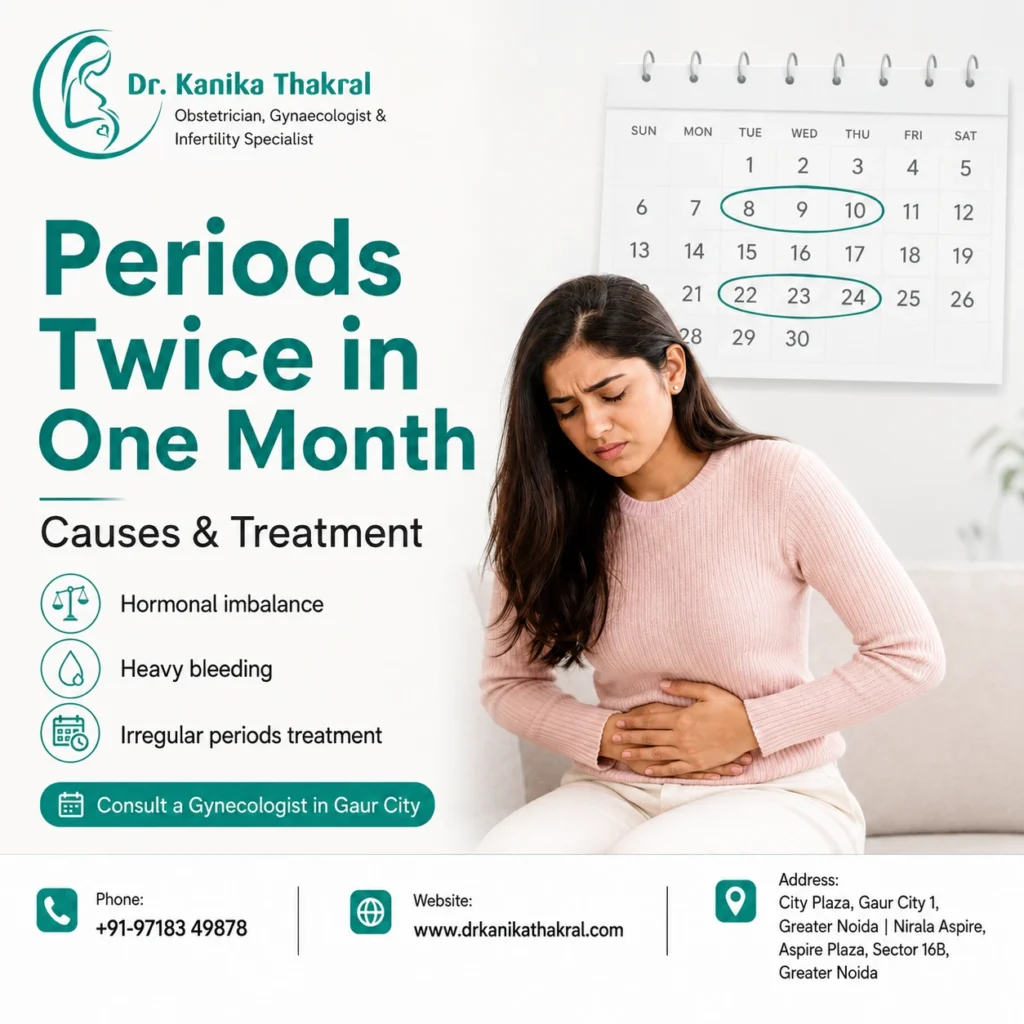
Periods Twice in One Month: Causes and Treatment in Gaur City
Getting Periods Twice in One Month can feel confusing and stressful. Many women start worrying when bleeding comes again after a short gap. Sometimes, it may happen once due to stress, travel, weight change, or hormonal fluctuation. However, if it happens repeatedly, becomes heavy, or comes with pain, weakness, or clots, it should be checked.
A normal menstrual cycle is counted from the first day of one period to the first day of the next period. If your cycle suddenly becomes much shorter than usual or your bleeding pattern changes, it may be a sign of irregular periods. ACOG explains that abnormal uterine bleeding includes bleeding that is different from your normal cycle, including irregular timing or heavy flow.
So, if you are getting periods two times in a month, do not ignore it. A timely consultation with a Gynecologist in Gaur City can help find the real cause and guide the right treatment.
What Does Periods Twice in One Month Mean?
Periods Twice in One Month means you bleed again within the same calendar month or your cycle gap becomes shorter than usual. For example, if your period starts on the 1st and then bleeding starts again around the 18th or 20th, it may look like two periods in one month.
However, every bleeding episode is not always a proper period. Sometimes, it may be spotting, breakthrough bleeding, ovulation bleeding, infection-related bleeding, or bleeding due to hormonal changes.
That is why it is important to understand the pattern. Note the date, flow, pain, clots, and any other symptoms.
Is It Normal to Get Periods Twice in One Month?
Sometimes, it can happen once and may not be serious. For example, stress, sudden weight change, illness, lack of sleep, or travel can affect hormones and period timing.
However, repeated bleeding twice a month is not something to ignore. NHS guidance also advises speaking to a doctor if your normal period pattern changes or your periods become irregular.
You should consult early if:
- Bleeding happens twice for 2–3 months
- Flow is heavy
- You pass large clots
- Pain is severe
- You feel weak or dizzy
- Bleeding happens after sex
- Periods are becoming unpredictable
- You are trying to conceive
- You are above 35 or 40
- Bleeding happens after missed periods
Early diagnosis can prevent unnecessary worry and help start proper care.
Frequent Periods Causes
There are many Frequent periods causes. Some are simple and temporary, while others need medical care.
Common causes include:
- Hormonal imbalance
- Stress
- Thyroid problems
- PCOS
- Sudden weight gain or weight loss
- Birth control pill changes
- Emergency contraceptive pills
- Fibroids
- Uterine polyps
- Endometrial problems
- Infection
- Perimenopause
- Pregnancy-related bleeding
- Miscarriage-related bleeding
- Certain medicines
- Bleeding disorders in some cases
Because the causes are different, treatment should not be the same for every woman.
Hormonal Imbalance and Periods Twice in One Month
Hormonal imbalance is one of the most common reasons for irregular bleeding. Your menstrual cycle depends on a balance of hormones. If this balance changes, ovulation may become irregular and bleeding can happen earlier than expected.
Hormonal imbalance may happen due to:
- PCOS
- Thyroid issues
- High prolactin
- Stress
- Poor sleep
- Weight changes
- Excessive exercise
- Perimenopause
- Diabetes or insulin resistance
In such cases, periods may become early, late, heavy, light, or unpredictable. Proper testing helps identify the exact issue.
Heavy Bleeding With Frequent Periods
Heavy bleeding with frequent periods should be taken seriously. It can cause tiredness, weakness, low hemoglobin, dizziness, and daily-life discomfort.
ACOG notes that heavy bleeding may point to an underlying health problem that needs treatment. It may be linked with fibroids, polyps, bleeding disorders, infection, pregnancy-related causes, or hormonal concerns.
You should seek urgent care if you are soaking pads very quickly, feeling faint, or having chest pain, shortness of breath, or dizziness with heavy bleeding. ACOG advises emergency care if pads or tampons are being changed every hour for more than two hours with symptoms such as dizziness, chest pain, or shortness of breath.
Could It Be Spotting Instead of a Period?
Yes, sometimes the second bleeding may be spotting, not a real period. Spotting is usually lighter than normal flow. It may appear as light pink, brown, or red discharge.
Spotting may happen due to:
- Ovulation
- Hormonal changes
- Birth control pills
- Emergency pills
- Cervical irritation
- Infection
- Pregnancy implantation
- Thyroid or PCOS-related changes
Still, if spotting repeats, smells bad, happens after sex, or comes with pain, consult your doctor.
PCOS and Frequent Periods
PCOS is commonly linked with delayed periods, but it can also cause irregular and unpredictable bleeding. Some women may bleed after a long gap, while others may have frequent spotting or heavy flow.
PCOS may also cause:
- Acne
- Weight gain
- Hair growth on face
- Hair fall
- Irregular ovulation
- Fertility concerns
- Dark patches on skin
If PCOS is the reason, Irregular periods treatment may include lifestyle care, weight management, hormone evaluation, cycle regulation, and fertility guidance if pregnancy is planned.
Thyroid Problems and Period Changes
Thyroid imbalance can affect period flow and timing. Both underactive and overactive thyroid may disturb cycles.
Symptoms may include:
- Tiredness
- Weight change
- Hair fall
- Mood changes
- Constipation or loose motions
- Feeling too cold or too hot
- Period irregularity
A simple blood test can help check thyroid levels.
Fibroids, Polyps and Bleeding Twice a Month
Fibroids and polyps can cause abnormal bleeding. Some women may have heavy periods, bleeding between periods, pain, pressure, or clots.
ACOG lists polyps and fibroids among possible causes of abnormal bleeding.
If fibroids or polyps are suspected, your doctor may suggest ultrasound or other tests. Treatment depends on size, location, symptoms, age, and pregnancy plans.
Infection and Irregular Bleeding
Sometimes, vaginal, cervical, or pelvic infection can cause bleeding between periods. It may also cause pain, discharge, itching, burning, smell, or pain during sex.
Do not ignore bleeding with:
- Foul-smelling discharge
- Pelvic pain
- Fever
- Burning urine
- Pain during intercourse
- Itching or irritation
Proper diagnosis is important before taking any medicine.
Pregnancy-Related Bleeding
If you are sexually active and bleeding pattern changes suddenly, pregnancy should be ruled out. Sometimes, bleeding in early pregnancy can look like a period.
Pregnancy-related bleeding may happen due to implantation, miscarriage, ectopic pregnancy, or other concerns. ACOG includes pregnancy-related causes, such as ectopic pregnancy and miscarriage, among possible causes of abnormal bleeding.
Take a pregnancy test if your period pattern changes and pregnancy is possible. If the test is positive and bleeding comes with pain, dizziness, or shoulder pain, seek urgent care.
When Should You Consult a Gynecologist in Gaur City?
Consult a Gynecologist in Gaur City if periods twice in one month happen repeatedly or if bleeding is unusual for you.
You should book a consultation if you have:
- Bleeding twice in a month
- Heavy bleeding
- Large clots
- Bleeding after sex
- Severe period pain
- Pelvic pain
- Dizziness or weakness
- Irregular periods for many months
- Bleeding after missed period
- Trying to conceive with irregular cycles
- Bleeding after menopause
- Bad-smelling discharge with bleeding
Do not wait for the problem to become severe.
Diagnosis for Periods Twice in One Month
Diagnosis starts with your menstrual history. Your doctor may ask about your cycle dates, flow, pain, clots, medicines, birth control use, pregnancy possibility, weight changes, stress, and past medical history.
Tests may include:
- Pregnancy test
- CBC to check hemoglobin
- Thyroid test
- Hormone tests
- Prolactin test
- PCOS evaluation
- Pelvic ultrasound
- Infection testing if needed
- Pap smear if advised
- Endometrial evaluation in selected cases
ACOG also says your ob-gyn may ask about health history, pregnancy history, medicines, and birth control method when evaluating abnormal uterine bleeding.
Irregular Periods Treatment in Gaur City
Irregular periods treatment depends on the cause. There is no single treatment for every woman.
Treatment may include:
- Lifestyle changes
- Stress management
- Weight management
- Hormone treatment if needed
- Thyroid treatment
- PCOS care
- Infection treatment
- Medicines to reduce heavy bleeding
- Birth control-related guidance
- Fibroid or polyp treatment
- Fertility guidance if pregnancy is planned
NHS guidance also says treatment for irregular periods depends on the cause.
So, the right treatment starts with the right diagnosis.
Lifestyle Tips to Support Period Health
Healthy habits can support hormonal balance and period regularity.
Helpful steps include:
- Track your periods every month
- Sleep on time
- Reduce stress
- Maintain a healthy weight
- Eat balanced meals
- Stay active
- Avoid crash dieting
- Drink enough water
- Limit junk food and excess sugar
- Do not self-medicate with hormonal pills
These steps may help, but medical evaluation is still important if bleeding is frequent or heavy.
Period Tracking: What to Note
Before your visit, keep a simple record. This helps your doctor understand the pattern better.
Note these details:
- Period start date
- Period end date
- Flow amount
- Number of pads used
- Clots
- Pain level
- Spotting days
- Any bleeding after sex
- Medicines taken
- Pregnancy test result if done
NHS also suggests keeping a symptom diary before seeing a doctor for period problems.
When to Seek Urgent Care
Seek urgent medical help if you have:
- Very heavy bleeding
- Dizziness or fainting
- Severe lower abdominal pain
- Chest pain or breathlessness
- Positive pregnancy test with pain and bleeding
- Bleeding after menopause
- Fever with pelvic pain
- Passing very large clots
- Severe weakness
These signs need quick attention.
When to Consult Dr. Kanika Thakral
Consult Dr. Kanika Thakral if you are getting Periods Twice in One Month, frequent bleeding, heavy flow, clots, irregular cycles, pelvic pain, or hormonal symptoms.
You may need guidance for:
- Periods Twice in One Month
- Frequent periods causes
- Irregular periods treatment
- Hormonal imbalance
- Heavy bleeding
- PCOS-related period issues
- Thyroid-related cycle concerns
- Fertility planning
- Women’s health checkup
Timely consultation can help find the cause and support better period health.
FAQs
1. Is it normal to get periods twice in one month?
It can happen once due to stress, travel, or hormonal changes. However, if it repeats or bleeding is heavy, consult a gynecologist.
2. What are common frequent periods causes?
Common causes include hormonal imbalance, PCOS, thyroid issues, stress, fibroids, polyps, infection, pregnancy-related bleeding, and birth control changes.
3. Can hormonal imbalance cause periods twice in one month?
Yes, hormonal imbalance can disturb ovulation and cause early, late, heavy, or frequent periods.
4. When is heavy bleeding a concern?
Heavy bleeding is concerning if you soak pads quickly, pass large clots, feel dizzy, weak, or bleeding affects your daily life.
5. What tests are needed for irregular periods?
Tests may include pregnancy test, CBC, thyroid test, hormone tests, ultrasound, infection tests, and other tests depending on symptoms.
6. Can irregular periods be treated?
Yes, irregular periods treatment is possible. The treatment depends on the cause, such as PCOS, thyroid issues, infection, fibroids, or hormonal imbalance.
