
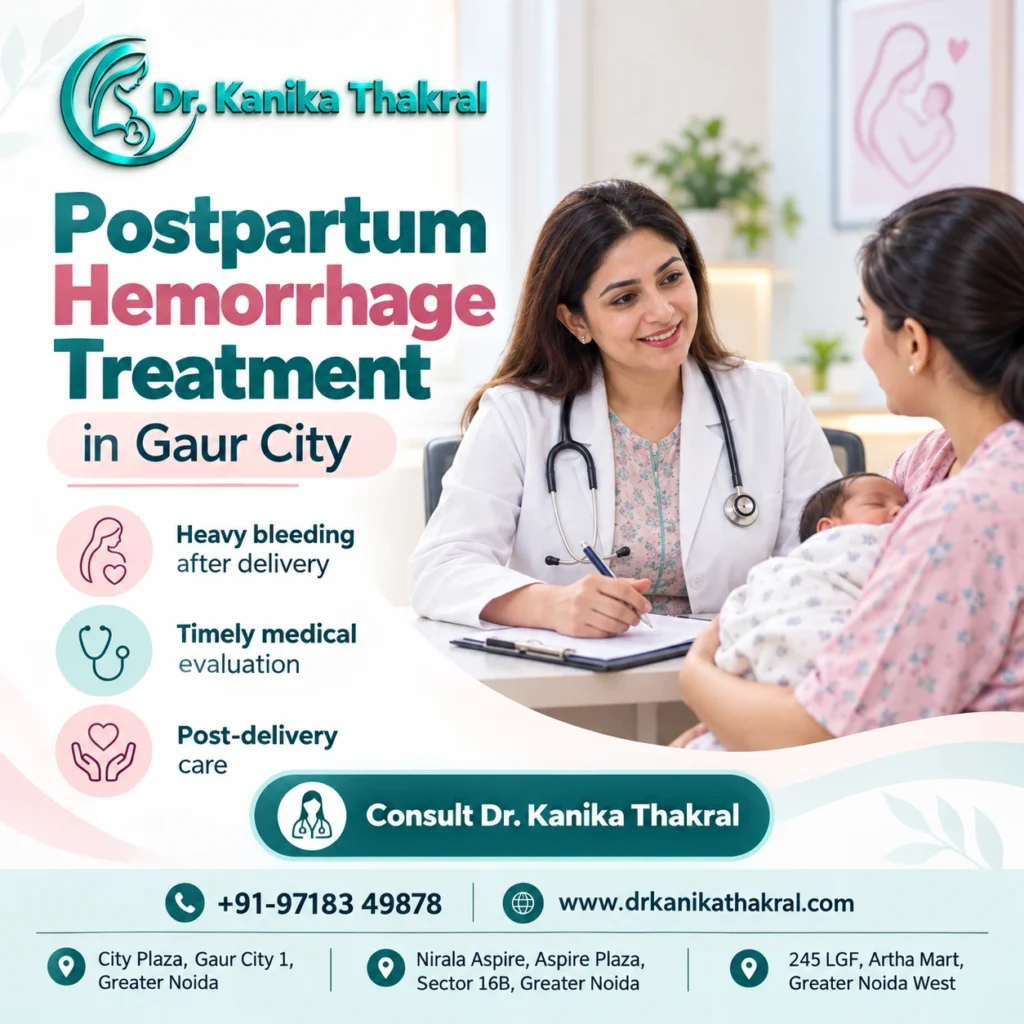
Postpartum Hemorrhage Treatment in Gaur City
Postpartum Hemorrhage Treatment in Gaur City is important when a woman has unusually heavy bleeding after childbirth. Some vaginal bleeding after delivery is expected. However, very heavy bleeding, large clots, dizziness, weakness, fainting, fast heartbeat, or breathing difficulty can be warning signs and need urgent medical attention.
Heavy bleeding after delivery can happen after a normal delivery or cesarean birth. In some cases, it may start soon after childbirth. In other cases, abnormal bleeding can happen days later.
Therefore, timely Pregnancy Care After Delivery and proper monitoring are important for the mother’s safety and recovery.
What Is Postpartum Hemorrhage?
Postpartum hemorrhage, also called PPH, means excessive bleeding after childbirth. It can happen immediately after delivery or later during the postpartum period.
A small amount of postpartum bleeding is normal as the uterus heals. However, bleeding becomes concerning when it is very heavy, increases suddenly, or causes symptoms such as weakness or dizziness.
Possible signs include:
- Very heavy vaginal bleeding
- Large blood clots
- Soaking pads very quickly
- Dizziness
- Fainting
- Severe weakness
- Fast heartbeat
- Pale skin
- Breathlessness
- Low blood pressure
Because postpartum hemorrhage can become serious quickly, emergency medical care may be needed.
Heavy Bleeding After Delivery
Heavy bleeding after delivery should never be ignored. While postpartum discharge and bleeding can continue for some time, the flow should generally reduce gradually.
Seek urgent medical attention if:
- Bleeding suddenly becomes very heavy
- Pads are soaking quickly
- Large clots are passing repeatedly
- You feel faint or dizzy
- Your heartbeat feels very fast
- You feel extremely weak
- You have severe lower abdominal pain
- You develop fever or chills
These symptoms may point to postpartum hemorrhage or another complication.
Common Causes of Postpartum Hemorrhage
There are several possible causes of heavy bleeding after childbirth.
Common causes may include:
- Uterus not contracting properly
- Retained placental tissue
- Tear in the birth canal
- Placental problems
- Blood clotting problems
- Infection
- Uterine injury in rare cases
- Complications after delivery
Sometimes more than one factor may be present. Therefore, quick evaluation is important.
Uterus Not Contracting Properly
After delivery, the uterus should contract firmly to help control bleeding. If it remains soft or relaxed, bleeding can increase.
This is one of the common reasons for postpartum hemorrhage.
Treatment may include:
- Uterine massage
- Medicines to help the uterus contract
- IV fluids
- Close monitoring
- Blood transfusion if required
- Further procedures if bleeding continues
The treatment depends on the severity of bleeding and the mother’s condition.
Retained Placental Tissue
Sometimes a small part of the placenta may remain inside the uterus after delivery. This can prevent the uterus from contracting properly and may lead to heavy or prolonged bleeding.
Symptoms may include:
- Heavy bleeding
- Large clots
- Abdominal pain
- Fever
- Bad-smelling discharge
- Bleeding that does not reduce
In such cases, ultrasound or further evaluation may be needed.
Pregnancy Care After Delivery
Pregnancy Care After Delivery is just as important as care during pregnancy. The first days and weeks after childbirth are a major recovery period for the mother.
Post-delivery care may include:
- Monitoring vaginal bleeding
- Checking blood pressure
- Checking pulse
- Monitoring temperature
- Watching for infection
- Checking hemoglobin when needed
- Pain assessment
- Breastfeeding guidance
- Nutrition support
- Follow-up visits
In addition, women should be told which symptoms need immediate medical help.
Normal Delivery Care
Normal Delivery Care includes monitoring the mother after vaginal birth and checking for bleeding, tears, pain, infection, bladder problems, and uterine recovery.
After normal delivery, some bleeding is expected. However, sudden heavy bleeding should not be considered normal.
Normal delivery care may include:
- Checking uterine contraction
- Monitoring bleeding
- Examining birth canal tears
- Pain management
- Checking urine output
- Monitoring blood pressure
- Supporting breastfeeding
- Nutrition and hydration guidance
- Postpartum follow-up
Proper follow-up helps detect complications early.
Warning Signs After Delivery
Contact a doctor or seek urgent care if you have:
- Very heavy bleeding
- Large clots
- Fainting
- Severe dizziness
- Fast heartbeat
- Breathlessness
- Severe lower abdominal pain
- Fever
- Bad-smelling vaginal discharge
- Severe weakness
- Severe headache or blurred vision
- Chest pain
These signs should not be managed at home without medical evaluation.
Diagnosis of Postpartum Hemorrhage
Before starting Postpartum Hemorrhage Treatment in Gaur City, the medical team will assess how much bleeding is happening and why.
Evaluation may include:
- Blood pressure check
- Pulse monitoring
- Abdominal examination
- Uterine examination
- Birth canal examination
- Blood tests
- Hemoglobin testing
- Clotting tests
- Ultrasound when needed
The aim is to find the cause quickly and control bleeding safely.
Postpartum Hemorrhage Treatment in Gaur City
Postpartum Hemorrhage Treatment in Gaur City depends on the cause and severity of bleeding.
Treatment may include:
- Uterine massage
- Medicines to control bleeding
- IV fluids
- Oxygen support
- Blood transfusion if needed
- Treatment of birth canal tears
- Removal of retained tissue when required
- Balloon or other procedures to control bleeding
- Surgery in severe cases
Treatment should never be delayed if bleeding is heavy or the mother is becoming weak or unstable.
Can Postpartum Hemorrhage Happen After Normal Delivery?
Yes. Postpartum hemorrhage can happen after both vaginal and cesarean delivery.
After normal delivery, heavy bleeding may be related to:
- Poor uterine contraction
- Retained placenta
- Vaginal or cervical tears
- Blood clotting problems
- Infection
Therefore, Normal Delivery Care should include proper monitoring even when the delivery itself was uncomplicated.
Recovery After Heavy Bleeding
Women who have had postpartum hemorrhage may feel weak for several days or weeks.
Recovery may include:
- Rest
- Iron-rich diet
- Iron supplements if prescribed
- Hemoglobin monitoring
- Plenty of fluids
- Balanced meals
- Gradual physical activity
- Follow-up appointments
If anemia is severe, additional treatment may be required.
When to Consult Dr. Kanika Thakral
Consult Dr. Kanika Thakral for postpartum recovery concerns, abnormal bleeding, delivery follow-up, or women’s health problems after childbirth.
You may need care for:
- Postpartum Hemorrhage Treatment in Gaur City
- Heavy bleeding after delivery
- Pregnancy Care After Delivery
- Normal Delivery Care
- Consultation with a Gynecologist in Gaur City
However, if bleeding is very heavy, you feel faint, or there are signs of shock, seek emergency hospital care immediately.
FAQs
1. Is bleeding after delivery normal?
Some bleeding is expected after childbirth. However, very heavy bleeding, repeated large clots, dizziness, or fainting is not normal and needs urgent care.
2. What causes postpartum hemorrhage?
Common causes include poor uterine contraction, retained placental tissue, birth canal tears, infection, and clotting problems.
3. Can postpartum hemorrhage happen after normal delivery?
Yes. Postpartum hemorrhage can happen after normal delivery as well as after cesarean delivery.
4. What are the warning signs of heavy bleeding after delivery?
Warning signs include very heavy bleeding, large clots, weakness, dizziness, fainting, fast heartbeat, breathlessness, and severe abdominal pain.
5. What is included in pregnancy care after delivery?
Pregnancy Care After Delivery includes bleeding monitoring, blood pressure checks, infection screening, breastfeeding support, nutrition guidance, and postpartum follow-up.
6. Which doctor should I consult in Gaur City?
You can consult a Gynecologist in Gaur City for postpartum bleeding concerns, delivery recovery, and routine postnatal care. Severe bleeding requires immediate emergency care.
