
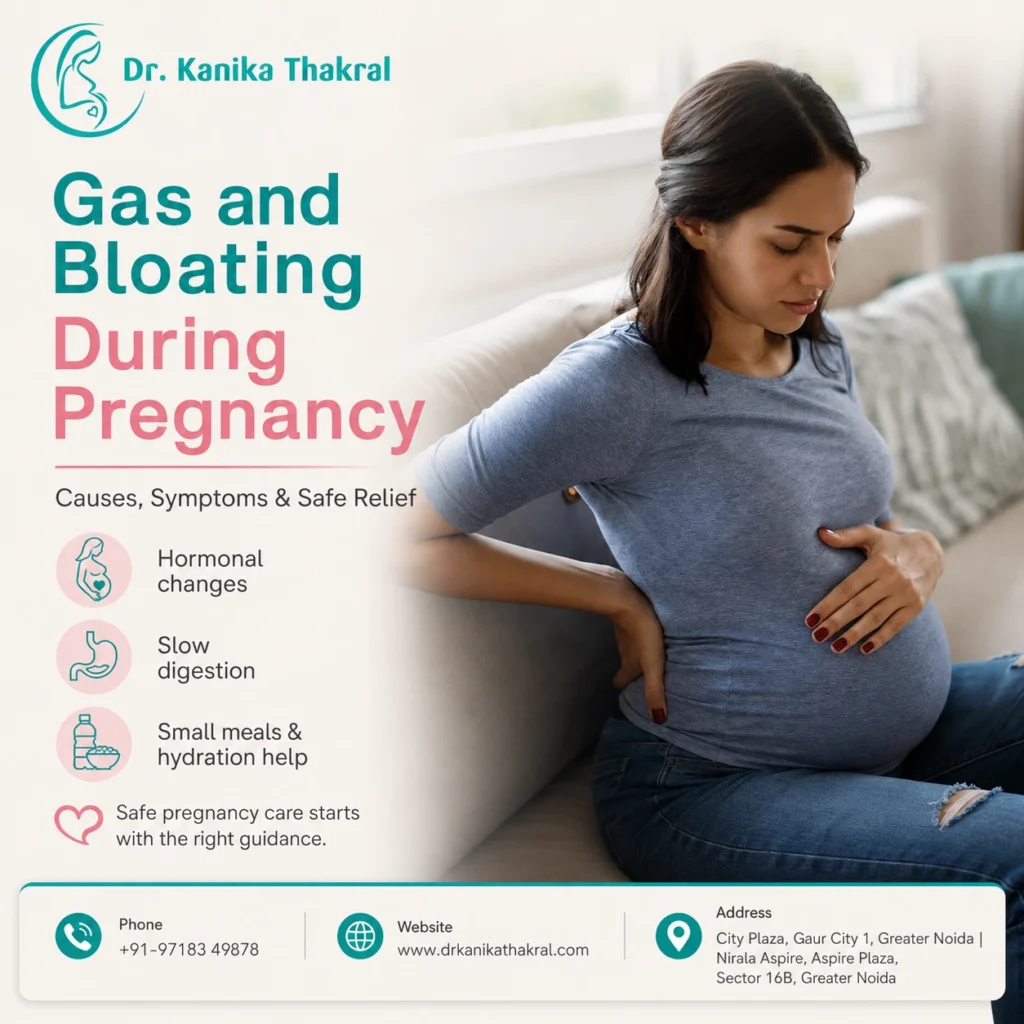
Gas and Bloating During Pregnancy: Causes, Symptoms, and Treatment
Gas and Bloating During Pregnancy are common problems for many expecting mothers. You may feel stomach fullness, tightness, burping, heaviness after meals, passing gas, or abdominal discomfort. These symptoms can feel worrying, but in many cases, they happen because pregnancy slows digestion.
During pregnancy, hormone changes can relax the digestive system. As a result, food moves slowly through the stomach and intestines. This can cause gas, bloating, constipation, and acidity. ACOG notes that increased pregnancy hormones can slow digestion and lead to digestive concerns such as constipation, gas, bloating, and heartburn.
However, severe pain, vomiting, fever, bleeding, dizziness, or reduced baby movements should not be ignored. For safe guidance, consult a Gynecologist in Gaur City and get proper Pregnancy Care in Gaur City.
What Is Gas and Bloating During Pregnancy?
Gas means air or digestive gas trapped in the stomach or intestines. Bloating means a feeling of fullness, swelling, tightness, or pressure in the belly.
During pregnancy, bloating may feel more noticeable because the uterus is growing and digestion becomes slower. Some women feel bloated even after eating a small meal. Others may feel more discomfort at night or after spicy and heavy food.
Most of the time, gas and bloating are manageable with simple care. Still, it is important to know when symptoms are normal and when they need medical attention.
Common Pregnancy Bloating Causes
There are many Pregnancy bloating causes. Some are linked with hormones, while others are related to diet and routine.
Common causes include:
- Slow digestion due to pregnancy hormones
- Constipation
- Gas-forming foods
- Eating too fast
- Large meals
- Less physical activity
- Drinking carbonated drinks
- Spicy or oily foods
- Iron supplements in some women
- Growing uterus pressure
- Stress and poor sleep
- Acidity or indigestion
NHS also explains that indigestion and heartburn are common in pregnancy and may be managed with diet and lifestyle changes.
Symptoms of Gas and Bloating During Pregnancy
Symptoms may vary from woman to woman. Some may have mild discomfort, while others may feel strong heaviness.
Common symptoms include:
- Fullness after eating
- Tight stomach feeling
- Burping
- Passing gas
- Stomach heaviness
- Mild cramps
- Constipation
- Chest burning with acidity
- Sour taste in mouth
- Discomfort after heavy meals
- Feeling pressure in the belly
If bloating comes with severe pain, bleeding, fever, repeated vomiting, or weakness, consult your doctor quickly.
Gas During Pregnancy Treatment
Gas during pregnancy treatment usually starts with safe food and lifestyle changes. Do not take medicines or home remedies without asking your doctor.
Helpful steps may include:
- Eat small meals more often
- Chew food slowly
- Avoid eating too fast
- Drink enough water
- Walk gently after meals if allowed
- Avoid lying down immediately after eating
- Reduce oily and spicy foods
- Limit carbonated drinks
- Add fibre slowly if constipation is present
- Avoid foods that trigger your symptoms
If lifestyle changes are not enough, your doctor may suggest pregnancy-safe medicines. Some medicines for indigestion and heartburn may be used during pregnancy, but only after medical advice.
Foods That Can Increase Gas and Bloating
Some foods may increase gas in a few women. Triggers are different for everyone, so you do not need to stop every food completely.
Common triggers may include:
- Rajma
- Chole
- Cabbage
- Cauliflower
- Broccoli
- Fried snacks
- Very spicy food
- Cold drinks
- Packaged foods
- Excess tea or coffee
- Heavy dinner
- Too many sweets
If a healthy food causes gas, try smaller portions instead of fully avoiding it. For example, dal and beans are nutritious, but they may need proper soaking, cooking, and portion control.
Safe Pregnancy Treatment for Bloating
Safe pregnancy treatment means managing symptoms without harming mother or baby. The safest approach is to first identify your trigger foods and improve meal timing.
Safe care may include:
- Small and frequent meals
- Light dinner
- Proper hydration
- Gentle walking
- Pregnancy-safe stretching if advised
- Constipation management
- Doctor-approved medicines if required
- Regular pregnancy follow-up
Avoid taking acidity tablets, digestive syrups, herbal medicines, powders, or laxatives without medical advice during pregnancy.
Gas, Bloating and Heartburn During Pregnancy in Gaur City
Gas and bloating can sometimes happen along with acidity and heartburn. Heartburn During Pregnancy in Gaur City may feel like burning in the chest, sour burps, throat irritation, or discomfort after meals.
Heartburn happens when stomach acid moves upward into the food pipe. NHS states that indigestion, also called heartburn or acid reflux, is common during pregnancy and can be related to hormonal changes and the growing baby pressing on the stomach.
If heartburn is frequent, affects sleep, or causes severe discomfort, consult your gynecologist for safe treatment.
Pregnancy Care in Gaur City for Digestive Problems
Regular Pregnancy Care in Gaur City helps you discuss common symptoms like gas, bloating, constipation, acidity, nausea, vomiting, and stomach pain.
During consultation, your doctor may ask about:
- Pregnancy month
- Food habits
- Constipation
- Vomiting
- Pain location
- Acidity symptoms
- Medicines already taken
- Water intake
- Warning symptoms
- Baby movements in later pregnancy
This helps your doctor decide whether the problem is simple digestive discomfort or needs further evaluation.
When Gas and Bloating May Be a Warning Sign
Gas and bloating are usually common, but some symptoms need medical care.
Consult your doctor if you have:
- Severe stomach pain
- Bleeding or spotting
- Fever
- Repeated vomiting
- Dizziness
- Severe constipation
- Loose motions with weakness
- Burning urine
- Water leakage
- Reduced baby movements
- Chest pain or breathlessness
- Pain that does not settle
Do not ignore strong pain by assuming it is only gas.
Simple Pregnancy Care Tips for Gas and Bloating
These tips may help you feel better:
- Eat slowly
- Avoid overeating
- Keep dinner light
- Sit upright after meals
- Walk for 10–15 minutes if allowed
- Drink water throughout the day
- Avoid trigger foods
- Wear comfortable clothes
- Sleep on your side
- Manage constipation early
- Discuss supplements if they worsen constipation
Small daily changes can make a big difference.
When to Consult Dr. Kanika Thakral
Consult Dr. Kanika Thakral if you have frequent gas, bloating, acidity, constipation, stomach pain, or heartburn during pregnancy.
You may need guidance for:
- Gas and Bloating During Pregnancy
- Pregnancy bloating causes
- Gas during pregnancy treatment
- Safe pregnancy treatment
- Pregnancy Care in Gaur City
- Heartburn During Pregnancy in Gaur City
- Digestive discomfort in pregnancy
- Safe medicine advice
Timely care can help improve comfort and support a healthier pregnancy journey.
FAQs
1. Is gas and bloating common during pregnancy?
Yes, gas and bloating are common during pregnancy because hormones can slow digestion and the growing uterus can add pressure.
2. What are common pregnancy bloating causes?
Common causes include slow digestion, constipation, large meals, spicy food, oily food, carbonated drinks, and less movement.
3. What is safe gas during pregnancy treatment?
Small meals, slow eating, hydration, gentle walking, avoiding trigger foods, and doctor-approved medicines can help.
4. Can gas and bloating harm the baby?
Usually, gas and bloating do not harm the baby. However, severe pain, bleeding, fever, vomiting, or reduced baby movements should be checked.
5. Can heartburn happen with bloating?
Yes, bloating can happen with acidity and heartburn during pregnancy. Burning chest, sour burps, and throat irritation may need safe care.
6. Which doctor should I consult?
You should consult a Gynecologist in Gaur City for pregnancy-safe diagnosis, treatment, and care guidance.
