
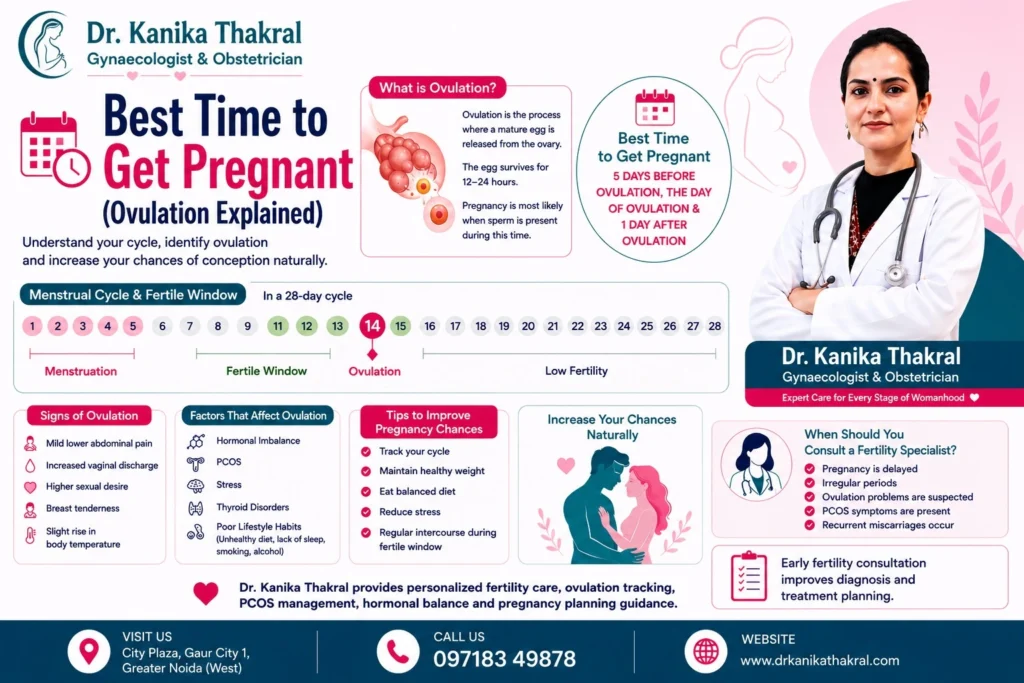
Best Time to Get Pregnant (Ovulation Explained)
Understanding the best time to get pregnant is very important for couples trying to conceive naturally. Pregnancy chances are highest during ovulation, which is the phase when the ovary releases an egg for fertilization. Knowing how ovulation works can help improve fertility awareness and increase the chances of successful conception.
At Dr. Kanika Thakral’s clinic, women receive personalized guidance for fertility care, ovulation tracking, hormonal health, pregnancy planning, and reproductive wellness in Gaur City.
What is Ovulation?
Ovulation is the process where a mature egg is released from the ovary during the menstrual cycle. This usually happens once every month in women with regular periods.
The released egg stays active for around 12–24 hours, and pregnancy is most likely when sperm is already present during this fertile window.
What is the Best Time to Get Pregnant?
The best time to get pregnant is usually during the fertile window, which includes:
- 5 days before ovulation
- The day of ovulation
- 1 day after ovulation
Women are most fertile during this time because sperm can survive inside the body for several days.
How to Calculate Ovulation
In women with a regular 28-day cycle, ovulation often happens around day 14.
Example:
- Day 1 = First day of periods
- Ovulation = Around day 14
- Fertile window = Day 10 to Day 15
However, every woman’s cycle may differ depending on hormones and health conditions.
Signs of Ovulation
Some women notice natural ovulation symptoms such as:
- Mild lower abdominal pain
- Increased vaginal discharge
- Higher sexual desire
- Breast tenderness
- Slight rise in body temperature
Tracking these symptoms may help identify fertile days.
Factors That Affect Ovulation
Several factors may disturb ovulation and reduce pregnancy chances.
Hormonal Imbalance
Hormonal imbalance can affect egg release and menstrual cycles.
PCOS
PCOS is one of the most common causes of irregular ovulation and infertility.
Stress
Stress may affect hormones and reproductive health.
Thyroid Disorders
Thyroid imbalance can interfere with ovulation.
Poor Lifestyle Habits
Lack of sleep, obesity, unhealthy diet, smoking, and alcohol may affect fertility.
Tips to Improve Pregnancy Chances
Track Your Cycle
Monitoring periods and ovulation days helps identify the fertile window.
Maintain Healthy Weight
Healthy body weight supports hormonal balance.
Eat Balanced Diet
Nutritious foods support fertility and reproductive health.
Reduce Stress
Stress management may improve hormonal health.
Regular Intercourse During Fertile Window
Couples trying to conceive should plan intercourse around ovulation days.
When Should You Consult a Fertility Specialist?
You should consult a gynecologist or fertility specialist if:
- Pregnancy is delayed
- Periods are irregular
- Ovulation problems are suspected
- PCOS symptoms are present
- Recurrent miscarriages occur
Early fertility consultation improves diagnosis and treatment planning.
Fertility Care by Dr. Kanika Thakral
Dr. Kanika Thakral provides personalized fertility guidance and women’s healthcare support for couples planning pregnancy.
Her care approach includes:
- Ovulation tracking guidance
- Fertility evaluation
- PCOS and hormonal imbalance management
- Pregnancy planning consultation
- Women’s reproductive healthcare
FAQs
1. What is the best time to get pregnant?
The fertile window around ovulation is the best time to conceive.
2. When does ovulation usually happen?
In a 28-day cycle, ovulation often occurs around day 14.
3. Can irregular periods affect ovulation?
Yes, irregular periods may indicate ovulation problems.
4. Can stress affect fertility?
Yes, stress may affect hormones and ovulation.
5. How can I track ovulation?
You can track periods, symptoms, ovulation kits, or consult a doctor.
6. Can PCOS affect ovulation?
Yes, PCOS commonly affects ovulation and fertility.
7. Who should I consult in Gaur City?
Consult Dr. Kanika Thakral for fertility care and pregnancy planning.
