
Blood Clots During Periods Treatment in Gaur City
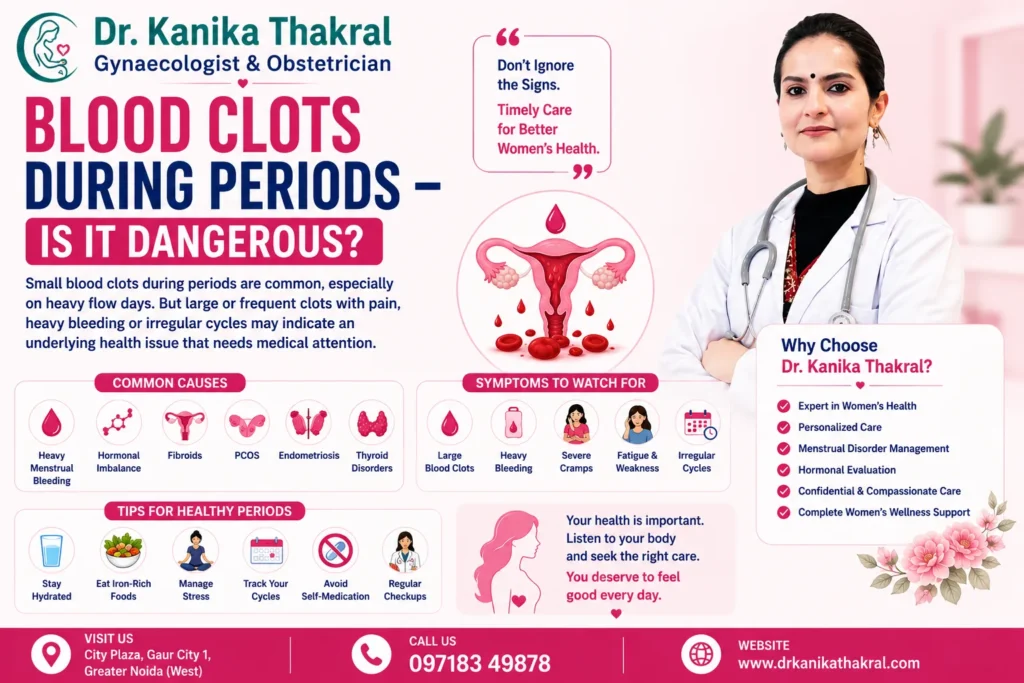
Many women notice blood clots during their menstrual cycle and often wonder whether it is normal or a sign of a serious health issue. Small blood clots during periods are usually common, especially during heavy flow days. However, large or frequent clots accompanied by pain, heavy bleeding, or irregular cycles may indicate an underlying condition that requires medical attention.
Understanding blood clots during periods – is it dangerous helps women identify warning signs early and maintain better menstrual health. At Dr. Kanika Thakral’s clinic, women receive personalized care for menstrual disorders, hormonal imbalance, and gynecological concerns.
Are Blood Clots During Periods Normal?
Yes, small blood clots during menstruation are often normal. Blood clots form when menstrual blood collects faster than the body can release it.
Clots are usually more common:
- During heavy flow days
- In the first few days of periods
- In women with naturally heavy menstrual cycles
Small clots occasionally are generally not dangerous.
When Should Blood Clots Be a Concern?
You should consult a gynecologist if you experience:
- Large blood clots frequently
- Severe cramps
- Extremely heavy bleeding
- Periods lasting longer than 7 days
- Fatigue or weakness
- Irregular menstrual cycles
Understanding blood clots during periods – is it dangerous is important because excessive clotting may be linked to hormonal or uterine conditions.
Common Causes of Blood Clots During Periods
Heavy Menstrual Bleeding
Excessive blood flow may lead to clot formation.
Hormonal Imbalance
Hormonal changes can affect the uterine lining and menstrual flow.
Fibroids
Non-cancerous uterine growths may cause heavy periods and clotting.
PCOS
Polycystic Ovary Syndrome can affect menstrual cycles and bleeding patterns.
Endometriosis
This condition may cause painful and heavy periods.
Miscarriage or Pregnancy Complications
In some cases, abnormal bleeding with clots may require urgent evaluation.
Symptoms That Should Not Be Ignored
Consult a doctor immediately if blood clots are associated with:
- Severe pelvic pain
- Dizziness
- Weakness
- Excessive bleeding
- Fever
- Missed periods with heavy bleeding
How are Blood Clots During Periods Diagnosed?
Doctors may recommend:
- Blood tests
- Ultrasound
- Hormonal evaluation
- Thyroid testing
- Menstrual history assessment
Proper diagnosis helps identify the underlying cause.
Treatment for Blood Clots During Periods
Treatment depends on the cause and severity of symptoms.
Medication
Medicines may help regulate periods and reduce heavy bleeding.
Hormonal Therapy
Hormonal treatment may help balance menstrual cycles.
Nutritional Support
Iron-rich diet and supplements may help prevent anemia.
Lifestyle Changes
Healthy diet, exercise, and stress management support hormonal health.
Tips to Maintain Healthy Periods
To support menstrual health:
- Stay hydrated
- Eat balanced diet
- Manage stress
- Track menstrual cycles
- Avoid self-medication
- Get regular gynecological checkups
Why Women’s Health Monitoring is Important
Regular gynecological care helps identify menstrual and hormonal issues early. Timely treatment improves comfort and reproductive health.
At Dr. Kanika Thakral’s clinic, women receive compassionate care for menstrual disorders and women’s wellness.
Why Choose Dr. Kanika Thakral?
Dr. Kanika Thakral provides personalized women’s healthcare focused on menstrual health and long-term wellness.
Her approach includes:
Menstrual disorder management
Hormonal evaluation
Personalized treatment plans
Women’s wellness guidance
Compassionate gynecological care
FAQs – Blood Clots During Periods
1. Are blood clots during periods normal?
Small clots during heavy flow days are usually normal.
2. When should I worry about period clots?
Large or frequent clots with heavy bleeding or pain should be evaluated.
3. Can hormonal imbalance cause blood clots?
Yes, hormonal imbalance can affect menstrual bleeding.
4. Can fibroids cause heavy clotting?
Yes, uterine fibroids may increase bleeding and clot formation.
5. Can stress affect periods?
Stress may disrupt hormones and menstrual cycles.
6. Should I consult a doctor for blood clots?
Yes, especially if symptoms are severe or persistent.
7. Who should I consult in Gaur City?
Consult Dr. Kanika Thakral for women’s health and menstrual care.
