
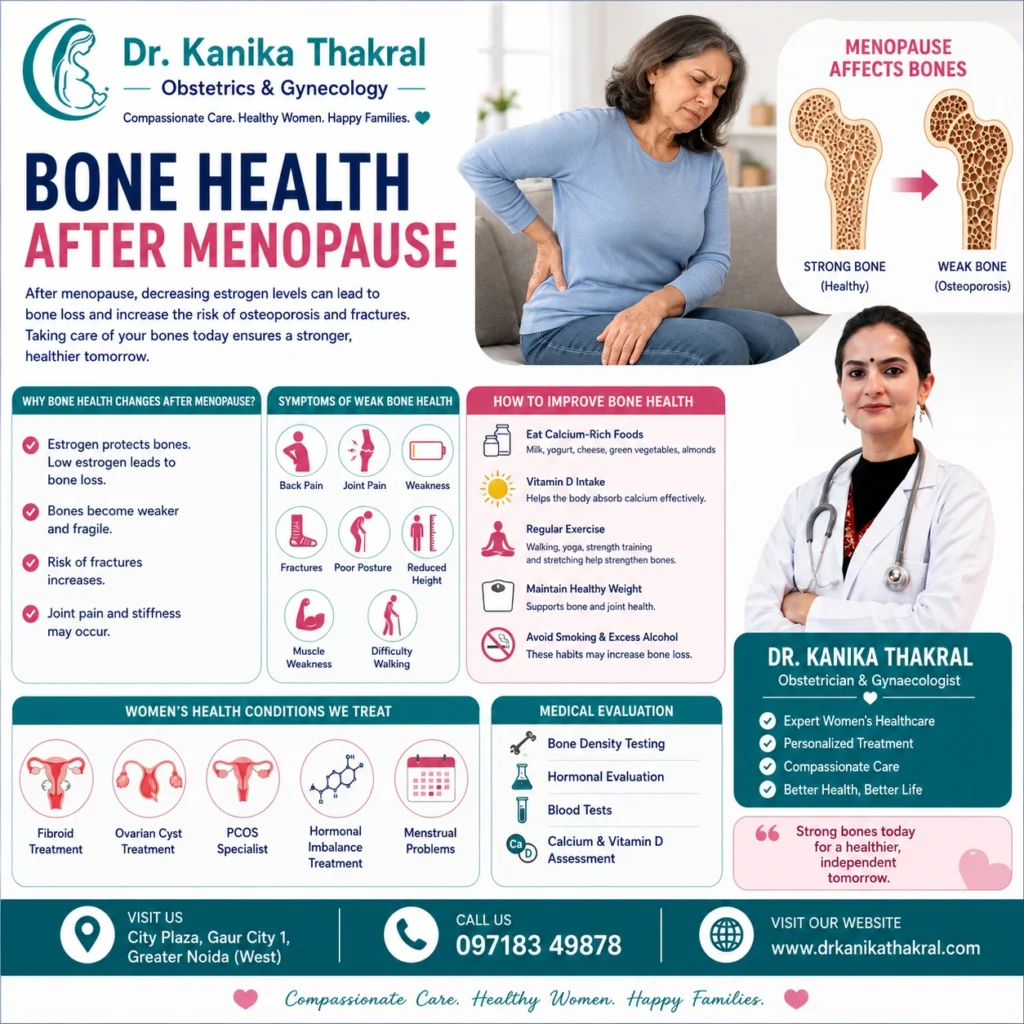
Bone Health After Menopause
Menopause is a natural stage in a woman’s life, but it also brings several hormonal and physical changes. One of the most important health concerns women face after menopause is reduced bone strength. Understanding Bone Health After Menopause is essential for maintaining mobility, strength, and overall health as women age.
At Dr. Kanika Thakral’s clinic, women receive expert healthcare support for hormonal health, menopause care, women’s wellness, and long-term reproductive health management.
Why Does Bone Health Change After Menopause?
After menopause, estrogen hormone levels decrease significantly. Estrogen plays a major role in protecting bone density.
When estrogen levels drop:
- Bones may become weaker
- Bone loss may increase
- Fracture risk rises
- Joint stiffness may occur
This condition may eventually lead to osteoporosis if not managed properly.
Common Symptoms of Weak Bone Health
Women may notice:
- Back pain
- Joint pain
- Weakness
- Reduced height over time
- Bone fractures
- Poor posture
- Difficulty walking
- Muscle weakness
Many women may not notice symptoms until bone weakness becomes severe.
Risk Factors for Bone Loss After Menopause
Some factors may increase the risk of weak bones:
Hormonal Changes
Low estrogen levels directly affect bone density.
Poor Nutrition
Lack of calcium and vitamin D weakens bones.
Lack of Physical Activity
Inactive lifestyle reduces bone strength.
Smoking & Alcohol
These habits may increase bone loss.
Family History
Women with family history of osteoporosis may be at higher risk.
Hormonal Imbalance
Women already taking Hormonal Imbalance Treatment may require additional monitoring.
Importance of Bone Health for Women
Strong bones help women maintain:
- Mobility
- Independence
- Healthy posture
- Muscle support
- Better quality of life
Healthy bones also support overall women’s wellness and long-term health.
How to Improve Bone Health After Menopause
Eat Calcium-Rich Foods
Good calcium sources include:
- Milk
- Yogurt
- Cheese
- Green vegetables
- Almonds
Vitamin D Intake
Vitamin D helps the body absorb calcium effectively.
Regular Exercise
Weight-bearing exercises help strengthen bones.
Examples include:
- Walking
- Yoga
- Light strength training
- Stretching
Maintain Healthy Weight
Proper weight management supports bone and joint health.
Avoid Smoking & Excess Alcohol
These habits may weaken bones over time.
Medical Evaluation for Bone Health
Doctors may recommend:
- Bone density testing
- Hormonal evaluation
- Blood tests
- Calcium and vitamin D assessment
Early diagnosis helps prevent complications.
Women’s Health Conditions That Need Attention
Women with hormonal or gynecological conditions may require long-term health monitoring, including those receiving:
- Fibroid Treatment
- Ovarian Cyst Treatment
- PCOS Specialist care
- Hormonal Imbalance Treatment
- Treatment for Menstrual Problems
Proper healthcare management supports women’s overall wellness before and after menopause.
Menopause & Women’s Healthcare
Regular women’s healthcare remains important even after menopause.
Women should continue routine checkups for:
- Bone health
- Hormonal health
- Gynecological wellness
- Breast health
- Pelvic health
Comprehensive care improves long-term health and quality of life.
Why Choose Dr. Kanika Thakral?
Dr. Kanika Thakral provides complete women’s healthcare and hormonal wellness support.
Services include:
✔ Hormonal Imbalance Treatment
✔ PCOS Specialist Consultation
✔ Fibroid Treatment
✔ Ovarian Cyst Treatment
✔ Menstrual Problems Management
✔ Women’s Wellness Care
✔ Pregnancy Care
✔ Safe Delivery Consultation
FAQs
1. Why does bone weakness increase after menopause?
Reduced estrogen levels may lead to bone loss after menopause.
2. What are signs of weak bones?
Back pain, fractures, posture changes, and weakness may occur.
3. Can exercise improve bone health?
Yes, regular physical activity helps strengthen bones.
4. Why is calcium important after menopause?
Calcium supports bone density and bone strength.
5. Can hormonal imbalance affect bone health?
Yes, hormones play a major role in maintaining healthy bones.
6. Should women continue regular health checkups after menopause?
Yes, routine healthcare is essential for long-term wellness.
7. Where can I get women’s healthcare support?
Consult Dr. Kanika Thakral for expert women’s wellness and hormonal healthcare
