
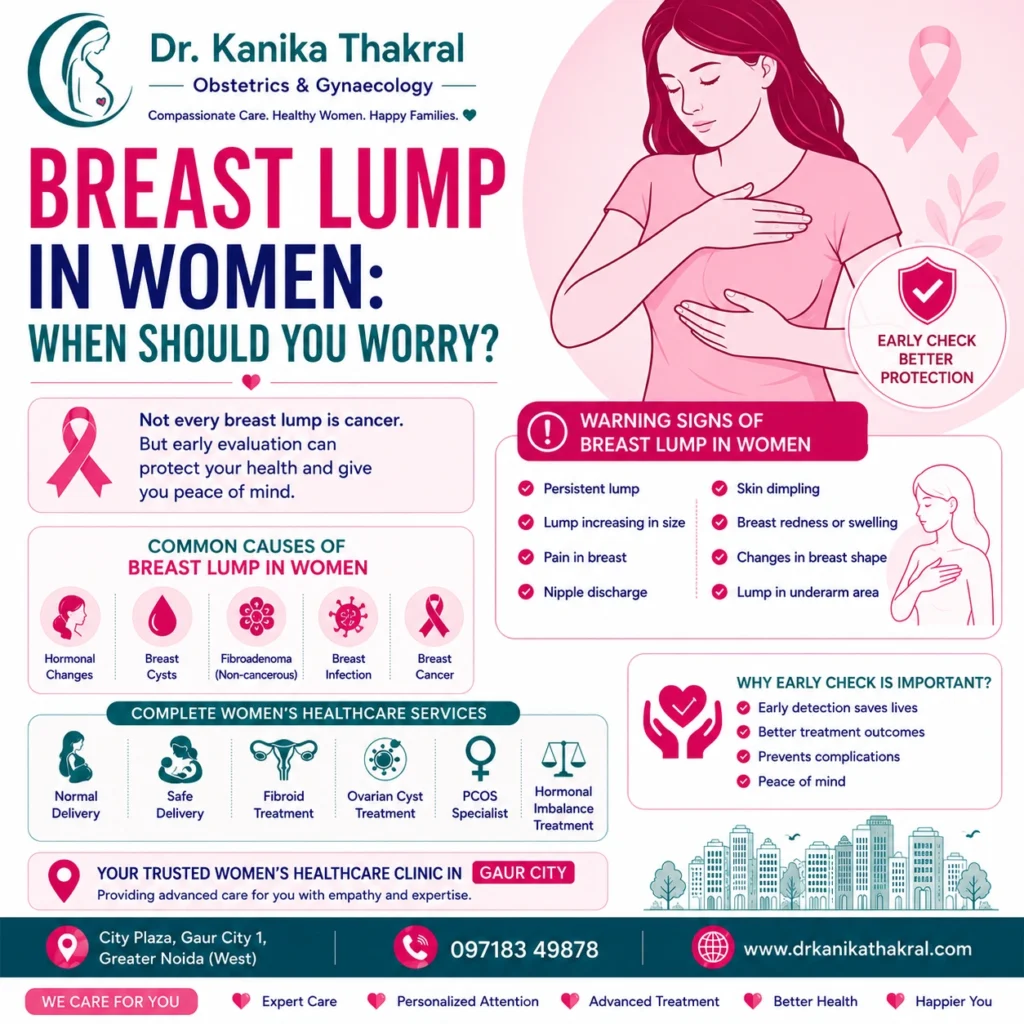
Breast Lump in Women: When Should You Worry?
Finding a breast lump can be stressful and frightening for many women. However, not every breast lump is cancerous. Some lumps may occur due to hormonal changes, infections, cysts, or non-cancerous growths.
Understanding the warning signs and knowing when medical evaluation is necessary can help women seek timely care and reduce anxiety. Early diagnosis and proper women’s healthcare monitoring are extremely important for better outcomes.
At Dr. Kanika Thakral’s clinic, women receive compassionate gynecological care, hormonal health support, and complete women’s healthcare services.
What is a Breast Lump?
A breast lump is a thickened area, swelling, or bump inside the breast tissue that feels different from surrounding tissue.
Breast lumps may:
- Be soft or hard
- Cause pain or no pain
- Feel movable or fixed
- Change during menstrual cycle
Some breast lumps are harmless, while others may require immediate medical attention.
Common Causes of Breast Lumps
Hormonal Changes
Hormonal fluctuations during periods, pregnancy, or menopause may cause breast swelling or lumpiness.
Breast Cysts
Fluid-filled sacs inside the breast are common and usually non-cancerous.
Fibroadenoma
These are non-cancerous breast tumors commonly found in younger women.
Breast Infection
Infections can cause painful lumps, redness, swelling, and fever.
Fatty Tissue Changes
Breast injury or tissue damage may create lump-like areas.
Breast Cancer
In some cases, a breast lump may be associated with cancer and requires immediate evaluation.
Warning Signs You Should Not Ignore
Women should consult a doctor if they notice:
- Persistent breast lump
- Lump increasing in size
- Pain in breast
- Nipple discharge
- Skin dimpling
- Breast redness or swelling
- Changes in breast shape
- Lump in underarm area
Early medical consultation helps identify the exact cause quickly.
Are All Breast Lumps Dangerous?
No, many breast lumps are non-cancerous. However, proper examination and imaging tests are important to confirm the diagnosis.
Women should avoid self-diagnosis and seek medical advice whenever they notice unusual breast changes.
Importance of Early Detection
Early diagnosis improves treatment success and reduces complications.
Doctors may recommend:
- Clinical breast examination
- Ultrasound
- Mammography
- Biopsy (if required)
Timely healthcare consultation can provide reassurance and appropriate treatment planning.
Hormonal Health and Breast Changes
Hormonal imbalance can influence breast tissue changes in women.
Women dealing with:
- Hormonal Imbalance Treatment
- PCOS Specialist consultation
- Menstrual irregularities
- Pregnancy-related hormonal changes
may experience temporary breast discomfort or swelling.
Breast Health During Pregnancy
Pregnancy and breastfeeding may naturally change breast tissue because of hormonal shifts and milk production.
Women receiving:
- Normal Delivery care
- Safe Delivery support
- Pregnancy monitoring
should continue routine breast health awareness and regular medical checkups.
How to Maintain Breast Health
Women can support breast health by:
- Performing self-breast awareness
- Maintaining healthy weight
- Exercising regularly
- Avoiding smoking and excessive alcohol
- Getting regular medical checkups
- Managing hormonal health properly
Why Choose Dr. Kanika Thakral for Breast Lump in Women?
Dr. Kanika Thakral provides compassionate women’s healthcare and gynecological consultation for women’s health concerns.
Services include:
✔ Women’s Healthcare Consultation
✔ Hormonal Imbalance Treatment
✔ PCOS Specialist Care
✔ Fibroid Treatment
✔ Ovarian Cyst Treatment
✔ Pregnancy & Maternity Care
✔ Safe Delivery Support
FAQs
1. Are all breast lumps cancerous?
No, many breast lumps are non-cancerous and caused by hormonal or benign conditions.
2. When should I see a doctor for a breast lump?
You should consult a doctor if the lump persists, grows, or causes unusual symptoms.
3. Can hormonal changes cause breast lumps?
Yes, hormonal fluctuations commonly affect breast tissue.
4. Are painful breast lumps dangerous?
Not always, but proper evaluation is still important.
5. Can young women get breast lumps?
Yes, breast lumps can occur at any age.
6. What tests are used to examine breast lumps?
Doctors may recommend ultrasound, mammography, or biopsy depending on symptoms.
7. Where can I consult for women’s healthcare?
Consult Dr. Kanika Thakral for expert women’s healthcare and gynecological support.
