
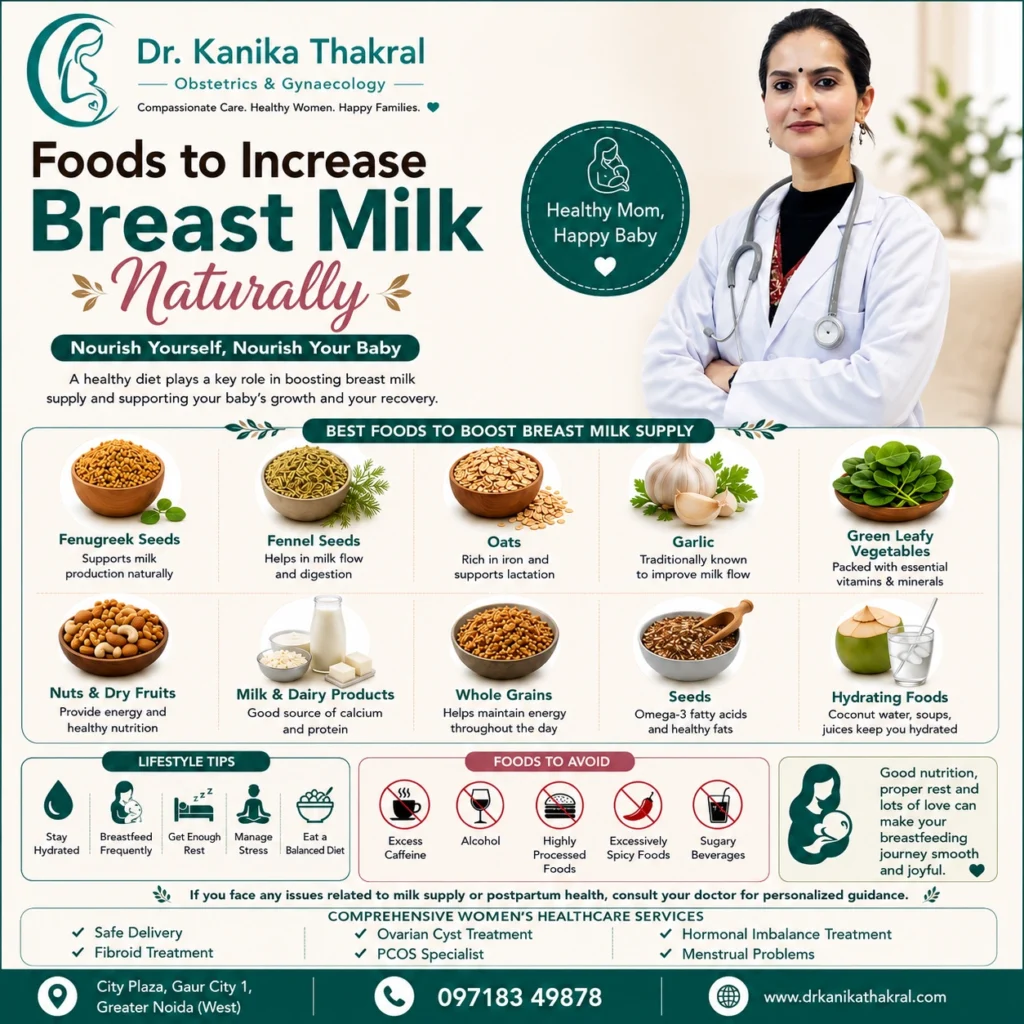
Foods to Increase Breast Milk Naturally
Foods to Increase Breast Milk Naturally are important for new mothers who want to support healthy breastfeeding and improve milk production naturally. Many women worry about low milk supply after delivery, but proper nutrition, hydration, and postpartum care can help maintain healthy lactation for both mother and baby.
The good news is that certain Foods to Increase Breast Milk Naturally may help support healthy lactation and improve milk production. Along with proper hydration, rest, and breastfeeding techniques, a nutritious diet can play a major role in maintaining a healthy milk supply.
At Dr. Kanika Thakral clinic, mothers receive compassionate women’s healthcare, postpartum guidance, and breastfeeding support for a healthy motherhood journey.
Why Breast Milk is Important
Breast milk contains:
- Essential nutrients
- Antibodies for immunity
- Healthy fats
- Proteins and vitamins
- Digestive support for babies
Breastfeeding benefits both mother and baby and is strongly recommended during the first months after delivery.
What Affects Breast Milk Supply?
Several factors may influence milk production, including:
- Maternal nutrition
- Hydration levels
- Stress and fatigue
- Hormonal changes
- Feeding frequency
- Sleep quality
- Medical conditions
Women dealing with Hormonal Imbalance Treatment or PCOS Specialist consultation may sometimes experience lactation challenges and may require additional medical guidance.
Best Foods to Increase Breast Milk Naturally
Fenugreek Seeds
Fenugreek is one of the most commonly recommended Foods to Increase Breast Milk Naturally.
Benefits include:
- Supports milk production
- Rich in iron and nutrients
- Traditionally used during postpartum care
Fenugreek can be consumed as tea or added to meals.
Fennel Seeds
Fennel seeds may support digestion and lactation naturally.
Benefits:
- Helps breastfeeding mothers
- Supports digestion
- Rich in antioxidants
Many mothers consume fennel water or herbal tea after meals.
Oats
Oats are nutritious and filling foods that may help support milk production.
Benefits include:
- High iron content
- Energy support
- Healthy fiber source
Oats can be eaten as porridge, smoothies, or healthy snacks.
Garlic
Garlic is traditionally believed to support breastfeeding and improve milk flow.
Benefits:
- Supports immunity
- Adds nutrition to meals
- May improve breastfeeding naturally
However, garlic should be consumed in moderation.
Green Leafy Vegetables
Vegetables such as spinach, fenugreek leaves, and moringa are rich in nutrients important for lactation.
Benefits:
- Iron-rich nutrition
- Calcium support
- Vitamins and minerals
These vegetables support overall postpartum recovery.
Nuts and Dry Fruits
Almonds, walnuts, and dry fruits provide healthy fats and proteins.
Benefits:
- Energy support
- Nutrient-rich snacking
- Healthy postpartum nutrition
Nuts can be consumed as snacks or blended into milk.
Milk and Dairy Products
Dairy products provide calcium and protein necessary for maternal health.
Healthy options include:
- Milk
- Yogurt
- Paneer
- Buttermilk
Balanced calcium intake supports overall recovery after delivery.
Whole Grains
Whole grains help maintain energy levels during breastfeeding.
Examples include:
- Brown rice
- Whole wheat
- Millets
- Quinoa
They provide steady nutrition throughout the day.
Seeds
Flax seeds, chia seeds, and sesame seeds are healthy additions to breastfeeding diets.
Benefits:
- Omega-3 fatty acids
- Healthy fats
- Nutritional support
Hydrating Foods
Hydration is extremely important during breastfeeding.
Helpful foods include:
- Coconut water
- Soups
- Fruits with high water content
- Fresh juices
Proper hydration helps support healthy milk supply.
Foods to Avoid While Breastfeeding
Certain foods should be limited if they affect the baby or mother negatively.
These may include:
- Excess caffeine
- Alcohol
- Highly processed foods
- Excessively spicy foods
- Sugary beverages
Every mother’s body responds differently, so monitoring the baby’s reactions is important.
Importance of Proper Hydration
Water intake is extremely important for breastfeeding mothers.
Tips for staying hydrated:
- Drink water regularly
- Keep water nearby while feeding
- Include soups and healthy drinks
- Avoid dehydration
Good hydration supports overall maternal health and milk production.
Lifestyle Tips to Support Breastfeeding
Besides Foods to Increase Breast Milk Naturally, healthy habits are equally important.
Breastfeed Frequently
Frequent feeding stimulates milk production naturally.
Get Adequate Rest
Proper sleep and recovery help hormonal balance.
Manage Stress
Stress may negatively affect milk supply.
Maintain Healthy Nutrition
Balanced nutrition supports postpartum recovery and breastfeeding health.
Consult a Doctor if Needed
If milk supply concerns continue, professional guidance is important.
Hormonal Health and Breastfeeding
Hormones play a major role in milk production. Women dealing with:
- PCOS Specialist consultation
- Hormonal Imbalance Treatment
- Menstrual Problems history
may sometimes require additional postpartum monitoring and lactation support.
Postpartum Recovery and Women’s Healthcare
Proper postpartum care is important for:
- Maternal recovery
- Hormonal balance
- Nutrition support
- Breastfeeding guidance
- Emotional wellness
Women should continue regular healthcare checkups after delivery.
Importance of Safe Delivery and Maternal Care
Healthy breastfeeding often begins with proper pregnancy and maternity care.
Women receiving:
- Safe Delivery support
- Pregnancy monitoring
- Women’s healthcare consultation
may experience smoother postpartum recovery and breastfeeding support.
Women’s Healthcare Services Available
At Dr. Kanika Thakral’s clinic, women receive complete Obstetrics & Gynecology care including:
✔ Safe Delivery Support
✔ Pregnancy Care
✔ Fibroid Treatment
✔ Ovarian Cyst Treatment
✔ PCOS Specialist Consultation
✔ Hormonal Imbalance Treatment
✔ Menstrual Problems Management
✔ Postpartum Women’s Healthcare
Why Choose Dr. Kanika Thakral?
Dr. Kanika Thakral provides compassionate women’s healthcare and personalized support for mothers during pregnancy and postpartum recovery.
Women trust her for:
- Pregnancy care
- Postpartum monitoring
- Hormonal health guidance
- Breastfeeding consultation
- Women wellness support
FAQs
1. Which foods help increase breast milk naturally?
Fenugreek, oats, fennel, leafy vegetables, nuts, and hydrating foods may support healthy lactation.
2. Does drinking water increase breast milk?
Proper hydration helps maintain healthy milk production.
3. Can stress reduce milk supply?
Yes, stress and fatigue may negatively affect breastfeeding.
4. Are oats good for breastfeeding mothers?
Yes, oats provide iron and nutrition that may support milk production.
5. How often should mothers breastfeed?
Frequent breastfeeding helps stimulate milk supply naturally.
6. Can hormonal imbalance affect breastfeeding?
Yes, hormonal conditions may sometimes influence lactation.
7. Where can I consult for women’s healthcare and postpartum care?
Consult Dr. Kanika Thakral for expert pregnancy, postpartum, and women’s healthcare support.
