
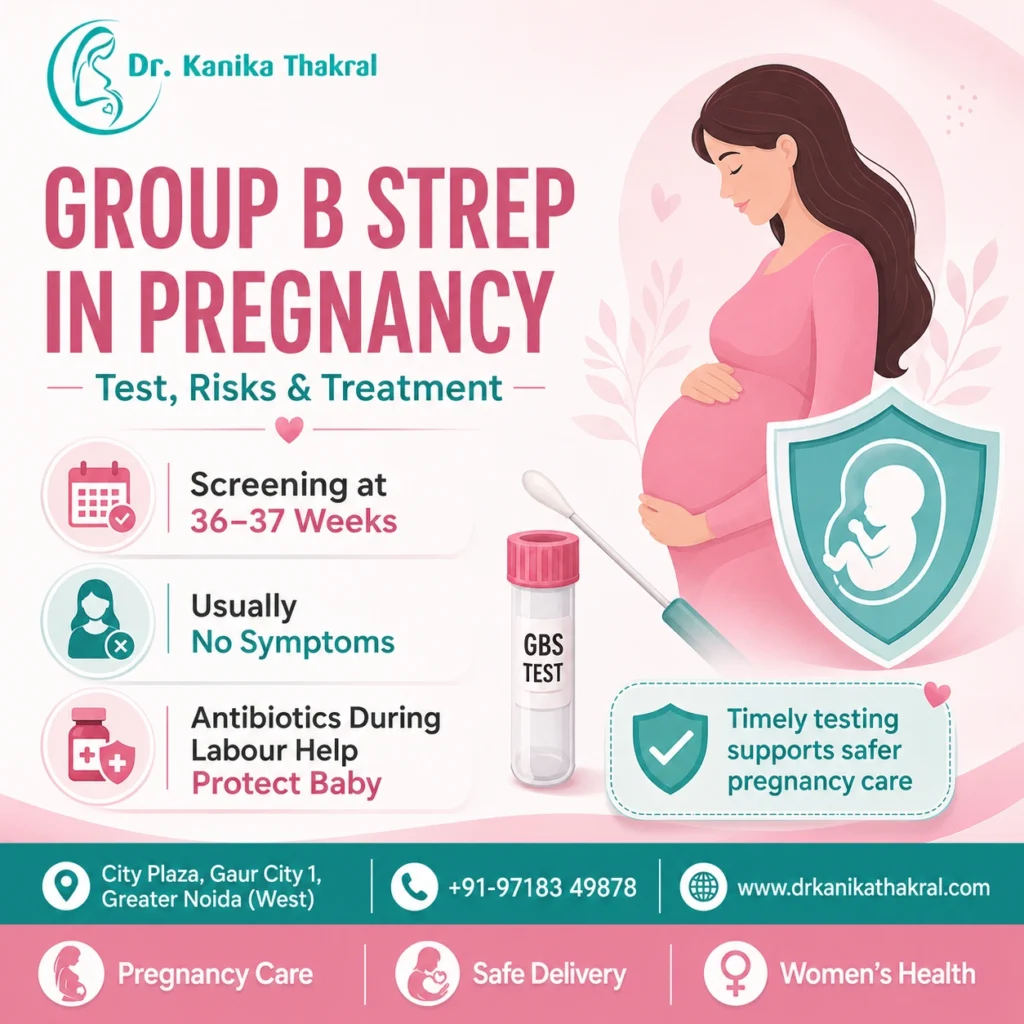
Group B Strep In Pregnancy: Test, Risks & Treatment
Group B Strep in pregnancy is a common concern, but many mothers do not know about it until the last few weeks of pregnancy. Group B Strep, also called GBS, is a type of bacteria that can live naturally in the body. It is usually found in the vagina, rectum, or intestines.
For most healthy adults, Group B Strep does not cause any problem. However, during pregnancy, it matters because the bacteria may pass to the baby during labour or birth. This can rarely cause serious infection in newborns.
The good news is that testing and timely treatment can reduce this risk. At Dr. Kanika Thakral’s clinic, expecting mothers get clear guidance for Pregnancy Care, GBS testing, delivery planning, and newborn safety. If you are in the last trimester, it is important to discuss Group B Strep screening with your doctor.
What Is Group B Strep?
Group B Strep is a common bacteria. It can be present in the body without causing symptoms. A woman can carry it and still feel completely healthy.
This is why many women do not know they have GBS. It does not always cause itching, discharge, pain, fever, or urinary symptoms. In most cases, it is found only through a screening test.
The CDC explains that people who test positive for GBS bacteria do not usually feel sick or have symptoms. However, pregnant women can pass it to their babies during delivery.
It is important to remember one thing. Testing positive for GBS does not mean poor hygiene. It is not a sexually transmitted infection. It is also not something you caused.
Why Group B Strep Matters During Pregnancy
Group B Strep matters because it can sometimes affect the newborn. If the baby comes in contact with GBS during birth, there is a small risk of infection.
Newborn GBS infection can be serious. It may lead to breathing problems, blood infection, pneumonia, or meningitis in rare cases. This is why doctors focus on prevention.
ACOG states that GBS is a leading cause of newborn early-onset disease, and prevention depends on proper screening and antibiotics during labour when needed.
Most babies born to GBS-positive mothers stay healthy, especially when the mother receives antibiotics during labour. So, a positive report should not create panic. It should simply help your doctor plan safer care.
Group B Strep Test During Pregnancy
The Group B Strep test is simple. Your doctor takes a swab from the lower vagina and rectum. The sample is sent to a lab to check if GBS bacteria are present.
The test is usually quick. It does not require a blood sample. It is also not painful for most women, though it may feel slightly uncomfortable.
This test helps your doctor know whether antibiotics are needed during labour. It does not mean you need treatment immediately in most cases.
The result may show:
- GBS positive
- GBS negative
- Sometimes unclear or repeat needed
If the result is positive, your doctor will explain the next step. Usually, this means IV antibiotics during labour.
When Is the Group B Strep Test Done?
Timing is important. Group B Strep screening is usually done near the end of pregnancy.
ACOG recommends routine GBS screening between 36 weeks and 37 weeks 6 days of pregnancy. Women who test positive should receive antibiotics during labour.
Some sources mention screening between 36 and 38 weeks as part of routine prenatal care. ACOG’s patient guidance also says the test is now done between 36 and 38 weeks of pregnancy.
Your doctor will guide the right timing for your case. If you are close to delivery and have not had this test, ask about it during your antenatal visit.
Who Needs Group B Strep Screening?
Most pregnant women are advised to discuss Group B Strep screening during the last trimester. However, some women may need special attention even if a routine test was missed.
Your doctor may give extra attention if you have:
- GBS found in urine during pregnancy
- Previous baby affected by GBS infection
- Fever during labour
- Labour before 37 weeks
- Water breaking for a long time before birth
- Unknown GBS status during labour
If any of these apply to you, tell your doctor. It helps in planning labour care safely.
Symptoms of Group B Strep in Pregnancy
Most women with Group B Strep do not have symptoms. This is why screening is important.
However, GBS can sometimes be found during urine testing. In some cases, it may be linked with urinary infection symptoms.
Tell your doctor if you have:
- Burning during urination
- Frequent urination with pain
- Fever
- Lower abdominal pain
- Unusual discomfort
- Blood in urine
These symptoms may also happen due to other infections. So, urine testing and medical advice are important.
What Happens If You Test Positive?
If you test positive for Group B Strep, do not panic. It does not mean your baby is infected. It also does not mean you will have pregnancy complications.
A positive result usually means you should receive antibiotics during labour. These antibiotics lower the chance of passing GBS to the baby.
The CDC says most babies born to women who test positive do not need treatment if the mother received antibiotics during labour.
In many cases, the rest of your pregnancy continues normally. Your doctor will note the result and plan care during labour.
Why Antibiotics Are Given During Labour
Antibiotics are usually given during labour, not weeks before delivery. This is because GBS can come and go in the body. Treating too early may not protect the baby at birth.
The antibiotics are usually given through an IV line. They work best when given a few hours before birth.
The WHO notes that women who test positive should receive intravenous antibiotics, such as penicillin or ampicillin, at least four hours before delivery to reduce the chance of passing GBS to the baby.
Your doctor will choose the antibiotic based on your allergy history and medical condition. Always tell your doctor if you are allergic to penicillin or any medicine.
Is Treatment Needed Before Labour?
In most cases, treatment before labour is not needed only for vaginal or rectal GBS carriage. The main prevention method is antibiotics during labour.
NHS information explains that if GBS is found in the vagina or rectum, antibiotics before labour do not reduce the chance of newborn infection. Antibiotics are offered during labour to reduce the risk.
However, if GBS is found in urine, or if you have a urinary infection, your doctor may treat it during pregnancy. This is different from routine GBS carriage.
Do not take antibiotics on your own. Always follow your doctor’s advice.
Risks of Group B Strep for Baby
The main concern with Group B Strep is newborn infection. This can happen early, usually within the first week of life. It may also happen later, but early prevention mainly focuses on labour care.
Possible newborn concerns may include:
- Blood infection
- Pneumonia
- Breathing difficulty
- Fever
- Poor feeding
- Sleepiness or irritability
- Meningitis in rare cases
These risks sound scary, but prevention works well. Timely antibiotics during labour can significantly reduce the risk of early newborn infection.
NHS guidance says antibiotics given into a vein during labour can significantly reduce the risk of the baby getting ill.
Does Group B Strep Affect Normal Delivery?
A positive Group B Strep result does not usually stop a woman from having a Normal Delivery. Many GBS-positive women deliver vaginally with antibiotics during labour.
The delivery plan depends on many factors. These include baby position, placenta position, mother’s health, labour progress, previous delivery history, and baby wellbeing.
GBS status is only one part of delivery planning. If everything else is suitable, Normal Delivery may still be possible.
The main goal is always Safe Delivery for mother and baby.
What If You Need a C-Section?
If you have a planned C-section before labour starts and before the water breaks, GBS antibiotics may not be needed only for GBS prevention. However, your doctor will still follow standard surgical antibiotic guidance if required.
If labour starts or water breaks before the planned C-section, GBS-positive women may need antibiotics. This is because the baby may be exposed to GBS during labour or after the water breaks.
Therefore, even if a C-section is planned, GBS screening can still be useful. Your doctor will guide you based on your situation.
Group B Strep and Water Breaking
If your water breaks and you are GBS positive, contact your doctor immediately. Do not wait at home for long.
Your doctor may ask you to come for evaluation. Antibiotics may be started during labour or after water breaking, depending on your condition.
Also contact your doctor quickly if:
- Labour pain starts
- Water breaks
- Fever develops
- Baby movement reduces
- You notice unusual discharge
- You have bleeding
Timely care helps reduce risk and supports safer delivery planning.
Can Group B Strep Be Prevented Naturally?
There is no reliable natural method to remove Group B Strep before birth. Diet, home remedies, washing, or herbal treatments cannot guarantee protection for the baby.
GBS can come and go naturally. A woman may test positive in one pregnancy and negative in another. That is why doctors use screening and labour-time antibiotics.
Do not use vaginal washes, self-medication, or home remedies to “clear” GBS. These may disturb vaginal balance and may not protect the baby.
Medical guidance is the safest approach.
Group B Strep and Pregnancy Care
Good Pregnancy Care includes regular visits, blood tests, ultrasound scans, blood pressure checks, baby growth monitoring, and delivery planning. GBS screening is one more part of late pregnancy care.
If you are looking for a Gynecologist in Gaur City, discuss all third-trimester tests during your antenatal visits. This helps avoid last-minute confusion.
A complete pregnancy plan may include:
- Regular antenatal checkups
- Baby growth monitoring
- Blood pressure and sugar checks
- GBS screening discussion
- Delivery plan
- Labour warning signs
- Newborn safety guidance
When these steps are planned well, you feel more confident near delivery.
Group B Strep and High-Risk Pregnancy
Women with high-risk pregnancy may need closer monitoring. High-risk pregnancy may include diabetes, high blood pressure, thyroid disease, twin pregnancy, low fluid, previous pregnancy loss, or previous premature birth.
If you had Fibroid Treatment, Ovarian Cyst Treatment, PCOS, or fertility treatment earlier, share your complete history with your doctor. Although these conditions do not always relate directly to GBS, full history helps your doctor plan better care.
Women who need hormonal or cycle-related guidance before pregnancy may also consult for complete women’s health support. A trusted Women Clinic in Gaur City can help with pre-pregnancy and antenatal planning.
What Should You Ask Your Doctor?
It is good to ask questions during pregnancy. Clear answers reduce fear.
You can ask:
- Do I need a Group B Strep test?
- When should I get tested?
- What if my report is positive?
- Will I need antibiotics during labour?
- What if I am allergic to penicillin?
- Can I still have Normal Delivery?
- What should I do if my water breaks?
- Will my baby need monitoring after birth?
These questions help you understand your care plan.
When Should You Contact Your Doctor Urgently?
Contact your doctor urgently if labour starts, water breaks, or you develop fever near delivery. You should also seek care if baby movements reduce, bleeding occurs, or you feel unwell.
If you are GBS positive, tell the care team as soon as you reach for delivery. This helps start antibiotics on time.
Also keep your reports ready in your pregnancy file. It avoids delay during labour.
Why Choose Dr. Kanika Thakral?
Pregnancy tests and reports can feel confusing, especially in the last trimester. Many mothers feel anxious when they hear about bacteria, antibiotics, or newborn infection risk.
Dr. Kanika Thakral provides patient-friendly guidance for Group B Strep, late pregnancy screening, labour planning, and complete Obstetrics & Gynecology care. The focus is on clear explanation, timely testing, and safe planning for mother and baby.
If you are looking for the Best Gynecologist in Gaur City, you can consult Dr. Kanika Thakral for pregnancy guidance, test interpretation, and delivery care.
Final Thoughts
Group B Strep in pregnancy is common and often has no symptoms. It usually does not harm the mother, but it can rarely cause serious infection in newborns if passed during birth.
The good news is that screening and antibiotics during labour can reduce the risk. A positive GBS report does not mean your baby is infected. It simply helps your doctor plan safer labour care.
For GBS test guidance, complete Pregnancy Care, and planning toward Safe Delivery, consult Dr. Kanika Thakral. Timely testing and proper care can support a safer and more confident birth experience.
FAQs
1. What is Group B Strep in pregnancy?
Group B Strep is a common bacteria that may live in the vagina, rectum, or intestines. It usually causes no symptoms, but it can pass to the baby during birth.
2. When is the Group B Strep test done?
The test is usually done near the end of pregnancy, often around 36 to 38 weeks. Your doctor will guide the right timing.
3. Is Group B Strep dangerous for the mother?
It usually does not cause problems in healthy adults. The main concern is the small risk of newborn infection during birth.
4. What happens if my GBS test is positive?
If your test is positive, your doctor usually plans IV antibiotics during labour. This helps reduce the risk of passing GBS to the baby.
5. Do I need antibiotics before labour?
Usually no, unless GBS is found in urine or there is another infection. For routine GBS carriage, antibiotics are usually given during labour.
