
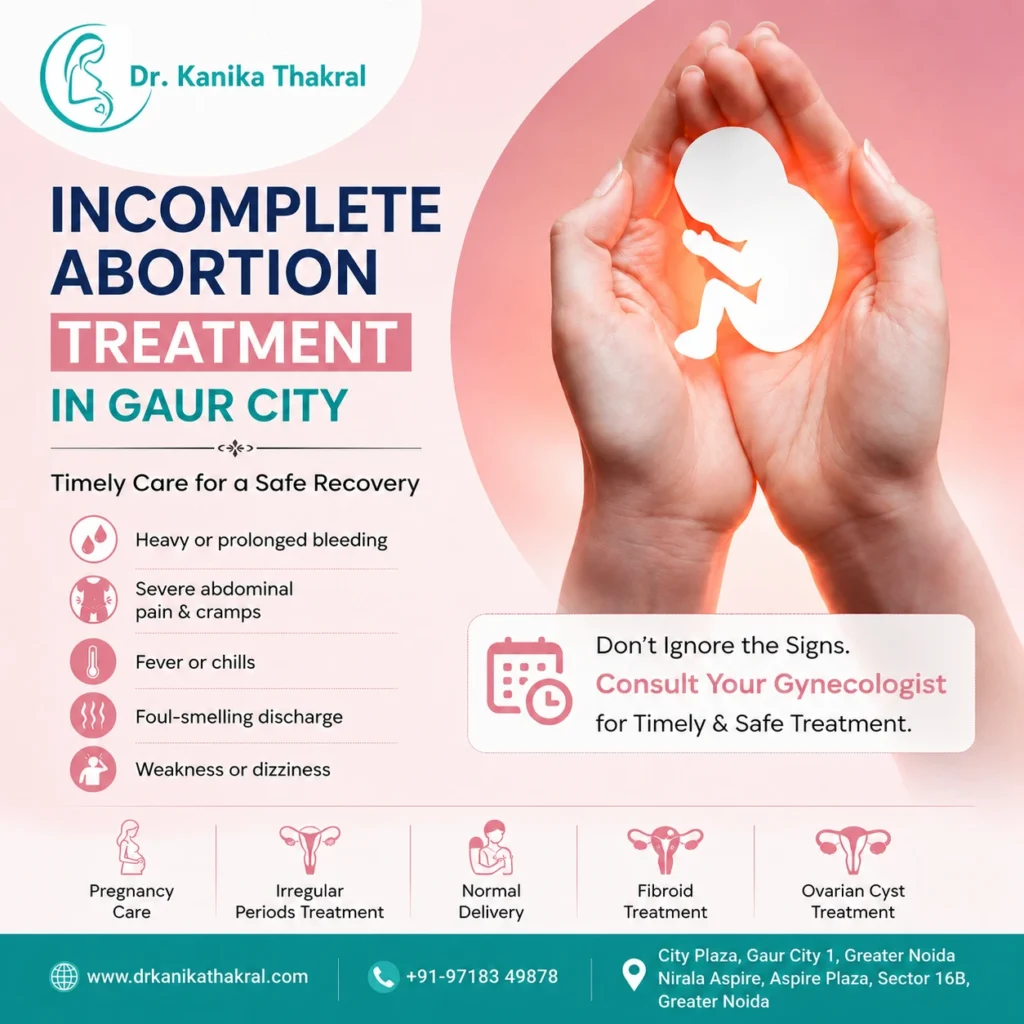
Incomplete Abortion Treatment in Gaur City
Incomplete Abortion Treatment in Gaur City is important when some pregnancy tissue remains inside the uterus after a miscarriage or abortion. This can cause heavy bleeding, pain, fever, weakness, or infection risk. It needs timely medical evaluation and safe care.
Many women feel scared or confused in this situation. However, it is a medical condition, and proper treatment can help protect health. Incomplete abortion can happen after early pregnancy loss or after an abortion that has not completed fully. ACOG notes that an incomplete miscarriage means some pregnancy tissue has passed, but some remains inside the uterus.
If you have heavy bleeding, severe lower abdominal pain, fever, foul-smelling discharge, or dizziness, do not wait at home. Quick care can prevent complications and support safer recovery.
What Is Incomplete Abortion and When Do You Need Incomplete Abortion Treatment in Gaur City?
Incomplete abortion means the uterus has not emptied fully after pregnancy loss or abortion. Some tissue may remain inside, which can lead to bleeding, cramps, infection, or delayed recovery.
You may need Incomplete Abortion Treatment in Gaur City if bleeding continues, pain increases, fever starts, or ultrasound shows retained tissue. In some cases, symptoms may be mild. Still, follow-up is important to confirm that the uterus has cleared properly.
WHO includes incomplete abortion and pregnancy-loss care within abortion care and post-abortion care guidance, which shows why proper medical support matters.
Common Symptoms of Incomplete Abortion
Symptoms may vary from woman to woman. Some women have heavy bleeding, while others may have pain or fever.
Common symptoms include:
- Heavy or prolonged bleeding
- Severe lower abdominal cramps
- Pelvic pain
- Passing clots again and again
- Fever or chills
- Foul-smelling discharge
- Weakness or dizziness
- Positive pregnancy test for longer than expected
- Ultrasound showing retained tissue
- Bleeding that does not reduce with time
If bleeding is heavy or you feel faint, seek urgent medical care.
Emergency Signs You Should Not Ignore
Some symptoms need urgent attention. Do not delay care if you notice danger signs.
Seek immediate help if you have:
- Very heavy bleeding
- Severe abdominal pain
- Fever
- Foul-smelling discharge
- Dizziness or fainting
- Fast heartbeat
- Severe weakness
- Shoulder pain with pregnancy concern
- Pain with positive pregnancy test
- Bleeding after taking abortion pills without follow-up
These signs may point to infection, heavy blood loss, incomplete abortion, or another pregnancy-related emergency.
Causes of Incomplete Abortion
Incomplete abortion can happen due to different reasons. Sometimes, the uterus does not expel all tissue naturally. In other cases, abortion medicines or procedures may not complete the process fully.
Possible causes include:
- Early pregnancy loss
- Medical abortion not completed fully
- Missed follow-up after abortion pills
- Retained pregnancy tissue
- Uterus not contracting enough
- Infection-related concerns
- Pregnancy tissue stuck near the cervix
- Unknown causes
ACOG says treatment may be needed for early pregnancy loss, and surgical treatment may be recommended when there are signs of infection, heavy bleeding, or certain medical concerns.
Diagnosis Before Incomplete Abortion Treatment in Gaur City
Diagnosis starts with symptoms and pregnancy history. Your doctor may ask about bleeding, pain, fever, last menstrual period, abortion pills if taken, miscarriage history, and previous scan reports.
Tests may include:
- Pelvic examination
- Ultrasound
- Pregnancy test
- Blood test
- Hemoglobin check
- Infection evaluation
- Blood group test if needed
- Follow-up scan
Ultrasound helps check whether tissue remains inside the uterus. Blood tests may help check blood loss or infection.
Incomplete Abortion Treatment in Gaur City
Incomplete Abortion Treatment in Gaur City depends on bleeding, infection signs, ultrasound findings, pregnancy week, and overall health. Treatment should always happen under medical guidance.
Care options may include:
1. Observation in selected cases
If bleeding is mild and the woman is stable, the doctor may advise close observation and follow-up. However, this is only suitable in selected cases.
2. Medicines
Medicines may help the uterus clear retained tissue in some cases. Your doctor will decide if this option is safe for you.
3. Procedure to clear the uterus
If bleeding is heavy, tissue remains inside, or infection risk is present, a procedure may be advised to empty the uterus safely. ACOG notes that incomplete abortion can sometimes need additional treatment, including a procedure, especially if the pregnancy is not removed completely.
4. Infection treatment
If infection is suspected, antibiotics and close monitoring may be needed.
5. Follow-up care
Follow-up confirms recovery and helps prevent repeated problems.
Why Follow-Up Is Important After Abortion or Miscarriage
Follow-up helps confirm that the uterus has cleared fully. It also checks bleeding, pain, infection signs, and emotional recovery.
Without follow-up, retained tissue may stay unnoticed. This can lead to repeated bleeding, infection, or weakness.
Good follow-up may include:
- Review of bleeding pattern
- Pain assessment
- Ultrasound if needed
- Pregnancy test follow-up
- Infection check
- Hemoglobin check
- Guidance for future pregnancy planning
Incomplete Abortion and Pregnancy Care
After treatment, proper Pregnancy Care becomes important if you plan to conceive again. Your doctor may guide when it is safe to try, what tests are needed, and how to prepare for a healthy pregnancy.
If you have repeated pregnancy loss, irregular periods, fibroids, ovarian cysts, thyroid issues, or hormonal concerns, a detailed checkup may be advised before the next pregnancy.
Good care before and during pregnancy can support safer monitoring and better planning.
Incomplete Abortion and Irregular Periods Treatment
Periods may take some time to become regular after miscarriage or abortion. However, if bleeding continues for long, periods become very irregular, or pain happens repeatedly, proper evaluation is needed.
Irregular Periods Treatment may be needed if cycle changes are linked with hormonal imbalance, PCOS, thyroid issues, fibroids, ovarian cysts, or retained tissue concerns.
Do not assume every bleeding change is a normal period. If bleeding is heavy, foul-smelling, painful, or prolonged, consult early.
Fibroid Treatment and Incomplete Abortion Concerns
Fibroids are non-cancerous growths in the uterus. Some fibroids may affect bleeding pattern, pregnancy, and uterus shape.
Fibroids do not always cause incomplete abortion. However, if a woman has repeated bleeding, pregnancy loss, or heavy periods, fibroid evaluation may be needed.
Fibroid Treatment depends on size, location, symptoms, and pregnancy goals. Proper diagnosis helps decide whether fibroids need monitoring or treatment.
Ovarian Cyst Treatment and Pregnancy Health
Ovarian cysts may cause pelvic pain, bloating, lower abdominal discomfort, or cycle changes. They are not a common direct cause of incomplete abortion. Still, cysts may need evaluation if pelvic pain continues after treatment.
Ovarian Cyst Treatment depends on cyst type, size, symptoms, and pregnancy plans. If pain is severe or one-sided, do not delay evaluation.
Can Normal Delivery Happen in Future?
Many women can have a healthy pregnancy and Normal Delivery in the future after proper recovery. However, the next pregnancy plan depends on overall health, uterus recovery, cause of pregnancy loss, and any other medical conditions.
After recovery, your doctor may guide you about:
- When to try again
- Required tests before pregnancy
- Folic acid and nutrition
- Early pregnancy scan
- Pregnancy monitoring
- Safe delivery planning
The final delivery plan always depends on mother and baby health during pregnancy.
Women Clinic in Gaur City for Safe Recovery
A Women Clinic in Gaur City can support women with bleeding, miscarriage care, pregnancy follow-up, period concerns, pelvic pain, fibroid evaluation, and ovarian cyst concerns.
Because incomplete abortion can cause complications if ignored, timely consultation matters. A safe and private checkup helps women get correct diagnosis and treatment without delay.
Prevention and Safety Tips
Incomplete abortion cannot always be prevented. However, timely medical supervision can reduce risks.
Helpful safety steps include:
- Do not take abortion pills without medical guidance
- Confirm pregnancy location through medical advice
- Attend follow-up after miscarriage or abortion
- Report heavy bleeding quickly
- Do not ignore fever or foul-smelling discharge
- Keep ultrasound reports safely
- Avoid self-medication
- Take rest during recovery
- Follow doctor’s treatment plan
- Discuss future pregnancy planning before trying again
When to Consult Dr. Kanika Thakral
Consult Dr. Kanika Thakral if you have heavy bleeding, severe cramps, fever, prolonged bleeding, foul-smelling discharge, or suspected retained tissue after miscarriage or abortion.
You may need guidance for:
- Incomplete Abortion Treatment in Gaur City
- Women Clinic in Gaur City support
- Pregnancy Care after recovery
- Irregular Periods Treatment
- Fibroid Treatment
- Ovarian Cyst Treatment
- Future pregnancy planning
- Normal Delivery guidance in future pregnancy
Early consultation can help protect health and reduce complications.
FAQs
1. What is incomplete abortion?
Incomplete abortion means some pregnancy tissue remains inside the uterus after miscarriage or abortion. It may cause bleeding, pain, fever, or infection risk.
2. What are the signs of incomplete abortion?
Common signs include heavy bleeding, prolonged bleeding, pelvic pain, cramps, fever, foul-smelling discharge, weakness, or ultrasound showing retained tissue.
3. Is incomplete abortion dangerous?
It can become serious if ignored. Heavy bleeding or infection needs urgent care.
4. How is incomplete abortion diagnosed?
Doctors may use pelvic examination, ultrasound, pregnancy test, blood tests, and infection evaluation.
5. Is treatment possible?
Yes, treatment is possible. Depending on the case, treatment may include observation, medicines, procedure, antibiotics, and follow-up care.
6. Can I have a normal pregnancy later?
Many women can have a healthy pregnancy later after proper recovery. Your doctor can guide pregnancy planning and follow-up care.
