
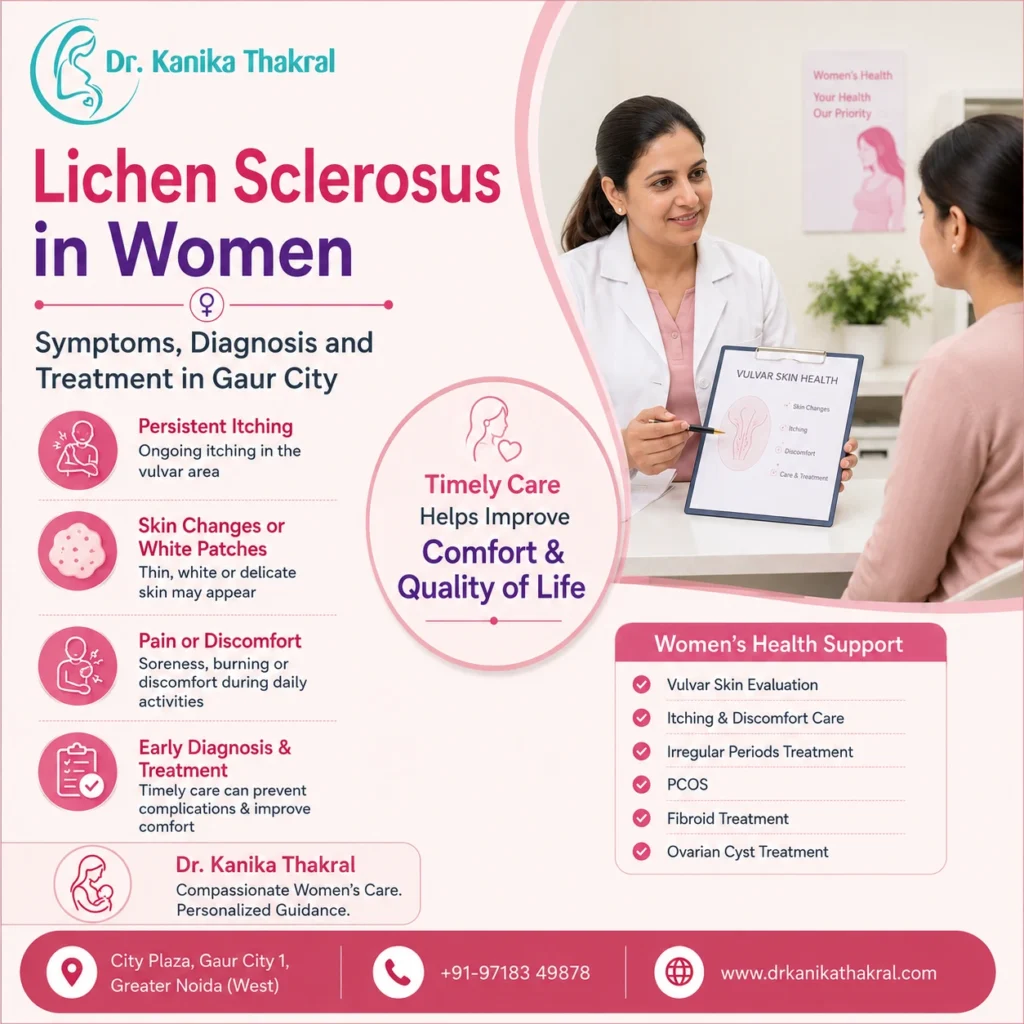
Lichen Sclerosus in Women: Vulvar Itching and Treatment in Gaur City
Lichen Sclerosus is a long-term skin condition that often affects the vulvar area in women. It can cause itching, white patches, soreness, burning, pain during intercourse, and skin thinning. Although it may feel embarrassing to talk about, early evaluation is important because the condition can become uncomfortable if ignored.
Many women confuse this problem with a regular vaginal infection. However, Lichen Sclerosus is not the same as a common infection. It is a Vulvar skin condition that needs proper diagnosis and guided treatment.
Dr. Kanika Thakral provides caring support for vulvar itching, women’s intimate health concerns, Women’s Health Checkup, Vaginal infection treatment guidance, and complete gynecology support in Gaur City.
What Is Lichen Sclerosus?
Lichen Sclerosus is a chronic skin condition. It usually affects the skin around the vulva and anus. In some women, it may cause thin, white, shiny, or wrinkled patches on the skin.
The affected skin may become fragile over time. Because of this, it may tear, bleed, or become painful with friction. Some women also feel burning or discomfort while passing urine.
This condition is not caused by poor hygiene. Also, it is not a sexually transmitted infection. However, it can affect intimate comfort and daily life if not treated on time.
Why Lichen Sclerosus Happens
The exact cause of Lichen Sclerosus is not fully clear. However, experts believe it may be linked with immune system changes, skin sensitivity, hormonal factors, or genetic tendency.
It is more common after menopause, but it can happen at any age. Some women may notice symptoms before menopause too.
Since the condition can look similar to infection, allergy, or eczema, self-diagnosis is not safe. Therefore, a proper evaluation by a Gynecologist in Gaur City is important.
Common Symptoms in Women
Symptoms may be mild at first. However, they can slowly become more uncomfortable. Some women may have symptoms for months before seeking help.
Common symptoms include:
- Itching in the vulvar area
- White patches on the skin
- Skin thinning or wrinkling
- Burning or soreness
- Pain during intercourse
- Small cracks or tears
- Bleeding after scratching
- Pain while passing urine
- Tightness or discomfort
- Skin sensitivity
NHS notes that lichen sclerosus can cause itchy white patches, soreness, fragile skin, bleeding, and pain during sex. So, repeated itching should never be ignored.
Itching in Private Parts: When to Worry
Itching in private parts can happen due to many reasons. It may be caused by fungal infection, allergy, sweating, tight clothing, hygiene products, diabetes, or a skin condition like Lichen Sclerosus.
However, if itching keeps coming back, becomes severe, or is linked with white patches, pain, or skin cracks, it needs evaluation. Using random creams can delay the correct diagnosis.
Also, repeated scratching can damage the skin. As a result, the area may become more painful and sensitive.
Lichen Sclerosus vs Vaginal Infection
Many women think vulvar itching always means infection. However, that is not true. A vaginal infection usually causes discharge, smell, itching, burning, or irritation. Lichen Sclerosus mainly affects the skin and may cause white patches, thinning, or tearing.
Still, both conditions may cause itching. That is why proper diagnosis matters.
If symptoms look like infection, your doctor may check for discharge, irritation, and other signs. When needed, Vaginal infection treatment may be advised. However, if the main problem is a vulvar skin condition, treatment will be different.
Pain During Intercourse
Pain during intercourse is a common concern in women with Lichen Sclerosus. The vulvar skin may become thin, dry, tight, or sensitive. Because of this, intercourse may cause burning, tearing, or soreness.
Many women avoid talking about this symptom. However, it is important to share it during consultation. Painful intercourse can affect emotional wellbeing, confidence, and relationship comfort.
Treatment can help reduce inflammation and improve skin comfort. Therefore, do not suffer silently.
Can Lichen Sclerosus Affect Daily Life?
Yes, it can affect daily life. Itching may disturb sleep. Burning may make sitting uncomfortable. Skin cracks may cause pain while walking or exercising.
Some women also feel anxious because they do not understand what is happening. Others may feel embarrassed to seek help.
However, this condition is manageable. Early care can reduce symptoms and help prevent scarring or long-term discomfort.
Diagnosis of Lichen Sclerosus
Diagnosis starts with a detailed discussion and examination. Your doctor may ask about itching, pain, discharge, skin changes, intercourse discomfort, urine symptoms, and menopause history.
In many cases, the condition can be suspected by looking at the skin changes. However, if the diagnosis is unclear or if there are unusual areas, a small skin biopsy may be advised.
A biopsy means a tiny sample of skin is taken and checked in a lab. It helps confirm the diagnosis and rule out other skin problems.
Why Early Diagnosis Matters
Early diagnosis is important because untreated Lichen Sclerosus may cause scarring. Over time, the skin can become tighter or the vulvar shape may change. This can increase pain and discomfort.
Although cancer risk is low, long-term untreated vulvar lichen sclerosus may slightly increase the risk of vulvar skin cancer. Therefore, regular follow-up is important. NHS also advises checking for skin changes and seeking help if lumps, ulcers, or changes appear.
Timely treatment helps control symptoms and protect skin health.
Treatment for Lichen Sclerosus
Treatment usually focuses on reducing inflammation, itching, pain, and skin damage. The most commonly advised treatment is a strong prescription steroid ointment, used exactly as directed.
NHS states that lichen sclerosus cannot be cured, but a strong prescription steroid ointment usually helps relieve symptoms. The treatment plan may continue for a few months, followed by maintenance care if needed.
Your doctor may also suggest moisturizers or barrier ointments to protect the skin. However, do not use steroid creams without medical guidance.
Self-Care Tips for Comfort
Self-care can support treatment. It cannot replace medical care, but it can reduce irritation and protect sensitive skin.
Helpful tips include:
- Wear loose cotton underwear.
- Avoid harsh soaps.
- Use mild, fragrance-free cleansers.
- Keep the area dry and clean.
- Avoid scratching.
- Avoid tight jeans or synthetic clothing.
- Use lubricants if advised.
- Avoid scented wipes or sprays.
- Follow the treatment plan regularly.
Small changes can make a big difference, especially when the skin is sensitive.
What to Avoid
Certain habits can make symptoms worse. Therefore, avoid products and actions that irritate the vulvar skin.
Avoid:
- Perfumed intimate washes
- Scented pads
- Harsh soaps
- Vaginal deodorants
- Random over-the-counter creams
- Tight clothing
- Scratching the area
- Delaying follow-up
- Self-treatment with antibiotics or antifungal creams
If you are unsure about a product, ask your doctor before using it.
Is Lichen Sclerosus Contagious?
No, Lichen Sclerosus is not contagious. It does not spread through touch, toilet seats, clothes, or sexual contact.
This is important to understand because many women feel unnecessary fear or shame. The condition is related to skin inflammation, not personal hygiene or sexual behavior.
So, you do not need to feel embarrassed. Getting the right help is the best step.
Can It Come Back?
Yes, symptoms can come back. Lichen Sclerosus is usually a long-term condition. Even after symptoms improve, maintenance care may be needed.
This is why follow-up matters. Your doctor may adjust the treatment plan based on symptoms and skin condition.
Do not stop treatment suddenly unless advised. Also, do not use strong medicines longer than recommended without guidance.
Lichen Sclerosus and Menopause
Lichen Sclerosus is more common after menopause. Lower estrogen levels may make vulvar tissue drier and more sensitive. However, the condition is not only due to menopause.
Women in reproductive age can also develop it. Therefore, any woman with long-term vulvar itching, white patches, or pain should get evaluated.
Menopause-related dryness and Lichen Sclerosus may also happen together. In such cases, treatment may need a combined approach.
Link With Other Women’s Health Concerns
Lichen Sclerosus is a skin condition, but a complete women’s health history is still useful. During consultation, your doctor may ask about periods, menopause, infections, diabetes, immune concerns, and past gynecology problems.
Women with PCOS, previous Fibroid Treatment, or Ovarian Cyst Treatment should share their history. These conditions do not directly cause Lichen Sclerosus, but a complete history helps in better care planning.
A routine Women’s Health Checkup also helps identify other concerns that may be affecting intimate health.
When Should You Seek Help?
You should seek help if itching does not improve, keeps returning, or is linked with skin changes. Do not wait for symptoms to become severe.
Consult Dr. Kanika Thakral if you have:
- Repeated vulvar itching
- White skin patches
- Burning or soreness
- Pain during intercourse
- Skin cracks or tears
- Bleeding after scratching
- Pain while passing urine
- Tightness around the vulva
- Symptoms not improving with infection treatment
Early guidance can prevent discomfort and reduce long-term skin damage.
Why Choose Dr. Kanika Thakral?
Dr. Kanika Thakral provides caring guidance for Vulvar skin condition, Itching in private parts, Pain during intercourse, and women’s intimate health concerns.
Women can consult Dr. Kanika Thakral for Women’s Health Checkup, Vaginal infection treatment guidance, PCOS, Fibroid Treatment, Ovarian Cyst Treatment, and complete gynecology support.
If you are looking for the Best Gynecologist in Gaur City, Dr. Kanika Thakral offers patient-friendly evaluation and personalized care.
Final Thoughts
Lichen Sclerosus is a long-term vulvar skin condition that can cause itching, white patches, soreness, burning, and pain during intercourse. Many women confuse it with infection, but it needs a different treatment plan.
The condition is manageable with proper diagnosis, prescription treatment, skin care, and regular follow-up. Most importantly, do not ignore repeated itching or white patches in private parts.
For vulvar itching, Vulvar skin condition, Itching in private parts, Pain during intercourse, and women’s health guidance in Gaur City, consult Dr. Kanika Thakral. Early care can improve comfort and protect skin health.
FAQs
1. What is Lichen Sclerosus?
Lichen Sclerosus is a long-term skin condition that often affects the vulvar area. It may cause itching, white patches, soreness, and fragile skin.
2. Is Lichen Sclerosus a vaginal infection?
No. It is not a vaginal infection. It is a Vulvar skin condition, but symptoms may sometimes look similar to infection.
3. What are the common symptoms?
Common symptoms include itching, white patches, burning, soreness, skin cracks, pain during intercourse, and discomfort while passing urine.
4. Is Lichen Sclerosus contagious?
No. It does not spread through touch, sexual contact, toilet seats, clothes, or poor hygiene.
5. Can Lichen Sclerosus cause pain during intercourse?
Yes. Pain during intercourse can happen because the vulvar skin becomes thin, tight, dry, or sensitive.
6. How is Lichen Sclerosus diagnosed?
Diagnosis is usually based on symptoms and skin examination. In some cases, a small skin biopsy may be advised.
