
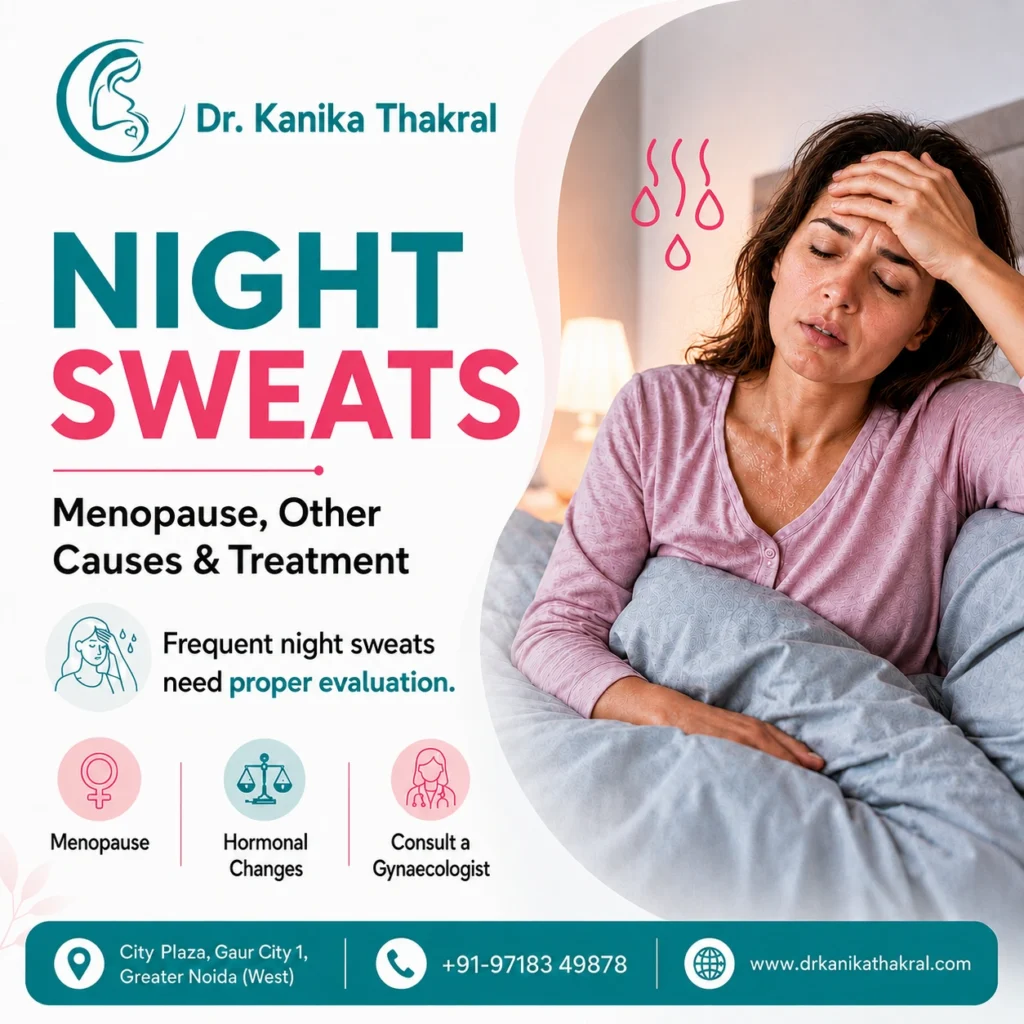
Night Sweats: Menopause, Other Causes & Treatment in Gaur City
Night Sweats Treatment in Gaur City is important for women who wake up at night feeling hot, sweaty, uncomfortable, or unable to sleep properly. Night sweats can happen during menopause, but they can also be linked to anxiety, medicines, infections, hormonal changes, thyroid problems, low blood sugar, or other health concerns.
Many women ignore night sweats because they think it is only due to weather or stress. However, if night sweats happen often, disturb sleep, or come with irregular periods, weight changes, weakness, fever, or mood changes, it is better to consult a gynecologist.
At Dr. Kanika Thakral’s clinic, women get proper guidance for menopause symptoms, hormonal concerns, menstrual changes, PCOS, pregnancy planning, and complete women’s health care. If you are looking for Night Sweats Treatment in Gaur City, timely consultation can help find the cause and start the right care.
What Are Night Sweats?
Night sweats mean sweating heavily during sleep, even when the room is not too hot. Some women wake up with wet clothes, damp bedsheets, or a sudden feeling of heat. In many cases, night sweats can disturb sleep and make the woman feel tired the next day.
Night sweats are not always a disease by themselves. They are usually a symptom. The reason may be simple, such as a warm room or heavy blanket. But sometimes, the cause may be hormonal or medical.
NHS lists menopause symptoms, anxiety, certain medicines, low blood sugar, alcohol or drug use, and hyperhidrosis as common reasons for night sweats. Sometimes, the cause is not clear.
Night Sweats and Menopause
Menopause is one of the most common reasons for night sweats in women. During perimenopause and menopause, estrogen levels start changing. These hormonal changes can affect the body’s temperature control system. As a result, women may suddenly feel hot, sweaty, anxious, or uncomfortable.
Night sweats are closely linked with hot flashes. A hot flash may happen during the day, while night sweats happen during sleep. NHS explains that hot flushes can make the face, neck, and chest feel suddenly hot or cold. They can also cause sweating, palpitations, anxiety, dizziness, and sleep disturbance.
Menopause-related night sweats may also come with:
- Irregular periods
- Mood swings
- Sleep problems
- Vaginal dryness
- Low energy
- Weight changes
- Reduced sexual comfort
- Anxiety or irritability
If these symptoms are affecting your daily life, you should not suffer silently. Proper treatment can help improve sleep, comfort, and quality of life.
Other Causes of Night Sweats
Although menopause is common, it is not the only cause. Night sweats can happen due to many other reasons. This is why diagnosis is important before starting treatment.
Other possible causes may include anxiety, thyroid imbalance, low blood sugar, fever, infections, some medicines, alcohol use, or excessive sweating conditions. Some antidepressants, steroids, pain medicines, hormone therapy, and diabetes medicines may also trigger sweating in some people. Mayo Clinic lists antidepressants, hormone therapy, methadone, and diabetes medicines among medications that can cause night sweats.
Women with irregular periods, PCOS, thyroid issues, or hormonal imbalance may also notice sweating, sleep changes, or mood changes. If your cycles are irregular, you may need Irregular Periods Treatment to understand the underlying hormonal pattern.
When Night Sweats Need Medical Attention
Occasional sweating at night may happen due to weather, blankets, spicy food, or stress. But frequent night sweats should not be ignored, especially when they disturb sleep or come with other symptoms.
You should consult a doctor if you notice:
- Night sweats happening repeatedly
- Unexplained weight loss
- Fever or chills
- Severe tiredness
- Fast heartbeat
- Irregular periods
- Heavy or unusual bleeding
- Vaginal dryness or pain
- Mood changes or anxiety
- Sleep problems affecting daily life
If you are unsure whether your symptoms are menopause-related or due to another reason, a gynecologist can help with proper history, examination, and tests.
Night Sweats and Irregular Periods
Night sweats with irregular periods may suggest hormonal changes. This can happen during perimenopause, which is the transition phase before menopause. During this stage, periods may become irregular, heavy, light, delayed, or unpredictable.
However, irregular periods are not always due to menopause. They can also happen because of PCOS, thyroid problems, stress, weight changes, fibroids, ovarian cysts, or other conditions. This is why Irregular Periods Treatment should be based on the correct diagnosis.
If you are under 40 and have night sweats with missed periods, you should get evaluated. In some women, early ovarian hormone changes or premature ovarian insufficiency may cause menopause-like symptoms. Early diagnosis helps protect fertility, bone health, and long-term wellbeing.
Diagnosis of Night Sweats
Diagnosis starts with a detailed consultation. Your doctor may ask when the sweating started, how often it happens, whether periods are regular, and whether you have hot flashes during the day. She may also ask about medicines, stress, sleep, weight changes, fever, thyroid symptoms, and pregnancy possibility.
Depending on your symptoms, your doctor may suggest blood tests. These may include thyroid profile, blood sugar, CBC, hormone tests, pregnancy test, or other tests as needed. If there is pelvic pain, heavy bleeding, or irregular periods, ultrasound may also be advised.
At Dr. Kanika Thakral’s clinic, evaluation is done according to your age, symptoms, menstrual history, and health goals. This helps create a treatment plan that is safe and suitable for you.
Treatment for Night Sweats in Gaur City
Night Sweats Treatment in Gaur City depends on the cause. If night sweats are due to menopause, treatment may include lifestyle changes, non-hormonal medicines, or hormone therapy, depending on your health profile. If the cause is thyroid, infection, low sugar, medicine side effect, or anxiety, treatment will focus on that condition.
For menopause-related hot flashes and night sweats, hormone therapy may help some women. ACOG says systemic estrogen therapy, with or without progestin, has been shown to be the best treatment for hot flashes and night sweats.
However, hormone therapy is not suitable for everyone. Your doctor will check your age, medical history, uterus status, breast health, blood clot risk, liver history, and family history before advising it.
Non-Hormonal Treatment Options
Some women cannot take hormone therapy or prefer to avoid it. In such cases, non-hormonal options may help. These may include certain medicines, lifestyle changes, sleep support, and trigger management.
Mayo Clinic notes that medicines such as antidepressants and anti-seizure medicines may help ease hot flashes, though they usually do not work as well as hormones.
In recent years, newer non-hormonal medicines have also been used for moderate to severe menopause-related hot flashes and night sweats in some countries. However, medicine choice should always be made by your doctor after checking safety, liver health, other medicines, and personal risk factors.
Lifestyle Tips to Reduce Night Sweats
Lifestyle changes can make a real difference, especially when night sweats are mild to moderate. They may not remove the problem completely, but they can reduce triggers and improve sleep quality.
You can try:
- Keep the bedroom cool
- Wear light cotton nightwear
- Use breathable bedsheets
- Avoid heavy blankets
- Avoid spicy food at night
- Limit caffeine and alcohol
- Drink enough water
- Manage stress before sleep
- Maintain healthy weight
- Follow a regular sleep routine
Mayo Clinic suggests dressing in layers, using breathable fabrics, lowering room temperature, using fans, and avoiding triggers like caffeine, alcohol, and spicy foods for hot flashes.
Night Sweats, Fibroids and Ovarian Cysts
Fibroids and ovarian cysts do not usually directly cause night sweats. However, they may cause symptoms that overlap with hormonal and menstrual concerns. Fibroids may cause heavy bleeding, pelvic pressure, painful periods, and anemia. Ovarian cysts may cause pelvic pain, bloating, irregular periods, or sudden pain in some cases.
If night sweats happen along with heavy bleeding, pelvic pain, or irregular periods, your doctor may advise an ultrasound. Women who need Fibroid Treatment or Ovarian Cyst Treatment should not delay care.
Not every fibroid or cyst needs surgery. Treatment depends on symptoms, size, age, pregnancy plans, and overall health.
Night Sweats and PCOS
PCOS can cause irregular periods, acne, weight gain, hair fall, facial hair growth, and fertility concerns. It is not the most common direct cause of night sweats, but hormonal imbalance, sleep problems, stress, and insulin resistance may affect overall comfort.
If night sweats come with irregular cycles, acne, weight gain, or difficulty conceiving, consultation with a PCOS Specialist can help. PCOS care may include lifestyle changes, cycle regulation, hormone evaluation, and fertility planning when needed.
PCOS should not be treated only as a period problem. It can affect long-term metabolic and reproductive health, so regular follow-up is important.
Night Sweats and Pregnancy Planning
Women who are planning pregnancy should not ignore night sweats and menstrual changes. If periods are irregular, ovulation may also be irregular. This can make pregnancy planning more difficult.
Your gynecologist may check your cycle pattern, thyroid, sugar, PCOS symptoms, weight, and hormone levels. If pregnancy happens, early antenatal visits become important for proper Pregnancy Care.
You can also discuss future pregnancy monitoring, Normal Delivery, and Safe Delivery planning with your doctor. Good pregnancy care starts before conception, especially when there are hormonal or menstrual concerns.
Emotional Impact of Night Sweats
Night sweats can affect emotional health. Poor sleep can make you feel tired, irritated, anxious, or low in energy. It may also affect work, family life, and relationships.
Many women feel embarrassed to talk about sweating, menopause, vaginal dryness, or sleep problems. But these are common medical concerns. You do not need to suffer quietly.
A supportive consultation can help you understand the cause and treatment options. Once sleep improves, mood and energy often improve too.
When to Consult Dr. Kanika Thakral
You should consult Dr. Kanika Thakral if night sweats happen often, disturb sleep, or come with menstrual changes. You should also visit if you have hot flashes, mood swings, vaginal dryness, heavy bleeding, pelvic pain, or difficulty conceiving.
At Dr. Kanika Thakral’s clinic, women receive guidance for menopause symptoms, Irregular Periods Treatment, PCOS, hormonal concerns, Fibroid Treatment, Ovarian Cyst Treatment, fertility planning, and complete women’s health care.
If you are looking for Night Sweats Treatment in Gaur City, timely evaluation can help you feel better and prevent unnecessary worry.
Why Choose Dr. Kanika Thakral?
Women’s health needs privacy, comfort, and clear explanation. Night sweats may look simple, but the cause can vary from menopause to thyroid, PCOS, medicine side effects, stress, or other health concerns.
Dr. Kanika Thakral provides patient-friendly consultation for menstrual health, menopause care, pregnancy planning, and gynecological concerns. The focus is on understanding your symptoms, finding the cause, and giving safe treatment.
Whether you need menopause guidance, Irregular Periods Treatment, Fibroid Treatment, Ovarian Cyst Treatment, or care from a PCOS Specialist, you can consult Dr. Kanika Thakral in Gaur City.
Final Thoughts
Night sweats can happen due to menopause, but they can also be linked to anxiety, medicines, thyroid problems, low blood sugar, infections, or hormonal imbalance. If they happen occasionally, simple lifestyle changes may help. But if they are frequent, severe, or linked with other symptoms, medical evaluation is important.
Night Sweats Treatment in Gaur City should focus on the real cause. Some women may need lifestyle changes. Some may need hormone therapy or non-hormonal medicines. Others may need treatment for thyroid, PCOS, infection, or menstrual problems.
For night sweats, menopause symptoms, hormonal concerns, Pregnancy Care, and guidance toward Safe Delivery, consult Dr. Kanika Thakral. Timely care can improve sleep, comfort, and overall women’s health.
FAQs
1. Are night sweats common during menopause?
Yes, night sweats are common during menopause and perimenopause. They happen due to hormonal changes that affect body temperature control.
2. Can night sweats happen without menopause?
Yes, night sweats can also happen due to anxiety, medicines, thyroid problems, low blood sugar, infections, alcohol use, or other health conditions.
3. When should I worry about night sweats?
You should consult a doctor if night sweats happen repeatedly, disturb sleep, or come with fever, weight loss, irregular periods, heavy bleeding, or severe tiredness.
4. What is the best treatment for menopause-related night sweats?
Treatment depends on your health profile. Hormone therapy may help some women, while others may need non-hormonal medicines or lifestyle changes.
5. Can PCOS cause night sweats?
PCOS may not directly cause night sweats in every woman, but hormonal imbalance and irregular periods can affect overall health. A PCOS Specialist can help evaluate symptoms.
