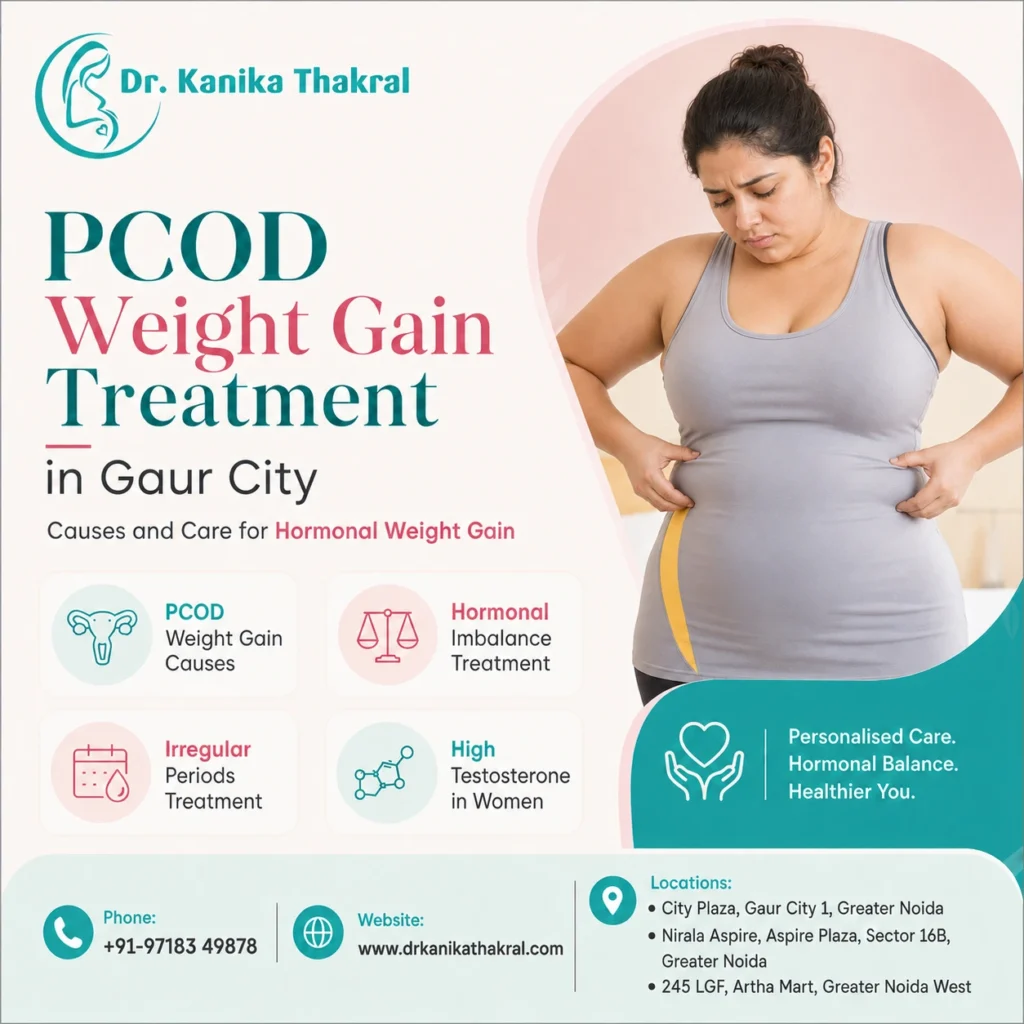
PCOD Weight Gain Treatment in Gaur City: Causes and Care
PCOD Weight Gain Treatment in Gaur City is important for women who are gaining weight suddenly or finding it difficult to lose weight despite diet and exercise. PCOD can affect periods, hormones, skin, hair growth, fertility, metabolism, and body weight.
Weight gain in PCOD is not always due to overeating. In many women, it may be linked with insulin resistance, hormonal imbalance, irregular ovulation, high androgen levels, poor sleep, stress, and lifestyle factors. PCOD/PCOS is commonly linked with irregular periods, excess androgen symptoms, acne, excess hair growth, and metabolic concerns.
If you are facing Hormonal weight gain in women, irregular periods, acne, facial hair growth, or repeated weight gain around the belly, consulting a Gynecologist in Gaur City can help identify the cause and guide the right care.
What Is PCOD?
PCOD, commonly discussed along with PCOS, is a hormonal and metabolic condition that can affect the ovaries and monthly cycle. It may cause irregular periods, delayed periods, acne, unwanted facial hair, scalp hair fall, weight gain, and difficulty in ovulation.
Many women think PCOD is only an ovarian problem, but it can also affect insulin levels, hormones, weight, skin, and long-term health. Early diagnosis and proper treatment can help manage symptoms and reduce future health risks.
PCOD Weight Gain Causes
There are many PCOD weight gain causes, and every woman may not have the same reason. Some women gain weight mainly around the belly, while others notice overall weight gain.
Common PCOD weight gain causes include:
- Insulin resistance
- Hormonal imbalance
- High androgen levels
- Irregular ovulation
- Low physical activity
- Poor sleep
- Stress
- Thyroid imbalance
- Unhealthy eating pattern
- Long gaps between meals
- Family history
- Irregular periods
Insulin resistance can make the body store more fat and may make weight loss difficult. Weight gain and difficulty losing weight are also commonly seen in PCOD/PCOS.
PCOD Symptoms in Women
PCOD symptoms in women can be different from person to person. Some women have only irregular periods, while others may have weight gain, acne, hair fall, or facial hair growth.
Common symptoms include:
- Irregular periods
- Delayed periods
- Weight gain
- Belly fat
- Acne
- Oily skin
- Facial hair growth
- Hair thinning
- Dark patches on neck or underarms
- Difficulty losing weight
- Mood changes
- Difficulty conceiving
- Pelvic discomfort in some cases
Excess androgen symptoms such as acne and unwanted hair growth are commonly seen in PCOD/PCOS.
Hormonal Weight Gain in Women
Hormonal weight gain in women can happen when hormones affecting periods, ovulation, insulin, thyroid, stress, and metabolism are not balanced.
In PCOD, weight gain may be linked with:
- Insulin resistance
- High testosterone
- Irregular periods
- Low progesterone due to irregular ovulation
- Stress hormone changes
- Thyroid imbalance
This type of weight gain may not improve with crash dieting. A proper evaluation helps understand whether the weight gain is connected with PCOD, thyroid, insulin resistance, lifestyle, or another medical concern.
High Testosterone in Women and PCOD
High Testosterone in Women can be one of the reasons behind PCOD symptoms. Testosterone is an androgen hormone. Women also have small amounts of androgen hormones, but when levels are high, symptoms may appear.
Signs of high testosterone may include:
- Facial hair growth
- Acne
- Oily skin
- Hair thinning
- Irregular periods
- Weight gain
- Difficulty with ovulation
PCOD diagnosis may involve symptoms, hormone tests, menstrual history, and ultrasound when required. Irregular periods and excess androgen signs are important clinical clues.
Hormonal Imbalance Treatment
Hormonal imbalance treatment depends on your symptoms, age, period pattern, weight changes, pregnancy plans, and test reports.
Your gynecologist may suggest:
- Lifestyle correction
- Weight management plan
- Diet changes
- Exercise routine
- Period regulation treatment
- Insulin resistance management
- Acne or facial hair treatment
- Hormone tests
- Thyroid and sugar evaluation
- Follow-up monitoring
Treatment should be personalized. Do not start hormonal tablets, weight-loss medicines, or supplements without medical advice.
Irregular Periods Treatment in PCOD
Irregular periods treatment is an important part of PCOD care. Delayed or missed periods may happen because ovulation is irregular.
Irregular periods in PCOD may appear as:
- Periods coming late
- Missed periods
- Very light flow
- Heavy flow after delay
- Periods once in 2–3 months
- Unpredictable cycles
A gynecologist may check pregnancy possibility, thyroid levels, PCOD signs, hormone reports, weight changes, and ultrasound findings. NHS also advises medical review when irregular periods happen with symptoms such as weight gain, tiredness, facial hair growth, or skin changes.
PCOD Weight Gain Treatment in Gaur City
PCOD Weight Gain Treatment in Gaur City should focus on the root cause, not only the number on the weighing scale. The goal is to improve periods, hormones, ovulation, metabolism, skin symptoms, and overall women’s health.
Treatment may include:
- Detailed symptom evaluation
- Period history review
- Weight and BMI assessment
- Blood sugar and insulin-related evaluation
- Thyroid test if needed
- Hormone tests if required
- Ultrasound if advised
- Diet and activity guidance
- Medicines based on diagnosis
- Regular follow-up
Even 5–10% weight loss in overweight women may help improve PCOD symptoms, periods, and metabolic health, but the right plan should be selected after medical evaluation. ACOG notes that weight loss can help improve cholesterol and insulin levels and relieve some PCOS symptoms.
Lifestyle Care for PCOD Weight Gain
Lifestyle changes are an important part of PCOD care, but they should be practical and sustainable.
Helpful steps include:
- Eat balanced meals
- Add protein to daily diet
- Avoid long gaps between meals
- Reduce sugary foods and drinks
- Include fibre-rich foods
- Walk regularly
- Do strength training if medically fit
- Sleep properly
- Manage stress
- Track periods
- Avoid crash dieting
PCOD weight gain needs consistent care. Extreme dieting may worsen weakness, cravings, hair fall, and mood changes.
When Should You Consult a Gynecologist?
You should consult a Gynecologist in Gaur City if you have weight gain along with irregular periods, acne, unwanted facial hair, hair fall, dark neck patches, delayed periods, or difficulty conceiving.
You may need consultation for:
- PCOD Weight Gain Treatment in Gaur City
- PCOD weight gain causes
- PCOD symptoms in women
- Hormonal weight gain in women
- Hormonal imbalance treatment
- Irregular periods treatment
- High Testosterone in Women
Early care can help manage symptoms before they affect fertility, skin, metabolism, or long-term health.
FAQs
1. Can PCOD cause weight gain?
Yes, PCOD can cause weight gain or difficulty losing weight, especially when insulin resistance and hormonal imbalance are present.
2. What are common PCOD weight gain causes?
Common causes include insulin resistance, high androgen levels, irregular ovulation, stress, poor sleep, thyroid imbalance, and unhealthy eating habits.
3. What are PCOD symptoms in women?
Common PCOD symptoms in women include irregular periods, weight gain, acne, facial hair growth, hair thinning, oily skin, and difficulty conceiving.
4. Can high testosterone cause weight gain in women?
High testosterone in women may be linked with PCOD symptoms like acne, facial hair growth, irregular periods, hair thinning, and weight-related changes.
5. Is irregular periods treatment important in PCOD?
Yes, irregular periods treatment is important because delayed or missed periods may indicate hormonal imbalance and irregular ovulation.
6. Which doctor should I consult for PCOD weight gain?
You should consult a Gynecologist in Gaur City for PCOD-related weight gain, hormonal imbalance, irregular periods, and high testosterone symptoms.
