
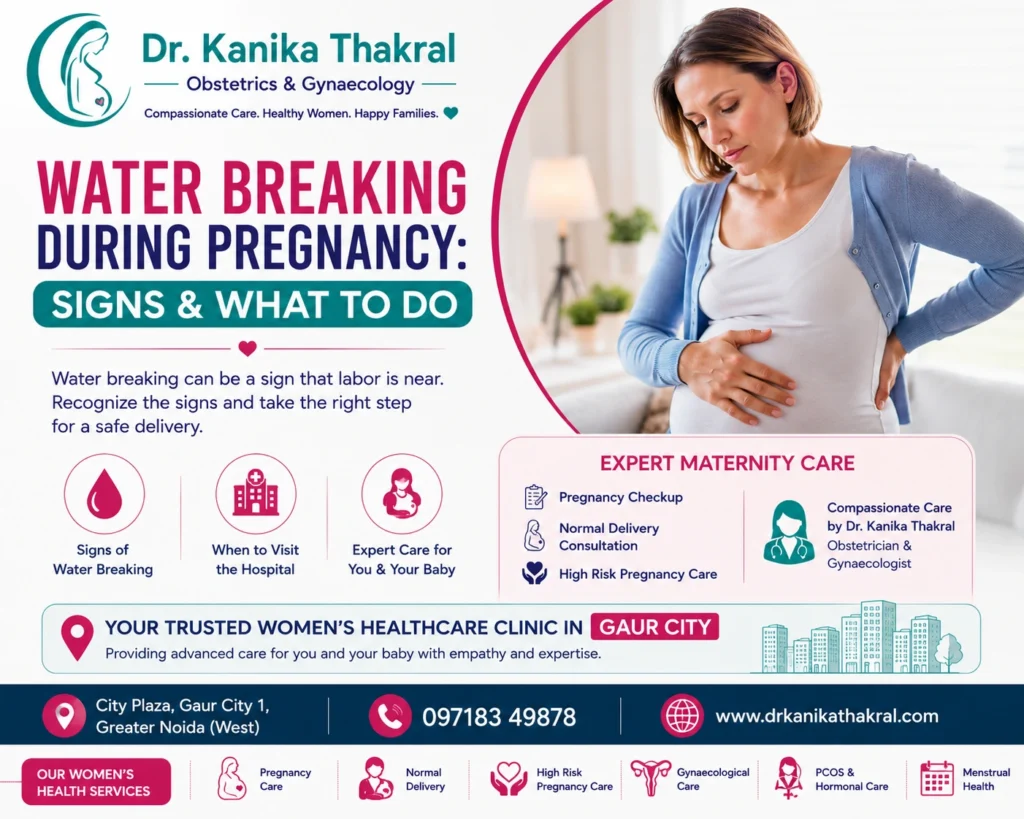
Water Breaking During Pregnancy: Signs & What to Do
Water breaking is one of the most important signs that labor may be approaching. Many pregnant women become anxious when they experience leaking fluid and may wonder whether it is normal discharge, urine leakage, or actual water breaking.
Understanding Water Breaking During Pregnancy: Signs & What to Do in Gaur City helps expecting mothers stay calm and seek timely medical care for a safe delivery.
At Dr. Kanika Thakral’s clinic in Gaur City, pregnant women receive expert pregnancy monitoring, labor guidance, Pregnancy Checkup support, Normal Delivery Consultation, and complete High Risk Pregnancy Care for a healthy pregnancy journey. Women experiencing leaking water pregnancy symptoms or 9th labor symptoms should seek immediate medical guidance for proper monitoring and safe maternity care.
What Does “Water Breaking” Mean?
During pregnancy, the baby grows inside a fluid-filled sac called the amniotic sac. When this sac ruptures, the amniotic fluid starts leaking out. This is commonly called “water breaking.”
Water breaking usually happens close to labor, but in some cases it may occur earlier and require immediate medical attention.
Signs of Water Breaking During Pregnancy
Sudden Fluid Leakage
A sudden gush of clear fluid from the vagina may indicate water breaking.
Continuous Fluid Dripping
Some women may not experience a large gush but notice continuous leaking fluid.
Wet Underwear
Persistent wetness that does not stop may be a sign of leaking amniotic fluid.
Mild Contractions
Water breaking may occur along with labor symptoms such as abdominal tightening or contractions.
Change in Fluid Color
Amniotic fluid is usually clear or pale yellow. Green or foul-smelling fluid should be evaluated immediately.
How to Differentiate Water Breaking from Urine Leakage?
During pregnancy, bladder pressure may cause urine leakage, which can confuse many women.
Water breaking usually:
- Continues leaking
- Feels uncontrollable
- May not have urine smell
- Can soak clothes repeatedly
If unsure, it is always safer to contact your gynecologist in Gaur City.
What Should You Do After Water Breaking?
Stay Calm
Do not panic. Water breaking does not always mean immediate delivery.
Note the Time
Record the time when leaking started.
Observe Fluid Color
Clear fluid is common, but green, brown, or bloody fluid requires urgent medical attention.
Avoid Self-Medication
Do not take medicines without medical advice.
Contact Your Doctor
Immediate consultation helps reduce infection risk and ensures proper labor monitoring.
When Should You Go to the Hospital Immediately?
Visit the hospital immediately if you experience:
- Continuous leaking fluid
- Strong labor pain
- Fever
- Reduced baby movement
- Bleeding
- Green or foul-smelling fluid
- Water breaking before 37 weeks
These symptoms may require urgent medical care.
Water Breaking Before Due Date
Sometimes water breaking happens before labor begins or before full-term pregnancy.
This condition is called premature rupture of membranes and may increase risks such as:
- Infection
- Premature birth
- Complications for baby
Timely medical care is very important in such cases.
Importance of Pregnancy Checkups
Regular Pregnancy Checkup visits help monitor:
- Baby growth
- Amniotic fluid levels
- Blood pressure
- Maternal health
- Signs of labor complications
Routine pregnancy care improves safety for both mother and baby.
Labor Symptoms to Watch
Women should watch for common labor symptoms, including:
- Regular contractions
- Back pain
- Pelvic pressure
- Water breaking pregnancy signs
- Abdominal tightening
- Cervical changes
Early recognition helps ensure timely delivery care.
Normal Delivery Consultation
Every pregnancy is different. Some women may be suitable for Normal Delivery Consultation in gaur city , while others may require additional monitoring based on pregnancy condition.
Delivery planning depends on:
- Baby position
- Mother’s health
- Labor progress
- Pregnancy complications
- Gestational age
High Risk Pregnancy Care
Women with high-risk pregnancies may require closer observation after water breaking.
Conditions requiring extra care include:
- High blood pressure
- Gestational diabetes
- Twin pregnancy
- Previous pregnancy complications
- Early labor symptoms
Specialized High Risk Pregnancy Care helps improve pregnancy outcomes.
Why Choose Dr. Kanika Thakral?
Dr. Kanika Thakral provides compassionate maternity and pregnancy care for expecting mothers in Gaur City.
Services include:
Pregnancy Checkup
Normal Delivery Consultation
High Risk Pregnancy Care specialist
Labor Monitoring
Pregnancy Counseling
Women’s Healthcare Support
FAQs
1. Does water breaking always mean labor starts immediately?
Not always. Labor may begin within hours, but some women may need medical induction.
2. What color is amniotic fluid?
It is usually clear or pale yellow.
3. Can water break slowly?
Yes, some women experience slow leaking instead of a sudden gush.
4. Is water breaking painful?
Water breaking itself is usually painless, though contractions may follow.
5. What should I do if my water breaks before due date?
Contact your doctor immediately for evaluation.
6. Can I wait at home after water breaks?
You should always inform your doctor because infection risk increases after membrane rupture.
7. Where can I get pregnancy care in Gaur City?
Consult Dr. Kanika Thakral for pregnancy checkups, labor guidance, and maternity care in Gaur City.
