
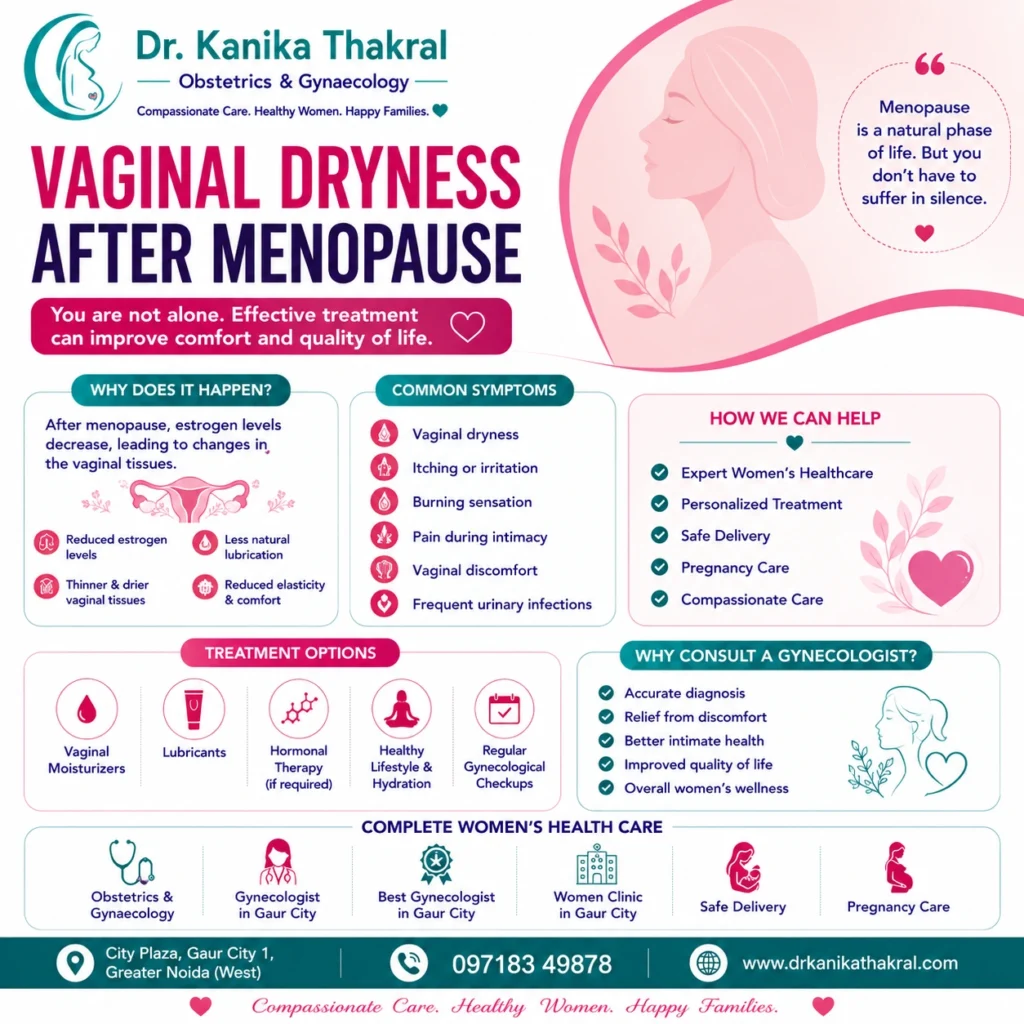
Vaginal Dryness After Menopause
Menopause brings many hormonal changes in a woman’s body, and one common yet often ignored condition is Vaginal Dryness After Menopause. Reduced estrogen levels after menopause can affect vaginal tissues, causing dryness, irritation, discomfort, and changes in intimate health.
Many women hesitate to discuss these symptoms, but proper medical care can help improve comfort, confidence, and overall quality of life.
At Dr. Kanika Thakral’s clinic, women receive compassionate Obstetrics & Gynecology care for menopause health, hormonal balance, and women’s wellness.
What Causes Vaginal Dryness After Menopause?
The main cause is a decrease in estrogen hormone levels after menopause.
Estrogen helps maintain:
- Vaginal moisture
- Tissue elasticity
- Healthy blood flow
- Vaginal lubrication
When estrogen levels reduce, vaginal tissues may become thinner, drier, and more sensitive.
Common Symptoms of Vaginal Dryness
Women may experience:
- Vaginal dryness
- Burning sensation
- Itching
- Irritation
- Pain during intimacy
- Vaginal discomfort
- Frequent urinary infections
- Sensitivity in intimate areas
Some women may also notice emotional discomfort or reduced confidence because of these symptoms.
Who is More Likely to Experience Vaginal Dryness?
The condition is common in:
- Women after menopause
- Women with hormonal imbalance
- Women after certain medical treatments
- Breastfeeding women
- Women with low estrogen levels
Hormonal health plays an important role in women’s intimate wellness.
Why Should Vaginal Dryness Not Be Ignored?
Untreated vaginal dryness may affect:
- Daily comfort
- Intimate relationships
- Emotional wellbeing
- Vaginal health
- Urinary health
Early treatment can improve comfort and prevent complications.
How is Vaginal Dryness Diagnosed?
A gynecologist may recommend:
- Medical history evaluation
- Physical examination
- Hormonal assessment
- Vaginal health examination
Women should not feel embarrassed discussing menopause-related symptoms with their doctor.
Treatment Options for Vaginal Dryness After Menopause
Vaginal Moisturizers
These help improve vaginal hydration and comfort.
Lubricants
Lubricants may reduce discomfort during intimacy.
Hormonal Therapy
Some women may benefit from estrogen-based treatments after medical evaluation.
Healthy Lifestyle
Good hydration, balanced diet, stress management, and exercise support women’s wellness.
Regular Women’s Healthcare Checkups
Routine gynecological care helps monitor hormonal and reproductive health after menopause.
Importance of Women’s Healthcare After Menopause
Women’s health needs continue even after menopause.
Regular checkups help manage:
- Hormonal imbalance
- Vaginal health
- Bone health
- Menstrual history concerns
- Pelvic health
- Overall wellness
Women should never ignore ongoing discomfort or unusual symptoms.
Women’s Health Conditions That Need Attention
Women with previous gynecological conditions should continue regular healthcare monitoring, including those who have received:
- Pregnancy Care
- Fibroid Treatment
- Hormonal care
- Menstrual health treatment
- Reproductive health support
Complete women’s healthcare improves long-term wellness.
Why Choose Dr. Kanika Thakral?
Dr. Kanika Thakral provides compassionate and personalized Obstetrics & Gynecology care for women at every stage of life.
Services include:
✔ Menopause Care
✔ Hormonal Health Support
✔ Women’s Wellness Care
✔ Gynecological Consultation
✔ Pregnancy Care
✔ Safe Delivery Consultation
✔ Menstrual Health Management
If you are searching for a trusted Gynecologist in Gaur City or the Best Gynecologist in Gaur City, consult Dr. Kanika Thakral for expert women’s healthcare support.
FAQs
1. Is vaginal dryness common after menopause?
Yes, it is very common due to reduced estrogen levels.
2. Can vaginal dryness be treated?
Yes, proper treatment and women’s healthcare support can improve symptoms.
3. Does menopause always cause vaginal dryness?
Not every woman experiences severe symptoms, but it is common after menopause.
4. Can hormonal imbalance affect vaginal health?
Yes, hormones play a major role in maintaining vaginal moisture and comfort.
5. Should I consult a gynecologist for vaginal dryness?
Yes, medical consultation helps identify the cause and proper treatment.
