
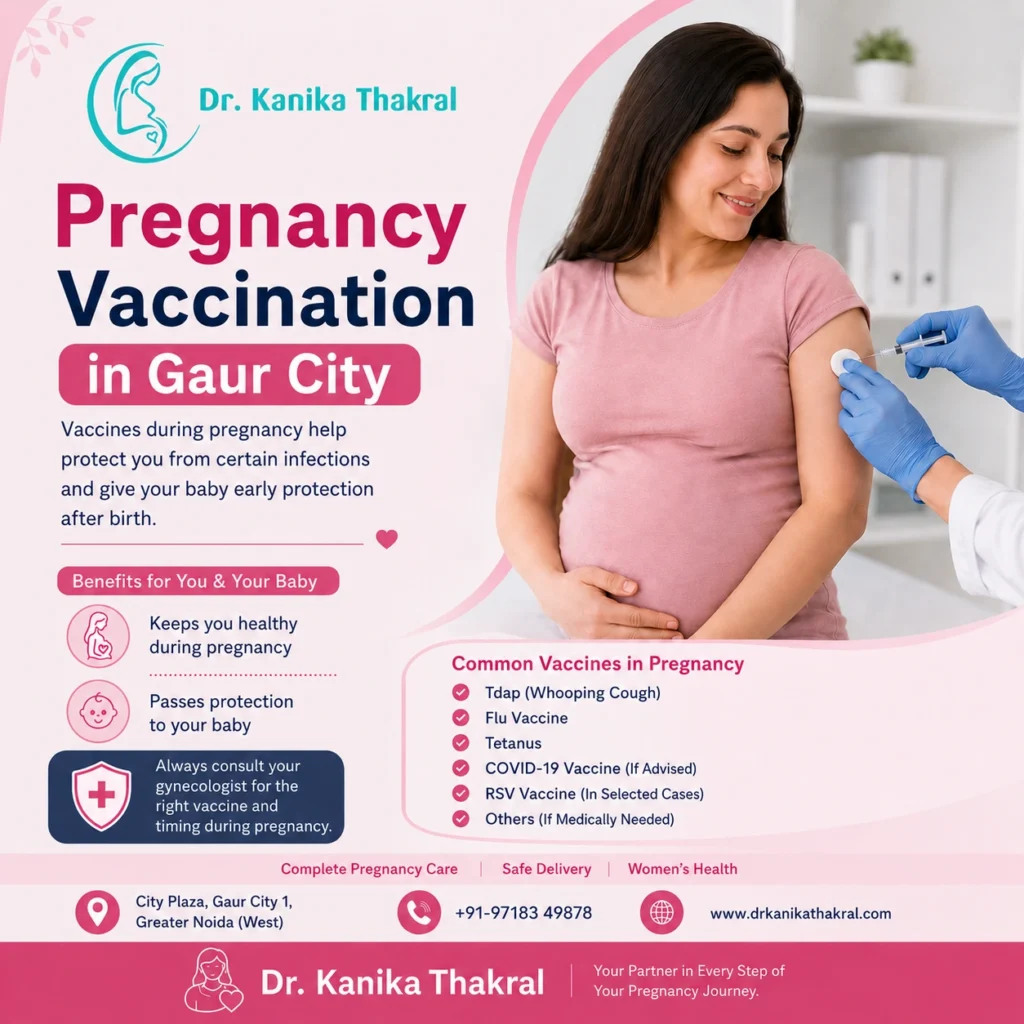
Pregnancy Vaccination in Gaur City: Safety, Timing and Benefits
Pregnancy vaccination is an important part of antenatal care. It helps protect the mother from selected infections. It can also help protect the baby during the first few months after birth.
Many expecting mothers feel unsure about vaccines. They often ask, “Is vaccination safe during pregnancy?” or “Which vaccine should I take?” These questions are normal. Pregnancy is a sensitive time, so every vaccine should be taken only after medical advice.
Dr. Kanika Thakral guides expecting mothers about vaccine timing, pregnancy checkups, nutrition, scans and complete Pregnancy Care. If you are looking for safe pregnancy guidance in Gaur City, early consultation can help you plan better.
Why Pregnancy Vaccination Is Important
Pregnancy changes the body in many ways. The immune system, heart and lungs work differently during this phase. Because of this, some infections may become more serious during pregnancy.
Pregnancy vaccination helps lower the risk of certain infections. It may also help the mother pass protective antibodies to the baby. These antibodies can support the newborn before the baby starts getting routine vaccines.
The flu vaccine, Tdap vaccine and some other vaccines are commonly discussed during pregnancy. The CDC says pregnant women have a higher risk of serious flu illness because of changes in the immune system, heart and lungs. It also says flu vaccination can be given during pregnancy in flu season.
Vaccination is not a replacement for regular checkups. It is one part of safe pregnancy care.
Common Vaccines Discussed During Pregnancy
Not every pregnant woman needs the same vaccine. Your doctor will decide based on your pregnancy week, health condition, past vaccine history and current guidance.
Common vaccines discussed during pregnancy include:
- Tdap or whooping cough vaccine
- Flu vaccine
- Tetanus protection
- COVID-19 vaccine, if advised
- RSV vaccine in selected cases
- Hepatitis B vaccine, if needed
ACOG states that four vaccines are currently recommended during pregnancy: influenza, Tdap, COVID-19 and RSV. The final advice may still depend on personal health and updated guidance.
So, do not take any vaccine on your own. Always ask your gynecologist first.
Tdap Vaccine During Pregnancy
Tdap protects against tetanus, diphtheria and pertussis. Pertussis is also called whooping cough. It can be serious for newborn babies.
Babies cannot get full protection immediately after birth. So, when the mother receives the Tdap vaccine during pregnancy, antibodies can pass to the baby. This gives early protection in the first weeks of life.
The CDC recommends one dose of Tdap during each pregnancy. It is usually given between 27 and 36 weeks.
Some guidance also supports whooping cough vaccination from 16 weeks onward. NHS says pregnant women can have the whooping cough vaccine from 16 weeks, usually around the 20-week scan period.
Your doctor will guide the right timing for your case.
Flu Vaccine During Pregnancy
Flu may look like a common seasonal illness. However, it can sometimes become serious during pregnancy. It may cause high fever, weakness, breathing trouble or other complications.
The flu vaccine helps protect the mother during flu season. It may also give some protection to the baby after birth.
NHS says the flu vaccine is safe during pregnancy and can be taken at any stage of pregnancy. It also says protection can pass to the baby for the first few months after birth.
If you are pregnant during flu season, ask your doctor about the flu vaccine. Your gynecologist will check your pregnancy stage and health before advising it.
RSV Vaccine During Pregnancy
RSV is a respiratory virus. It can be serious for some newborn babies. In selected cases, RSV vaccination during pregnancy may help protect the baby after birth.
The CDC recommends one dose of the maternal RSV vaccine during 32 to 36 weeks of pregnancy during RSV season in many settings.
RSV vaccine timing is specific. It may not be needed for every pregnant woman. Therefore, your doctor will guide you based on pregnancy week, season and current recommendations.
Are Vaccines Safe During Pregnancy?
This is one of the most common doubts. The answer depends on the vaccine type. Some vaccines are recommended during pregnancy. Some are given only when needed. Some live vaccines are usually avoided.
Before taking any vaccine, tell your doctor about:
- Your pregnancy week
- Allergy history
- Previous vaccine reaction
- Fever or current illness
- Current medicines
- High-risk pregnancy
- Previous pregnancy complications
This helps your doctor choose the safest option for you.
Good Pregnancy Care means taking the right vaccine at the right time. It also means avoiding unnecessary medicines or vaccines.
Vaccines Before Pregnancy Planning
Some vaccines are better discussed before pregnancy. So, a preconception visit can be helpful.
If you are planning pregnancy, your doctor may review your vaccine history. She may also check your periods, thyroid, sugar, weight and general health.
This is especially useful if you have irregular cycles, PCOS, fibroids, ovarian cysts or previous pregnancy problems. If you need Irregular Periods Treatment, it is better to discuss pregnancy planning early.
Good care before conception can support a healthier pregnancy later.
Vaccines Usually Avoided During Pregnancy
Some vaccines are usually avoided during pregnancy. These are often live vaccines. They contain a weakened form of a virus or bacteria.
Examples may include MMR and varicella vaccines in many routine cases. If these vaccines are needed, they are usually planned before pregnancy or after delivery.
If you received any vaccine before knowing you were pregnant, do not panic. Speak to your doctor. She will guide you based on the vaccine type and timing.
Side Effects After Pregnancy Vaccination
Mild side effects can happen after vaccination. These usually settle in a short time.
Common side effects may include:
- Pain at the injection site
- Mild fever
- Body pain
- Tiredness
- Headache
- Mild swelling or redness
Most side effects are not serious. However, call your doctor if you have high fever, breathing difficulty, swelling, severe rash, dizziness or anything unusual.
Do not self-medicate during pregnancy without medical advice.
Pregnancy Vaccination and High-Risk Pregnancy
Women with high-risk pregnancy need careful guidance. High-risk pregnancy may include diabetes, high blood pressure, thyroid problems, twin pregnancy, previous miscarriage or previous premature delivery.
Vaccines may still be important in these cases. However, the decision should be made after checking your full health history.
If you had Fibroid Treatment, Ovarian Cyst Treatment, PCOS or fertility treatment, tell your gynecologist. A PCOS Specialist can also guide women with irregular periods, weight concerns and pregnancy planning.
Once pregnancy starts, vaccine timing becomes part of complete antenatal care.
Can Vaccines Help in Normal Delivery?
Vaccines do not decide whether you will have a Normal Delivery or C-section. Delivery depends on baby position, placenta position, mother’s health, labour progress, previous surgery and baby wellbeing.
However, vaccination can support overall pregnancy safety. It may reduce the risk of some infections during pregnancy. A healthier pregnancy journey can support better delivery planning.
The final aim is always Safe Delivery for both mother and baby.
Simple Myths About Pregnancy Vaccination
Many mothers hear confusing advice about vaccines. Some information comes from social media. Some comes from family opinions. But pregnancy care should be based on medical guidance.
Common myths include:
- Vaccines are never safe in pregnancy.
- Healthy mothers do not need vaccines.
- All vaccines harm the baby.
- All vaccines can be taken anytime.
- Natural immunity is always enough.
These myths can delay important care. The truth is simple. Some vaccines are recommended. Some are avoided. Some are given only when needed.
Your gynecologist can help you understand the difference.
Role of Regular Pregnancy Checkups
Regular checkups help your doctor plan vaccines at the right time. They also help monitor the baby’s growth and the mother’s health.
During antenatal visits, your doctor may check:
- Blood pressure
- Sugar levels
- Hemoglobin
- Thyroid levels
- Baby growth
- Ultrasound reports
- Vaccine history
- Pregnancy symptoms
A trusted Women Clinic in Gaur City can help you follow a proper antenatal care plan. This plan includes tests, scans, diet, supplements, vaccines and regular follow-up.
When Should You Consult Dr. Kanika Thakral?
You should consult Dr. Kanika Thakral as soon as pregnancy is confirmed. Early visits help plan tests, scans, medicines, supplements and vaccines.
You should also consult if you are planning pregnancy, unsure about past vaccines, have irregular periods, or have high-risk pregnancy factors. Women with PCOS, thyroid problems, diabetes, BP issues or previous miscarriage should also take early guidance.
If you are searching for the Best Gynecologist in Gaur City, Dr. Kanika Thakral can guide you with pregnancy vaccine timing and complete antenatal care.
Why Choose Dr. Kanika Thakral?
Pregnancy brings many questions. Mothers want to know what is safe, what is needed and what should be avoided. This is why clear guidance matters.
Dr. Kanika Thakral provides pregnancy vaccination guidance, antenatal care, menstrual health support, PCOS care, fertility planning and women’s health consultation.
Her focus is on safe pregnancy care, timely advice and better health for mother and baby.
Final Thoughts
Pregnancy vaccination is an important part of antenatal care. It helps protect the mother from selected infections. It may also help protect the newborn after birth.
Vaccine choice should always be doctor-guided. It depends on pregnancy week, health condition, previous vaccines and current medical guidance.
For pregnancy vaccine advice, complete Pregnancy Care and planning toward Safe Delivery, consult Dr. Kanika Thakral. Timely care can help you feel confident and informed throughout pregnancy.
FAQs
1. Is pregnancy vaccination safe?
Many recommended vaccines are safe during pregnancy when given at the right time and under medical guidance. Your doctor will decide what is suitable for you.
2. Which vaccines are commonly advised during pregnancy?
Common vaccines include Tdap or whooping cough vaccine, flu vaccine, tetanus protection and other vaccines if medically needed.
3. When is Tdap given during pregnancy?
Tdap is commonly given during 27 to 36 weeks of pregnancy. Your gynecologist will guide the best timing for your case.
4. Can I take the flu vaccine during pregnancy?
Yes, the flu vaccine is commonly advised during pregnancy during flu season. Your doctor will guide you based on your pregnancy stage.
5. Are live vaccines safe during pregnancy?
Live vaccines are usually avoided during pregnancy. If needed, they are generally planned before pregnancy or after delivery.
