
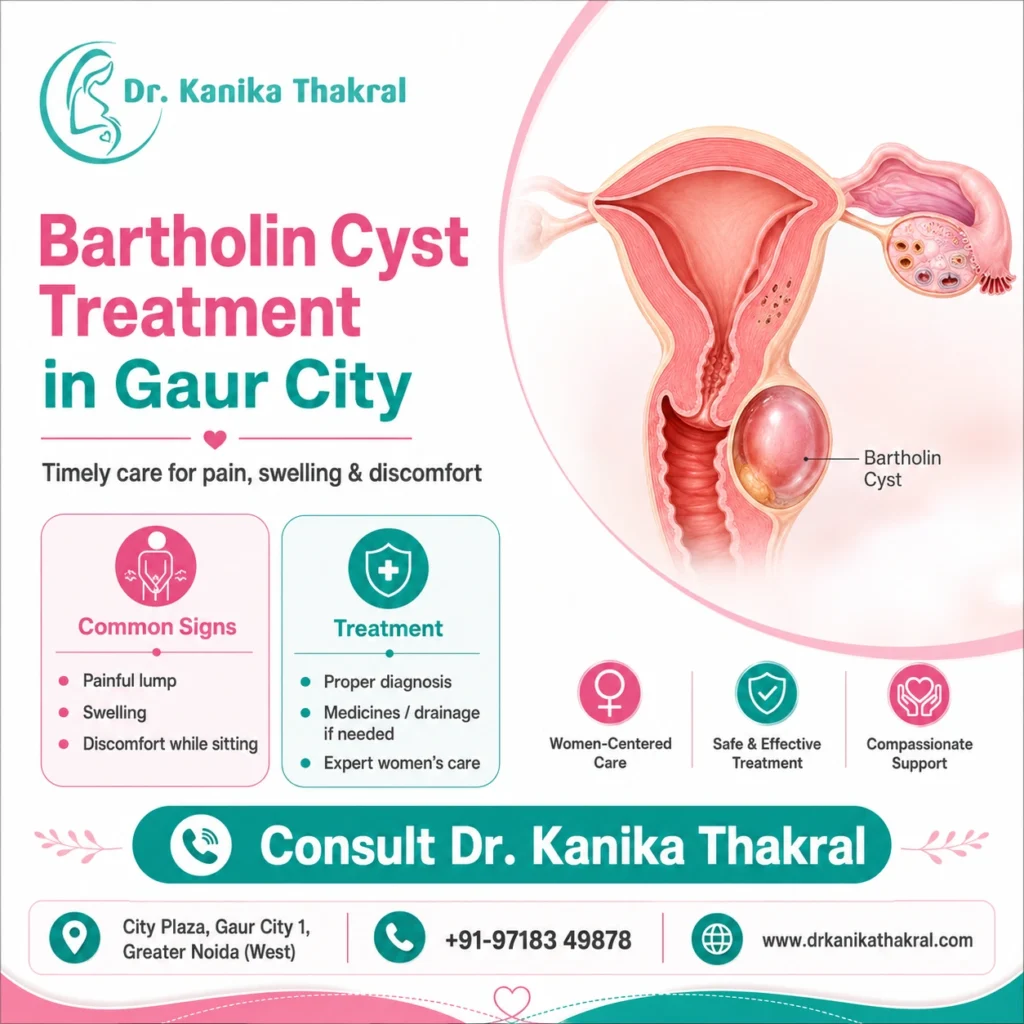
Bartholin Cyst Treatment in Gaur City
Bartholin Cyst Treatment is important when a woman notices a lump, swelling, pain, or discomfort near the vaginal opening. A Bartholin cyst can feel worrying, especially because it appears in a sensitive area. However, many Bartholin cysts are common, treatable, and not serious when checked on time.
A Bartholin cyst forms when one of the Bartholin glands becomes blocked. These glands are present near the vaginal opening and help with natural lubrication. When the gland opening gets blocked, fluid can collect and form a cyst.
At Dr. Kanika Thakral’s clinic, women get private and patient-friendly care for vaginal swelling, vulval pain, Bartholin cyst, abscess, and complete Obstetrics & Gynecology concerns. If you are looking for Bartholin Cyst Treatment in Gaur City, early consultation can help reduce pain, infection risk, and recurrence.
What Is a Bartholin Cyst?
A Bartholin cyst is a fluid-filled swelling near the vaginal opening. It usually appears on one side. Sometimes it is small and painless. In other cases, it may become large, painful, or infected.
The NHS explains that a Bartholin’s cyst is a lump near the opening of the vagina. It may not always need treatment, but any new lump should be checked by a doctor.
Many women first notice it while walking, sitting, bathing, or during intercourse. Some feel only a small lump. Others may feel pressure, tenderness, or pain.
Common Symptoms of Bartholin Cyst
Symptoms depend on the size of the cyst and whether it is infected. A small cyst may not cause any problem. It may only be noticed by chance.
However, a larger or infected cyst may cause more symptoms.
Common symptoms include:
- Lump near the vaginal opening
- Swelling on one side
- Pain while walking or sitting
- Pain during intercourse
- Tenderness in the vulval area
- Redness or warmth
- Fever in case of infection
- Pus or discharge if abscess drains
If the cyst becomes infected, it may turn into an abscess. An abscess is usually more painful and may need medical treatment.
Bartholin Cyst vs Bartholin Abscess
A Bartholin cyst and Bartholin abscess are related, but they are not the same.
A cyst usually means fluid is trapped inside the gland. It may be painless or mildly uncomfortable. An abscess means the cyst has become infected and filled with pus. It is usually painful, swollen, red, and tender.
A Bartholin abscess may cause:
- Severe pain
- Difficulty walking
- Pain while sitting
- Fever
- Redness and swelling
- Sudden increase in lump size
If you have severe pain or fever, do not wait. You should consult a gynecologist as early as possible.
Why Does a Bartholin Cyst Happen?
A Bartholin cyst usually happens when the opening of the Bartholin gland gets blocked. Fluid then collects inside and forms a swelling.
The exact reason may not always be clear. In some cases, thick mucus, injury, irritation, infection, or inflammation may block the gland opening.
Possible causes or triggers include:
- Blocked Bartholin gland duct
- Local irritation
- Bacterial infection
- Previous cyst history
- Sexual activity-related irritation
- Poor drainage of gland fluid
A cyst is not always caused by poor hygiene. It is also not something to feel ashamed about. It is a medical condition and can be treated.
Is Bartholin Cyst Dangerous?
Most Bartholin cysts are not dangerous. Many small cysts do not need active treatment if they are painless and not infected. However, it is still important to get a lump checked.
Treatment depends on the cyst size, pain level, infection, age, and recurrence. NCBI medical guidance explains that Bartholin cyst care can range from conservative management to procedures such as Word catheter placement or marsupialization when needed.
Women above 40 or postmenopausal women should take any new vulval lump more seriously. Your doctor may advise additional evaluation in selected cases.
When Should You See a Gynecologist?
You should consult a gynecologist if you notice any lump near the vaginal opening. You should also seek care if the swelling is painful, increasing in size, or affecting daily activities.
Visit a doctor if you have:
- Painful swelling near the vagina
- Fever with vaginal lump
- Difficulty walking or sitting
- Pain during intercourse
- Pus or discharge
- Recurrent Bartholin cyst
- Lump that does not improve
- New lump after age 40
If you are searching for a Gynecologist in Gaur City, Dr. Kanika Thakral can help with proper diagnosis and treatment planning.
Diagnosis of Bartholin Cyst
Diagnosis usually starts with a private consultation and examination. Your doctor will ask about your symptoms, pain, fever, discharge, sexual history, previous cysts, and recurrence.
In most cases, a pelvic examination is enough to identify a Bartholin cyst. If infection is suspected, your doctor may advise testing or treatment based on symptoms.
Your doctor may check:
- Size of the lump
- Pain and tenderness
- Signs of infection
- Pus or discharge
- Recurrence history
- Age and risk factors
Sometimes, other conditions can look similar to a Bartholin cyst. This is why self-diagnosis is not safe.
Can Bartholin Cyst Heal on Its Own?
A small and painless Bartholin cyst may improve on its own. It may not need treatment if it is not causing symptoms. However, you should still get it checked, especially if it is new or keeps coming back.
Warm sitz baths may help mild discomfort. This means sitting in warm water for a short time. It may help reduce pain and support natural drainage in some cases.
Do not squeeze, press, or try to burst the cyst at home. This can worsen pain and increase infection risk.
Home Care for Mild Bartholin Cyst
Home care may help only when the cyst is small, mild, and not infected. It is not a replacement for medical care when pain, fever, or swelling is severe.
Helpful steps may include:
- Warm sitz bath
- Keeping the area clean and dry
- Wearing loose cotton underwear
- Avoiding friction or pressure
- Avoiding squeezing the lump
- Taking medicines only as advised
The NHS notes that a Bartholin cyst may not always need treatment, but painful or infected cysts may need medical care.
If symptoms do not improve, consult your gynecologist.
Medical Treatment for Bartholin Cyst
Bartholin Cyst Treatment depends on symptoms. A small painless cyst may only need observation. A painful cyst or abscess may need drainage or further treatment.
Treatment may include:
- Warm sitz baths for mild cases
- Pain relief medicines if advised
- Antibiotics if infection or cellulitis is present
- Drainage if abscess is painful
- Word catheter placement in selected cases
- Marsupialization for recurrent cysts
- Biopsy in selected older women or suspicious cases
ACOG educational guidance describes treatment based on symptoms. It notes that asymptomatic cysts may not need treatment, while symptomatic cysts or abscesses may need procedures such as Word catheter or marsupialization.
Your doctor will choose the best option after examination.
Antibiotics for Bartholin Cyst
Antibiotics are not always needed for every Bartholin cyst. They may be advised if there is infection, fever, cellulitis, or sexually transmitted infection concern.
If the cyst is only blocked but not infected, antibiotics may not help much. In many painful abscess cases, drainage is more important than antibiotics alone.
Do not start antibiotics on your own. Wrong antibiotic use can delay proper treatment and may not solve the problem.
Drainage of Bartholin Abscess
If a Bartholin abscess is painful, large, or infected, drainage may be needed. This helps remove pus and reduce pressure.
A simple cut and drainage may give temporary relief, but the cyst can come back if the opening closes too quickly. That is why your doctor may use a Word catheter in selected cases.
A Word catheter is a small tube placed after drainage. It helps keep the opening open for some time so fluid can drain properly. This may reduce recurrence.
What Is Marsupialization?
Marsupialization is a minor procedure used for recurrent or persistent Bartholin cysts. In this procedure, the cyst is opened and the edges are stitched in a way that creates a small permanent opening for drainage.
This can help prevent repeated blockage. It may be advised when cysts keep coming back or when other treatments are not suitable.
Your doctor will explain whether this procedure is needed in your case. Not every woman with a Bartholin cyst needs marsupialization.
Can Bartholin Cyst Come Back?
Yes, Bartholin cyst can come back in some women. Recurrence may happen if the gland duct gets blocked again or if the cyst does not drain properly.
To reduce recurrence risk, follow your doctor’s advice. Complete the treatment plan. Attend follow-up visits if advised. Do not stop care once pain reduces if your doctor asked for review.
If the cyst keeps returning, your doctor may suggest a more long-term solution.
Bartholin Cyst and Sexual Health
A Bartholin cyst may cause pain during intercourse, especially if it is large or tender. If there is infection, intercourse may worsen discomfort.
You should avoid sexual activity if the area is painful, swollen, infected, or healing after drainage. Ask your doctor when it is safe to resume.
If infection is suspected, your doctor may also advise testing based on symptoms and history. This helps choose the right treatment.
Bartholin Cyst During Pregnancy
A Bartholin cyst can also happen during pregnancy. If you are pregnant and notice a painful lump near the vaginal opening, consult your doctor.
Pregnancy care needs extra caution. Do not use home remedies or medicines without medical advice. Your doctor will decide safe treatment based on pregnancy stage, pain, infection, and delivery plan.
Complete Pregnancy Care includes checking any swelling, infection, pain, or discharge on time. Timely treatment helps support comfort and safer pregnancy planning.
Does Bartholin Cyst Affect Normal Delivery?
A small and painless Bartholin cyst may not affect delivery. However, a large painful cyst or abscess near delivery may need medical attention.
Delivery planning depends on cyst size, infection, pain, baby position, labour progress, and mother’s health. If everything else is suitable, Normal Delivery may still be possible.
The goal is always Safe Delivery for mother and baby. Your doctor will guide the safest plan after examining your condition.
Bartholin Cyst and Women’s Health
Bartholin cyst is a gynecological concern. It should be treated with privacy, comfort, and proper explanation.
Many women delay consultation due to embarrassment. This delay can make the cyst more painful or infected. Early care can prevent discomfort and complications.
If you need a Women Clinic in Gaur City, choose timely consultation instead of waiting for the lump to become severe.
Myths About Bartholin Cyst
Many women have wrong ideas about Bartholin cyst. These myths can delay treatment.
Common myths include:
- “Every vaginal lump is dangerous.”
- “It happens due to poor hygiene.”
- “It will always need surgery.”
- “It can be popped at home.”
- “It always affects fertility.”
- “It means cancer.”
Most of these are not true. Many Bartholin cysts are simple and treatable. However, proper diagnosis is important.
Why Choose Dr. Kanika Thakral?
Dr. Kanika Thakral provides patient-friendly care for Bartholin cyst, vaginal swelling, vulval pain, abscess, pregnancy concerns, and Obstetrics & Gynecology needs.
If you are looking for the Best Gynecologist in Gaur City, you can consult Dr. Kanika Thakral for private consultation, proper diagnosis, and safe treatment planning.
The focus is on comfort, clear explanation, and timely care.
Final Thoughts
Bartholin Cyst Treatment should not be delayed when there is pain, swelling, fever, or repeated cyst formation. A Bartholin cyst may be small and painless, but it can become infected and painful in some cases.
Treatment depends on the cyst size, symptoms, infection, and recurrence. Mild cases may need warm care and observation. Painful or infected cases may need drainage, antibiotics, Word catheter, or marsupialization.
For Bartholin cyst care, Pregnancy Care, and complete women’s health guidance, consult Dr. Kanika Thakral. Early diagnosis can help reduce discomfort and support better recovery.
FAQs
1. What is a Bartholin cyst?
A Bartholin cyst is a fluid-filled lump near the vaginal opening. It forms when the Bartholin gland duct gets blocked.
2. Is Bartholin cyst serious?
Most Bartholin cysts are not serious. However, painful, infected, recurrent, or new lumps should be checked by a gynecologist.
3. What are the symptoms of Bartholin cyst?
Symptoms may include a lump near the vaginal opening, swelling, pain while sitting or walking, tenderness, redness, fever, or pus if infected.
4. Can Bartholin cyst heal naturally?
A small and painless cyst may improve on its own. Warm sitz baths may help mild cases. Painful or infected cysts need medical care.
5. Where can I consult for Bartholin Cyst Treatment in Gaur City?
You can consult Dr. Kanika Thakral for Bartholin Cyst Treatment, vaginal swelling, vulval pain, abscess care, and complete women’s health guidance.
