
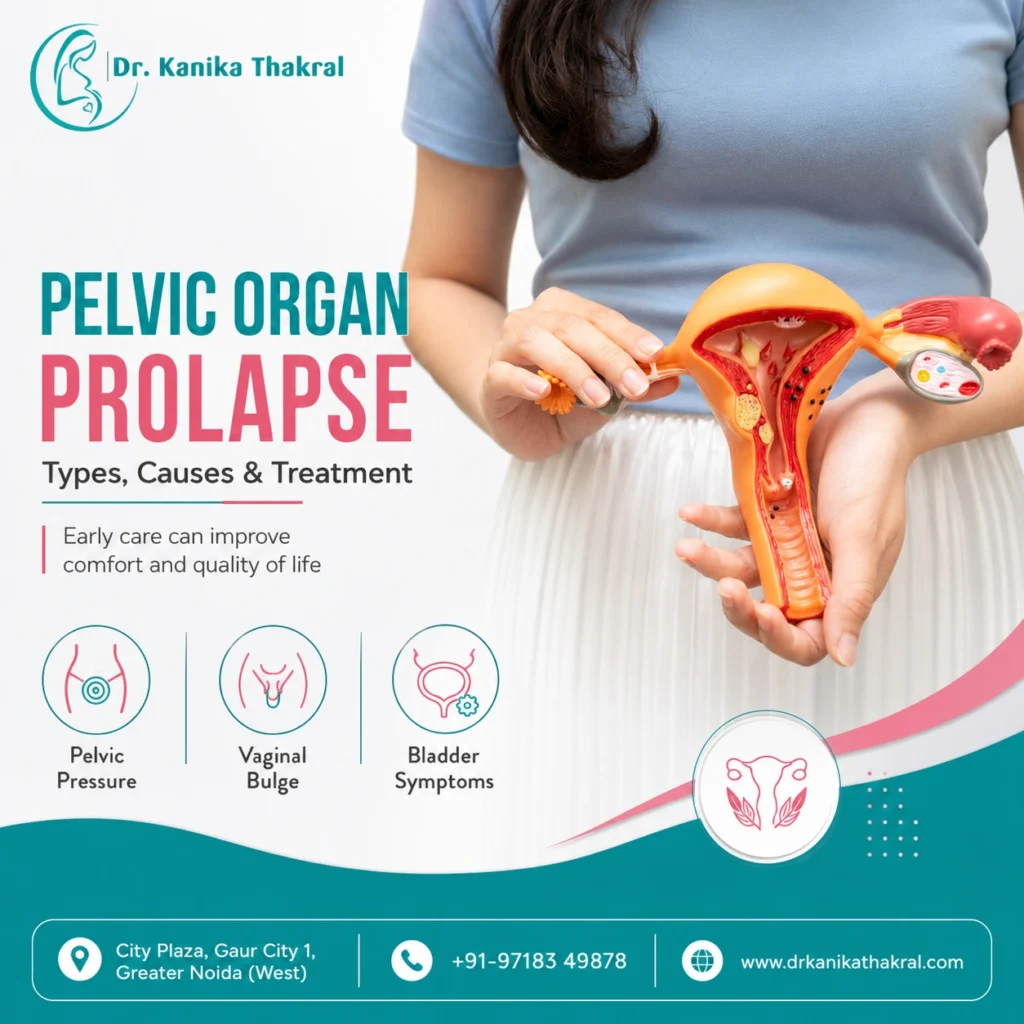
Pelvic Organ Prolapse: Types, Causes & Treatment
Pelvic Organ Prolapse is a common women’s health condition. It happens when the pelvic floor muscles become weak and one or more pelvic organs move down from their normal position. These organs may include the uterus, bladder, rectum, or vaginal walls.
Many women feel heaviness, pressure, or a bulge in the vaginal area. Some may also face urine leakage, frequent urination, constipation, or discomfort during daily activities. However, many women do not talk about these symptoms because they feel embarrassed.
This condition is treatable. Early care can reduce discomfort and improve quality of life.
Dr. Kanika Thakral provides patient-friendly guidance for pelvic floor problems, post-delivery concerns, Pregnancy Care, Irregular Periods Treatment, and complete Obstetrics & Gynecology care.
What Is Pelvic Organ Prolapse?
Pelvic Organ Prolapse means that the support system of the pelvic organs has weakened. The pelvic floor muscles and tissues normally hold the bladder, uterus, vagina, and rectum in place. When these muscles lose strength, the organs may shift downward.
In mild cases, a woman may only feel pressure. In more advanced cases, she may feel or see a bulge coming out of the vagina.
This condition is not always dangerous. Still, it can affect comfort, confidence, bladder control, bowel habits, intimacy, and daily routine.
So, if you feel heaviness or a bulge in the vaginal area, do not ignore it. A proper gynecological checkup can help find the type and stage.
Common Symptoms of Pelvic Organ Prolapse
Symptoms can differ from woman to woman. Some women have mild symptoms. Others may feel discomfort every day.
Common symptoms include:
- Vaginal heaviness or pressure
- A feeling of something coming down
- Bulge near or outside the vaginal opening
- Lower back discomfort
- Urine leakage
- Frequent urination
- Difficulty emptying the bladder
- Constipation or bowel pressure
- Pain or discomfort during intercourse
- Trouble inserting a tampon
Symptoms may worsen after standing for long hours. They may also feel worse after lifting heavy weight, coughing, or straining during bowel movements.
However, symptoms may improve when lying down.
Types of Pelvic Organ Prolapse
There are different types of prolapse. The type depends on which organ has moved downward.
A woman may have one type or more than one type at the same time. This is why proper diagnosis is important.
Uterine Prolapse
Uterine prolapse happens when the uterus moves down into the vagina. In mild cases, the uterus may only drop slightly. In severe cases, it may come close to or outside the vaginal opening.
Women may feel pelvic heaviness, pressure, or a dragging sensation.
Cystocele
Cystocele is also called bladder prolapse. It happens when the bladder pushes into the front wall of the vagina.
This may cause urinary symptoms such as frequent urination, urine leakage, urgency, or incomplete bladder emptying.
Rectocele
Rectocele happens when the rectum pushes into the back wall of the vagina.
This may cause constipation, bowel pressure, or difficulty passing stool. Some women may feel that the bowel does not empty completely.
Vaginal Vault Prolapse
This type may happen after uterus removal surgery. The upper part of the vagina may drop downward.
It may cause heaviness, bulging, pressure, or discomfort while standing or walking.
Enterocele
Enterocele happens when the small bowel pushes into the upper part of the vagina.
It may cause pelvic pressure, lower back discomfort, or a dragging feeling.
What Causes Pelvic Organ Prolapse?
The main cause is weakness of the pelvic floor muscles and supporting tissues. This weakness may happen slowly over time.
Common causes and risk factors include:
- Pregnancy and childbirth
- Vaginal delivery
- Menopause
- Age-related tissue weakness
- Chronic constipation
- Repeated straining
- Persistent cough
- Heavy weight lifting
- Obesity
- Previous pelvic surgery
- Family history
- Low estrogen after menopause
Childbirth is one of the common reasons. During delivery, pelvic muscles stretch to allow the baby to pass. In some women, these muscles may not fully regain strength.
However, prolapse can also happen in women who never had a vaginal birth. Age, hormonal changes, chronic pressure, and genetic factors can also play a role.
Pelvic Organ Prolapse After Pregnancy
Pregnancy puts pressure on the pelvic floor. As the baby grows, the uterus becomes heavier. This can stretch the muscles and tissues that support the pelvic organs.
After delivery, some women may feel heaviness, urine leakage, or pelvic pressure. These symptoms should not be ignored.
Good Pregnancy Care and post-delivery recovery can help protect pelvic health. Pelvic floor exercises, weight management, and timely follow-up can support healing.
If you had a difficult delivery, long labour, large baby, or forceps delivery, discuss pelvic floor recovery with your doctor.
Does Normal Delivery Cause Prolapse?
A Normal Delivery can increase the risk of pelvic floor weakness in some women. However, it does not mean every woman who has vaginal delivery will develop prolapse.
Many women recover well after delivery. Risk depends on many factors, such as baby weight, labour duration, pelvic floor strength, age, weight, and previous deliveries.
The goal is always Safe Delivery for both mother and baby. If vaginal birth is suitable, it can still be planned safely. After delivery, pelvic floor care becomes important.
Pelvic Organ Prolapse and Menopause
Menopause can increase prolapse symptoms. This happens because estrogen levels fall after menopause. Low estrogen can make vaginal and pelvic tissues thinner and less elastic.
Some women notice heaviness, dryness, urinary symptoms, or discomfort after menopause.
Treatment may include lifestyle changes, pelvic floor exercises, pessary support, or local estrogen in selected cases. Your doctor will decide based on your symptoms and health condition.
Pelvic Organ Prolapse and Irregular Periods
Pelvic Organ Prolapse is not usually a direct cause of irregular periods. However, some women may have prolapse along with other gynecological concerns.
If you have heavy bleeding, delayed periods, spotting, pelvic pain, or cycle changes, you may need Irregular Periods Treatment. Conditions like fibroids, hormonal imbalance, thyroid problems, or PCOS may affect periods.
So, do not assume every pelvic symptom is due to prolapse. A complete evaluation is important.
When Should You See a Gynecologist?
You should consult a doctor if pelvic symptoms affect your daily life. Early care can prevent worsening and improve comfort.
Visit Dr. Kanika Thakral if you notice:
- Vaginal bulge
- Pelvic pressure
- Feeling of something coming down
- Urine leakage
- Difficulty passing urine
- Constipation with pelvic pressure
- Pain during intercourse
- Lower back heaviness
- Symptoms after delivery
- Symptoms after menopause
If you are looking for the Best Gynecologist in Gaur City, timely consultation can help you get the right diagnosis and treatment plan.
How Is Pelvic Organ Prolapse Diagnosed?
Diagnosis usually starts with a detailed discussion. Your doctor may ask about your symptoms, childbirth history, menopause status, urinary problems, bowel habits, surgery history, and daily activities.
A pelvic examination is usually done to check the type and stage of prolapse. Your doctor may ask you to bear down gently during the exam. This helps see how much the organ has moved downward.
In some cases, your doctor may suggest urine tests, ultrasound, or further evaluation if bladder or bowel symptoms are present.
The goal is to understand the full picture before deciding treatment.
Treatment Options for Pelvic Organ Prolapse
Treatment depends on symptoms, type, stage, age, future pregnancy plans, and quality of life.
Not every woman needs surgery. Many women improve with non-surgical care.
Treatment options may include:
- Lifestyle changes
- Pelvic floor exercises
- Weight management
- Constipation control
- Pessary support
- Medicines for related symptoms
- Surgery in selected cases
Your doctor will suggest the best option after examination.
Lifestyle Changes That May Help
Lifestyle changes are often the first step. They reduce pressure on the pelvic floor and may help symptoms.
Helpful changes include:
- Avoid heavy lifting.
- Treat constipation early.
- Drink enough water.
- Eat fiber-rich food.
- Maintain healthy weight.
- Control chronic cough.
- Avoid repeated straining.
- Stop smoking if applicable.
- Practice correct posture.
- Follow pelvic floor guidance.
These steps may not cure advanced prolapse, but they can reduce worsening and improve comfort.
Pelvic Floor Exercises
Pelvic floor exercises are important for mild to moderate symptoms. They strengthen the muscles that support the bladder, uterus, and rectum.
These exercises are also called Kegel exercises.
To do them, tighten the muscles used to stop urine flow. Hold for a few seconds. Then relax. Repeat as advised.
However, technique matters. If done incorrectly, results may be poor. In some cases, pelvic floor physiotherapy may be helpful.
Do not start intense exercises without guidance if you have pain or severe prolapse.
Vaginal Pessary for Prolapse
A pessary is a device placed inside the vagina to support the pelvic organs. It may help women who want non-surgical treatment.
It can be useful for women who:
- Have mild or moderate prolapse
- Want to avoid surgery
- Are not fit for surgery
- Want future pregnancy
- Need temporary support
A pessary must be fitted by a trained doctor. It also needs cleaning and follow-up. If not maintained well, it may cause discharge, irritation, or infection.
Surgical Treatment for Pelvic Organ Prolapse
Surgery may be considered when symptoms are severe or when non-surgical treatment does not help.
The type of surgery depends on the organ involved, severity, age, sexual activity, health condition, and future pregnancy plans.
Surgery may repair the weakened vaginal wall or support the uterus or vaginal vault. In some cases, uterus removal may be discussed, but it is not needed for every woman.
Your doctor will explain benefits, risks, recovery time, and future care before planning surgery.
Can Prolapse Come Back After Treatment?
Yes, prolapse can come back in some women. Recurrence depends on tissue strength, age, weight, chronic cough, constipation, heavy lifting, and treatment type.
To reduce recurrence risk:
- Follow pelvic floor exercises.
- Avoid heavy straining.
- Manage constipation.
- Maintain healthy weight.
- Attend follow-up visits.
- Treat cough early.
- Avoid lifting heavy loads too soon.
Long-term pelvic care matters even after treatment.
Pelvic Organ Prolapse and Daily Life
This condition can affect daily life in many ways. Some women feel uncomfortable while walking or standing. Others avoid social activities due to urine leakage or pressure.
It may also affect intimacy. Pain, fear, embarrassment, or discomfort can reduce confidence.
However, you do not have to silently manage symptoms. Treatment can help. Even small improvements can make daily life easier.
Can Pelvic Organ Prolapse Be Prevented?
Not every case can be prevented. Still, some habits can reduce risk.
Prevention tips include:
- Do pelvic floor exercises regularly.
- Avoid chronic constipation.
- Maintain healthy weight.
- Avoid smoking.
- Treat long-term cough.
- Avoid unnecessary heavy lifting.
- Take post-delivery care seriously.
- Follow up after childbirth.
- Seek care after menopause symptoms.
Women planning pregnancy should also discuss pelvic health as part of complete Pregnancy Care.
Why Choose Dr. Kanika Thakral?
Pelvic floor problems need sensitive care. Many women delay treatment due to shame or fear. But prolapse is a medical condition, and help is available.
Dr. Kanika Thakral provides care for pelvic pressure, vaginal bulge, urine leakage, post-delivery recovery, menopause concerns, Irregular Periods Treatment, and complete Obstetrics & Gynecology support.
If you need a trusted Women Clinic in Gaur City, you can consult Dr. Kanika Thakral for proper diagnosis and personalized treatment.
Final Thoughts
Pelvic Organ Prolapse is common, but it should not be ignored. It can cause pelvic pressure, vaginal bulge, urine leakage, bowel problems, and discomfort during daily activities.
The good news is that treatment is available. Mild cases may improve with lifestyle changes and pelvic floor exercises. Some women may need pessary support. Surgery is considered only when symptoms are severe or other treatments do not help.
For pelvic floor concerns, Pregnancy Care, Safe Delivery planning, and women’s health support, consult Dr. Kanika Thakral. Early care can improve comfort, confidence, and quality of life.
FAQs
1. What is Pelvic Organ Prolapse?
Pelvic Organ Prolapse happens when pelvic organs move down from their normal position due to weak pelvic floor support.
2. What are common symptoms?
Common symptoms include pelvic pressure, vaginal bulge, heaviness, urine leakage, frequent urination, constipation, and lower back discomfort.
3. What causes prolapse?
Common causes include pregnancy, childbirth, menopause, chronic constipation, obesity, persistent cough, heavy lifting, and previous pelvic surgery.
4. Can prolapse happen after delivery?
Yes, pelvic floor weakness after childbirth can increase the risk. Post-delivery pelvic floor care can help recovery.
5. Is surgery always needed?
No. Many women improve with lifestyle changes, pelvic floor exercises, and pessary support. Surgery is advised only in selected cases.
