
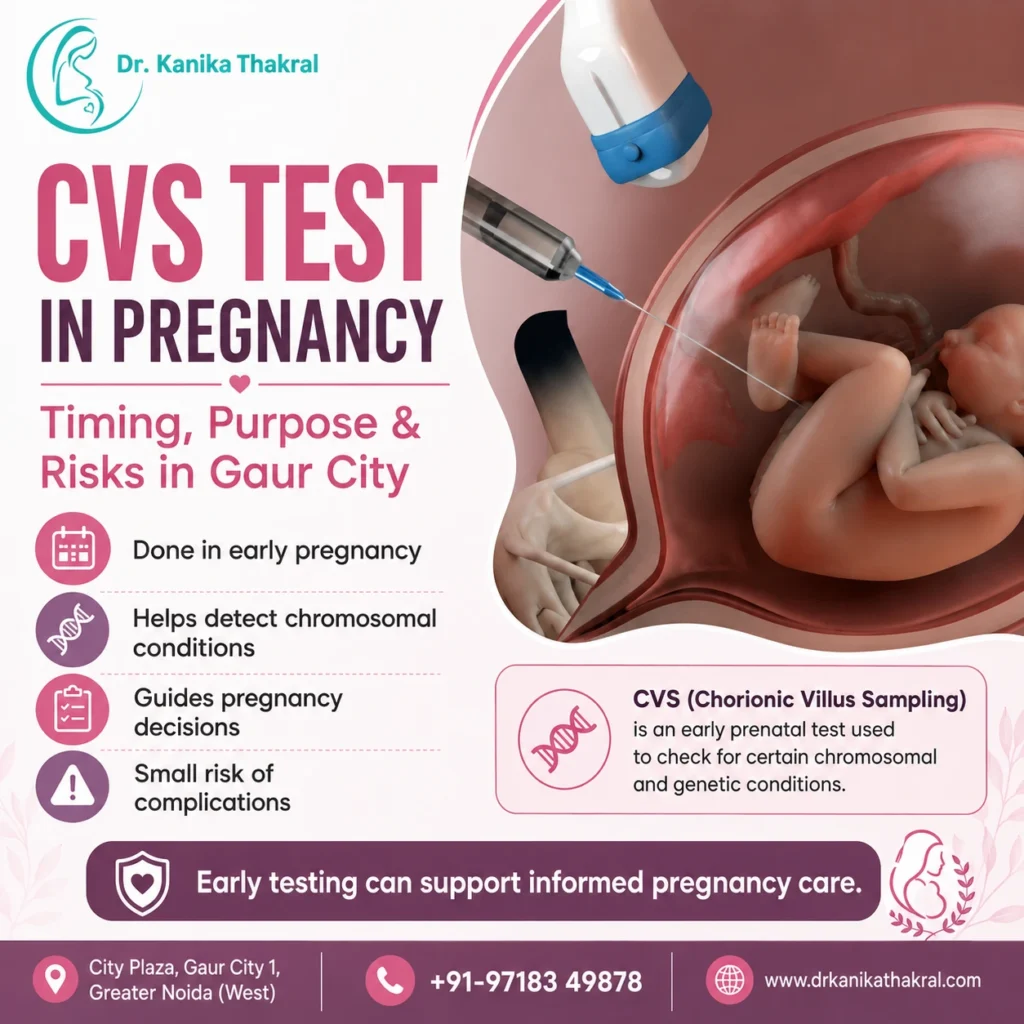
CVS Test in Pregnancy in Gaur City – Timing, Purpose & Risks
CVS Test in Pregnancy is a prenatal diagnostic test. It is done to check selected genetic or chromosomal concerns in the baby during early pregnancy. CVS stands for chorionic villus sampling.
Many parents feel worried when CVS is advised. This is natural. However, the test is not suggested in every pregnancy. It is usually discussed when screening reports, family history, previous pregnancy history, or early scan findings suggest the need for more clarity.
Dr. Kanika Thakral provides guidance for CVS Test in Pregnancy, early pregnancy screening, diagnostic test counselling, Pregnancy Care, and high-risk pregnancy support in Gaur City.
What Is CVS Test in Pregnancy?
CVS Test in Pregnancy is a diagnostic test done during early pregnancy. In this test, a small sample is taken from the placenta. The sample contains chorionic villi, which usually have the same genetic material as the baby.
This sample is tested to check selected chromosome-related or inherited genetic conditions. Since CVS gives diagnostic information, it is different from screening tests.
Screening tests only tell whether the risk is high or low. CVS can help confirm selected concerns when there is a clear reason for testing.
Why Is CVS Test Done?
CVS is done when doctors need early diagnostic information about the baby’s chromosomes or genes. It may be advised after a high-risk screening result or when there is a known genetic concern in the family.
The purpose is to help parents and doctors understand the pregnancy better. It can also support timely counselling and care planning.
However, CVS does not check every possible pregnancy problem. It is useful for selected conditions only.
When Is CVS Test Usually Done?
CVS is usually done in the first trimester, most commonly between 10 and 13 weeks of pregnancy. The exact timing depends on pregnancy weeks, scan findings, placenta position, and the reason for testing.
Timing is important because the test should not be done too early. If the pregnancy is already beyond the suitable CVS window, another diagnostic option may be discussed.
Therefore, if CVS is advised, report review and counselling should not be delayed.
CVS Test vs Amniocentesis
CVS and amniocentesis are both prenatal diagnostic tests. However, they are done at different times and use different samples.
CVS is usually done earlier in pregnancy. It uses a small placental tissue sample. Amniocentesis is usually done later and uses amniotic fluid.
CVS can give early information, which may reduce waiting time. However, amniocentesis may be preferred in some cases depending on the concern being checked. Dr. Kanika Thakral can guide which test is more suitable based on reports and pregnancy stage.
CVS Test and Screening Reports
CVS may be discussed after screening reports show increased risk. Screening tests may include first-trimester screening, double marker test, or other pregnancy screening tests.
A high-risk screening result does not always mean the baby has a problem. It only means the chance is higher than expected. Therefore, diagnostic testing may be discussed for confirmation.
This is why counselling is important. Parents should understand the difference between “risk” and “diagnosis” before making a decision.
When May CVS Be Recommended?
CVS may be considered when there is a specific medical reason. It is not a routine test for every pregnant woman.
It may be discussed in cases such as:
- High-risk screening result
- Abnormal early ultrasound finding
- Previous child with genetic condition
- Family history of inherited disorder
- Either parent carrying a known genetic condition
- Recurrent pregnancy concerns
- Advanced maternal age with other risk factors
- Need for early diagnostic confirmation
- Specific chromosome-related concern
The decision should be personalized. Every pregnancy is different, so the reason for CVS should be clearly explained.
How Is CVS Test Performed?
CVS is done with ultrasound guidance. The doctor first checks the baby, placenta, and pregnancy position. Then, a small sample is taken from the placenta.
There are two possible ways to collect the sample:
- Through the abdomen
- Through the cervix
The method depends on placenta position, pregnancy stage, and safety considerations. Your doctor will decide the suitable approach after scan assessment.
What Happens Before CVS?
Before CVS, Dr. Kanika Thakral will review your reports and pregnancy history. This helps confirm whether the test is needed and whether it is the right time.
You may be asked about:
- Pregnancy weeks
- Ultrasound report
- Screening report
- Previous pregnancy history
- Family history
- Medicine history
- Blood group
- Any bleeding or pain
- Any infection symptoms
This discussion helps reduce confusion and supports safe planning.
What Happens During CVS?
During CVS, ultrasound is used throughout or during key steps. The sample is collected carefully from the placental tissue.
Some women may feel pressure, cramping, or mild discomfort. The procedure usually takes a short time, but preparation and observation may take longer.
After the sample is collected, it is sent for testing. The type of test depends on what condition is being checked.
What Happens After CVS?
After CVS, you may be advised to rest for some time. Mild cramping or light spotting may happen in some women.
You should follow all aftercare instructions. Avoid heavy activity if advised. Also, keep emergency symptoms in mind.
Seek urgent guidance if you notice:
- Heavy bleeding
- Fluid leakage
- Fever
- Severe abdominal pain
- Strong cramps
- Foul-smelling discharge
- Feeling very unwell
Timely reporting of symptoms is important after any invasive pregnancy procedure.
What Can CVS Detect?
CVS can help detect selected chromosome conditions and inherited genetic disorders. The exact result depends on what test is performed on the sample.
It may help check for:
- Down syndrome
- Trisomy 18
- Trisomy 13
- Selected inherited genetic conditions
- Known family genetic disorders
- Some chromosome-related changes
However, CVS cannot detect every pregnancy issue. It also does not replace all ultrasound scans.
What CVS Cannot Detect
CVS cannot detect every birth defect or pregnancy complication. Some structural problems are seen only on ultrasound. Some concerns may develop later in pregnancy.
Also, CVS is not usually used to check open neural tube defects in the same way as some later pregnancy tests. Therefore, regular pregnancy scans remain important even after CVS.
Parents should understand both the benefits and limits of the test before deciding.
Risks of CVS Test
CVS is an invasive test, so it has some risks. Most women do not face serious problems, but risk discussion is important before the procedure.
Possible risks may include:
- Mild cramps
- Light spotting
- Infection
- Need for repeat sample in some cases
- Pregnancy loss in rare cases
- Rh-related concern in selected women
The risk can vary based on pregnancy factors, test timing, placenta position, and procedure-related factors. That is why CVS should be done only when there is a clear reason.
Is CVS Test Painful?
Most women describe CVS as uncomfortable rather than very painful. Some may feel pressure or cramps during or after the procedure.
The experience depends on the method used, individual pain tolerance, and anxiety level. Clear counselling before the test can help reduce fear.
If you are very anxious, discuss your concerns with Dr. Kanika Thakral before the procedure.
How Long Do CVS Results Take?
Result timing depends on the type of testing requested. Some reports may come earlier, while detailed genetic analysis may take longer.
Your doctor will explain the expected timeline before the test. Once the report is available, it should be reviewed carefully.
Do not make decisions based on incomplete or unclear information. Proper counselling after results is very important.
CVS Test and Pregnancy Care
Pregnancy Care after CVS should include follow-up, symptom monitoring, and regular antenatal visits. Even if the CVS report is normal, routine pregnancy care should continue.
You may still need ultrasound scans, growth monitoring, and other pregnancy checks. A normal CVS report does not remove the need for routine pregnancy follow-up.
Good pregnancy care helps track mother and baby health throughout pregnancy.
CVS Test and Safe Delivery
Safe Delivery planning depends on overall pregnancy progress, baby’s growth, placenta position, mother’s health, and any test findings.
A CVS test itself does not decide the mode of delivery. Instead, delivery planning is based on the full pregnancy picture.
If CVS results show a concern, additional counselling and monitoring may be needed. If results are reassuring and pregnancy remains stable, delivery planning continues according to routine pregnancy factors.
Can Normal Delivery Happen After CVS?
Yes, Normal Delivery may be possible after CVS if pregnancy remains healthy and there are no other delivery-related concerns.
CVS does not automatically mean cesarean delivery. The final delivery plan depends on baby position, placenta, fetal growth, mother’s condition, previous delivery history, and labor progress.
Dr. Kanika Thakral can guide delivery planning during the later months of pregnancy.
CVS Test and High-Risk Pregnancy
CVS may be part of high-risk pregnancy evaluation when there is a genetic or chromosomal risk. It may help confirm selected concerns early.
Women with abnormal screening results, previous baby with genetic disorder, family history, or recurrent pregnancy issues may need closer monitoring.
A high-risk pregnancy care plan may include detailed counselling, targeted scans, diagnostic testing, and planned follow-up.
CVS Test and Irregular Periods Treatment
Irregular Periods Treatment is not directly related to CVS. However, women with irregular periods may need early pregnancy dating carefully because correct pregnancy weeks are important for CVS timing.
If periods are irregular, the pregnancy date may not match the last menstrual period. In such cases, ultrasound dating becomes important before deciding any first-trimester procedure.
Therefore, menstrual history should be shared clearly during consultation.
CVS Test and Fibroid Treatment
Fibroid Treatment is different from CVS testing. However, fibroids can sometimes affect pregnancy monitoring, scan views, pain, bleeding, or delivery planning.
If a woman has fibroids during pregnancy, the doctor may review fibroid size and location. This helps guide pregnancy care.
Fibroids do not automatically mean CVS is needed. CVS is advised only when genetic or chromosome-related diagnostic information is required.
Preparing for CVS Counselling
Before deciding on CVS, take time to understand the test. You should know why it is being advised and what information it can provide.
Helpful questions to ask include:
- Why is CVS being recommended?
- What condition are we checking?
- Is it the right pregnancy week?
- What are the risks?
- What are the alternatives?
- How will the sample be taken?
- When will results come?
- What happens if the report is normal?
- What happens if the report shows a concern?
- What follow-up will be needed?
Clear answers can help you feel more confident.
Emotional Stress Around CVS
It is normal to feel stressed before CVS. Parents may worry about the procedure, baby’s health, results, and future decisions.
However, panic does not help. Counselling and proper report review can make the process easier.
Speak openly with Dr. Kanika Thakral. Share your fears, doubts, and family history. This helps in better guidance and planning.
When Should You Consult Dr. Kanika Thakral?
You should consult Dr. Kanika Thakral if your pregnancy screening result is high risk or if CVS has been suggested.
You can also consult if you have:
- Abnormal first-trimester screening
- Abnormal ultrasound finding
- Previous baby with genetic condition
- Family history of inherited disorder
- Recurrent pregnancy concerns
- Confusing reports
- Need for second opinion
- Irregular periods affecting pregnancy dating
- Fibroids during pregnancy
- Need for safe pregnancy planning
Timely consultation helps you understand the next step clearly.
Why Choose Dr. Kanika Thakral?
Dr. Kanika Thakral provides caring guidance for CVS Test in Pregnancy, early diagnostic testing, pregnancy screening reports, Pregnancy Care, Safe Delivery, and Normal Delivery planning.
Women can also consult Dr. Kanika Thakral for Irregular Periods Treatment, Fibroid Treatment, pregnancy planning, and reproductive health support.
If you are looking for a Gynecologist in Gaur City, Dr. Kanika Thakral can guide you with privacy, comfort, and clear communication.
Final Thoughts
CVS Test in Pregnancy is an early prenatal diagnostic test. It may be advised when screening results, scan findings, family history, or previous pregnancy history suggest the need for genetic or chromosomal confirmation.
The test is not needed in every pregnancy. It has benefits and risks, so the decision should be made after proper counselling.
For CVS Test in Pregnancy, Pregnancy Care, Safe Delivery, Normal Delivery, and pregnancy screening guidance in Gaur City, consult Dr. Kanika Thakral.
FAQs
1. What is CVS Test in Pregnancy?
CVS Test in Pregnancy is a prenatal diagnostic test where a small placental tissue sample is collected to check selected genetic or chromosomal concerns.
2. When is CVS Test usually done?
CVS is usually done between 10 and 13 weeks of pregnancy, depending on pregnancy dating, scan findings, and medical advice.
3. Is CVS a screening test?
No. CVS is a diagnostic test. It gives more definite information for selected genetic or chromosomal conditions.
4. Why is CVS advised?
It may be advised after high-risk screening, abnormal early scan, family history of genetic disorder, or previous baby with a genetic condition.
5. Can CVS detect every birth defect?
No. CVS cannot detect every birth defect or pregnancy complication. Regular ultrasound scans and pregnancy care are still needed.
