
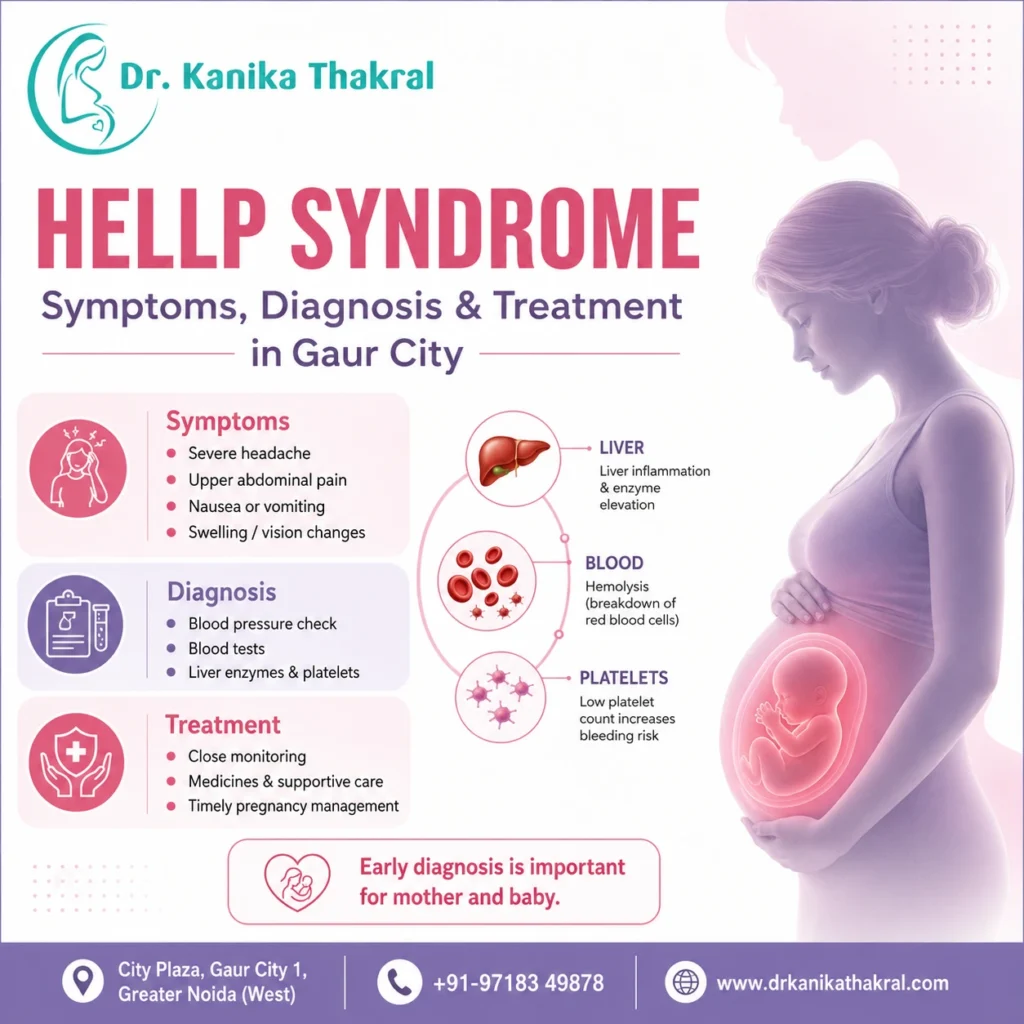
HELLP Syndrome in Gaur City – Symptoms, Diagnosis & Treatment
HELLP syndrome is a serious and rare pregnancy complication. It is usually considered a variant of preeclampsia and can affect the liver, blood cells, and overall pregnancy health. Because it can progress quickly, early recognition and timely care are very important.
Dr. Kanika Thakral provides guidance for HELLP syndrome symptoms, pregnancy complications, and High-Risk Pregnancy Care in Gaur City.
What is HELLP Syndrome?
HELLP stands for:
- H – Hemolysis (breakdown of red blood cells)
- EL – Elevated Liver enzymes
- LP – Low Platelet count
This condition usually develops during the later part of pregnancy or sometimes shortly after delivery. It is considered a medical emergency in pregnancy and needs careful monitoring.
HELLP Syndrome Symptoms
HELLP syndrome symptoms can sometimes look like normal pregnancy discomfort, which is why awareness is important.
Common symptoms include:
- Upper abdominal pain (especially right side)
- Nausea or vomiting
- Severe headache
- Fatigue or weakness
- Blurred vision
- Swelling in hands or face
- High blood pressure
- Pain under ribs
- Sudden weight gain
These symptoms should never be ignored during pregnancy.
Causes and Risk Factors
The exact cause of HELLP syndrome is not fully known, but it is often linked with preeclampsia and high blood pressure in pregnancy.
Risk factors may include:
- Previous history of preeclampsia
- Multiple pregnancy (twins or more)
- High blood pressure
- Age above 30–35 years
- Obesity
- Previous pregnancy complications
Not every woman with risk factors develops HELLP-related condition, but monitoring is important.
How HELLP Syndrome is Diagnosed
Diagnosis is based on symptoms, physical examination, and lab tests.
Doctors may recommend:
- Blood pressure monitoring
- Liver function tests
- Platelet count
- Blood smear test
- Urine protein test
- Fetal ultrasound
- Liver enzyme evaluation
Early diagnosis helps prevent complications and supports timely treatment decisions.
HELLP Syndrome Treatment
HELLP syndrome treatment depends on severity and pregnancy stage. Since it is a serious condition, hospital-based monitoring is usually required.
Treatment options may include:
- Blood pressure control
- Medicines for stabilization
- Corticosteroids in selected cases
- Monitoring of liver and blood parameters
- Emergency delivery if required
- Blood transfusion in severe cases
The safest treatment is often delivery of the baby if the condition is severe or worsening.
High-Risk Pregnancy Care
HELLP syndrome is managed under High-Risk Pregnancy Care because it can develop quickly and affect both mother and baby.
High-risk care includes:
- Frequent monitoring
- Regular scans
- Blood pressure tracking
- Lab test follow-up
- Fetal heart monitoring
- Timely delivery planning
Dr. Kanika Thakral provides structured high-risk pregnancy support in Gaur City.
Gynecologist in Gaur City Role
A Gynecologist in Gaur City plays an important role in early detection of pregnancy complications like HELLP-related condition.
Regular antenatal visits help identify warning signs early and ensure timely intervention when needed.
Pregnancy Complications Linked with HELLP
HELLP syndrome is one of the serious pregnancy complications that requires close observation.
It may be associated with:
- Preeclampsia
- Premature birth
- Placental complications
- Liver dysfunction
- Blood clotting issues
Early care improves pregnancy safety outcomes.
Can Normal Delivery Happen?
Normal Delivery may be possible in mild or controlled cases depending on maternal and fetal condition.
However, in severe HELLP-related condition cases, early or emergency delivery may be required for safety. The delivery method is decided based on medical evaluation.
HELLP Syndrome and Irregular Periods
Irregular Periods Treatment is not directly related to HELLP syndrome, but menstrual health history is important during pregnancy evaluation.
Women with irregular cycles may need early pregnancy dating and monitoring to ensure accurate pregnancy tracking.
HELLP Syndrome and Fibroid/Ovarian Cyst
Fibroid Treatment and Ovarian Cyst Treatment are separate conditions, but they may be assessed during pregnancy checkups.
These conditions do not directly cause this condition but may be part of overall pregnancy evaluation.
Warning Signs to Watch During Pregnancy
Seek immediate medical help if you notice:
- Severe abdominal pain
- Sudden swelling
- Severe headache
- Vomiting with weakness
- Vision changes
- High blood pressure symptoms
Early action is important for safety.
When to Consult Doctor
You should consult immediately if:
- Blood pressure is high
- Sudden swelling occurs
- Severe headache or pain develops
- You feel unusual pregnancy discomfort
Early consultation improves outcomes.
Why Choose Dr. Kanika Thakral?
Dr. Kanika Thakral provides expert care for, High-Risk Pregnancy Care, pregnancy complications, and safe pregnancy monitoring in Gaur City.
She also supports women with Irregular Periods Treatment, Fibroid Treatment, Ovarian Cyst Treatment, and complete pregnancy care guidance.
Final Thoughts
HELLP-related condition is a serious pregnancy complication that needs early diagnosis and immediate care. Awareness of symptoms and timely medical attention can help protect both mother and baby.
For High-Risk Pregnancy Care, pregnancy complications, and expert gynecology support in Gaur City, consult Dr. Kanika Thakral.
FAQs
1. What is HELLP syndrome?
It is a serious pregnancy complication affecting blood cells, liver, and platelets.
2. What are HELLP syndrome symptoms?
Symptoms include abdominal pain, nausea, headache, swelling, and high blood pressure.
3. Is HELLP syndrome dangerous?
Yes, it is a medical emergency and needs immediate care.
4. How is HELLP syndrome treated?
Treatment includes monitoring, medicines, and sometimes early delivery.5. Who is at risk?
Women with preeclampsia, high BP, or previous pregnancy complications are at higher risk.
