
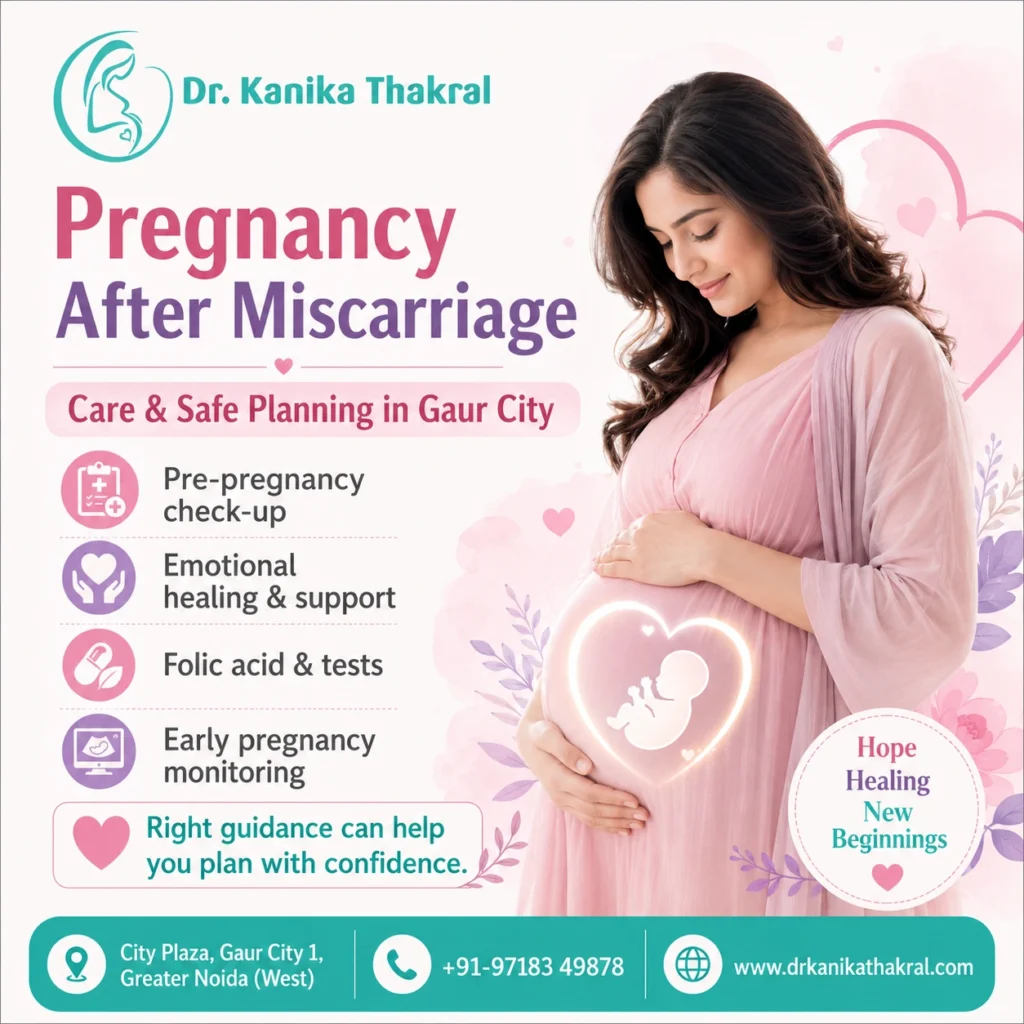
Pregnancy After Miscarriage in Gaur City – Care & Safe Planning
Pregnancy After Miscarriage can bring mixed emotions. Many women feel hope, fear, anxiety, and confusion at the same time. This is completely understandable because a previous loss can make the next pregnancy feel emotionally sensitive.
A miscarriage does not always mean that future pregnancy will be difficult. Many women go on to have a healthy pregnancy later. However, proper evaluation, emotional support, and early pregnancy monitoring can help you feel more confident.
Dr. Kanika Thakral provides guidance for Pregnancy After Miscarriage, Pregnancy Care in Gaur City, High-Risk Pregnancy Care, safe pregnancy planning, and complete women’s health support.
What Is Miscarriage?
Miscarriage means pregnancy loss before the baby can survive outside the womb. Most miscarriages happen in the early weeks of pregnancy. In many cases, the cause is related to chromosome changes in the embryo, which are not under the mother’s control.
This is important to understand because many women blame themselves after miscarriage. However, daily activities, normal work, walking, mild stress, or routine travel are usually not the reason.
After a miscarriage, both physical and emotional recovery matter. So, the next pregnancy should be planned with care, not pressure.
Is Pregnancy Possible After Miscarriage?
Yes, pregnancy is possible after miscarriage. In fact, many women conceive again and have healthy pregnancies. A previous miscarriage does not always mean that the same thing will happen again.
However, if you have had repeated miscarriages, late pregnancy loss, severe bleeding, infection, or an underlying medical condition, evaluation becomes more important.
The goal is to understand your health, check possible risk factors, and make the next pregnancy plan safer.
When Can You Try Again?
There is no single answer for every woman. Some women may feel ready soon after physical recovery. Others may need more time emotionally.
Before trying again, it is important that:
- Bleeding has stopped
- Pain has settled
- Infection is not present
- Your body has recovered
- You feel emotionally ready
Some women prefer waiting until one normal period. This can help with pregnancy dating. However, the best timing depends on your health, miscarriage type, treatment taken, and emotional readiness.
Why Emotional Healing Matters
Pregnancy after miscarriage is not only a physical journey. It is also an emotional journey. Fear of another loss is common. You may feel anxious before scans, blood tests, or even normal pregnancy symptoms.
This emotional response is natural. However, if anxiety becomes too much, it should be discussed. Support from your partner, family, and doctor can help.
During the next pregnancy, clear communication and planned follow-up can reduce fear. Knowing what to expect makes the journey easier.
What Should Be Checked Before Trying Again?
Before planning the next pregnancy, a basic review is helpful. This does not mean every woman needs many tests after one miscarriage. However, a consultation can help decide what is needed.
Dr. Kanika Thakral may review:
- Pregnancy loss history
- Gestational age at miscarriage
- Bleeding pattern
- Ultrasound reports
- Previous treatment or procedure
- Menstrual cycle pattern
- Thyroid symptoms
- Diabetes risk
- PCOS history
- Uterine health
- Age and fertility history
- Lifestyle factors
This helps create a practical plan for the next pregnancy.
Tests After Miscarriage
Tests are not always required after one early miscarriage. However, testing may be advised if there are repeated losses, late miscarriage, abnormal reports, medical conditions, or pregnancy complications.
Possible tests may include:
- Complete blood count
- Thyroid profile
- Blood sugar testing
- Vitamin and nutrition review
- Hormonal tests in selected cases
- Pelvic ultrasound
- Uterine cavity evaluation when needed
- Infection testing in selected cases
- Blood clotting-related tests in selected cases
- Genetic counselling in selected cases
The test plan should be personalized. Random testing can create confusion, while targeted testing gives better clarity.
Recurrent Miscarriage: When to Worry
If miscarriage happens more than once, proper evaluation becomes more important. Recurrent pregnancy loss may be linked with genetic factors, uterine problems, hormone concerns, thyroid issues, diabetes, blood clotting conditions, infections, or unexplained causes.
Repeated loss can be emotionally painful. However, evaluation may help identify a treatable reason in some cases.
If you have had two or more miscarriages, consult Dr. Kanika Thakral for a detailed review before planning again.
Pregnancy Care After Miscarriage
Pregnancy Care after miscarriage should begin early. Once pregnancy test is positive, early consultation can help confirm location of pregnancy, dating, heartbeat timing, and risk factors.
Early pregnancy care may include:
- Pregnancy confirmation
- Early ultrasound timing
- Blood tests if needed
- Review of previous loss history
- Medicine safety review
- Nutrition guidance
- Folic acid advice
- Warning sign education
- Follow-up plan
Early guidance helps reduce confusion and supports better pregnancy monitoring.
Pregnancy Care in Gaur City
Pregnancy Care in Gaur City after miscarriage should focus on both safety and emotional comfort. Many women need more reassurance in the early weeks, especially before the first scan.
Dr. Kanika Thakral can guide the right follow-up schedule based on your previous miscarriage history and current pregnancy status.
Care may include early scan planning, symptom review, risk assessment, and safe pregnancy counselling.
High-Risk Pregnancy Care After Miscarriage
Not every pregnancy after miscarriage is high risk. However, some women may need High-Risk Pregnancy Care depending on their history.
You may need closer monitoring if you have:
- Two or more miscarriages
- Previous late pregnancy loss
- Medical conditions
- High blood pressure
- Diabetes
- Thyroid disorder
- PCOS with complications
- Uterine abnormality
- Fibroids affecting the cavity
- Cervical weakness history
- Age-related pregnancy risk
- Previous fetal growth concern
A High risk pregnancy specialist approach helps plan monitoring more carefully.
Role of Early Ultrasound
Early ultrasound can be helpful after miscarriage. It can confirm whether the pregnancy is inside the uterus. It can also help check gestational age and heartbeat at the right time.
However, doing ultrasound too early can create unnecessary anxiety because heartbeat may not be visible before the expected time.
Dr. Kanika Thakral can guide the correct timing of the first scan. This helps avoid confusion and repeated worry.
Understanding Pregnancy Symptoms After Miscarriage
Pregnancy symptoms can vary. Some women have nausea, breast tenderness, tiredness, or frequent urination. Others have very mild symptoms.
After a previous miscarriage, women often compare every symptom with the past. However, symptom intensity does not always confirm pregnancy health.
If symptoms reduce suddenly, or if you have bleeding, pain, or dizziness, seek guidance. Otherwise, follow the planned checkup schedule.
Bleeding in Pregnancy After Miscarriage
Bleeding in early pregnancy can be frightening, especially after a previous loss. However, bleeding does not always mean miscarriage. It may happen due to implantation, cervical irritation, small collection near pregnancy, infection, or other reasons.
Still, bleeding should not be ignored. Contact Dr. Kanika Thakral if you notice spotting, heavy bleeding, cramps, or clots.
Evaluation may include examination, ultrasound, or blood tests based on pregnancy weeks and symptoms.
Cramping and Pain
Mild cramps can happen in early pregnancy. The uterus is changing, and some pulling discomfort may be normal.
However, severe pain, one-sided pain, shoulder pain, dizziness, fainting, heavy bleeding, or fever needs urgent evaluation.
These symptoms can sometimes suggest ectopic pregnancy, infection, or other pregnancy complications. Therefore, do not delay medical advice if pain is strong or unusual.
Medicines After Pregnancy Loss
Do not self-start medicines in the next pregnancy. Some women take medicines because someone else used them. This is not safe.
Medicine should be based on your history and reports. In selected cases, supplements, hormone support, thyroid medicines, diabetes control, or other treatments may be advised.
Dr. Kanika Thakral can guide what is needed and what should be avoided.
Nutrition Before the Next Pregnancy
A healthy body supports pregnancy planning. Nutrition cannot prevent every miscarriage, but it helps overall pregnancy health.
Focus on:
- Balanced meals
- Protein-rich food
- Iron-rich foods if needed
- Folic acid as advised
- Good hydration
- Seasonal fruits
- Green vegetables
- Calcium and vitamin D guidance
- Avoiding smoking and alcohol
- Limiting excess caffeine
If you have anemia, thyroid issues, diabetes, or vitamin deficiency, correct them before or during early pregnancy as advised.
Lifestyle Tips After Miscarriage
Lifestyle care supports physical recovery and emotional wellbeing. Small steps can help your body prepare for the next pregnancy.
Helpful tips include:
- Take rest after miscarriage.
- Attend follow-up if advised.
- Track your periods.
- Avoid self-blame.
- Start folic acid as advised.
- Maintain a healthy weight.
- Manage diabetes or thyroid issues.
- Sleep properly.
- Avoid smoking and alcohol.
- Discuss your fear openly.
- Plan pregnancy after medical review if needed.
These steps help you feel more prepared and supported.
What to Avoid While Planning Again
Avoid rushing only because of pressure. Also, avoid delaying consultation if you have repeated losses or health concerns.
Avoid:
- Random medicines
- Unnecessary supplements
- Self-diagnosis
- Ignoring heavy bleeding
- Ignoring fever after miscarriage
- Skipping follow-up
- Comparing your case with others
- Taking advice from social media only
- Hiding previous miscarriage history
- Planning again without review after repeated losses
Your case should be understood personally.
Safe Delivery After Miscarriage
Safe Delivery is possible for many women after a previous miscarriage. A miscarriage history does not automatically mean delivery complications later.
However, safe delivery planning begins much before labor. It includes early pregnancy care, regular scans, blood pressure monitoring, diabetes screening, fetal growth checks, and delivery planning in the final months.
The aim is to support both mother and baby throughout pregnancy.
Can Normal Delivery Happen After Miscarriage?
Yes, Normal Delivery may be possible after miscarriage if the current pregnancy progresses well and there are no delivery-related complications.
The final delivery plan depends on baby position, placenta position, mother’s health, fetal growth, previous delivery history, and labor progress.
Miscarriage history alone does not decide cesarean or normal delivery. The current pregnancy condition matters more.
When Should You Consult Dr. Kanika Thakral?
Consult Dr. Kanika Thakral before planning pregnancy if you had repeated miscarriages, late miscarriage, severe bleeding, infection, or a known medical condition.
Also consult early after a positive pregnancy test if you have a previous miscarriage history.
You should seek guidance if you have:
- Positive pregnancy test after miscarriage
- Bleeding in early pregnancy
- Cramping or pelvic pain
- Previous two or more miscarriages
- Previous late miscarriage
- Thyroid disorder
- Diabetes
- PCOS
- Uterine abnormality
- Fibroids
- High blood pressure
- Anxiety after previous loss
- Need for safe pregnancy planning
Early consultation can give clarity and support.
Why Choose Dr. Kanika Thakral?
Dr. Kanika Thakral provides caring guidance for Pregnancy After Miscarriage, early pregnancy monitoring, Pregnancy Care, High-Risk Pregnancy Care, and safe pregnancy planning.
Women can consult Dr. Kanika Thakral for Pregnancy Care in Gaur City, miscarriage history review, recurrent pregnancy loss evaluation, pregnancy anxiety support, and delivery planning.
If you are looking for a Gynecologist in Gaur City, Dr. Kanika Thakral can guide you with privacy, comfort, and clear communication.
Final Thoughts
Pregnancy After Miscarriage can feel emotional and uncertain, but many women go on to have a healthy pregnancy later. The key is to give your body and mind time, review important health factors, and start early pregnancy care when you conceive again.
If you had one early miscarriage, you may not need extensive testing unless there are specific concerns. However, repeated miscarriage, late loss, abnormal reports, or medical conditions need proper evaluation.
For Pregnancy After Miscarriage, Pregnancy Care in Gaur City, High-Risk Pregnancy Care, Safe Delivery, and pregnancy planning support, consult Dr. Kanika Thakral.
FAQs
1. Can I get pregnant after miscarriage?
Yes. Many women get pregnant again and have healthy pregnancies after miscarriage.
2. When can I try again after miscarriage?
You can plan again when bleeding has stopped, symptoms have settled, and you feel physically and emotionally ready. If there were complications, consult Dr. Kanika Thakral first.
3. Do I need tests after one miscarriage?
Not always. Many women do not need extensive tests after one early miscarriage. Testing may be advised if there are repeated losses or specific concerns.
4. What if I had two miscarriages?
If you had two or more miscarriages, detailed evaluation is recommended to check possible causes and plan the next pregnancy.
5. Is pregnancy after miscarriage high risk?
Not always. However, some women may need High-Risk Pregnancy Care based on age, medical history, repeated losses, or previous pregnancy complications.
